


Sabah heads to polls in three weeks.
These 2025 polls are the most competitive in her history, in terms of choices on offer for voters.
Arguably, they are also among the most important historically, as these polls will be crucial in determining her future and have implications for national politics.
Below, I outline six reasons why these Sabah polls are significant.
1. (Almost) every vote will matter
With four major political coalitions, over 15 substantive political parties, and scores of independent candidates trying their luck, individual Sabahans will have considerable power to decide the election results.
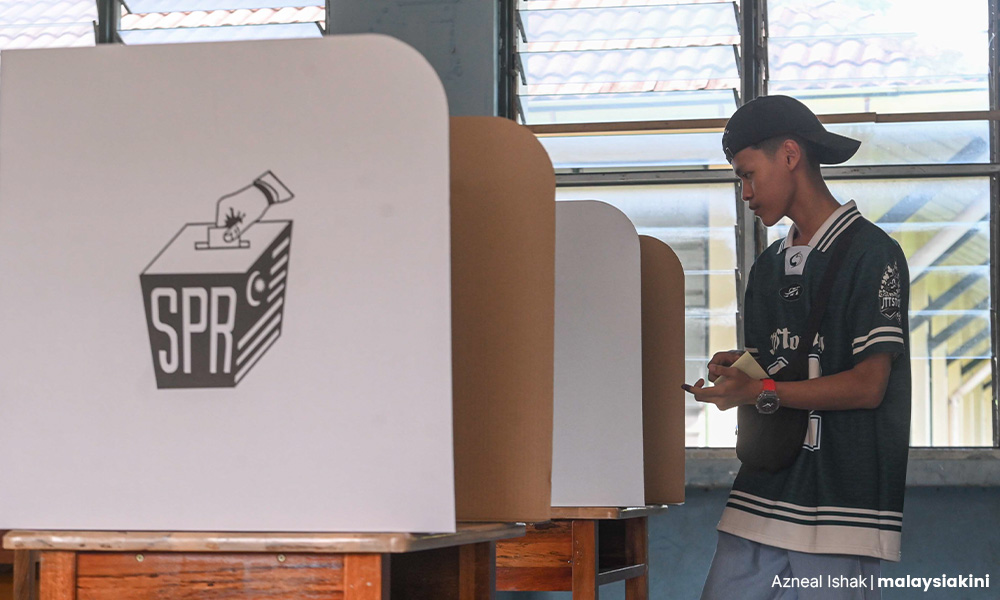
In the 16th state election (PRN16) 2020, 14 contests (out of 73 or 19 percent) came down to less than 10 percent margins, with the seats of Karambunai and Kukusan the closest. This election, PRN17, the races could be even tighter.
The intense competition, splitting of traditional vote banks, and coalition deals leaving room for the emergence of new patterns of contention make for a highly dynamic competitive election.
A look at the competitiveness of the contests even before nomination day shows that more than half - 39 seats - are already “panas” (hot) or highly competitive, with campaigns de facto underway.
(For more discussion of the hot seats in different regions, check out my podcast – Kerusi Panas Sabah here)
While many Sabahans feel that the choices are not good enough and worry about how their choices have been displaced in political pre-election deals over seat distribution and could be further disregarded through post-election coalition deals, the reality is that each voter, each vote, will have more power to determine who is in the post-election room than in recent elections.
2. (Almost) every seat will matter
No coalition or party is expected at this juncture to win a majority, a minimum of 37 seats. This means that every seat could impact the composition of the Sabah government and the respective bargaining power of the different players.

For voters, this means that the impact of who wins their seat will be important, reinforcing the significance of voting.
While elite politics and deal-making are defining contemporary Malaysian politics, in Sabah’s polls, with its intense competition, voters have considerable influence to determine who will represent them locally.
3. Test of federal respect for Sabahan rights
Sabah’s polls also give a voice to Sabahans.
The most salient issue in the campaign to date is how Sabah is being left behind with serious deficits in basic needs. It is 2025, and too many Sabahans don’t have proper roads, running water, streetlights or electricity.
Most young people are forced to leave home to find jobs, and living costs are higher, especially vis-à-vis lower wages compared to the rest of Malaysia.
The vulnerability across Sabah is arguably the most serious in Malaysia, and in some areas, especially in the interior, not acceptable. This suffering and marginalisation have gone on for decades and have been made more acute as Sarawak has increased development with greater autonomy and strong state leadership.
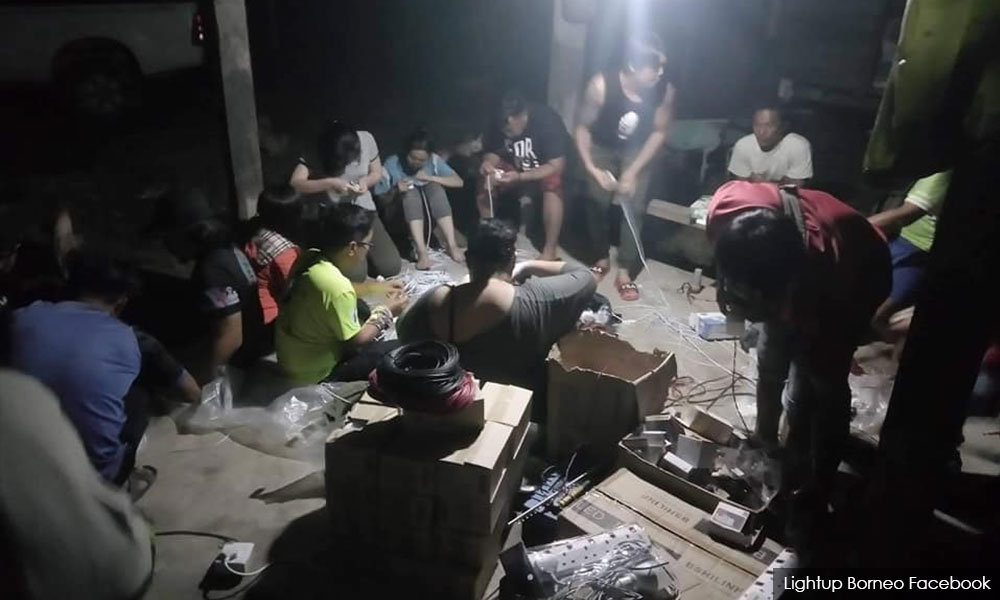
Across Sabah, the voter demand is clear: fix the problems, not later but now, not by promising money but with clear plans and priorities. The clarion call for representatives to do their job to improve lives is booming.
One decision will showcase whether the federal government genuinely cares about Sabah; whether the Anwar Ibrahim government appeals the Sabah Law Society’s legal case calling for a review of the 40 percent revenue requirement, a legal decision that recognises both Sabah’s constitutional rights and her systemic marginalisation.
The appeal decision must be made legally before the polls and, in particular, will shape how the prime minister and the Pakatan Harapan coalition are perceived.
4. Hajiji Noor evaluation
The polls are also a test for the incumbent state leadership of caretaker Chief Minister Hajiji Noor and his coalition Gabungan Rakyat Sabah (GRS).
He has provided political stability, moderate growth, and modest development improvements, especially in some parts of the interior areas. (For more details, see Episode 2 of the Kerusi Panas Sabah podcast)
Yet he faces a deficit in matching delivery with demands from the electorate. Many voters see the pace of progress as too slow, and others argue that he is weak. At the same time, many voters are risk averse, opting for the security of the government of the day, especially in seats where a mini-warlord aligned with GRS is running.
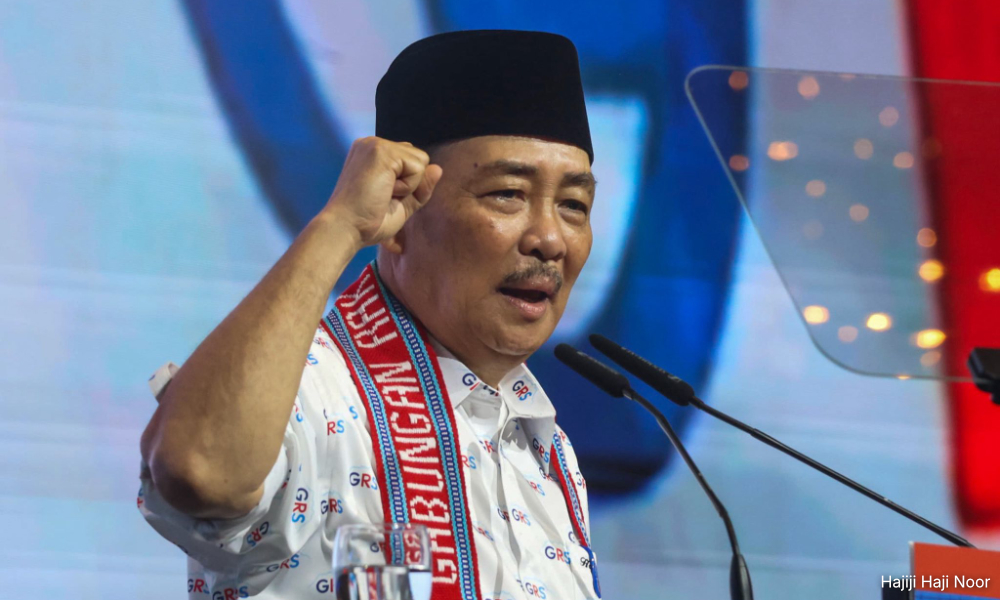
The key challenge for GRS is to distinguish itself beyond the “safe” option, and to stave off the criticism of a strong pro-change Warisan campaign and the ground machinery of Umno-BN.
Many are asking if they want Hajiji as chief minister again, especially younger voters, where the “tukar” (change) sentiment is among the strongest.
5. Madani government fight
This election is the first where parties inside the Madani government are directly fighting each other - Warisan is the main contender, with a strong narrative, facing three other coalitions: GRS, Pakatan Harapan, and Umno-BN.
Despite deals within the Madani umbrella, the contestation among the coalitions is intense, with many not-so-friendly fights.
Only around 20 seats, for example, were settled between GRS and Harapan, leaving over 50 open. Negotiations between GRS (with the core party PGRS largely formerly Umno) broke down altogether.
As the campaign has evolved, emotions have intensified and will intensify further. Inevitably, this will put pressure on the “unity” coalition.
This pressure will extend into individual coalitions, including Harapan. PKR appears to have reached the best situation for itself through deals, as it is contesting the most seats within this coalition in the deal arrangements. Arguably, it is the party that most needs deals to be competitive.
The likelihood of deals leading to splits inside and among coalitions is high. As the campaign evolves on the ground and with the results likely to shape party results, it will be a test to see how much pressure the Madani umbrella can face, especially when the post-election jockeying begins.
(One sidenote: Perikatan Nasional is also contesting, but it is in the opposition and not in the government. It is hoping that any victories in Sabah will strengthen its national position - challenging indeed when this coalition’s splits are on display and impacting its seat negotiations and campaign.)
6. Anwar Ibrahim assessment
Finally, despite this being a state election, the current federal administration has made this election about the prime minister, a mandate for his tenure. This is a risky move, given PKR’s poor record of winning seats in Sabah and the strong “local party” sentiment.
PMX posters feature in almost all of the seats where PKR is contesting and can be found especially in the cities. Some of the messages, such as “PMX Sayang Sabah” featuring the RM100 Sara benefit, ring a bit hollow, while other messaging, such as protecting Sabah from the Sulu invasion, might have been more sensitively placed in areas where there are not large Suluk populations. There seems to be a disconnect with the ground, even as Sabah is being made into a test for the PM.

Sabah continues to be seen as a place to shore up political support. Recall that in the September 2020 pandemic polls, former prime minister Muhyiddin Yassin received an electoral mandate that boosted his tenure. It came at a serious cost as Covid-19 spread rapidly, but the results strengthened his position as PM at a time when his majority in Parliament was not secure. Anwar appears to be looking to do the same.
The incumbency advantage, being the federal government, and the power of resources and assistance have traditionally mattered in Sabah elections, especially for more vulnerable populations.
No question, all of the parties/coalitions have core supporters in Sabah, including PMX and Harapan. In the weeks ahead, we will see whether the personalised framing of the Harapan campaign can offset the anti-federal/state nationalism sentiments.
From fierce competition, the federal-state relationship, leadership/party assessments and coalition pressures, the Sabah polls will shape Malaysian politics, especially for Sabahans seeking better leadership and governance.
The stakes are high, but it remains unclear who will feel the brunt of the stake ahead. - Mkini
BRIDGET WELSH is an honorary research associate of the University of Nottingham’s Asia Research Institute, a senior research associate at Hu Fu Centre for East Asia Democratic Studies, and a senior associate fellow at The Habibie Centre. Her writings can be found at bridgetwelsh.com.
She is on the ground in Sabah researching the polls, and her written analysis can be found exclusively in Malaysiakini and through her self-funded podcast Kerusi Panas Sabah.
The views expressed here are those of the author/contributor and do not necessarily represent the views of MMKtT.

No comments:
Post a Comment
Note: Only a member of this blog may post a comment.