


PARLIAMENT | A parliamentary select committee has taken the MCMC to task for what it labelled as glaring shortcomings in tackling online harms affecting children.
Backbencher Yeo Bee Yin (Harapan-Puchong) said the parliamentary select committee on women, children, and community development had found MCMC’s financial commitment and capacity in safeguarding internet safety to be “very low”.
The committee chairperson said the finding was based on MCMC’s role in controlling online games and the spread of pornography among children, as well as the distribution of child sexual abuse materials.
“The committee referred to MCMC’s financial statements from 2019 to 2023, and found that MCMC’s revenue stood at around RM1.2 billion to RM1.6 billion.
“However, for monitoring purposes, including identifying websites containing harmful content accessible to children, MCMC does not allocate sufficient specific provisions, with only 56 officers assigned to this task,” Yeo said today.
She was addressing the Dewan Rakyat during a briefing session on the committee’s report regarding digital safety and the mental health of children in the nation.
She also said it was “deeply concerning” that MCMC had failed to utilise automation systems or artificial intelligence (AI) as part of its monitoring efforts, with such procedures instead conducted “manually” through methods such as keyword searches across different websites.
MCMC’s deficiencies are especially alarming in light of the committee’s finding that nearly 90 percent of teenagers who repeatedly engaged in sexual activity did so as a result of early exposure to pornography, social media, and digital obscene materials.
Report’s findings
The report, tabled in the lower house yesterday, identified three main challenges in addressing the negative impact of uncontrolled internet exposure among children.
In particular, the committee determined that the country’s digital safety enforcement capability remains “inadequate” due to limitations in legal powers, non-compliance by global platforms, and “most importantly”, MCMC’s low monitoring capacity.
“The management of children’s mental health in schools is still neither comprehensive nor consistent, and the level of digital literacy and parents’ capacity to supervise their children’s device use remains low,” Yeo added.
As part of its recommendations for the MCMC, the committee urged the regulatory agency to immediately double its financial allocations to increase the capacity of its website monitoring team and include the use of the latest technology.

“The committee views very seriously the lack of financial commitment and capacity of MCMC in maintaining internet safety, which has resulted in children in Malaysia being exposed to harmful materials such as pornography and online gaming that are not appropriate for their age.
“MCMC should also channel corporate social responsibility funds to the National Centre of Excellence for Mental Health to prevent and manage the problem of digital addiction due to excessive internet use,” Yeo said.
The committee also recommended that MCMC conduct a large-scale digital safety awareness campaign in collaboration with the Education Ministry, including a structured digital literacy programme specifically for parents.
The campaign should also ensure that every school implements practical sessions on setting “parental controls,” where parents are directly guided to activate safety controls on their children's devices.
Such a measure, Yeo said, should be considered as parental involvement is critical in ensuring digital safety for children.
Social media ban
Debating Yeo’s briefing, Sim Tze Tzin (Harapan-Bayan Baru) urged Putrajaya to reconsider its proposal to prevent Malaysians below 16 from signing up for social media accounts beginning next year.
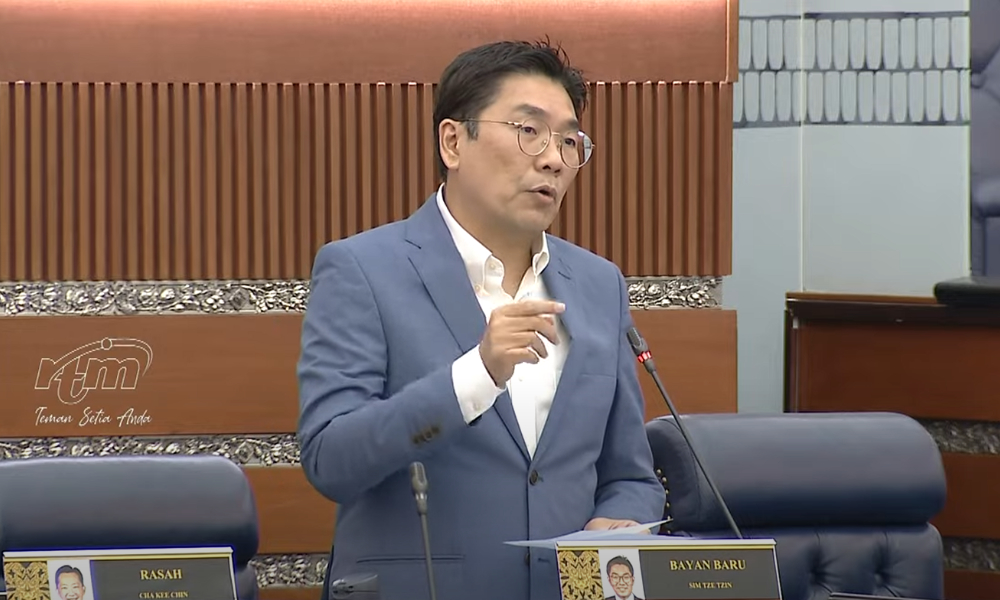
Stressing that the policy is a major decision which should first acquire comprehensive input from all relevant stakeholders, the backbencher argued that the committee’s report demonstrates that the nation is “not yet ready” for the move.
“The government has announced it will implement the social media ban next year. With only one month left until 2026, we need very large-scale engagement and discussion among all quarters.
“We need a deep conversation with all stakeholders, (but) I still do not see such conversations happening,” Sim said, cautioning the Communications Ministry against executing a “knee-jerk reaction” to the problems at hand.
Noting that a ban on social media for children could be a double-edged sword, Sim proposed that MPs establish a caucus to aid the government in finding solutions to internet gaming disorder and social anxiety disorder before deciding whether to prohibit social media.
“If we ban social media (for children), it will have effects: our children will lose platforms to learn new knowledge or encounter new ideas, and become disconnected from the world.
“Even in schools, WhatsApp is used for homework and to convey instructions from teachers. What happens if WhatsApp is banned? It will cause major disruption,” Sim said.
The government aims to ban social media use for children under 16 as part of broader protections under the Online Safety Act, effective Jan 1.
The cabinet had raised the minimum social media age from the earlier proposed 13 to 16, requiring platforms to verify users’ ages via official documents like MyKad, passports, or MyDigital ID through electronic know-your-customer (eKYC) identity verification.
Cybersecurity experts have since warned that handing national identity document data to social media platforms for eKYC checks could increase the risk of such information being misused for surveillance. - Mkini

No comments:
Post a Comment
Note: Only a member of this blog may post a comment.