



WHEN Jeffrey Epstein’s name hit the headlines, the world stopped. Billionaires, politicians, and celebrities were implicated in a web of sexual exploitation, and global outrage explodes.
Meanwhile, thousands of young girls in the United Kingdom suffered in silence under grooming gangs for decades: a scandal far larger in scale, yet far quieter in international attention.
Why does the abuse of the powerful demand the world’s gaze while the suffering of the vulnerable is often ignored?
For Malaysia, the contrast is a wake-up call: justice is not measured by the social status of the perpetrator, and protecting the powerless must become a national priority before silence and shame do even more damage.
The release and discussion of the so-called Epstein files have captured global attention in a way few criminal scandals ever have. Epstein’s network allegedly involved politicians, billionaires, and members of elite social circles across several countries.
The scandal’s intrigue lies not only in the crimes themselves but in the possibility that powerful individuals participated or enabled them.
Investigations into Epstein and his associate Ghislaine Maxwell have revealed grooming tactics targeting young girls over decades, facilitated by wealth and influence.
In media logic, this makes Epstein an irresistible story that combines crime, celebrity, conspiracy, and geopolitics. When perpetrators are connected to powerful elites, the scandal becomes a global spectacle.

By contrast, the grooming gangs’ scandal in Britain is structurally different. It involves numerous decentralised cases across towns such as Rotherham, Rochdale, and Telford, where groups of men systematically groomed and abused vulnerable girls over many years.
In Rotherham alone, an inquiry found that about 1,400 children were abused between 1997 and 2013. Investigations revealed severe institutional failures.
Police and social services frequently dismissed victims as “problem children,” and authorities sometimes hesitated to pursue investigations due to fears of inflaming racial tensions.
The crimes were horrific and systemic, yet they did not receive sustained global attention comparable to Epstein.
One reason is narrative simplicity versus political sensitivity. The Epstein story fits neatly into a widely understood narrative: powerful men abusing vulnerable victims while institutions look the other way. It is morally clear and politically universal. Few actors risk reputational damage by condemning it.
The grooming gangs scandal, however, sits at a politically sensitive intersection of race, immigration, class, and gender. In several high-profile cases, perpetrators were men of Pakistani heritage while victims were often white working-class girls.
Authorities feared that highlighting ethnicity could fuel racial tensions or far-right narratives. As a result, discussion of the scandal often became entangled in ideological battles rather than focusing purely on victim protection.
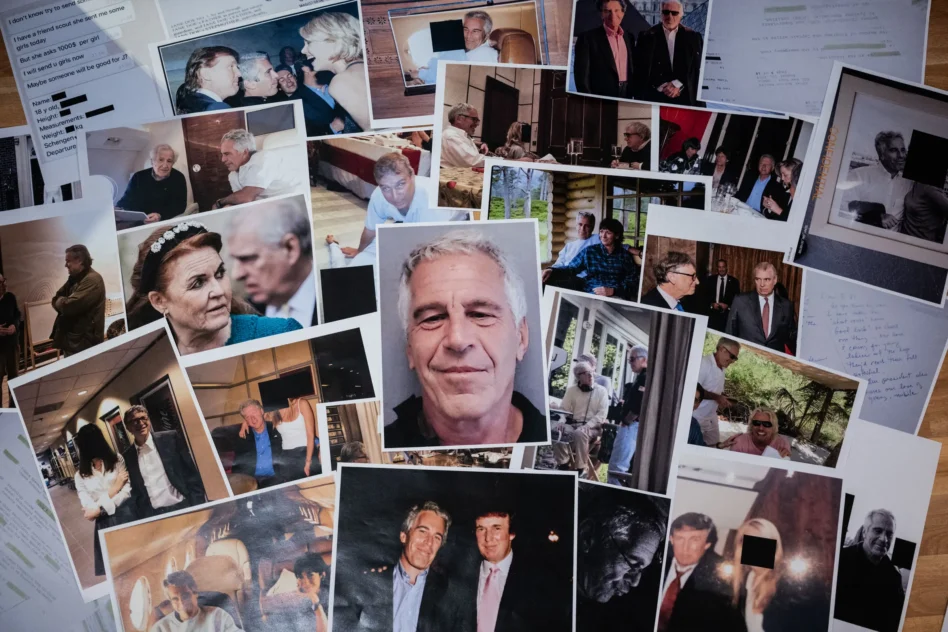
Structural media dynamics also play a role. Global news systems prioritise stories with recognisable characters and dramatic arcs. Epstein’s network provides identifiable villains, glamorous locations, and a clear investigative trail
The grooming gangs scandal, by contrast, involves hundreds of perpetrators, numerous local authorities, and decades of fragmented cases. It is harder to compress into a single headline or narrative.
Moreover, international audiences often overlook crimes that primarily affect marginalised communities.
Many victims in the UK cases were girls from foster care, poor households, or unstable family backgrounds. This reveals a troubling pattern: the world pays more attention when the perpetrators are elites rather than when the victims are marginalised.
For Malaysia, the contrast between these scandals offers important lessons. Institutional transparency must come before political sensitivity. When authorities avoid confronting uncomfortable truths whether about ethnicity, class, or power: abuse can persist for years.
Malaysia has experienced high-profile cases of sexual exploitation, from child trafficking rings to abuse scandals in schools and orphanages. Victim credibility must never depend on social status.
Many British victims were initially dismissed because they were seen as troubled teenagers rather than victims of exploitation.
In Malaysia, social stigma and victim-blaming continue to silence children, domestic workers, and other vulnerable populations, making victim-centred protections essential.
Elite accountability matters everywhere. The Epstein scandal demonstrates how wealth and influence can shield offenders. Malaysia must ensure that investigations into sexual exploitation remain independent of political or economic power.
This includes safeguarding anti-trafficking task forces, ensuring the Royal Malaysia Police and child welfare agencies act without political interference, and legislating stringent penalties for corruption-linked cover-ups.

Data and early intervention are critical. Several UK reports concluded that authorities lacked reliable data and coordination on child exploitation.
Malaysia must strengthen inter-agency data sharing, create a national database on abuse cases, and train front-line officials to detect grooming, trafficking, and online exploitation.
Survivor-centred support systems including trauma-informed policing, child advocacy centres, and counselling services: must be prioritised to prevent secondary victimisation.
Malaysia can also benefit from adopting international best practices. By collaborating with countries such as the UK and the United States, the nation can strengthen knowledge exchange, improve investigative methods, and develop more effective frameworks to protect victims.
Active participation in global networks would also help ensure that local scandals are not overlooked or under-reported, fostering a culture of accountability that extends beyond national borders.
Ultimately, the disparity between attention to Epstein and the UK grooming gangs scandal reflects more than media bias. It exposes a deeper global problem: outrage often follows power rather than suffering. The world is fascinated by the secrets of the powerful. But justice requires equal attention to the powerless.
For Malaysia, the lesson is clear: proactive institutional safeguards, victim-centred policies, and elite accountability are not optional: they are essential.
Without these measures, vulnerable populations will continue to suffer in silence, while global headlines remain focused on the crimes of the rich and famous.
R. Paneir Selvam is Principal Consultant at Arunachala Research & Consultancy Sdn Bhd (ARRESCON), a think tank specialising in strategic and geopolitical analysis.
The views expressed are solely of the author and do not necessarily reflect those of MMKtT.
- Focus Malaysia

No comments:
Post a Comment
Note: Only a member of this blog may post a comment.