The 24-year-old soldier died at the scene, while the 46-year-old motorcyclist suffered a fractured arm, facial injuries and internal head bleeding. SOURCE: SOCIAL MEDIA
KUALA LUMPUR: An Armed Forces personnel was killed after falling about 5m from a flyover onto another motorcyclist on the Middle Ring Road 2 (MRR2) near Terminal Bersepadu Selatan (TBS) this morning.
Kuala Lumpur Traffic Investigation and Enforcement Department chief assistant commissioner Mohd Zamzuri Mohd Isa said the incident occurred at 8.04am as the 24-year-old soldier was travelling from his home in Bukit Jalil to his workplace at Sungai Besi Camp.
He said the soldier, who was riding a Honda Wave motorcycle, was believed to have lost control while negotiating a ramp on the flyover near TBS to make a U-turn.
The soldier was thrown onto the road below, while his motorcycle remained on the flyover.
"The victim landed on a 46-year-old man riding a Honda Vario motorcycle from Cheras towards Sungai Besi, causing both to fall onto the road.
"At the same time, a lorry driven by a 46-year-old man tried to avoid the two victims but failed and hit the Honda Vario motorcycle," he said in a statement today.
Zamzuri said the soldier sustained severe head and bodily injuries and was pronounced dead at the scene.
The Honda Vario rider suffered a fractured left arm, facial injuries and internal head bleeding. He was taken to Hospital Canselor Tuanku Muhriz for treatment.
The lorry driver escaped unharmed.
Mohd Zamzuri said the case was being investigated under Section 41(1) of the Road Transport Act 1987.
He urged members of the public or witnesses with information to contact the Tun H.S. Lee Traffic Police Station at 03-2071 9999 or any nearby police station to assist in the investigation. - FMT
The F1 Bahrain Grand Prix sold more than 97,000 tickets and was watched by 827 million viewers worldwide.
The F1 Bahrain Grand Prix was held at the Sepang International Circuit from Oct 2 to 4, drawing about 261,000 fans over the race weekend. (Bernama pic)
PETALING JAYA: The F1 Bahrain Grand Prix held at the Sepang International Circuit (SIC) earlier this month generated an economic impact of nearly RM950 million, says the youth and sports ministry.
Citing figures from Formula 1 Management, youth and sports minister Dr Taufiq Johari said the Oct 2-4 event attracted about 261,000 fans, including an estimated 103,000 on race day, and was watched by 827 million viewers worldwide.
He also said that more than 97,000 tickets were sold, while over 50,000 international tourists and about 5,000 foreign workers came to Malaysia for the event.
“The presence of overseas spectators also increased revenue for the tourism, hospitality and aviation sectors, as well as local small and medium enterprises (SMEs), and strengthened Malaysia’s profile as a world-class sports and investment destination,” he said in a written parliamentary reply to Rodiyah Sapiee (GPS-Batang Sadong).
Rodiyah had asked the youth and sports ministry for the estimated economic benefit compared with the costs borne by the government, and whether a cost-benefit assessment would be carried out.
However, Taufiq said the government had yet to determine whether hosting the event was worthwhile, as a cost-benefit assessment was still under way.
He said SIC was conducting the assessment with an appointed consulting firm to examine the hosting costs and economic impact of the race.
“The findings of the cost-benefit assessment will serve as one of the considerations for the government in determining whether it is appropriate for Malaysia to consider hosting F1 again in future,” he said.
In July, Formula 1 confirmed Malaysia as the host of the Bahrain GP following an agreement between Formula 1, the FIA, and the governments of Malaysia and Bahrain.
The agreement kept the Bahrain GP on the 2026 F1 calendar after the race was cancelled earlier this season due to geopolitical tensions in West Asia.
SIC hosted the Malaysian Grand Prix from 1999 to 2017 before it was removed from the calendar because of rising hosting costs and licensing fees. - FMT
Tumpat MP Mumtaz Md Nawi says students should learn practical skills to cope with disasters and emergencies.
Tumpat MP Mumtaz Nawi warned that Malaysia could experience extreme heat between February and May 2027, with temperatures potentially exceeding 41°C. (Bernama pic)
PETALING JAYA: A PAS MP has called for survival and resilience education to be introduced in schools, higher education institutions and communities to better prepare Malaysians for disasters and emergencies.
Mumtaz Nawi (PN-Tumpat) said practical survival skills should be incorporated into the education syllabus, particularly as Malaysia braces for a possible Super El Niño phenomenon next year.
Speaking in the Dewan Rakyat today, she warned that Malaysia could experience extreme heat between February and May 2027, with temperatures potentially exceeding 41°C.
She said the proposed syllabus should equip Malaysians with practical skills to handle emergencies rather than focus solely on theoretical knowledge.
“It should cover disaster preparedness beyond floods, including extreme heat, first aid, financial management during crises, cybersecurity emergencies, and disruptions to water, food and energy supplies,” she said.
Mumtaz also cited Japan and the Philippines as examples of countries that had taken steps to strengthen disaster preparedness and resilience.
She called for a comprehensive climate preparedness framework, including a climate map and calendar, to improve Malaysia’s ability to respond to the growing risks posed by climate change.
The meteorological department previously forecast scorching weather between March and May next year due to the Super El Niño phenomenon, which could see temperatures surpass Malaysia’s record high of 40.1°C.
Its director-general, Hisham Anip, said an analysis of the current El Niño phenomenon, combined with the effects of climate change and global warming, suggested that temperatures could exceed 41°C.
He said the department was also working with the health ministry to develop a heat index to establish thresholds for warning the public about health risks associated with hot weather. - FMT
Higher education minister Zambry Abdul Kadir says the presence of international students is projected to contribute at least RM16 billion a year to the national economy.
Higher education minister Zambry Abd Kadir said about 170,000 international students from 180 countries are currently pursuing their studies in Malaysia. (Rawpixel pic)
KUALA LUMPUR: Malaysia aims to attract about 250,000 international students by 2030, focusing on a diversity of source countries to strengthen its position as a preferred higher education destination.
Higher education minister Zambry Abdul Kadir said about 170,000 international students from 180 countries are currently pursuing their studies in Malaysia.
“When there are many students from various countries, Malaysia becomes a good destination for them to study,” he told reporters after closing the 2026 International Young Future Leaders (iFUTURE) Summit at the World Trade Centre Kuala Lumpur here.
mbry said the presence of international students is projected to contribute at least RM16 billion a year to the national economy.
He added that the projection does not account for the spillover effects of other economic activities that also generate income for local businesses.
When asked about monitoring graduates, Zambry said the higher education ministry uses the MyMOHES system to track their employment progress over a three-year period.
He said the system enables the ministry to regularly review the status and progress of graduates. - FMT
As of mid-April, the authorities had received 29 police reports against the teen, with identified victims including children as young as 12. — Pexels photo
KOTA KINABALU (Oct 13): The Coroner’s Court here heard that DNA samples taken from the barrier railings of the third-floor corridor of Zara Qairina Mahathir’s hostel block were of poor quality and unsuitable for analysis.
The 83rd deponent Insp Wong Yew Zhung, who is the case investigating officer, also testified that dusting techniques on the corridor iron grilles found no fingerprints could be lifted due to the rough and rusted surface.
Wong told Coroner Amir Shah Amir Hassan that both the swab collection and dusting techniques were conducted on July 23, 2025 at 9.36am, while the swab samples were submitted for analysis on July 24, 2025 at 10.45am.
The witness said that on July 29, 2025, he received the DNA analysis chemistry report under laboratory number 25-FR-S-04127, prepared by a science officer from the Chemistry Department of Malaysia, Kota Kinabalu.
In his witness statement, Wong said he revisited the scene of the incident for forensic examination purposes with a team from the D10 Division (Forensics) of the Sabah Police Headquarters (IPK Sabah) led by Insp Mohamad Alif Mohd Razali.
“DNA swab samples were taken from the iron railings of the third-floor corridor by the D10 team for DNA comparison analysis by the Chemistry Department.
“Additionally, the D10 team also conducted dusting techniques on the corridor iron grilles,” said the witness.
On July 16, 2025, 13-year-old Zara was found unconscious below her hostel building and was pronounced dead at Queen Elizabeth Hospital the following day.
Zara’s remains were exhumed on Aug 9, 2025, and a post-mortem examination was conducted at the hospital’s Forensic Medicine Department on Aug 10.
On Aug 20, 2025, five minors, given the pseudonyms Students A, B, C, D, and E were charged in the Court for Children with insulting Zara.
KOTA KINABALU (Oct 13): The investigating officer for Zara Qairina Mahathir’s case told the Coroner’s Court here that her mother was allegedly “adamant” (berkeras) in refusing a postmortem.
Insp Wong Yew Zhung testified before Coroner Amir Shah Amir Hassan that Noraidah Lamat had twice refused a postmortem on Zara’s remains.
In his witness statement, the 83rd deponent stated: “Ibu Zara menjawab, ‘Tidak mahu’ dan enggan untuk bedah siasat dijalankan ke atas Zara (Zara’s mother answered “Don’t want” and refused for a postmortem to be carried out on Zara’s remains).
The witness further claimed that he explained the same thing to Noraidah again.
“Ibu Zara tetap berkeras menjawab: ‘Tidak mahu. Saya mahu kebumikan dia dengan segera” (Zara’s mother remained adamant and answered, “I don’t want. I want her to be buried immediately”).
The witness also claimed that when he was at the Neurology Ward, he did explain that a postmortem needed to be conducted on Zara’s remains to facilitate the investigation into this case.
When testifying on Oct 8, Noraidah had said she signed a form rejecting a postmortem on Zara’s remains without being informed of the importance of conducting the procedure.
Noraidah also testified that she signed the form because the family was in a state of panic and deep grief.
According to her, they wanted Zara’s remains to be managed as soon as possible because they were thinking about the three-hour journey to Sipitang from Kota Kinabalu.
Noraidah completed her oral testimony on Oct 12 and her legal team told the court that as of now there is no intention to recall her as a witness.
WHEN Madam Tan Chiew Mei was diagnosed with breast cancer during pregnancy, she cried through the night. Pregnant with her second child and already a mother to a young daughter, she wondered who would care for her child if she were no longer around.
Then she focused on two things: “I want to get it treated. And I want to keep my baby.”
Madam Tan, then 37, had discovered a hard breast lump. An initial ultrasound reassured her, but a second assessment two weeks later found it had grown. A biopsy confirmed triple-negative breast cancer, the type she had feared after reading about it online.
Chemotherapy began within days. Amid appointments and treatment decisions, knowing what to ask her doctors proved less straightforward.
What if I do not know what to ask?
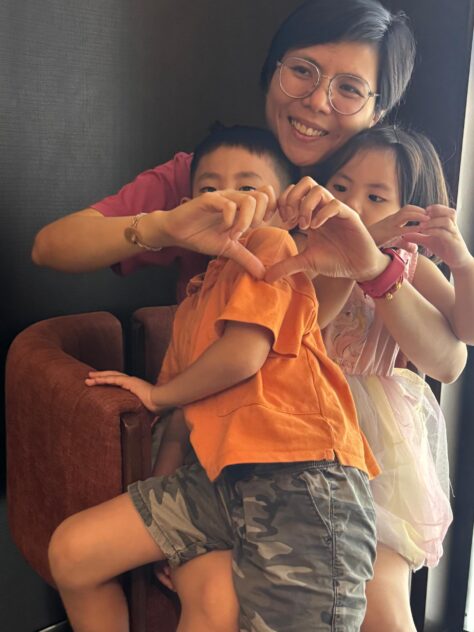
Mdm Tan Chiew Mei with her children today.
Madam Tan was not shy about speaking up, but often drew a blank when doctors invited questions.
“I just didn’t know what to ask,” she recalled.
She trusted her doctors with major treatment decisions but learned to ask about everyday concerns, from itchy skin to sore gums. Looking back, she encourages patients to raise even seemingly minor symptoms rather than dismiss them.
Consultant clinical oncologist Dr John Low Seng Hooi of OncoCare Malaysia says breast cancer during pregnancy requires careful coordination between the oncology team, obstetrician and breast surgeon.
Treatment choices depend on the cancer’s type and stage, the pregnancy’s progress and the patient’s circumstances. Some treatments can be given during pregnancy, while others must wait until after delivery because of potential risks to the baby.
Dr Low encourages patients to ask what their treatment aims to achieve, why it is recommended, how long it may take, what side effects to expect and which symptoms require attention.
“There are no questions that you cannot ask your treatment team,” he said.
How will treatment affect everyday life?
For Madam Tan, one of the hardest moments came after childbirth. Following an induced delivery, she underwent surgery the next morning.
“I felt very emotional, when I realised how difficult it had been to get to this point, and the journey was not over yet,” she recalled.
She now had a newborn and an older daughter to care for, with more chemotherapy ahead. She also could not breastfeed her son during chemotherapy.
Although she could eat without vomiting, other side effects were difficult. She lost her hair and experienced leg pain and tingling that made walking difficult, alongside sore gums and itchy skin.
Oncology nurse educator Norhaniza Mohd Rashid says patients often think of additional questions only after leaving consultations, when they begin considering how treatment will affect life at home.
She tries to involve caregivers in pre-chemotherapy briefings because patients may struggle to remember everything they are told. She also encourages patients to contact their treatment team about concerns between appointments.
Questions may range from whether they can hug their children to how they should manage precautions at home. Patients should ask their team about medication-specific precautions, symptoms requiring urgent attention and whom to contact outside office hours.
Norhaniza also offers practical advice tailored to individual needs, such as eating smaller, more frequent meals when appetite is poor or recognising energy limits when trying to continue working.
Who can help when things feel overwhelming?
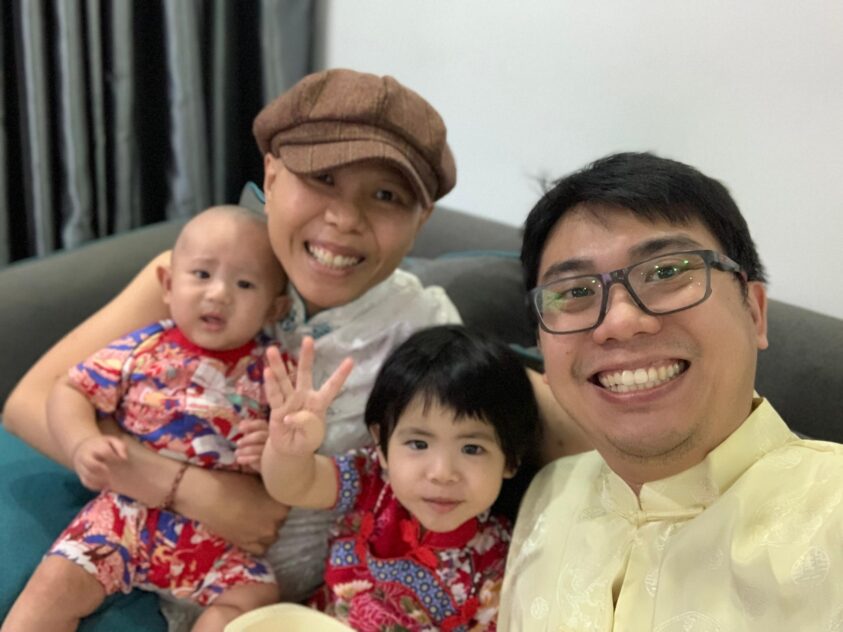
Mdm Tan Chiew Mei and her family while she is being treated for breast cancer.
Madam Tan had support from her husband, mother and siblings, who helped with appointments, meals and childcare. Her employer also checked the company’s prolonged illness leave policy, allowing her to take time off work.
“Whenever there was a doctor’s appointment, the whole village would come to my house,” she recalled.
She found distraction in Korean dramas and light household chores when she felt able. Conversations with other patients in waiting areas also helped her feel less alone.
But coping did not mean she was always positive. Norhaniza encourages patients to find manageable activities they enjoy, while taking time to listen when they feel unable to do so.
“We need to listen with no rush,” she added.
Dr Low says patients should also feel able to discuss fears about suffering and survival. Although doctors can explain likely outcomes based on the cancer and its response to treatment, they cannot predict an individual’s future with certainty.
What comes after treatment?
Now a mother of three, Madam Tan continues to attend follow-up appointments and says her checks have been clear so far. If concerns arise, her approach is to “deal with it as it comes”.
She also wishes she had sought medical advice sooner after discovering her lump rather than waiting for her next pregnancy appointment.
Her advice to other women is not to take their health for granted, to pay attention to breast changes and to seek medical assessment promptly rather than delaying concerns.
For someone newly diagnosed, her experience offers a simple reminder: there is no perfect list of questions to prepare. Patients can begin with what matters most, whether it is a symptom, childcare, work or a worry they cannot quite explain.
Her advice is straightforward: “Just ask whatever. Don’t feel shy to ask.” ‒ Focus Malaysia