


Deep in the Bintulu rainforest in Sarawak, an Iban community defending their ancestral land is being treated like trespassers, according to a new report by Human Rights Watch (HRW) released yesterday.
The report stated that timber companies are moving onto the land with support from the Sarawak government in the form of tree planting concessions.
The Iban community of Rumah Jeffery, documented in the HRW report, “Facing the Bulldozers: Iban indigenous resistance to the timber industry in Sarawak, Malaysia”, never consented to logging on their 521 hectares of native customary land, yet it was they who received an eviction notice in October 2022 from the Sarawak Forest Department.
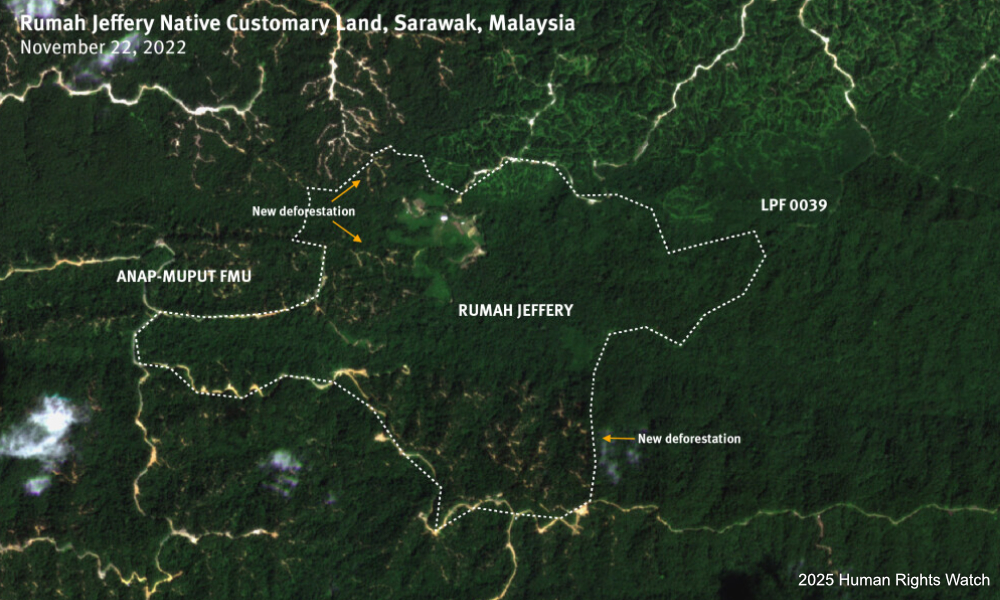
The order was issued after logging giant Zedtee Sdn Bhd, part of the Shin Yang timber conglomerate, accused the villagers of “encroachment”, even though the land in question has been used by the community for generations.
“The treatment of Rumah Jeffery by the company and government agencies is one example among many of how Sarawak laws and policies protect company interests and dispossess indigenous peoples of their territories and natural resources,” the report read.
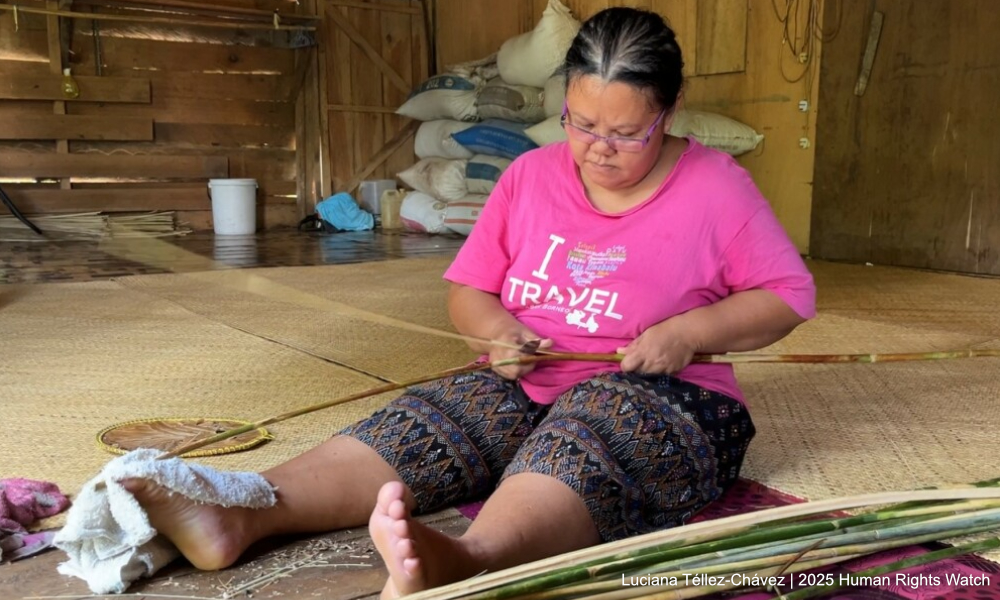
The report describes Rumah Jeffery as a community of 60 people living in a 40m-long longhouse along the banks of Sungai Belawit, which was completed in 2017.
It was formed as an offshoot of Rumah Mawang after the original village became too crowded.
The peaceful split also led to the division of ancestral territory previously shared by all Rumah Mawang residents, allowing Rumah Jeffery occupants to continue exercising their rights over their native customary land.
This community, which has no tapped water, electricity, or a land title that signals formal recognition by the government of their customary land rights, had sought to overturn the eviction order by appealing to multiple government offices, but has yet to receive an official response.
Logging giant
The HRW report warns that if the community loses their land, it risks losing its entire way of life.
The report revealed that Rumah Jeffery’s ancestral territory straddles both of the leases that Zedtee manages - a licensed planted forest (LPF 0039) and a certified selective logging site (Anap-Muput FMU T/4317).
Despite this overlap, the community has not been formally recognised by either Zedtee or government agencies, nor consulted meaningfully before the land was cleared.
Instead, the report documents that Rumah Jeffery’s longtime occupation of the territory is disputed by the forest department as “illegal occupation in their leasing”.
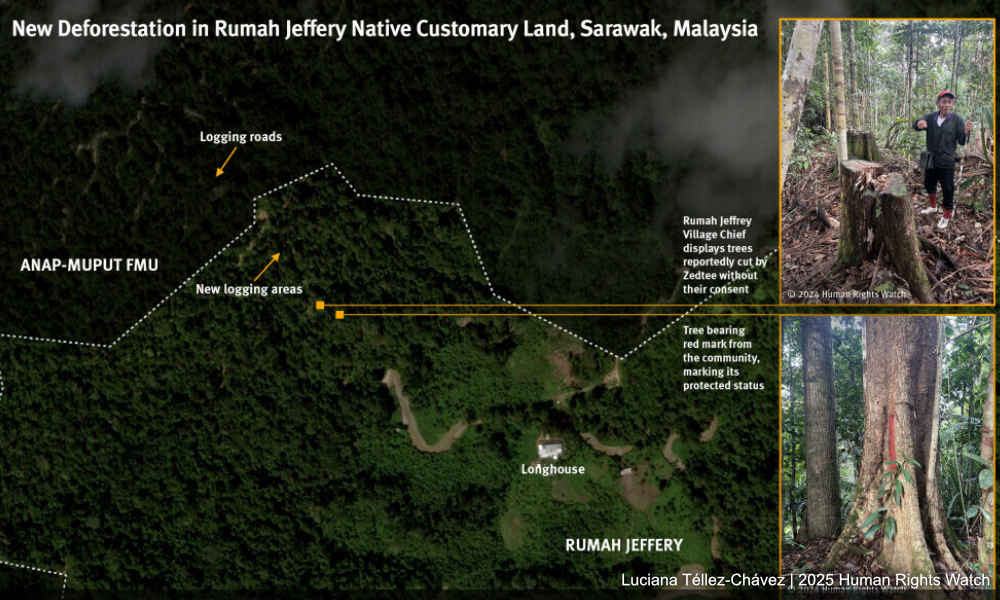
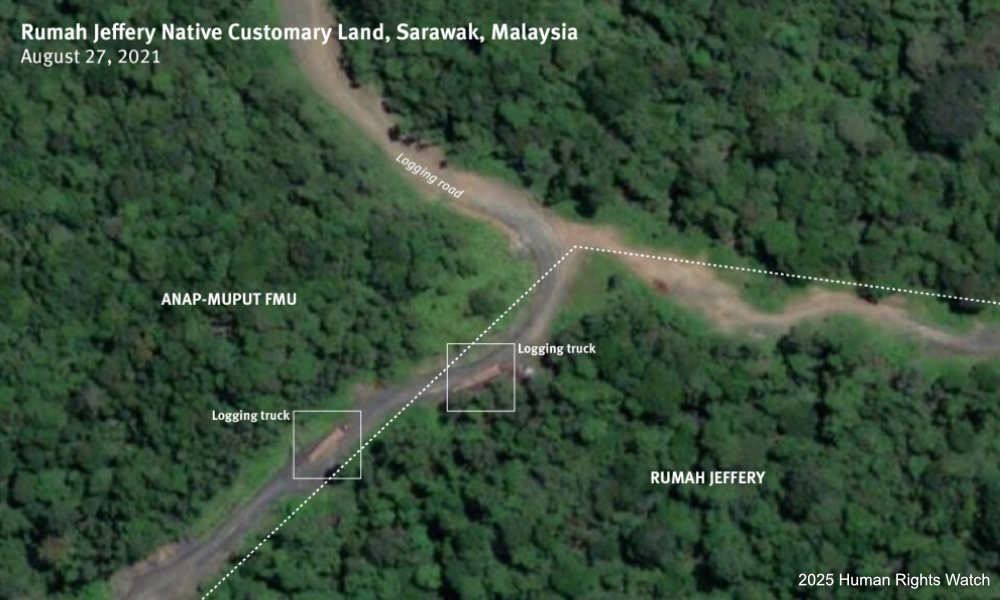
Zedtee is no newcomer to this part of Bintulu. In 2008, the Sarawak government granted the company a 60-year license to carry out selective logging over 83,535ha in the Anap-Muput Forest Management Unit in Tatau - an area roughly eight times the size of Paris, the report describes.
Malaysiakini contacted Zedtee and its parent company, Shin Yang, for a response to HRW’s allegations but has not received a reply.
A quick search on the Zedtee website revealed Zedtee’s CEO Kueh Nai Chung and director Lim Lu Kiong declare in a policy statement issued in May 2024, that the company respects the customary rights of indigenous people linked to its forest concession.
The policy also states that the company: “Respects their use rights and activities in areas through (a) free, prior, and informed consent process”.
There is no mention of Rumah Jeffrey on Zedtee’s list of communities.
However, this community may not be alone, as the report notes forest department enforcement head Wilson Ngai confirmed that five other villages received eviction notices.
Showing historical presence
Logging without the community’s consent is a violation of the Malaysian Timber Certification Scheme (MTCS), which requires companies to respect indigenous land rights.
HRW found that Zedtee’s concession was certified despite failing to meet this basic requirement with the Rumah Jeffery community.
The most recent audit by Sirim, the body responsible for assessing compliance, did not flag the lack of consent or engagement with Rumah Jeffery.
“The Sarawak government should protect Rumah Jeffery’s land rights and require Zedtee to compensate the community.
“The Malaysian federal government should adopt binding legislation protecting indigenous rights to prevent these violations from recurring,” HRW recommended in the report.
Meanwhile, Rumah Jeffery has taken steps to assert their land rights.
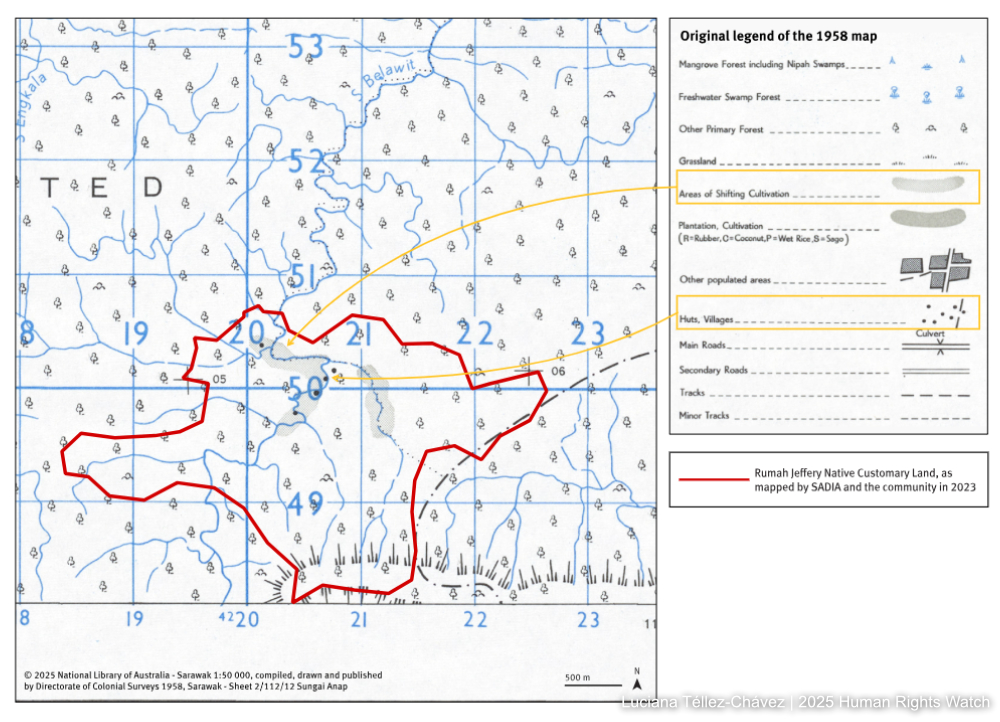
Geospatial expert Matek Geram from the Sarawak Dayak Iban Association, who mapped Rumah Jeffery’s ancestral territory, identified customary markers that show the community’s long-standing presence on the land.
These markers include graveyards, orchards, and sacred sites, all of which were photographed and documented by HRW.
The indigenous organisation that provides support to communities fighting for their land rights overlaid the boundary of Rumah Jeffery’s ancestral territory with a 1975 map published by the UK’s Directorate of Overseas Surveys for Malaysia’s Director of National Mapping.
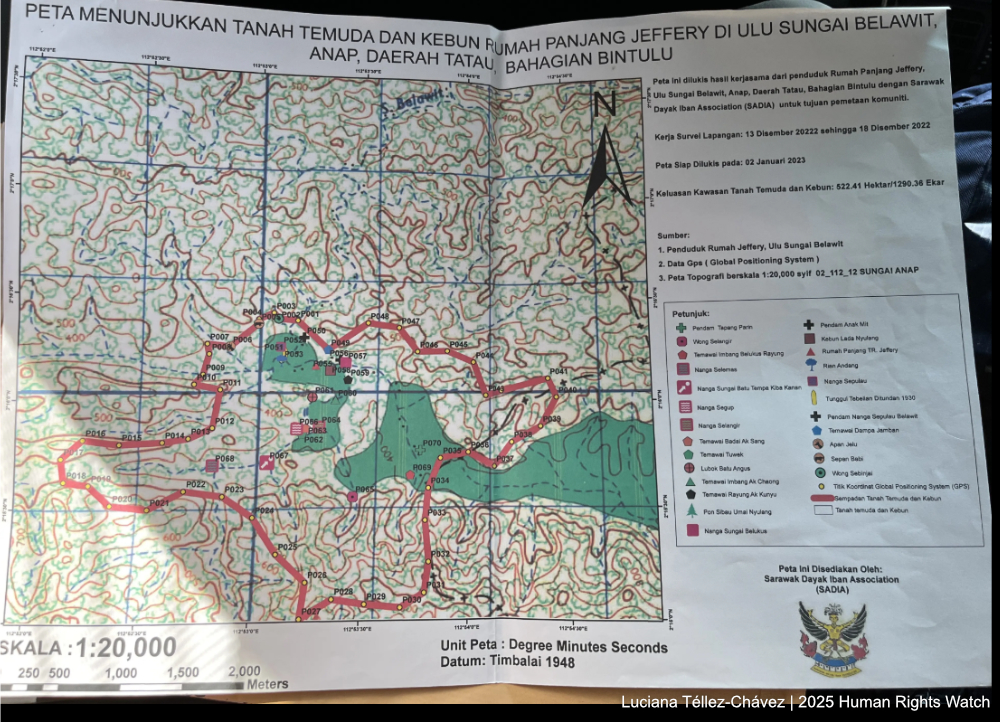
The comparison revealed consistent patterns of land use, with several cultivated areas shown in the 1975 map matching those still farmed by the community today.
Data from Global Forest Watch, an interactive online forest monitoring and alert system managed by the World Resources Institute, estimates that Malaysia lost about 70,000ha of primary forest in 2022 alone, an area about seven times the size of Paris.
- Mkini

No comments:
Post a Comment
Note: Only a member of this blog may post a comment.