


By all appearances, DAP leader Liew Chin Tong seems more preoccupied with critiquing the opposition rather than reflecting on the steadily worsening credibility crisis within Pakatan Harapan and the so-called unity government.
His recent piece is yet another attempt to deflect attention from the growing disillusionment with Prime Minister Anwar Ibrahim’s administration - a government that has not only abandoned its reform promises but now reacts to every criticism with arrogance and deflection.
Let us be clear: democracy in Malaysia deserves not just a better opposition, but most urgently, a better government.
A government that silences, not listens
Liew talks about how Perikatan Nasional must offer constructive alternatives. But when critics and civil society voices do present ideas, what happens?
The Harapan-led administration shuts them out, brands them as extremists or opposition stooges, and continues governing with elitist detachment.
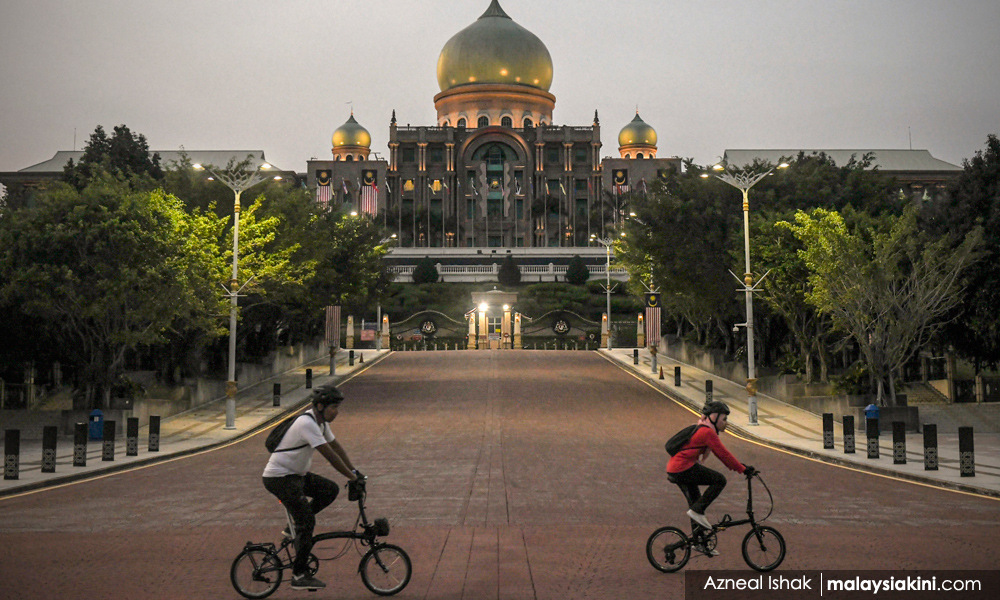
Whether it’s on economic reform, cost of living, judicial independence, or institutional integrity, Harapan today treats dissent not as a sign of democratic maturity but as a threat.
Anwar’s government has perfected the art of cosmetic consultation without real engagement. It’s a government that demands loyalty but offers neither performance nor reform.
That is why people are turning away, not because PN is too loud, but because Harapan is too deaf.
From reformists to rulers
Harapan was once a coalition of hope. Today, it’s a coalition of excuses. A coalition government cobbled together under royal advice is now being used to justify the abandonment of nearly every single major promise made before the 15th general election.
Where is the courage to abolish oppressive laws? Where is the political will to reform the GLC culture of patronage? Where is the transparency once demanded by Harapan leaders?
Today, we see court cluster politics creeping back in, selective prosecutions raising eyebrows, and reformists morphing into status quo managers.
The inconvenient truth for Liew is this: Harapan is failing not because the opposition is strong, but because Harapan has turned away from the very moral authority that once set it apart.
PN leadership more cohesive than you think
Liew spends a great deal of time dissecting PN’s internal dynamics, hinting at disunity and a leadership vacuum.
Yet he fails to admit an obvious truth: PN under Muhyiddin Yassin is the only coalition that has consistently introduced and mentored a new generation of capable leaders.
Names like Hamzah Zainudin, Azmin Ali, and Ahmad Samsuri Mokhtar, among others, have emerged not by accident but through a deliberate leadership transition.
Contrast this with Harapan, where the looming question remains: Who after Anwar?
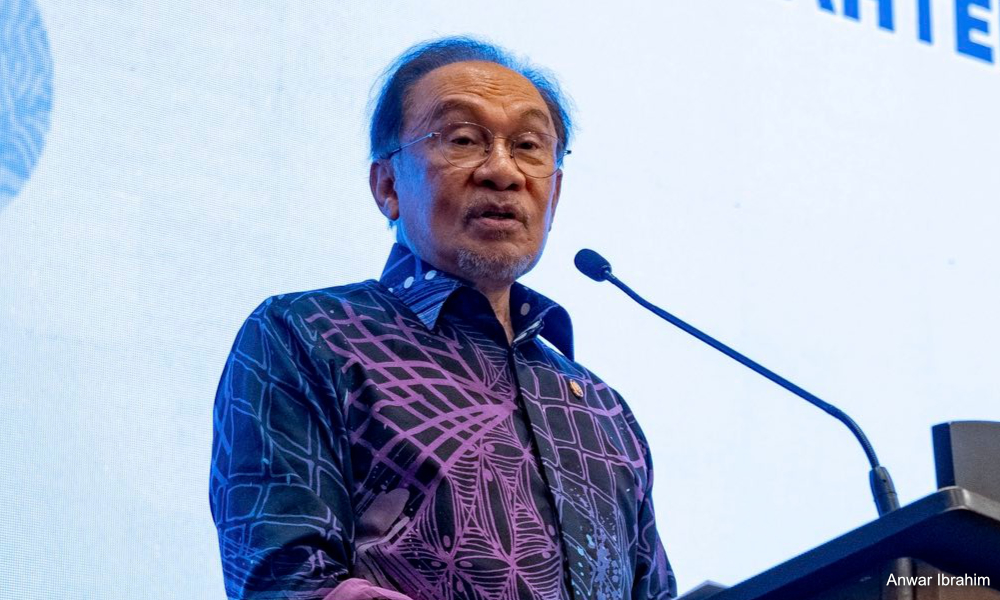
Is it former economy minister Rafizi Ramli, now sidelined and increasingly irrelevant? Is it DAP secretary-general Anthony Loke, whose party still wrestles with internal factionalism?
Or will Liew himself throw his hat into the ring, since he seems most eager to appoint prime ministers for others?
The fact that Liew can list so many potential leaders in PN but struggles to name a single credible successor to Anwar within Harapan speaks volumes.
The reality is that Harapan is a coalition held together by inertia and personality, not by shared vision or succession planning.
Can DAP fill the void?
Liew may criticise PN for lacking a prime ministerial candidate, but perhaps he should answer a more pressing question: Is DAP ready - or even acceptable - to fill the leadership vacuum if Anwar steps aside?
Would Umno accept a DAP-led government? Would rural Malays embrace a DAP prime ministerial candidate? Even within Harapan-BN, DAP’s role is tolerated, not celebrated.

While DAP is effective as a political party and technocratic administrator, it remains politically handicapped in majority-Malay constituencies.
It has neither the reach nor the trust to lead a multi-ethnic government on its own.
And more importantly, does DAP still hold the moral high ground it once claimed?
The answer is increasingly clear. DAP has slowly abandoned the integrity narrative that once defined its appeal.
The corruption trial involving DAP chairperson Lim Guan Eng over the Penang undersea tunnel project has not only damaged the party’s credibility - it has been met with eerie silence from its top leadership.
Meanwhile, Local Government Minister Nga Kor Ming has been embroiled in controversy over the opaque and questionable MyKiosk concession awarded in Selangor, raising alarm bells over transparency and cronyism under his watch.
When the party that once shouted “justice, integrity, and transparency” now governs with the same opacity it once condemned, what exactly differentiates it from the old regime it sought to replace?
Cynicism cloaked as intellectualism
Liew’s piece attempts to intellectualise political despair by painting PAS and Bersatu as backwards or fractured. Yet his silence on the dysfunctions of Harapan is deafening.
He criticises Muhyiddin’s past but says nothing about the economic stagnation, rising living costs, or eroding civil liberties under Anwar’s administration.
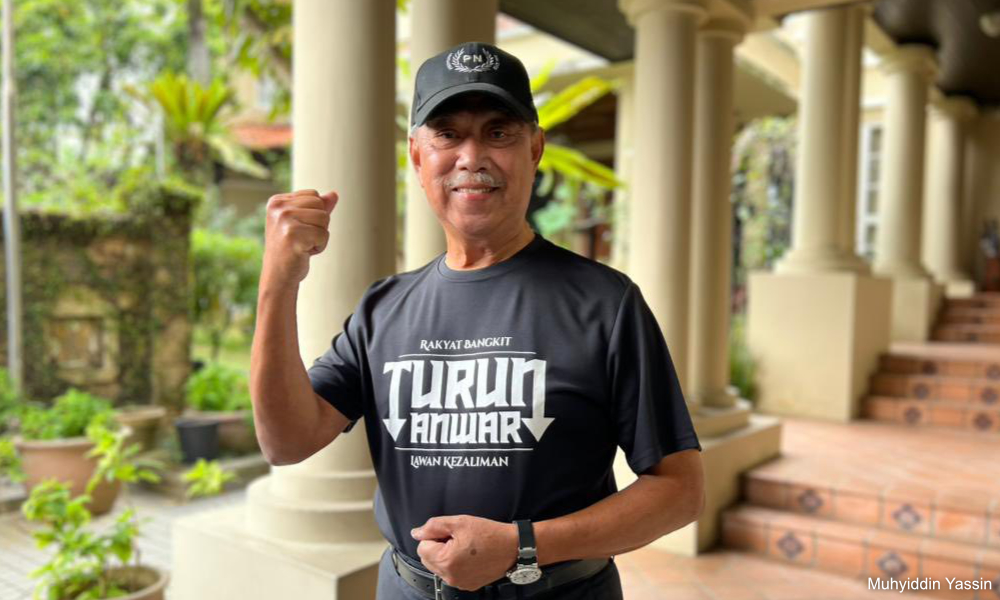
It is one thing to be critical; it is another to be selectively blind.
Perhaps it is easier to write elegant essays about the opposition than to confront the rot within one’s own camp.
But Malaysians are no longer impressed by flowery narratives - they want results, reforms, and integrity.
When that is missing from the government of the day, the opposition has a duty to step up, regardless of whether Liew finds them palatable.
The real question
Liew ends his piece asking for a better opposition. But let’s ask him: Can he name a better leader within Harapan to replace Anwar Ibrahim today?
Can he point to a coherent vision that binds Harapan beyond personality cults and anti-PN rhetoric?
Until he can answer that, his critique of PN is less about national concern and more about masking his own coalition’s intellectual and moral bankruptcy.
Let us not mistake verbosity for vision. Democracy in Malaysia does deserve better, especially in every aspect of the current Madani government leadership. - Mkini
DR AFIF BAHARDIN is a Bersatu supreme council member.
The views expressed here are those of the author/contributor and do not necessarily represent the views of MMKtT.

No comments:
Post a Comment
Note: Only a member of this blog may post a comment.