


Malaysia’s economy in 2025 saw an increase in average household income, a reduction in hardcore poverty, and the lowest unemployment rate in the past 11 years, said Economy Minister Akmal Nasir.
In a written parliamentary reply yesterday, the minister cited preliminary data from the Statistics Department (DOSM), outlining how Malaysia’s overall gross domestic product (GDP) is estimated to have risen by 5.7 percent in the first quarter of 2025.
“This growth is also supported by low inflation rates of 1.4 percent, reported in November 2025, and unemployment rates recorded at 2.9 percent, which is the lowest in 11 years, since November 2014,” Akmal said.
The minister also cited statistics from the 2024 Household Income and Expenditure Survey (HIES), which outlined that Malaysia’s average household income has risen as much as 3.8 percent, from RM8,479 in 2022 to RM9,155 in 2024.
“The rate of hardcore poverty has also reduced to 5.1 percent, from 6.2 percent within the same timeframe.
“The combination of robust economic growth, controlled inflation, a stable labour market, as well as rising incomes and poverty reduction, is proof that economic reforms have begun to yield results,” he added.
Akmal was responding to opposition leader Hamzah Zainudin (PN-Larut), who asked how far the current government has fulfilled its pledges on economic reforms, in light of rising inflation and the cost of living.
In October last year, a Finance Ministry report also cited Malaysia’s inflation as “relatively stable” at around two to three percent, despite periodic increases in minimum wage.
The report also stated that increasing the minimum wage and household purchasing power did not trigger excessive inflationary pressure, with the minimum wage set at RM1,700 in Budget 2025.
The report also stated that Budget 2026, which would be the first under the 13th Malaysia Plan (13MP), was set to mark a pivotal step towards achieving high-income status by 2030.
Aid payouts, reforms to continue
Meanwhile, in his parliamentary reply, the economy minister also highlighted the success of the government’s minimum wage policy and also cited the success of the Rahmah Necessities Aid (Sara) scheme, which was implemented since last year.
Akmal reiterated that the government would continue to assist the people in managing the cost of living by strengthening food security to curb price hikes, while offering aid, subsidies, and income-boosting initiatives, such as the Jualan Rahmah and Menu Rahmah initiatives.
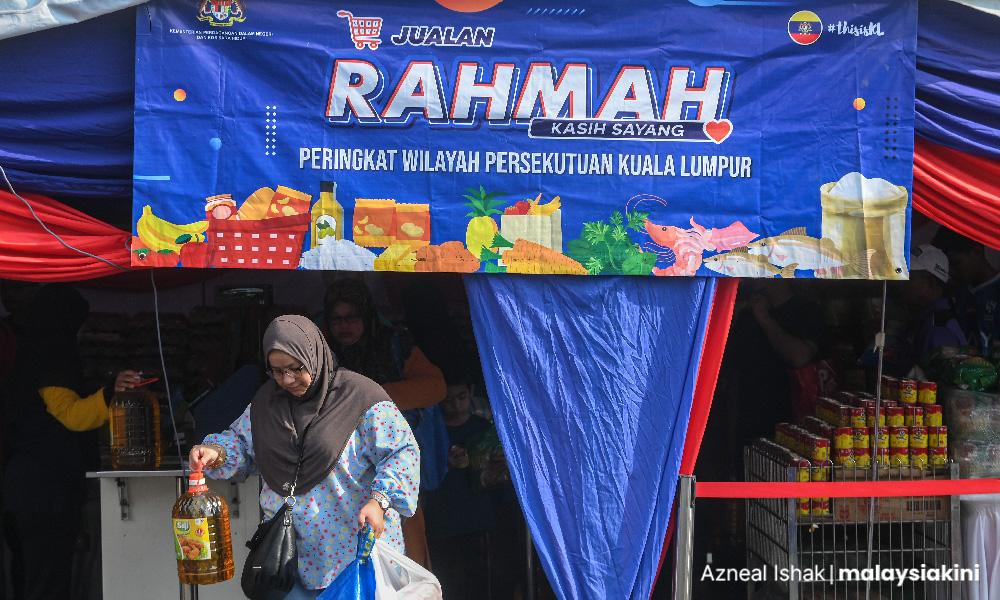
“Among these initiatives, Phase 1 of the Rahmah Cash Aid (STR), involving payments of up to RM500, has also been credited to recipients in stages starting Jan 20, 2026.
“Meanwhile, Sara payments of up to RM200 have also been credited to recipients’ identification cards progressively as early as Jan 9 this year,” he said.
He also stressed that the government would continue implementing structural reforms through the 13MP, while “raising the ceiling” and “raising the floor”.
“This includes restructuring the economy towards value creation, reforming the labour market, education, and housing, as well as specific measures to address the cost of living and increase people’s income.
“This is part of the government’s efforts to strengthen the nation's economic fundamentals and ensure long-term growth that is sustainable, inclusive, and competitive,” Akmal said. - Mkini

No comments:
Post a Comment
Note: Only a member of this blog may post a comment.