


Malaysians pay for national defence in good faith. Yet, corruption within the system has done more damage to our armed forces than any external enemy ever could.
For decades, political leaders have spoken about reforms while presiding over questionable defence contracts, opaque land deals, and endless procurement scandals.
The result is a simple but troubling question that increasingly plagues Malaysians: Who really defends the nation?
Every ringgit lost to corruption is money not spent on training, maintenance, or operational combat readiness.
Billions of ringgits have flowed into projects that were overpriced, delayed, or poorly executed. Ships arrive late or not at all. Systems underperform. Readiness suffers. Money disappears.
However, the deepest damage is not material. It is trust.
When defence contracts are hidden from scrutiny, when investigations drag on for decades, and accountability remains elusive, the message to the public is unmistakable - political elites appear insulated, while the public pays the price.

When leaders speak of zero tolerance without enforcing consequences, citizens stop believing the system is fair.
Top brass implicated
In late 2025, MACC launched a sweeping investigation into alleged bribery linked to army procurement contracts, prompting raids on several companies and the freezing of six bank accounts belonging to suspects and family members.
The army chief at the time was placed on leave, officially to avoid a conflict of interest, pending investigations.
However, we are aware of other major defence projects which continue to falter, like the littoral combat ships (LCS) project has suffered repeated cost overruns and delays.
No ship has been delivered despite billions of ringgits in payment, and delivery schedules got repeatedly revised.
Recently, the seriousness of these concerns surfaced. A former army chief and one of his wives were charged in court with money‑laundering offences involving more than RM2 million in alleged illicit funds.
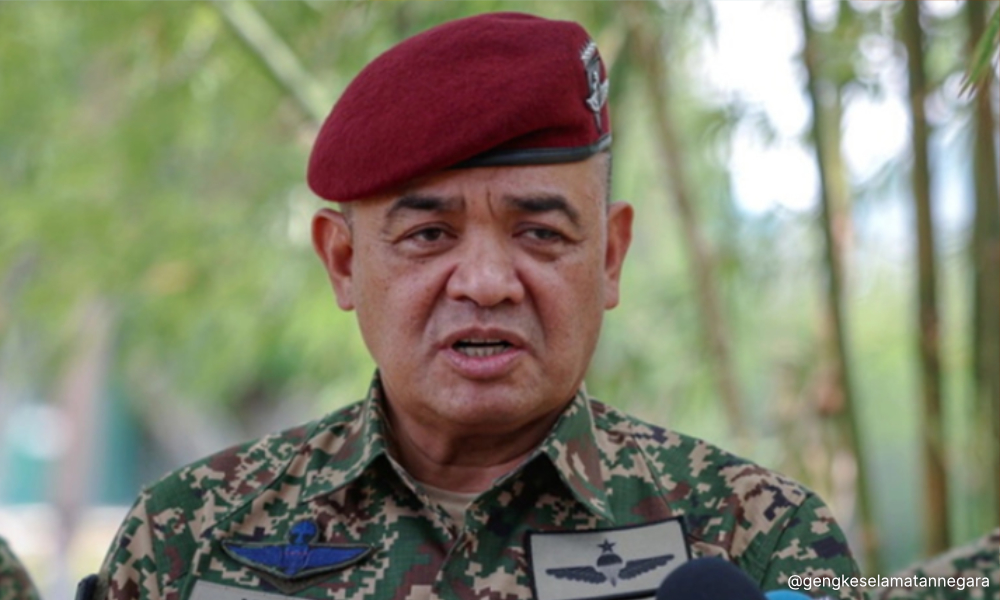
Both pleaded not guilty, and the cases remain before the courts.
The charges themselves, which were brought under anti‑money‑laundering laws, underscore the scale of the probe and the level of concern within enforcement agencies.
They also confirm what many Malaysians have long suspected: procurement corruption is not a minor issue confined to low‑level actors.
Freezing bank accounts, staging raids, and placing officials on leave may generate headlines but Malaysians want more than process. They want outcomes. They want accountability.
Sytemic failure
The rakyat is aware that this is not a bureaucratic hiccup. It is a systemic failure. The root of the problem is that defence‑related corruption in Malaysia did not begin in the last few years.
Parliamentary special select committee investigations and public statements by former defence minister Mohamad Sabu in 2019 highlighted questionable land swap deals involving ministry’s land, stretching back decades, with estimated losses in excess of RM500 million.
These deals involved 16 projects covering thousands of hectares of land and billions of ringgits in value, yet many details of the investigations remain classified.
When investigations span decades, administrations, and political parties, but few concrete prosecutions emerge, then it is no longer credible to dismiss them as isolated incidents.
The pattern points instead to weak enforcement, institutional reluctance, and political insulation from consequences.
Scorpene scandal
A case in point is the Scorpene submarine procurement which was once promoted as a landmark strategic acquisition. Instead, it has become a lasting symbol of unresolved controversy.
French prosecutors alleged misappropriation of hundreds of millions of euros linked to support contracts, and MACC investigations into related transactions have continued.
Former leaders have denied wrongdoing. No local convictions followed. If a defence procurement scandal from more than 20 years ago remains unresolved, Malaysians are entitled to ask how today’s system can be trusted to function any better.
These cases are not random. They reveal a recurring pattern involving the following: procurement decisions made with limited transparency and frequent reliance on direct negotiation, political oversight that tolerated, or perhaps enabled questionable approvals across successive governments, and investigations that begin years later, when evidence has faded and public attention has waned.
This is not bad luck. It is not inefficiency. It reflects a culture of permissiveness, weak oversight, and excessive secrecy, particularly in financial matters where secrecy is least justified.
National security requires operational secrecy. It does not require financial opacity.

The rakyat is not satisfied with the actions taken thus far. Freezing accounts is not enough. Raiding companies is not enough. Placing suspects on leave is not enough. Reopening old investigations is not enough.
These actions create activity, not justice.
What Malaysians deserve are the following:
Full disclosure of defence procurement contracts, with secrecy limited strictly to genuine operational needs.
Independent parliamentary oversight that is not beholden to the executive.
Clear, timely outcomes from anti‑corruption investigations.
An end to routine procurement exemptions that bypass open competition.
Strong, enforceable whistleblower protections.
Without these reforms, transparency remains cosmetic.
Decades of inaction
Malaysia’s defence integrity crisis did not begin today. It began decades ago, and it persisted because complacency was allowed to replace accountability.
What has changed is public awareness and our patience.
Malaysians are no longer willing to accept reassurances while scandals resurface again and again. For too long, corruption in defence has been treated as a management issue rather than what it truly is: a national emergency.
The armed forces are entrusted with defending the nation. Corruption within weakens them from the inside.
And Malaysians should not merely hope for accountability. They should demand it. - Mkini
MARIAM MOKHTAR is a defender of the truth, the admiral-general of the Green Bean Army, and the president of the Perak Liberation Organisation (PLO). Blog, X.
The views expressed here are those of the author/contributor and do not necessarily represent the views of MMKtT.

No comments:
Post a Comment
Note: Only a member of this blog may post a comment.