


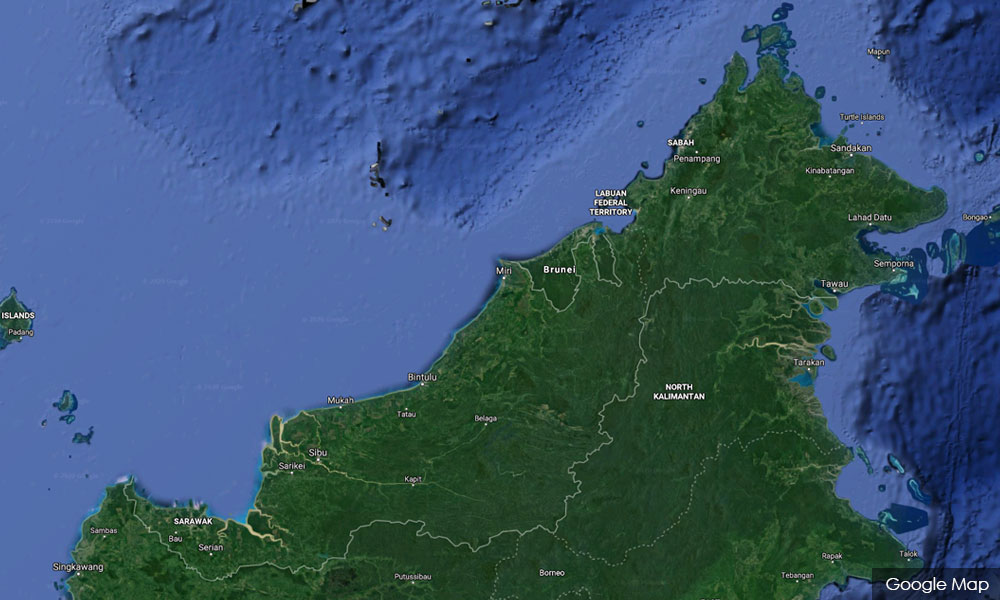
The Environment, National Resources, and Sustainability Ministry (NRES) has disputed reports claiming that Malaysia has ceded thousands of hectares of territory as “compensation” for three villages in Pulau Sebatik, along the Sabah-Kalimantan border.
In a statement today, its minister Arthur Joseph Kurup said the negotiations to survey and mark the borders between the two countries were done harmoniously based on pre-existing agreements, and not on “reciprocity, compensation, or profit-and-loss”.
While the agreement was finalised through a bilateral memorandum of understanding on Feb 18 last year, it was the culmination of over 45 years of technical negotiations.
“Through agreements between both countries, a scientific survey was carried out based on previously signed agreements to determine the border accurately.
“The decision was reached through a long technical process involving experts from the Survey and Mapping Department and security agencies.
“Every inch of the adjustment was made based on international law (Boundary Convention 1891, Boundary Agreement 1915, and Boundary Convention 1928) and accurate geospatial coordinates, not based on political concessions,” he said.
Arthur said media reports yesterday suggesting that Malaysia has ceded 5,207ha of territory - an area larger than Putrajaya - as compensation for gaining the three villages are “inaccurate”.
Strategic value
The statement does not address the extent of the territorial changes following the border settlement.
Instead, Arthur emphasised the strategic value of having borders recognised by neighbouring countries and the international community.
“This recognition is more significant than maintaining disputed areas that don’t have a legal basis.
“The final determination of the border will strengthen the country's legal position at the international level, as well as closing the door to larger territorial claims in the future,” he said.
Yesterday, the Indonesian news outlet Tempo reported that Malaysia had ceded territory to Indonesia as compensation for “gaining” Kampung Kabulangalor, Kampung Lepaga, and Kampung Tetagas that are now on the Malaysian side of the border.
The three villages are located on Pulau Sebatik, off the southeastern coast of Sabah, and are bisected by Malaysian territory on the northern half of the island and Indonesian territory on the southern half. - Mkini

No comments:
Post a Comment
Note: Only a member of this blog may post a comment.