


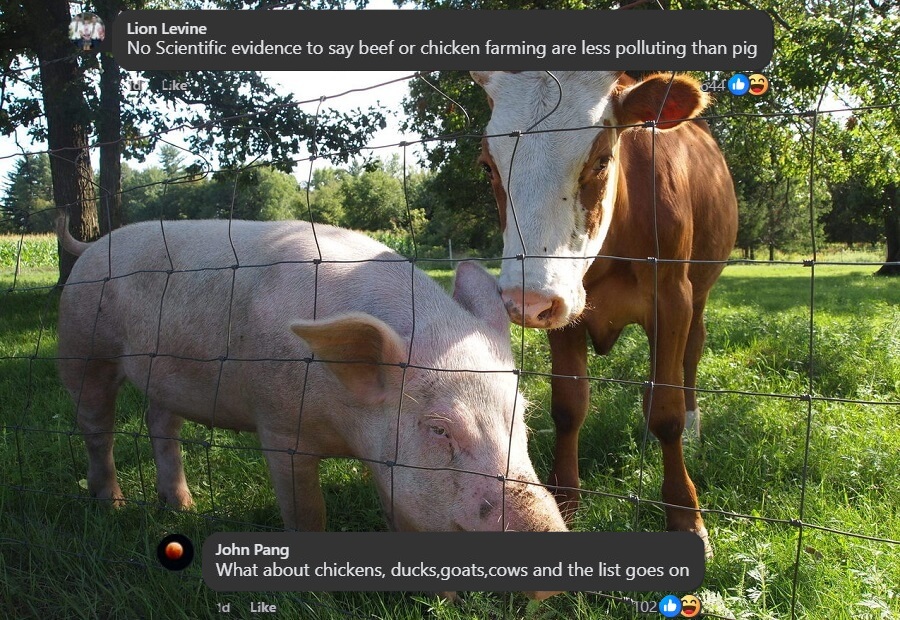
PROMPTED by the intriguing exchanges between the “no pork, no power” gang and the anti-swine farming fraternity following Sultan Sharafuddin Idris Shah’s big NO to pig farming in Selangor, FocusM has turned to Google AI to verify if indeed rearing hogs is detrimental to men’s surrounding.
Recall that the Selangor ruler does not consent to pig farming being carried out in any district in the state, citing environmental concerns, limited land resources and the need to protect public well-being. Export.
As a solution, His Highness suggested that the state government issue licences for the importation of pork to meet the demand and needs of non-Muslims, particularly the Chinese community, in Selangor.
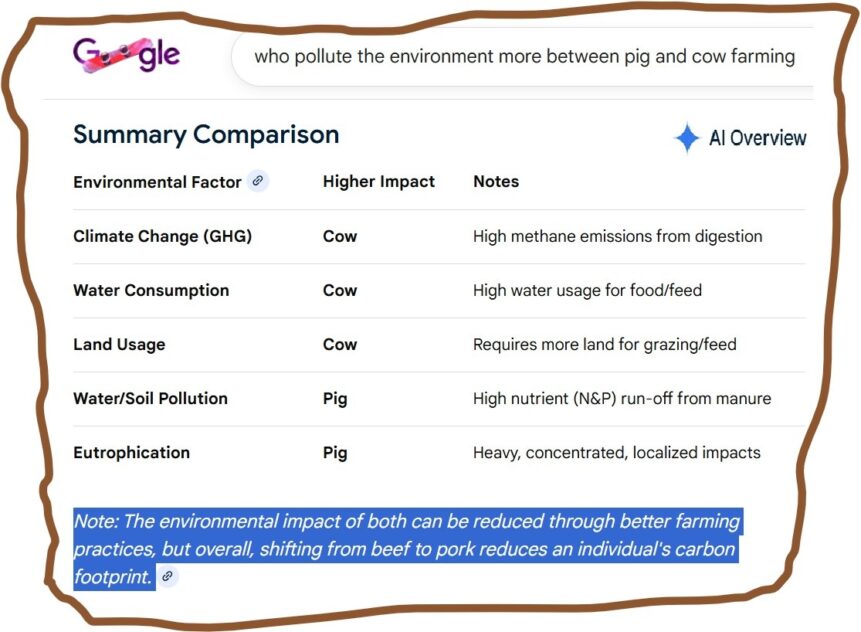
Shockingly, ‘jury’ Google AI contended that “cow farming pollutes the environment significantly more than pig farming across major metrics like greenhouse gas emissions, land use and water consumption”
To the question “who pollute the environment more between pig and cow farming”, Google AI further remarked that while pigs have a reputation for being “dirty”, scientific data consistently ranks beef as having the highest environmental footprint of all common proteins.
“Beef production emits approximately 11 times more greenhouse gases than pork,” stated the overarching research and development division within Google dedicated to advancing artificial intelligence technologies.
This is primarily because cows are ruminants; their unique digestive system produces massive amounts of methane through belching (enteric fermentation).”
“Raising cattle is highly resource-intensive, requiring roughly 20 times more land than pig farming per gram of protein … Beef production typically requires significantly more water – some estimates suggest up to 75% more than pork.
In all fairness, both industries contribute to water pollution through manure run-off which can cause eutrophication (algal blooms that kill aquatic life).
“While pig farms often utilise concentrated “slurry lagoons” that pose high local risks, cow farms are the primary source of ammonia emissions and significant bacterial contamination in groundwater,” claimed Google AI.
To the question “which is more environmentally friendly between pig and cow farming”, Google AI again remarked that pig farming is generally more environmentally friendly than cow (beef) farming on grounds that the former produces significantly lower greenhouse gas emissions, requiring less land and using less water per gram of protein.
But this comes with a caveat that although beef produces roughly five times more heat-trapping gases per calorie compared to pork, “industrial pig farming poses significant, localised pollution risks through waste while cows contribute higher methane emissions”.
To alleged foul smell complaints of residents who live close-by to pig farms, Google AI attributed this to the high volume of waste (urine and faeces) that produces ammonia.
However, it again caveated that the severity depends largely on the farm management with intense, poorly managed operations often emitting strong odour issues but “with proper ventilation, frequent cleaning and in some cases, deep bedding, the odour can be significantly reduced”.
Beef farming is not spared either for it, too, can produce significant, strong odours, particularly in concentrated animal feeding operations (AFOs) which is
“often described as smelling like manure or rotten eggs due to hydrogen sulphide”.
“Odour levels depend on factors like herd size, manure management and diet. While often unpleasant, these odours are a normal part of livestock farming,” added Google AI. – Focus Malaysia

No comments:
Post a Comment
Note: Only a member of this blog may post a comment.