KUALA LUMPUR: Keretapi Tanah Melayu Berhad (KTMB) is extending its Southern Shuttle rail service to cover the Paloh–JB Sentral route effective Aug 8.
The expansion introduces a direct rail link traversing central Johor, connecting seven stations: Paloh, Kluang, Renggam, Layang-Layang, Kulai, Kempas Baru, and JB Sentral. The full journey from Paloh to JB Sentral would take approximately 120 minutes.
Implemented less than three months after the service's initial launch on June 16, the route utilises part of the Gemas–Johor Bahru Electrified Double-Track Project (PLBEGJB) alignment.
"The extension is a strategic initiative by the Transport Ministry to provide a direct rail link between suburban areas and the key economic hubs of Kulai and JB Sentral," KTMB said in a statement on Monday (Aug 3).
Covering the districts of Kluang, Kulai, Pasir Gudang, and Johor Bahru, the service has the potential to benefit roughly 2.5 million residents. Since its debut, which initially covered the Kulai–JB Sentral and Kempas Baru–Pasir Gudang routes, the service has recorded 3,209 passengers.
The upgraded service will run 10 trips daily, five northbound and five southbound, with each train accommodating up to 400 passengers.
To cater to early-morning daily commuters and workers heading into Singapore, the earliest train from Paloh departs at 3.55am, arriving at JB Sentral by 5.52am. The final train leaves JB Sentral at 8.30pm, arriving in Paloh at 10.27pm.
Train schedules are integrated at Kempas Baru station, allowing transfers to the Kempas Baru–Pasir Gudang route and linking central Johor to the Pasir Gudang industrial zone.
In conjunction with the extension, KTMB is offering promotional fares until new electric trains are delivered.
A one-way fare between Paloh and JB Sentral would cost RM7.70, down from the standard RM15.30 rate. Destination-specific pricing applies for shorter legs.
Additionally, the Southern Shuttle Madani Commuter Card would be valid along the expanded route until Sept 16, 2026.
The MyRailLife Pass would also be extended for the Southern Shuttle from Aug 8 until Dec 31, 2026, offering free travel to children aged 4–6, primary/secondary students, and persons with disabilities (OKU).
Commuters are advised to plan their journeys using the KITS Style mobile app, visiting www.ktmb.com.my, or checking KTMB’s official social media channels. - Star
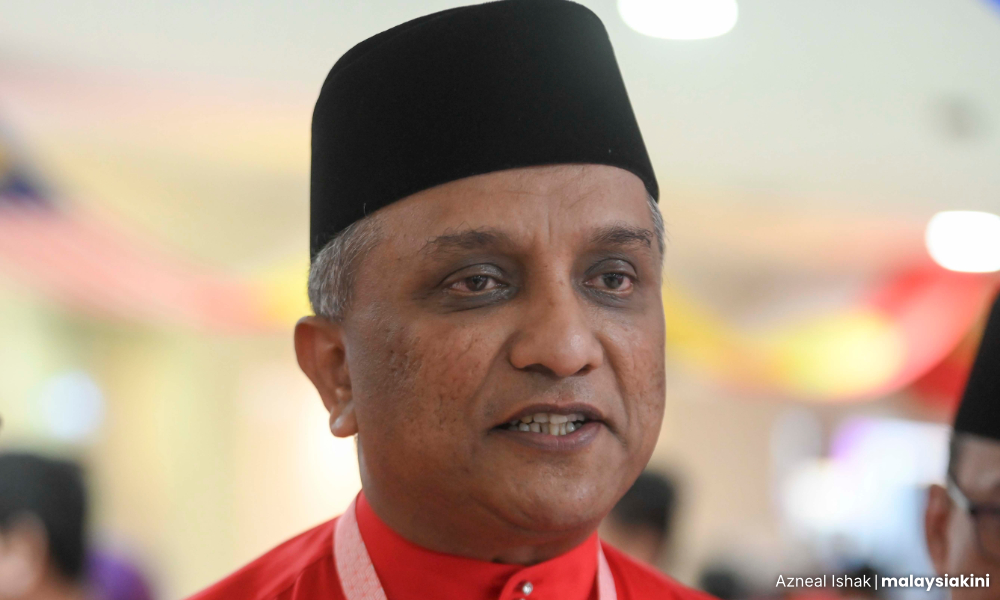
Perikatan Nasional deputy chairperson Tuan Ibrahim Tuan Man expressed confidence that his coalition would be part of the Negeri Sembilan administration, in view of their pact with BN.
“The party will make a decision and is confident that PN will become part of the state administration, as decided earlier.
“However, the number of excos will be decided in the next meeting, which will be conducted soon,” the PAS deputy president told Malaysiakini.
In the Aug 1 polls, PN won seven seats - with PAS winning four and Parti Wawasan Negara securing three. Umno captured 16 seats for BN, while MCA won the remaining two.
Crime
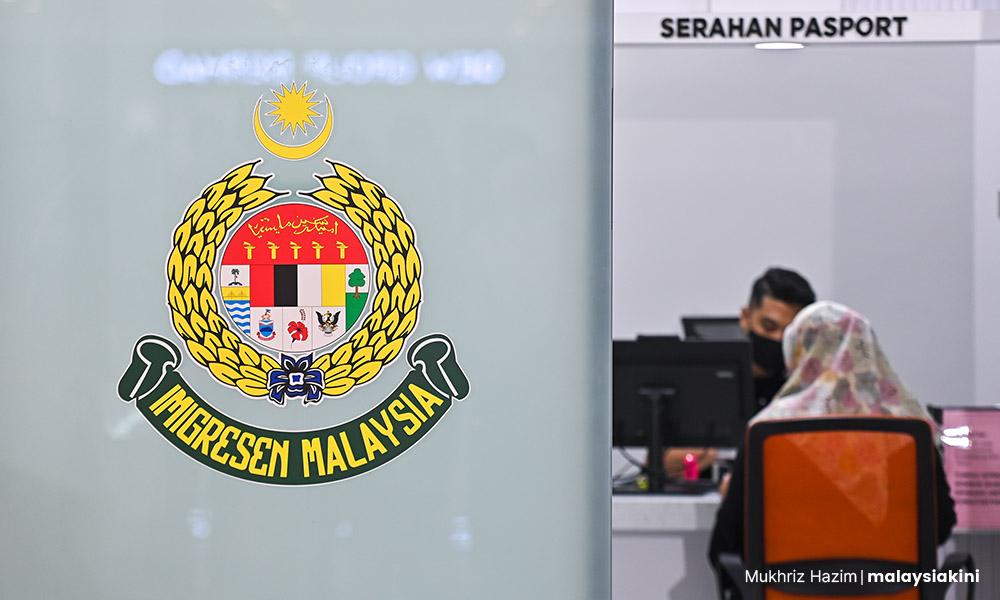
MACC has arrested another five immigration officers believed to be involved in the alleged hacking of the Malaysian Immigration System to issue fraudulent approvals of Temporary Employment Visit Passes.
Citing sources, Harian Metro said the suspects, four men and one woman aged in their 30s and 40s, were nabbed at 1pm yesterday at the MACC headquarters. Five mobile phones were also confiscated.
MACC chief commissioner Abd Halim Aman confirmed the arrests, stating that the case is being investigated under Sections 17(a) and 16(a) of the MACC Act 2009. - Mkini
Less than three weeks after coming into power, the Pakatan Harapan government and Prime Minister Anwar Ibrahim appeared to deliver on one of its most prominent pre-election pledges: ending political appointments.
Long said to be a “little extra income” for party affiliates, supporters, hangers-on, and sycophants, such appointments were extended to civil servants - past and present. It was also a backdoor entry for party leaders who lost in the elections.
I then wrote: “The appointment of competent and qualified people to the helm will help restore the prestige and stature of these bodies, which have often been accused of using them as their personal fiefdom.
“Their appointments must be decided by an independent and competent body and the candidates must be selected irrespective of colour or creed and the KPIs set.”
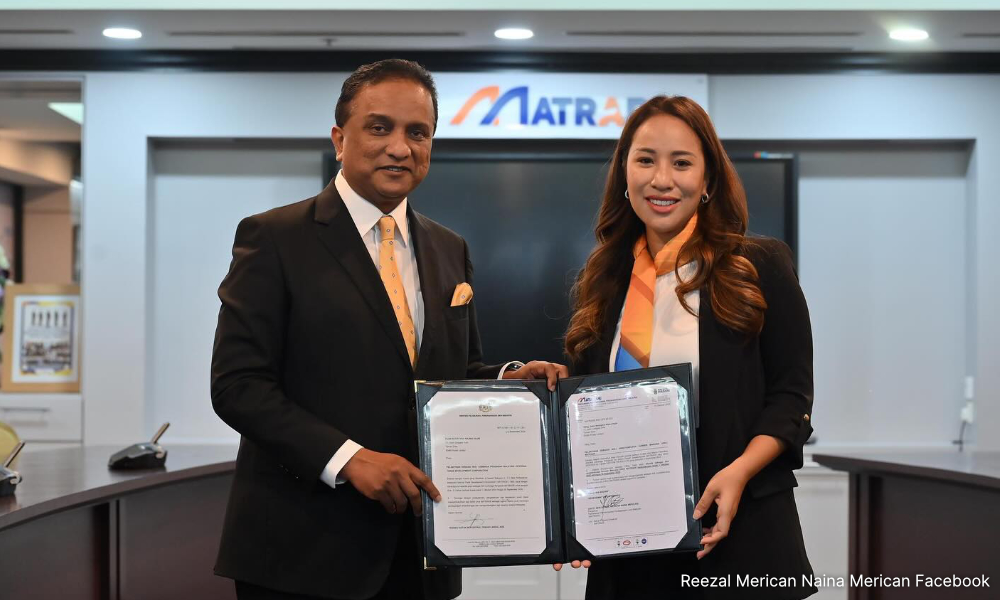
But it did not last long. Little by little, political appointments returned. By May the following year, Umno leader Reezal Merican Naina Merican was made Matrade chairperson.
His was among a series of political appointments involving Umno figures after the 15th general election, part of Umno’s machinations to retain its influence in government, and later take power.
However, it was the appointment of Nooryana Najwa Najib, daughter of former prime minister Najib Abdul Razak, to the board of the Matrade that drew the most attention and indicated Umno’s grip on Anwar.
From reform pledge to political patronage
This trend continued, and the Institute for Democracy and Economic Affairs (Ideas) flagged 238 political appointments to federal statutory bodies (FSB) and GLCs under Anwar’s administration.
In its report, titled “Who Sits at the Table: From Political to Public Appointees in Malaysia’s Federal Statutory Bodies”, released in March, the think tank found that 222 political appointments were made to FSBs, while another 16 were to GLCs.
“The appointments, made between August and October 2025, revealed that while Harapan parties largely - though not entirely - honoured the pledge, BN, particularly Umno, flouted it, resulting in a flood of its members into plum positions.”
Reezal and Nooryana Najwa Najib
Did Anwar break his promise? When asked about the appointments in late 2022, he reportedly quipped that the public can expect some political appointments to be made in GLCs, dismissing suggestions that he is outright against the idea.
“I never said that individuals involved in politics cannot be part of (GLC) management. However, they should be bound by certain conditions and have the required qualifications in the relevant fields.
“There is a possibility that several political figures or MPs will be assigned (to GLCs), but we will set the guidelines on the required level of an individual’s professional ability, his past performance, and compliance with the rules of governance.”
Changing stance
ADS
But by May last year, he appeared to shift his position.
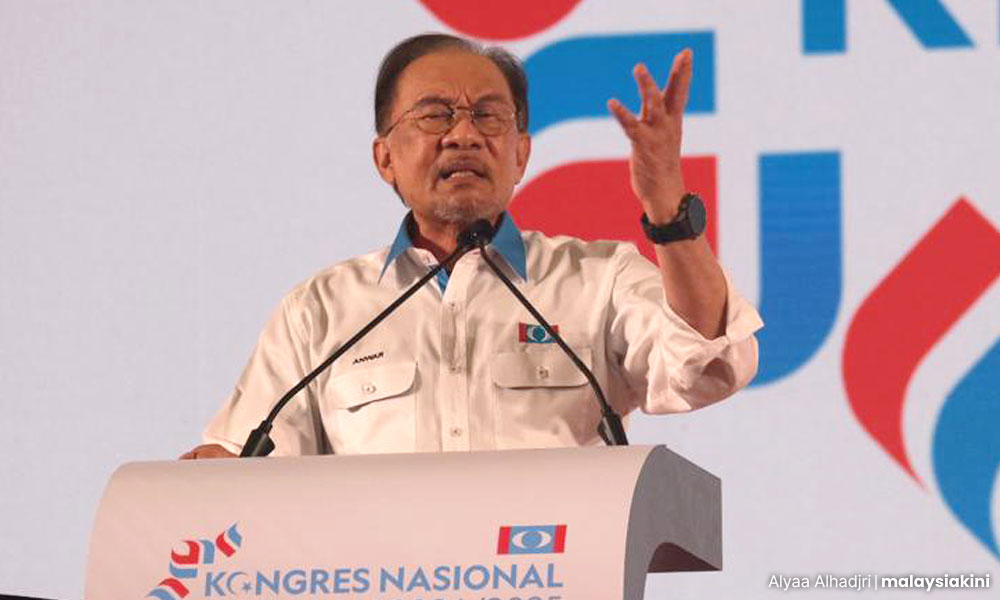
A Malay Mail report cited Anwar during his winding-up speech at the PKR national congress, where he said appointments are a “reward” that individuals deserve for their service and contributions to the success of the political party that eventually forms the government.
The immediate retort came from Ideas: “This narrative sends a dangerous message that public roles can be handed out like political souvenirs, rather than earned through merit and competence.”
The royal commission of inquiry report on the mismanagement of Tabung Haji was explicit – apportioning blame, among others, to politicians who sat on the boards of the organisation and subsidiaries.
Political involvement in its management, which extended to after the change of government from BN to Harapan in 2018, undermined the institution’s credibility and influenced key financial decisions, the report noted.
This exposed the pilgrimage fund’s decisions to political criticism and ultimately damaged public confidence in the institution, the report read.
The inquiry found that political considerations influenced major financial decisions, including the rate of profit distribution, or hibah, haj payments, and the provision of haj financial support.
A passive director
In response, former Tabung Haji chairperson Abdul Azeez Abdul Rahim maintained that he had no absolute authority over the pilgrimage fund’s management, saying he only played a non-executive role during his 2013-2018 tenure.
Azeez stressed that he was not involved in the fund’s daily operations or investment decisions, explaining that all proposals were vetted by Tabung Haji’s management before being served to the board.
Ex-Tabung Haji chairperson Abdul Azeez Abdul Rahim
According to the former Baling MP, the board met once a month to deliberate on papers that covered investment proposals, governance matters, bonus and hibah payments, as well as other administrative issues.
“I had no authority to sign cheques or ask people what they were doing. No, no. Everything would only be reported to the board every month,” Azeez added.
But the Companies Commission states that a director must exercise reasonable care and skill expected of a person of his experience and be diligent in managing the company's affairs.
“Thus, there is no such thing as a passive director. A director who is passive by not being involved in the company’s management may have breached his duty of care, skill, and diligence.
“When evaluating significant deals, contracts, new hires, investors, and business partners, directors may rely on the advice or opinion of the board member, engage experts or professional consultants who are believed to be reliable and competent to provide information.”
So, Azeez’s assertions and excuses are indefensible. Is he admitting incompetency or a breach of the Companies Act by being ignorant of his statutory duties?
Test of Anwar’s reform credentials
Anwar came to power promising to dismantle the patronage system. Less than three years later, that promise lies in tatters. The revolving door of political appointees has swung wide open, ushering in Umno warlords and party loyalists who treat statutory bodies and GLCs as spoils of victory.
The Tabung Haji scandal is proof of what happens when politics infects governance: credibility collapses, financial decisions are warped, and public trust evaporates.
To describe appointments as “rewards” is to reduce public institutions into political spoils - a contradiction of the reformist agenda Anwar campaigned on and a dangerous precedent for Malaysia’s future.
The question now is whether Anwar is willing to confront this contradiction.
Will he review these appointments and follow the principle of merit-based governance, or will he allow Umno’s grip to tighten and let reform remain only a slogan?
If he fails to confront this rot, history may not remember him as the leader who promised change, but as the prime minister who allowed political expediency to overwhelm reform.
Malaysia deserves better than recycled patronage presented as governance. - Mkini
R NADESWARAN is a veteran journalist who strives to uphold the ethos of civil rights leader John Lewis: “When you see something that is not right, not fair, not just, you have to speak up. You have to say something; you have to do something.” Comments: citizen.nades22@gmail.com.
The views expressed are those of the writer and do not necessarily reflect those of MMKtT.