`


THERE IS NO GOD EXCEPT ALLAH
read:
MALAYSIA Tanah Tumpah Darahku

LOVE MALAYSIA!!!


Thursday, November 26, 2026

MCA Youth calls for tailored education and early intervention for children with disabilities


MCA Youth has called for more individualised special education curricula, expanded early intervention services and stronger financial support for families of children with learning disabilities, saying Malaysia’s education system must better accommodate their diverse needs.

The party’s Youth Education Consultative Committee chairman Ong Chee Siang said children with learning disabilities may not have outward physical signs of disability, leaving their social, behavioural and communication differences vulnerable to misunderstanding, exclusion and bullying.

He commended The Star‘s Nov 25 coverage of the challenges faced by these children, and said integrating them into school routines, co-curricular programmes and social activities could help foster greater empathy and inclusiveness among students and educators.

Ong also welcomed the Education Ministry’s intention to introduce dedicated autism classes next year, but cautioned that learning disabilities encompass a wide range of cognitive, sensory and developmental needs.

“Even across the autism spectrum, cognitive and sensory profiles vary widely. A one-size-fits-all approach fails learners. Autistic pupils cannot simply be lumped into the same classrooms as children with Down Syndrome or other developmental delays,” he added.

He said the ministry should develop appropriately tailored syllabuses and curricula instead of treating children with different developmental conditions as having identical educational needs.

”Malaysia can draw lessons from developed countries. Singapore differentiates special education curricula according to pupils’ abilities, including life-skills-based programmes and national curriculum pathways for autistic learners with appropriate cognitive abilities, alongside targeted support in mainstream schools,” he remarked.

“Australia also provides specialised support units within mainstream schools, with Individual Education Plans, higher staffing support and opportunities for pupils to participate in mainstream activities.”

However, Ong said improvements to classroom arrangements alone would not be sufficient if children were unable to access early intervention services in a timely manner.

He claimed some families faced waiting periods of six to nine months at public hospitals for therapy services, and urged the government to expand access through several measures.

These include deploying speech, occupational and clinical therapists to Klinik Kesihatan and Community Rehabilitation Centres (PDK), which could bring services closer to families.

He also proposed means-tested therapy vouchers for B40 and M40 households waiting for public services, allowing them to seek help from accredited private centres or non-governmental organisations such as the National Autism Society of Malaysia (NASOM).

Ong further called for existing tax reliefs to be converted into refundable tax credits or direct cash grants so that lower-income families who do not pay income tax could benefit from financial assistance.

The scale of the need is reflected in government statistics. According to the Department of Statistics Malaysia’s (DOSM) Person with Disability Statistics, Malaysia, 2025, learning disabilities accounted for 326,387 registered persons, or 40% of all registered persons with disabilities (PWDs), making it the largest disability category.

DOSM’s Children Statistics, Malaysia, 2026 also recorded 188,140 children aged between zero and 18 with learning disabilities in 2025, representing 82.5% of registered children with disabilities.

Among children aged six to 12, registrations increased 15.4% to 100,279, the report said.

“These figures highlight the urgent need for greater investment and specially designed syllabi calibrated to their diverse educational needs,” Ong noted.

He said Malaysia’s special education system should recognise individual differences and ensure children receive the support necessary to learn, participate and develop their potential.

“Every child deserves the opportunity to learn, participate and develop their potential. Our special education system must recognise individual differences, provide the right support and ensure that no child is left behind,” he said. ‒  Focus Malaysia

“Modern invasion” looms as China factory brings own ecosystem to Malaysia – from staff to canteen operators


“NEOCOLONIALISM” refers to indirect economic, political or cultural dominance by powerful states or corporations over less powerful nations or groups without formal territorial annexation.

This seems to be the inherent fear in a couple of Thread posts highlighting the workings of production plants with origins from mainland China.

According to Threader Connaught Pua (@connaughtpua), China-based companies are going global and seemingly eating into domestic economies as they spread their tentacles worldwide.

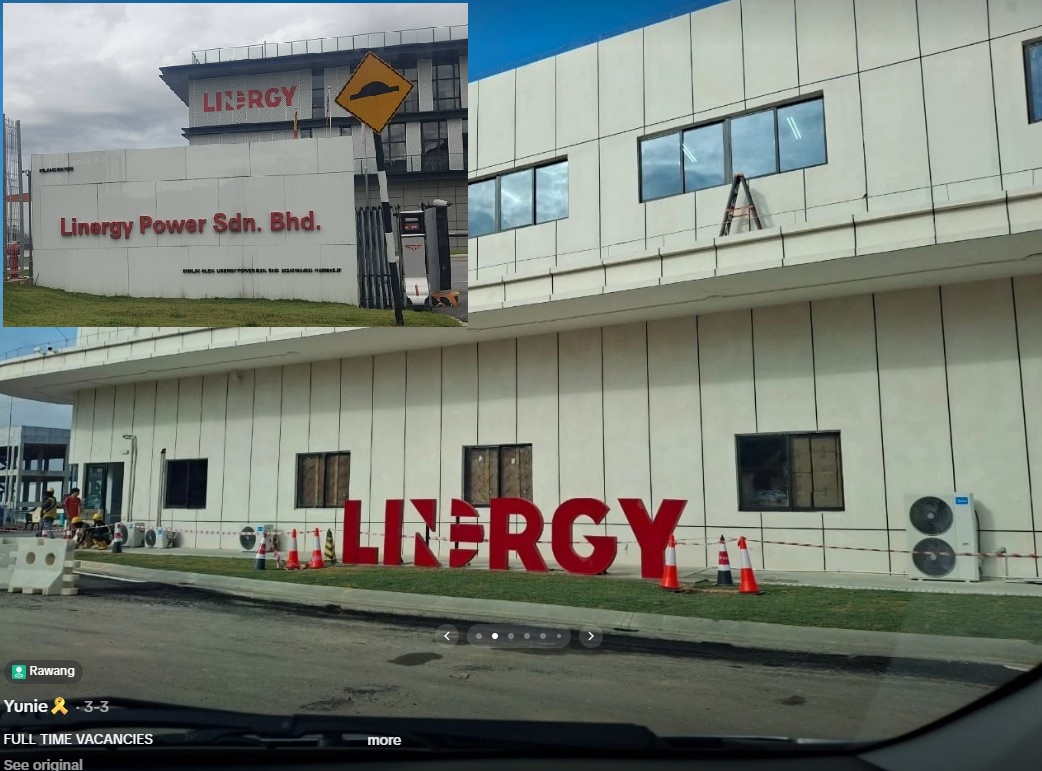
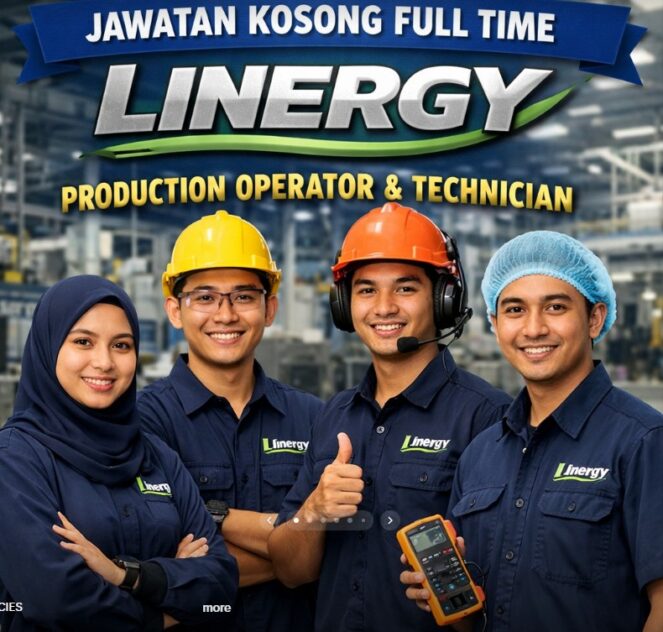
The poster had earlier given a ride to some employees of Linergy Power Sdn Bhd, a China-based manufacturer of lithium batteries for electric vehicles (EV) with a 2,000+ manpower headcount Malaysian operation.

They were mainly staff from China with local recruits being only designated junior positions.

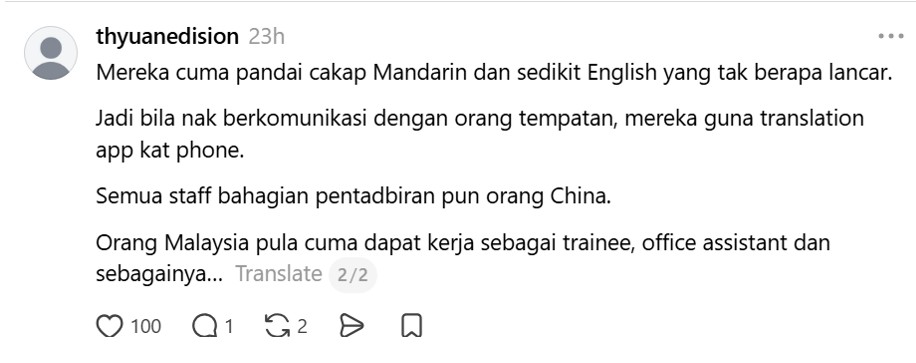
Ironically, these predominantly Mandarin speakers would communicate with Malaysians using translation apps and even had a canteen replete with chefs from their homeland to ensure their needs are well taken care of while underlining their growing numbers.

Editor’s Note: Established in December 2024 and operating out of Rawang, Linergy Power originated with ties to China’s Ampace Technology Ltd before Japan’s TDK Corp agreed in May 2026 to acquire full ownership via its Singapore unit, Amperex Technology (S) Pte Ltd.

These concerns were echoed in a number of comments that asked the obvious question. One commenter openly challenged Prime Minister Datuk Seri Anwar Ibrahim by asking if this is how China intends to improve the domestic economy.

Another concerned citizen queried how locals are going to “cari makan” (earn a living).

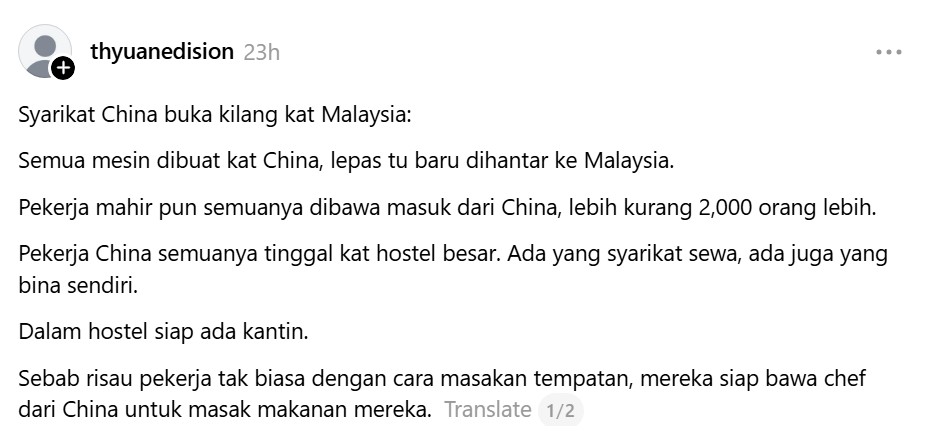
This sense of locals being sidelined by powerful foreign corporations were also echoed by thyuanedision (@thyuanedision) who claimed that all machinery was shipped from China while staff were predominantly Mainlanders.

Alluding to the original post by @connaughtpua, it was again reiterated that Malaysians were only offered “trainee and office assistant” positions, insinuating a closed-door operation that actively sidelined local participation.

One commenter called it “modern colonisation” where an ecosystem that excluded local participation was put in place.

It was also noted by another observer who could not hide his contempt for politicians for allowing such “foreign investment that didn’t benefit local populace”.

It was also asked wasn’t it a requirement for companies to have a certain number of locals, notably 80%, in its workforce (the Investment, Trade and Industry Ministry a.k.a. @mitimalaytsia was tagged in the query).

It was then insinuated that these wayward companies would use loopholes in the visa requirements allowing their workers to bypass local employment regulations.

Editor’s Note: In Malaysia, hiring foreign nationals is governed primarily by the Employment Act 1955 (specifically Section 60K), the Immigration Act 1959/63 and policies set by the Human Resources Ministry as well as the Home Ministry.

Rather than a single universal ratio for all companies, Malaysia enforces a national workforce cap, sector-specific quotas/ratios (for foreign workers on Temporary Employment Visit Passes) and prior-approval rules requiring employers to prioritise local talent.

Needless to say, unhappiness at enforcement agencies and politicians supposedly in charge of such matters was aplenty.

One even tagged MITI Minister Datuk Seri Johari bin Abdul Ghani as he pleaded to the authorities to investigate companies that do not adhere to local laws.

The sentiment was overwhelmingly negative as many saw it as investment that only benefitted foreign companies. It was argued that there are many more foreign companies taking advantage of local scenario to reap benefits at the expense of locals.

Justified or not, there are many Malaysians who view such foreign companies as being of little or no economic benefit to locals. It is strictly one-way traffic as far as benefits are concerned.

Perhaps, some form of explanation could be offered by the relevant authorities (such as the Immigration Department and MITI) for the existence of such enterprises that hire so many foreigners or would that be hoping for too much? 

- Focus Malaysia
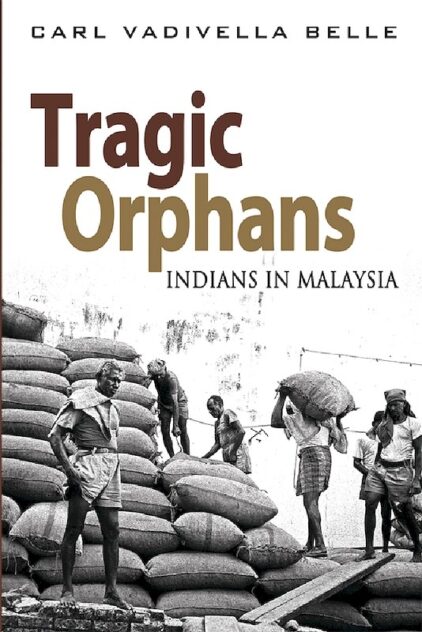
Beyond rubber estates: The forgotten roles of professional Indian forefathers in nation building


WE often hear an oversimplified narrative about British Malaya:

The Chinese came to do business. The Indians came to work on rubber estates. The Malays remained in their kampung.

But this familiar story leaves out an enormous part of our economic and social history.

The reality was far more complex.

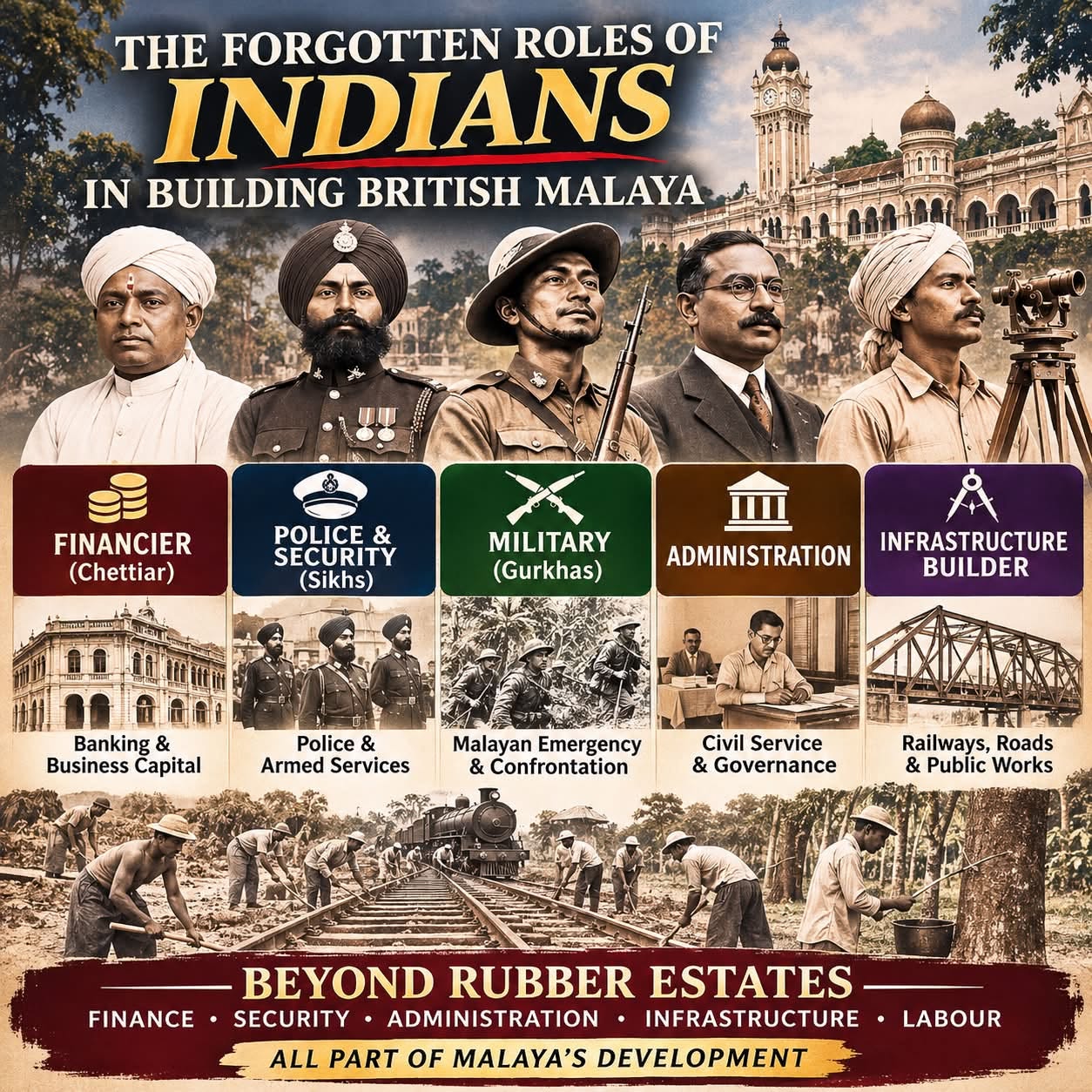
💰 Who financed Chinese tin mining empires?

When Chinese entrepreneurs needed capital to open tin mines, purchase equipment, hire workers and expand their businesses, where did the money come from?

Not all of it came from British banks or Chinese merchants.

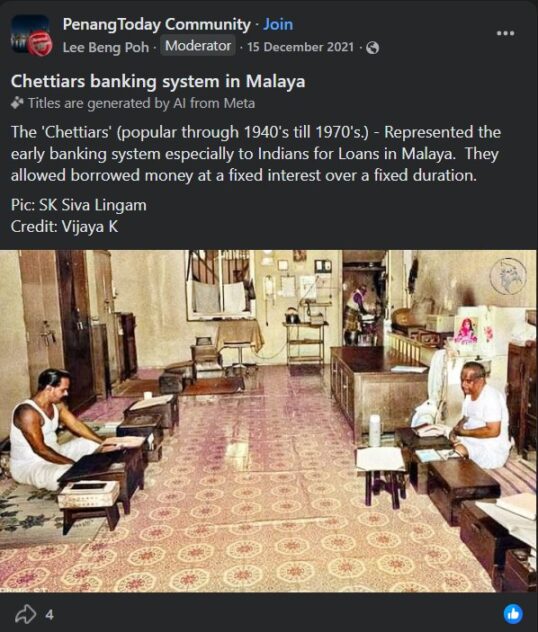
South Indian Nattukottai Chettiar banking networks were among the important sources of commercial credit in British Malaya.

Their financial networks provided loans to Chinese tin miners, rubber plantation owners, merchants, property investors and Malay landowners even the Ruler or Sultan.

These networks connected capital across India, Malaya, Singapore and other parts of Southeast Asia.

Indian financiers were therefore not simply participants in the colonial economy. They helped finance its expansion.

👮 Establishing Malaya’s early police and security forces?

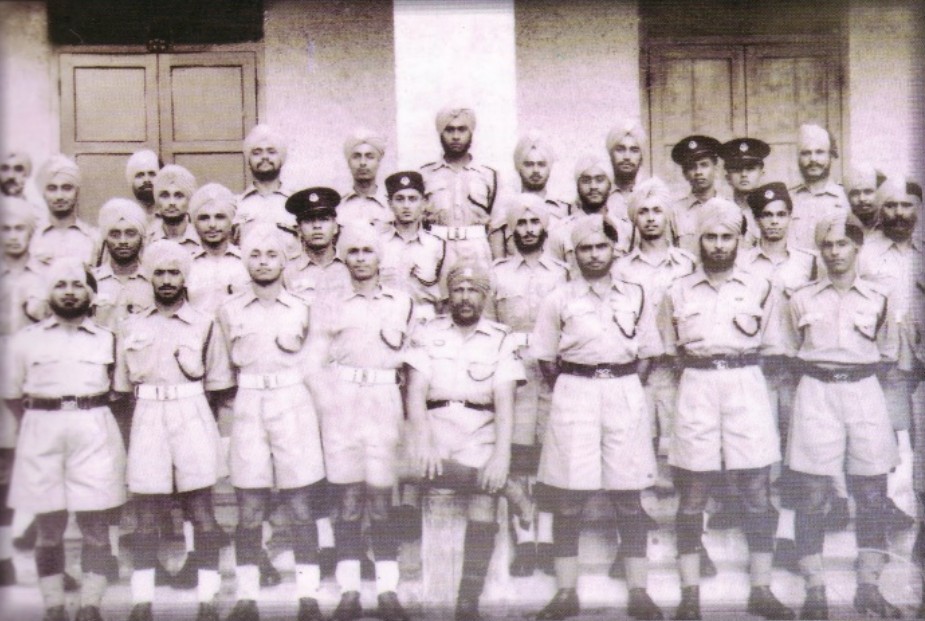
From the 1870s, Punjabi Sikhs from British India were recruited into the police and armed services.

They served in colonial police forces, security units, prisons and other institutions responsible for maintaining order.

Their presence became an important part of the security infrastructure of British Malaya.

But their role also reflected the colonial administration’s reliance on recruited forces to maintain British authority.

A platoon of Sikh recruits after completing basic training at Police Training Centre Jalan Gurney, Kuala Lumpur in 1957 (Image credit: Gurdwara Sahib Pulapol, KL)

⚔️ Who fought during the Malayan Emergency?

Another often-overlooked military contribution came from Gurkha soldiers who were recruited primarily from Nepal.

Although Gurkhas were not an Indian ethnic community, many served historically through the British Indian Army and later British military formations.

They played significant roles during the Malayan Emergency (1948-1960) and the Indonesia-Malaysia Confrontation (1963-1966).

Their history demonstrates that Malaya’s military development was connected to manpower networks extending far beyond the peninsula.

🏛️ Who helped run the colonial administration?

British Malaya was not administered by British officers alone.

Indians also served as clerks, interpreters, teachers, legal professionals, technical assistants, revenue officers and other government employees.

They helped maintain records, support communications, operate public services and implement administrative procedures.

English-educated Indians alongside members of other communities became part of the professional and clerical workforce supporting colonial government institutions.

Their contributions were essential to the everyday functioning of public administration, even though senior political authority remained largely concentrated in British hands and local ruling institutions.

🚂 Who helped build Malaya’s infrastructure?

The railways, roads, bridges, ports, drainage systems and public buildings of British Malaya did not construct themselves.

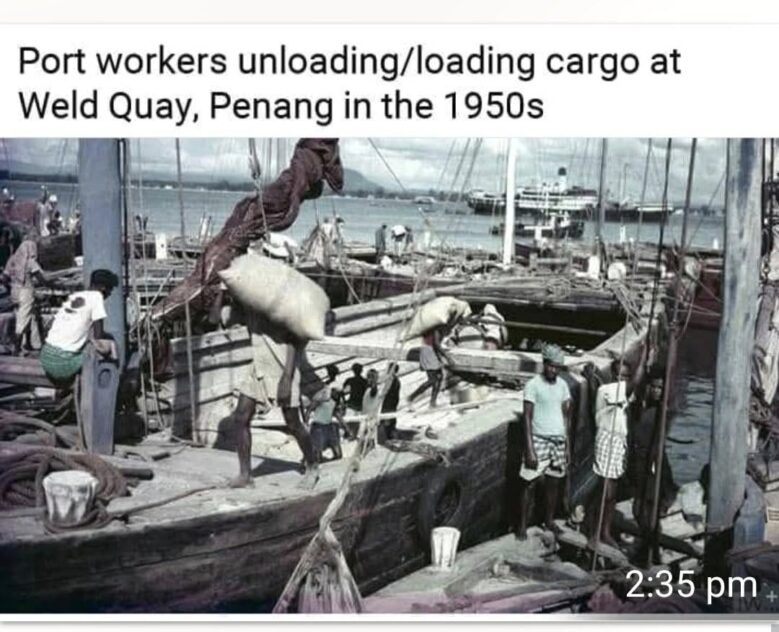
Indian engineers, surveyors, technical workers, overseers and large numbers of labourers contributed to the development of colonial infrastructure.

Indian workers were especially important in railway construction, maintenance and public works.

(Image credit: Jeffrey Lazar via Penang Walkabouts/Facebook)

They worked alongside Chinese, Malay and other labourers who helped build the physical foundations of the modern economy.

This infrastructure connected tin mines to ports, plantations to export markets and inland settlements to growing commercial towns.

Much of it was developed to serve British colonial economic interests, particularly the extraction and export of tin and rubber.

Nevertheless, these transport networks and public facilities became part of the infrastructure inherited by independent Malaya.

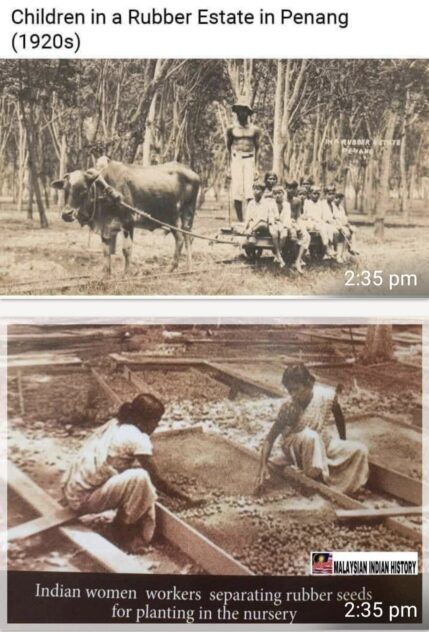
🌳 And yes, Indians also worked in rubber estates

Indian plantation labour was a major component of Malaya’s colonial economy. But even this history deserves a fuller explanation.

Indian plantation workers helped establish and maintain the rubber industry that generated substantial export earnings.

Their work was physically demanding and many experienced low wages, difficult living conditions and restrictive labour arrangements.

(Image credit: Jeffrey Lazar via Penang Walkabouts/Facebook)

Their contributions should not be treated as less important than those of financiers, engineers or businessmen. Capital financed the plantations but labour made production possible.

🇲🇾 The real economic history of British Malaya

The history of British Malaya was never simply three ethnic communities working in three separate economic sectors. It was an inter-connected colonial economy built upon:

  • Capital: British banks, Chinese merchants, Indian Chettiar financiers and other investors.
  • Land and political authority: Malay rulers, local landholders and British colonial administrations.
  • Enterprise: Chinese, Indian, Malay, European and other entrepreneurs.
  • Labour: Plantation workers, miners, railway builders, construction workers and agricultural communities.
  • Administration and security: British officials, local administrators, Indian civil servants, Sikh policemen and military personnel.

The British colonial system encouraged ethnic and occupational divisions but those divisions were never absolute.

Not every Chinese immigrant became a businessman. Not every Indian immigrant worked on a rubber estate. Not every Malay remained in a kampung or outside commercial activity. And not every major enterprise was financed by British capital.

The development of modern Malaysia depended on economic relationships that crossed ethnic, occupational and geographical boundaries.

Recognising these contributions does not mean ignoring colonial exploitation, unequal access to wealth, or the difficult conditions experienced by workers.

It means understanding the complete history rather than accepting an oversimplified racial narrative.

🏛️ The forgotten lesson

When we celebrate the Chinese entrepreneurs who developed Malaya’s tin mines, we should also remember the Indian financiers who supplied credit.

When we admire colonial railway stations and historic public buildings, we should remember the engineers, surveyors and labourers who helped construct them.

When we recognise Malaya’s economic and social development, we should also remember the generations of Malays who contributed through agriculture, trade, craftsmanship, public service and the building of local communities.

No one single community built Malaya alone. Our nation was built through the contributions and interdependence of its people.

And when we discuss the prosperity created by rubber and tin, we should remember the thousands of ordinary workers whose labour generated that wealth.

Malaysia was not built by three communities working separately. It emerged from an interconnected economy shaped by many communities under both local and colonial power.

Perhaps it is time we stopped asking which race built Malaya and started asking: How did different communities depend on one another to build the country we inherited today? That is the history worth teaching. 

Marcus Leng is a Malaysian who previously worked in Vietnam as an angel investor, venture builder and startup advisor. He is an independent researcher with a keen interest in Malaysia’s economic, corporate and capital market history.

Through Malaysian Forgotten History, he explores the untold stories of people, capital and enterprises that have shaped Malaysia’s economic development and nation-building.

The views expressed are solely of the author and do not necessarily reflect those of  MMKtT

- Focus Malaysia.