



INVESTMENT scams are becoming an increasingly serious threat to Malaysia’s digital financial ecosystem.
As investing becomes more accessible through mobile applications, social media and online communities, fraudsters are finding new ways to exploit public trust and turn financial aspirations into costly losses.
What makes these scams particularly effective is not always the promise of high returns, but the sense of urgency surrounding an allegedly exclusive opportunity.
Victims may be drawn in by promises of privileged market insights, exclusive investment classes or limited-time offers designed to trigger fear of missing out (FOMO), pressuring them to act before verifying whether the source is legitimate.
The scale of the problem

The figures are difficult to ignore. According to the Home Ministry, online fraud losses reached RM2.97 bil in 2025, up from RM1.57 bil in 2024.
Non-existent investment schemes accounted for RM1.46 bil of the losses last year. Between January and May 2026, another RM361.63 mil was lost to such schemes.
The threat is also becoming more sophisticated. In October 2026, Bank Negara Malaysia (BNM) and the Securities Commission Malaysia (SC) warned the public about deepfake videos impersonating senior officers to promote fraudulent investment schemes.
Fraudsters are also misusing the identities of legitimate financial institutions, including Moomoo’s logo and branding, to advertise fake investment classes.
These advertisements often direct unsuspecting individuals to unofficial WhatsApp groups or external links unaffiliated with legitimate platforms. By creating the impression of institutional endorsement, scammers exploit trust to draw people into fraudulent schemes.
Why the industry must work together
Investment scams are no longer just about misleading individuals. They are also eroding confidence in the financial institutions and capital markets investors rely on.
When scammers misuse the names, logos and identities of licensed firms, the damage extends beyond individual victims.
It creates uncertainty about which communications can be trusted and may discourage people from participating in legitimate investment opportunities.
This is why the investment industry cannot afford to sit out the anti-scam fight.
A scam may begin with a fraudulent advertisement on Facebook or Instagram, move into a WhatsApp or Telegram group, and eventually lead a victim to transfer money through a banking channel or download a fake trading application.
Addressing each stage requires cooperation between regulators, law enforcement, banks, payment providers, telecommunications operators, technology companies and investment platforms.
Brokerages and wealth-tech platforms sit at the intersection of financial information, investor behaviour and transactions.
We see how investors engage with markets, how fraudsters misuse our brands and the tactics used to persuade people to act without sufficient verification. That proximity comes with a responsibility to do more.
Moomoo has joined the Global Anti-Scam Alliance (GASA), becoming, according to the company, the first wealth-tech and digital investment platform in Southeast Asia to join the organisation.
We believe digital investment platforms should have a seat at the table and contribute their industry knowledge to the wider anti-scam effort.
At Moomoo Malaysia, investor protection is an important part of how we approach our business. Beyond strengthening safeguards and responding to impersonation attempts, we believe education must address how scammers actually operate.
Malaysia has strengthened its response through initiatives such as the National Scam Response Centre (NSRC).
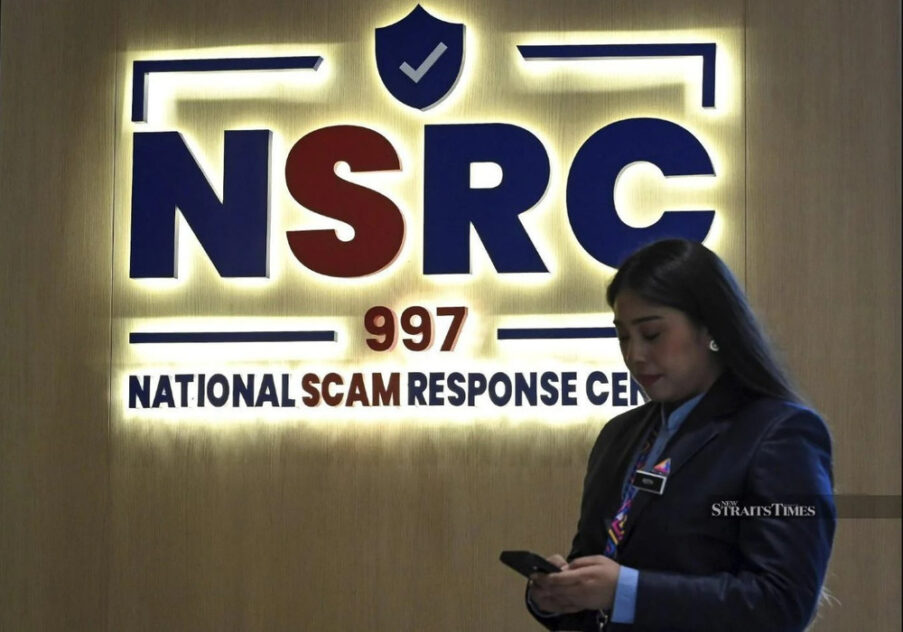
But the next step must be more proactive collaboration: sharing intelligence on emerging scam patterns, identifying fraudulent accounts and websites faster, and coordinating public warnings before more people are targeted.
Investors must also recognise that urgency is often a deliberate manipulation tactic. Offers promising exclusive access, guaranteed returns or privileged information should prompt greater scrutiny, not faster action.
A familiar company logo does not guarantee that a communication is genuine. Customers should verify communications through official channels, avoid unsolicited group invitations and never download applications or transfer funds based on unverified instructions.
Ultimately, trust cannot be treated as a communications issue to address only after an incident.
It must be built into how financial institutions operate, from internal escalation processes and customer reporting channels to consistent investor education and transparent communication.
As Malaysia’s digital investment landscape continues to grow, protecting investors must be part of that progress. Accessibility means little if people cannot distinguish legitimate opportunities from fraudulent ones.
The fight against investment scams will not be won by any single institution. It requires an industry willing to share intelligence, challenge emerging threats and put investor protection ahead of short-term growth.
Indy Lau is the COO of Moomoo Malaysia.
The views expressed are solely of the author and do not necessarily reflect those of
- Focus Malaysia.

No comments:
Post a Comment
Note: Only a member of this blog may post a comment.