The local note was unchanged at 4.1135/4.1200 as geopolitical and economic uncertainties continued to support demand for the greenback.
KUALA LUMPUR: The ringgit opened flat against the US dollar on Friday as cautious sentiment in the foreign exchange market continued to support demand for the greenback amid geopolitical and economic uncertainties.
At 8am, the local currency was unchanged at 4.1135/4.1200 against the US dollar from Thursday’s close of 4.1135/4.1175.
Bank Muamalat Malaysia Bhd chief economist Afzanizam Rashid said the foreign exchange market was expected to remain guarded amid ongoing geopolitical tensions in the Middle East and concerns over developments in the global economy.
He said the US financial markets were closed on Thursday in observance of Thanksgiving Day, while other markets remained active, with Brent crude oil prices rising 2.07% to US$96.57 per barrel.
The increase followed a strike on a Saudi Arabian oil refinery in the southern province of Jazan, which temporarily halted some of the facility’s operations.
He said the conflict in the Middle East continued to affect fuel supplies, while the market had fully priced in a 25-basis-point increase in the US Federal Funds Rate at the Federal Reserve’s December meeting.
“Besides that, there are concerns over excessive investment in artificial intelligence (AI), as well as a hawkish stance by the US Congress and administration towards China.
“Hence, we foresee the forex market will continue to remain guarded, which would result in higher demand for the US dollar,” he noted.
Afzanizam expects the ringgit to trade within a narrow range of RM4.10 to RM4.12 against the US dollar today.
At the opening, the ringgit traded mostly lower against a basket of major currencies.
It increased against the euro to 4.5121/4.5192 from 4.5133/4.5177 at Thursday’s close, edged up vis-à-vis the British pound to 5.3912/5.3997 from 5.3924/5.3976, and was slightly higher against the Japanese yen at 2.5824/2.5866 from 2.5834/2.5860.
Against its Asean peers, the ringgit traded mostly flat.
It fell against the Thai baht to 12.0825/12.1095 from 12.0712/12.0875, but was unchanged against the Singapore dollar at 3.1878/3.1931 from 3.1878/3.1911.
The local note was also flat versus the Philippine peso at 6.45/6.46 and the Indonesian rupiah at 224.0/224.4. - FMT
Sabah Electricity says technical teams have been mobilised to carry out preparatory work before installation of the ERS tower begins.
Efforts to remove cables blocking the main route on Jalan Ranau-Telupid following the collapse of the T313 electricity transmission tower yesterday. (Bernama pic)
KOTA KINABALU: The components of the temporary emergency restoration system (ERS) tower arrived at the site of the collapsed transmission tower in Ranau this morning to restore the electricity supply line connecting Sabah’s east and west coasts.
Sabah Electricity said the lorry transporting the temporary ERS tower container arrived at the site of transmission tower T313 at 1.07am.
“Sabah Electricity greatly appreciates your patience and sincerely regrets any inconvenience caused,” it said in a statement today.
It said its technical teams had been mobilised to carry out preparatory work before installation of the ERS tower begins, prioritising safety and compliance with work procedures.
Sabah Electricity is also stepping up efforts to expedite the restoration of electricity supply to affected consumers following the collapse of transmission tower T313.
The collapse of the tower, detected at 6.04am yesterday, severed two transmission line circuits supplying electricity from Sabah’s west coast to its east coast, disrupting electricity supply across eight districts and affecting 153,599 consumers. - FMT
The remains of former attorney-general Abdul Gani Patail were laid to rest at the Precinct 20 Muslim Cemetery in Putrajaya at 11.30am today.
The hearse carrying the remains of the Sabah-born former top prosecutor arrived at the cemetery at 10.50am.
About 300 people, including family members, friends, and acquaintances from various ethnic backgrounds, attended the funeral.
The talkin (graveside sermon) was delivered by the imam of the Mahmoodiah Mosque in Precinct 18, Rafuwan Putra Afffendi
Earlier, the remains were taken to the Musolla at Precinct 20 for the funeral prayer, which was led by Rafuwan and attended by about 200 congregants.
Among those who attended to pay their last respects were Attorney-General Dusuki Mokhtar, Putrajaya MP Radzi Jidin, Communications Ministry secretary-general Abdul Halim Hamzah, former Bank Negara adviser Nor Mohamed Yakcop, former education minister Idris Jusoh, and former women development, family and community minister Shahrizat Abdul Jalil.
Born in Lahad Datu, Gani, who served as AG for 13 years from 2002 to 2015, died at the age of 71 at Prince Court Medical Centre in Kuala Lumpur at 9.15pm yesterday due to an infection. He is survived by two children.
Born on Oct 6, 1955, Gani began his career in the legal and judicial service in 1980, serving as a deputy public prosecutor at the AG's Chambers in Tawau, Sabah.
He was the first Sabahan to hold the post of AG following the establishment of the federal AGC in the state.
Throughout his career, he held several key positions, including senior federal counsel in Sabah, head of the Prosecution Division, and law revision commissioner.
Among the high-profile cases he handled was the prosecution of 30 individuals in connection with the Lahad Datu intrusion in February 2013.
He was also part of the prosecution team in the 2006 murder case of Mongolian national Altantuya Shaariibuu.
In addition, Gani served as an adjunct professor at the Faculty of Law, Universiti Teknologi Mara, for two years from Oct 1, 2011. He also served as chairperson of the National Legal Aid Foundation.
During RTM's “Dialog Negara” programme on Nov 25, Prime Minister Anwar Ibrahim acknowledged that corruption in Malaysia had become systemic, describing it as a problem inherited by his administration.
His acknowledgement is significant: systemic corruption demands systemic reform. Yet four years after coming to power on a platform of institutional reform and anti-corruption, what has the Madani administration actually done to dismantle the institutional architecture that enables grand corruption?
Anwar cited the corruption charges brought against his former senior political secretary, Shamsul Iskandar Akin, stating that he had not interfered with the investigation.
However, there is a fundamental difference between a prime minister choosing not to interfere and a premier being prevented by institutional safeguards from interfering.
Four years on, can Malaysians confidently say that another scandal of the magnitude of 1MDB would be significantly more difficult to perpetrate?
Institutional independence and executive power
The 1MDB scandal exposed the dangers of concentrated executive authority and inadequate institutional safeguards.
Yet under Section 5(1) of the MACC Act 2009, the chief commissioner is appointed by the Yang di-Pertuan Agong on the advice of the prime minister.
The Organisation for Economic Co-operation and Development’s (OECD) 2026 Economic Survey of Malaysia noted that its earlier recommendation to involve Parliament in this appointment had yet to result in legislative action.
Similarly, the separation of the attorney-general and public prosecutor’s offices remains unfinished. Creating two separate offices without independent appointments, security of tenure and safeguards against executive interference would fall short of substantive reform.
The 2023 discharge not amounting to an acquittal (DNAA) granted to Deputy Prime Minister Ahmad Zahid Hamidi in the Yayasan Akalbudi case, followed by the Attorney-General's Chambers' decision in January 2026 to take no further action, illustrates the importance of prosecutorial transparency.
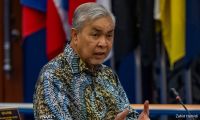
Deputy Prime Minister Ahmad Zahid Hamidi
According to an October 2026 parliamentary reply, courts issued DNAA orders in 19 criminal cases involving 12 politicians between 2010 and July 2026.
While these decisions span several administrations, they reinforce the need for accountability in the exercise of prosecutorial discretion.
Governance without addressing political interference
The Royal Commission of Inquiry (RCI) report into Tabung Haji, made public in July 2026, identified political interference in institutional decisions, including profit distributions and haj charges, extensive ministerial powers and inadequately defined criteria for board appointments.
It found that full application of the relevant financial reporting standards would have resulted in Tabung Haji recording a net loss of approximately RM1.4 billion in 2017, instead of its reported RM3.4 billion profit.
The governance concerns documented in the RCI, alongside those identified in official investigations into 1MDB, Felda Investment Corporation and the littoral combat ship (LCS) project, underscore the importance of institutional independence.
Proposed amendments to the Tabung Haji Act, including a prohibition against appointing active politicians, are targeted for tabling in 2027.
But why should such safeguards be confined to Tabung Haji? More fundamentally, who determines whether a politician is active or inactive?
Does resigning from a political position extinguish political loyalties, obligations or influence? Institutional safeguards must address actual, potential and reasonably perceived conflicts of interest.
The OECD's 2026 survey also noted the absence of formal policy or legislative changes addressing its earlier recommendations on merit-based appointments, minimum qualifications and cooling-off periods for former officials in state-owned enterprises.
Political patronage appointments must be prohibited across GLCs, government-linked investment companies (GLIC) and statutory bodies entrusted with public wealth.
Rather than introducing additional layers of “tatakelola” (governance), the government must address the political interference that undermines governance in the first place.
Without comprehensive political financing legislation, the relationship between political donations, corporate appointments, government contracts and business interests also remain inadequately regulated.
Legislative reform or reform whitewashing?
The introduction of legislation should not automatically be regarded as evidence of meaningful reform.
The Government Procurement Act 2025 must be assessed against whether it sufficiently constrains ministerial discretion, restricts procurement exemptions and provides independently enforceable accountability mechanisms.
The LCS controversy demonstrated that procurement failures extend beyond contract awards to contractual variations, implementation and supervision.
Similarly, amendments to whistleblower protection legislation must be assessed against whether individuals can safely disclose wrongdoing through independent channels and obtain effective remedies against retaliation.
Where legislation preserves the discretionary powers and institutional dependencies it was intended to address, it risks creating an appearance of reform without delivering substantive institutional change.
The benchmark must be the substance and enforceability of legislation, not the number of laws passed.
G2G arrangements, investments without accountability
C4 Center's March 2026 research report on Malaysia's steel industry, which examined the Malaysia-China Kuantan Industrial Park (MCKIP) and Alliance Steel, highlighted challenges in accessing information concerning investment incentives, corporate ownership, environmental compliance and bilateral economic obligations.
These concerns relate to institutional safeguards and do not, in themselves, establish unlawful conduct by the companies concerned.
Nevertheless, inadequate disclosure makes potential conflicts of interest, regulatory capture and preferential treatment more difficult to identify.
Similar transparency concerns surround data centre investments, with the government estimating daily water requirements of approximately 445 million litres across Selangor, Johor and Negeri Sembilan over the 2025–2030 planning period.
While the government celebrates billions in investments, who bears the infrastructure costs? What fiscal incentives have been granted? Are the economic benefits proportionate to the environmental and fiscal costs?
Freedom of information legislation must encompass economically significant bilateral agreements. Commercial confidentiality and diplomatic sensitivities must not become blanket justifications for withholding information concerning public resources.
A striking contradiction is the administration's continued reliance on restrictive legislation, particularly the Sedition Act, which Pakatan Harapan previously opposed.
According to a February 2026 parliamentary reply, investigation papers opened under the Sedition Act rose from 52 in 2022 to 125 in 2023, 96 in 2024 and 142 in 2025 - the highest annual figure in the available records covering 2010 to 2025.
Malaysia's World Press Freedom Index ranking also deteriorated from 88th in 2025 to 95th in 2026.
The continued application of restrictive laws raises concerns about their chilling effect on legitimate public-interest scrutiny.
Investigating allegations of wrongdoing is fundamentally different from investigating those who raise them. Combating corruption while restricting the civic space necessary to expose it is fundamentally contradictory.
Reform must constrain power
More governance, integrity pledges and assurances of non-interference cannot substitute for legally enforceable institutional safeguards.
Malaysia needs independent investigative and prosecutorial institutions, an end to political patronage appointments, comprehensive political financing legislation, independently verified asset declarations, an independent ombudsman, freedom of information and effective parliamentary oversight.
The ultimate test of institutional reform is not whether those in power promise to exercise their authority responsibly. It is whether institutions are capable of holding them accountable when they do not.
Economic achievements cannot substitute for institutional accountability. Nor should Malaysians have to rely on the personal integrity of whoever occupies the prime minister's Office to protect the country from grand corruption.
If corruption is systemic, the response must be systemic too. Reform must constrain power, not merely improve the appearance of its exercise. - Mkini
PUSHPAN MURUGIAH is an independent researcher and adviser on governance, integrity and anti-corruption.
The views expressed here are those of the author/contributor and do not necessarily represent the views of MMKtT
The Sessions Court here today stayed proceedings on a sedition charge against disputed Undang Luak Sungei Ujong Datuk Mubarak Thahak @ Dohak, referring constitutional questions raised by the defence to the High Court for determination. — NSTP/FIKRI YAZID
SEREMBAN: The Sessions Court here today stayed proceedings on a sedition charge against disputed Undang Luak Sungei Ujong Datuk Mubarak Thahak @ Dohak, referring constitutional questions raised by the defence to the High Court for determination.
Judge Tasnim Abu Bakar allowed a preliminary objection by the defence after hearing submissions from both parties during the first mention of the case.
The High Court will now determine questions concerning Mubarak's status, constitutional immunity and the jurisdiction of the Sessions Court to hear the case.
"After hearing submissions from the deputy public prosecutor and counter-submissions from the defence counsel, the court hereby allows the defence's application and invokes Section 30(1) of the Courts of Judicature Act 1964 to stay the proceedings.
"...And transmits the record of proceedings to the High Court regarding the question of the effect of the constitutional provisions raised," Tasnim said.
Earlier, defence counsel Asmawi Ismail applied for his client to be exempted from attending today's proceedings. He also informed the court that the defence had specific instructions that the charge should not be read in the Sessions Court.
He argued that Mubarak was a co-ruler in Negri Sembilan alongside the Undang Yang Empat and the Yang di-Pertuan Besar, citing Article 160(2) of the Federal Constitution (TAB-1), which provides for the interpretation of the term "Ruler" in relation to Negri Sembilan.
"On the material date stated in the charge, which is April 19, 2026, the words forming the basis of the charge were allegedly uttered at the Balai Undang Luak Sungai Ujong.
"Our client's position is that at the time, he was exercising his constitutional and customary functions as the Undang Luak Sungei Ujong, one of the Undang Yang Empat of Negri Sembilan," he said.
Asmawi said Clause XIV(1) of the Laws of the Constitution of Negri Sembilan 1959 expressly recognised the Undang Luak of Sungai Ujong, Jelebu, Johol and Rembau as persons lawfully elected according to the customs of their respective Luak.
"Further, our client's position is that proceedings against him in these circumstances fall within the exclusive jurisdiction of the Special Court under Article 183 of the Federal Constitution, and not this Honourable Sessions Court.
"Moreover, under Article 182(2) of the Federal Constitution, action against our client must first obtain the consent of the Attorney-General.
"We apply for these questions to be considered and decided as threshold questions before the prosecution proceedings continue," he said.
Asmawi also urged the court to invoke Section 30(1) of the Courts of Judicature Act 1964 to stay the proceedings and transmit the record to the High Court for determination of the constitutional questions raised.
"This application is made to enable the fundamental questions regarding our client's jurisdiction and constitutional protection to be determined in an orderly manner," he said.
Deputy public prosecutor Shahrizat Ismail opposed the application, arguing that Mubarak's status as Undang Luak Sungei Ujong was no longer relevant as he had been dismissed from the position on May 13, 2025, before the charge was brought.
Shahrizat said the dismissal was confirmed in a Negri Sembilan state government gazette dated Oct 23, 2026.
Also appearing for the prosecution were deputy public prosecutors Engku Ahmad Rashdi Engku Abdillah, Husni Fairos Ramly and Anas Bashari.
Mubarak was also represented by lawyers Emirul Sarifudin Nor Azmi, Hanif Hassan, Vel Manoharan, Deidra Nur Azmi, Nabila Nur Azmi and Fathin Syuhadah Mohamad Yasin. - NST