


As Malaysia progresses toward its centennial celebration of independence in 2057, the Madani government must take bold steps to evaluate the country’s race and religious relations.
Political expediency has dictated policies for far too long, often at the expense of true national unity. It is time to confront the truth.
We call for the immediate establishment of a Royal Commission of Inquiry (RCI). This commission must delve deeply and courageously into the realities of racial and religious harmony in Malaysia.
For too long, wounds have been buried, and uncomfortable truths ignored in the name of superficial peace.
This “superficial peace” could be seen in the lack of open discussions about racial and religious tensions, and the “uncomfortable truths” could be the systemic discrimination and inequality that many Malaysians face.
But silence is not unity, and forgetting is not forgiveness.
On Aug 31, 1957, Tunku Abdul Rahman stood before the nation and declared, “We are all Malaysians. This is the bond that unites us.”
That promise was renewed in 1963 but remains unfulfilled for too many. If we are to honour the vision of our founding fathers, we must look in the mirror with honesty and courage.
Let the next 32 years not be a repetition of quiet and deliberate denial, but a journey of reckoning, healing, and renewal.
Let us build a Malaysia where no one is made invisible because of their race or faith - where every citizen can say with pride: This is our home, and we are equal in it.
Incomplete national history
The current education system fails to accurately reflect the contributions of all races in Malaysia’s development.
The Indians and Chinese were the backbone of the nation’s early economy, building roads, railways, plantations, tin mines, and towns, kickstarting businesses and the financial system, and they continue to be so today.
Yet, their sacrifices and achievements are glaringly absent from school textbooks. This omission fosters ignorance among younger generations, leading to a lack of cultural appreciation and respect.
The dominant narrative becomes skewed, often glorifying one group while rendering others invisible. This leads to a false or incomplete understanding of national history, eventually leading to distrust and resentment.
People are less likely to feel invested in a society that does not recognise their value. If Malaysia is serious about unity, the education syllabus must be revised to include the proper historical roles of all communities.
Only by understanding our shared history can we cultivate mutual respect and dismantle the prejudices that divide us.
Teaching true unity
Patriotism is more than just sticking a Malaysian flag on a school uniform, flying Jalur Gemilang for a month between August and September, or attending Hari Raya, Chinese New Year, Deepavali, Christmas, or Hari Gawai open houses.
True unity requires meaningful engagement, including teaching students the values of peaceful coexistence and religious and cultural understanding of every community.
Schools should incorporate programs where students learn about their fellow Malaysians’ festivals, traditions, and beliefs.
Interfaith dialogues and cultural exchanges should be normalised, not treated as exceptions or suspicions. Unity cannot be enforced through slogans; it must be nurtured through genuine interactions and education.
Ending the colonial mindset
The contributions of Sabah and Sarawak to Malaysia’s development have been immense, yet their people feel marginalised. Despite providing vast natural resources, the Borneo states continue to lag in infrastructure and economic opportunities.
The sentiment of “Sabah for Sabahans” and “Sarawak for Sarawakians” stems from decades of perceived exploitation by peninsula-based politicians.
If Malaysia is to remain united, the federal government must ensure fairer wealth distribution, greater autonomy, and sincere efforts to uplift Sabah and Sarawak.
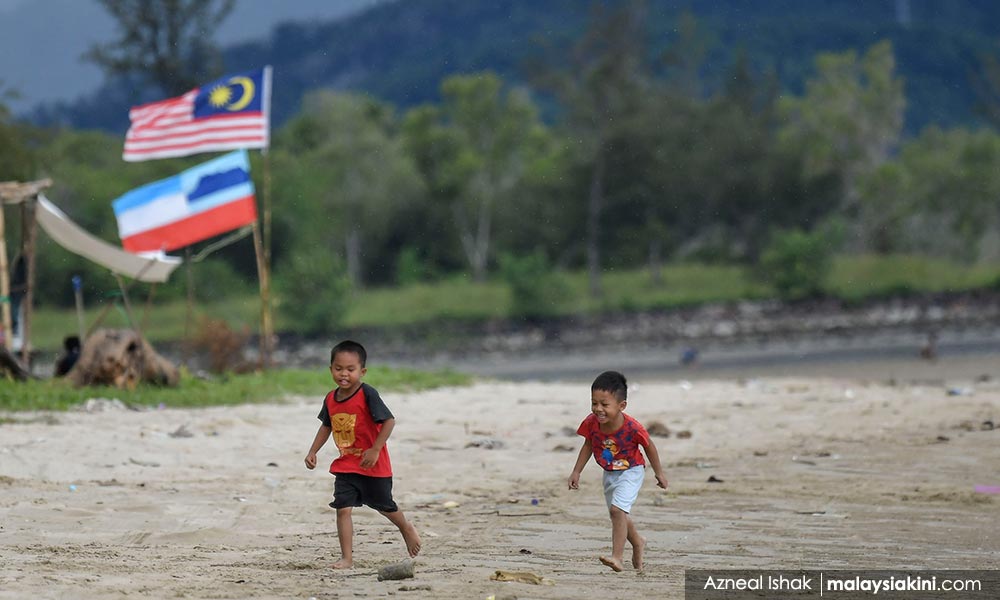
Their history, struggles, and aspirations must be given equal importance in the national narrative.
Power beyond politics
True national unity demands a shift in leadership mindset. Leaders must prioritise the nation’s long-term harmony over short-term political gains.
While Article 153 of the Federal Constitution was designed to uplift the economically disadvantaged Malay community at independence, its original intent was never to divide the people or perpetuate racial polarisation.
Unfortunately, this provision has often been misused as a political tool, fostering resentment among Malaysians of all backgrounds.
The government must demonstrate a genuine commitment to unity through:
1. Balancing meritocracy and social equity – Ensuring opportunities are accessible to all deserving Malaysians while addressing historical disparities.
2. Reforming alienating policies – Reviewing laws and policies perceived as discriminatory to strengthen national unity.
3. Encouraging open dialogues is crucial. We must create safe spaces for honest discussions on race and religion. We can truly understand each other and foster genuine unity through such open and respectful conversations.
As Malaysia progresses and moves towards its 100th anniversary of Merdeka celebrations in 32 years, policies must evolve toward a more inclusive vision in which no community feels marginalised.
Plight of the Indian underclass
A glaring oversight in our nation-building has been the systemic neglect of the Indian labour community.
While the Malay community had representation during Merdeka negotiations, the Indian working class, brought in as indentured labourers by the British, had no voice at the London Constitutional Conference.
Their interests were not catered for in the new Constitution drafted before independence.
Deliberately kept in poverty to serve and continue colonial economic interests, that were to remain despite Malaya achieving independence, they were left without constitutional safeguards for upliftment, and were left with the unfulfilled promises which encouraged their migration to the Malayan states.
The consequences have been devastating:
1. 800,000 Indian estate workers have been displaced since 1970 due to plantation land conversions and displacements.
2. Institutional neglect that caused generations to be trapped in cycles of poverty with limited access to education, housing, and economic mobility.
3. Malaysian Indians became the only landless community in the world and were politically disenfranchised.
4. No comprehensive policy to address their historical marginalisation.
The government must allocate RM25 billion in the 13th Malaysia Plan specifically for:
Skills training and job placement programmes,
2. Affordable housing and land ownership schemes,
3. Entrepreneurial development funds,
4. Establish a dedicated ministry or an empowered department to implement these initiatives,
5. Include genuine Indian community representatives in policy formulation.
This isn’t about special privileges but correcting a 70-year-old structural injustice. As we approach Malaysia’s centennial, we must ensure our celebration of independence includes justice for all who helped build this nation.
A united Malaysia by 2057 starts now
As we prepare for Malaysia’s 100th year of independence, we must ask ourselves: Have we honoured the vision of our forefathers? Are we truly a nation at peace with its diversity?
The Madani government must take decisive action, starting with an RCI to deeply and courageously examine and uncover the realities of racial and religious harmony in Malaysia, to ensure that the next three decades are spent healing divides, not deepening them.
The time for political games is over. The future of Malaysia depends on leaders who dare to put national unity and interests above short-term gains.
Let us build a Malaysia where every citizen, regardless of race or religion, feels valued and proud to call this nation home. The journey to 2057 begins today. - Mkini
P Waytha Moorthy is the chairperson of the Malaysian Advancement Party (MIP) and Hindraf.

No comments:
Post a Comment
Note: Only a member of this blog may post a comment.