`


THERE IS NO GOD EXCEPT ALLAH
read:
MALAYSIA Tanah Tumpah Darahku

LOVE MALAYSIA!!!


21 JUNE 2026

Saturday, October 31, 2020

Temporary hospital to be opened at Sg Udang prison


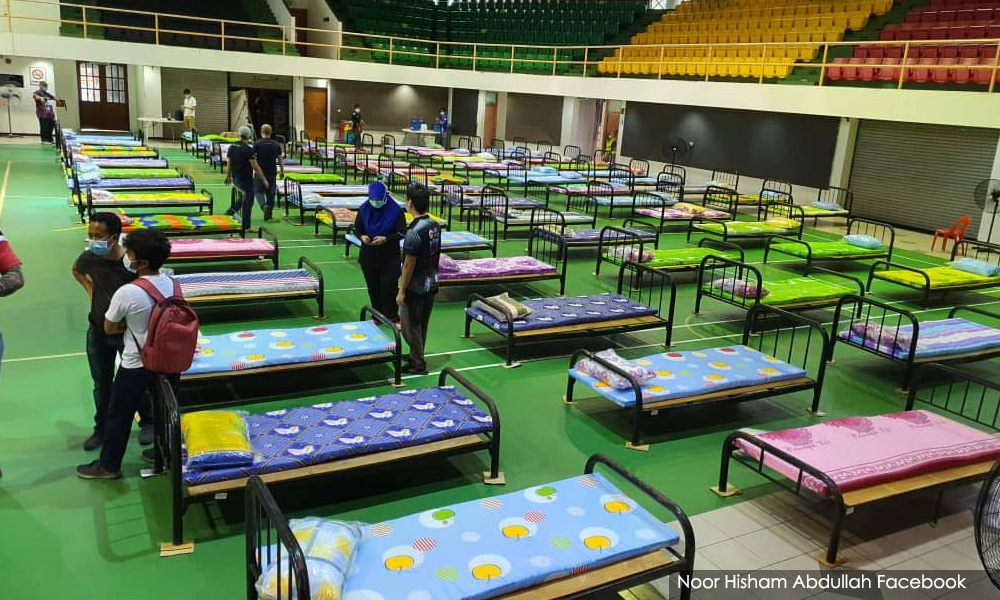
A temporary hospital will be opened at the Sungai Udang Prison, as part of preparation in the event of a spike in the number of Covid-19 cases among inmates in Malacca.

State Health and Anti-Drug Committee chairperson Rahmad Mariman said the temporary hospital could accommodate between 60 and 80 inmates infected with the disease, especially those who were low-risk and involved in minor crimes.

He said the preparation was carried out as the Malacca Hospital, the only hospital treating Covid-19 patients in the state, could only accommodate 14 prisoners at any one time.

"Yesterday I visited the prison and had a discussion with the state Health Department, state National Security Council and the Prison Department, to look into preparations at the prison in the event of spike in the number of Covid-19 positive cases, particularly involving prison residents.

"This is because we have just received about 300 new inmates who had undergone swab tests and they are currently being isolated from others at Sungai Udang Prison," he said.

He spoke reporters after the investiture ceremony of state awards in conjunction with 71st birthday of the Melaka Yang di-Pertua Negeri Mohd Ali Rustam, involving 294 recipients, at Seri Negeri, Malacca, today.

Rahmad said another two locations have also been identified to be turned into a temporary hospital, namely Jasin Correctional Centre and Alor Gajah National Service Training (PLKN) camp, if the temporary hospital at Sungai Udang Prison reaches its capacity.

Bernama

Health DG declines to answer why minister was fined for quarantine breach


The flip-flop of law enforcement in the case of cabinet minister Khairuddin Aman Razali, who failed to quarantine himself after returning from Turkey in July, remains unexplained.

On Aug 22, the Health Ministry issued a statement saying that the plantation industries and commodities minister had been issued with a RM1,000 compound on Aug 7 after they found him of having breached quarantine rules.

The Kuala Nerus MP was said to have paid the fine, and he had also apologised on top of making a vow to donate his ministerial salary from May to August to the country's Covid-19 fund.

This was four days after Seputeh MP Teresa Kok raised the matter in Parliament. However, health director-general Dr Noor Hisham Abdullah had told the media then that Khairuddin's case was still being probed by the police.

After about two months of investigation, things took another turn when Bukit Aman announced that the Attorney-General's Chambers had decided not to take action against the minister, saying that Khairuddin was not provided with the 14B form to undergo quarantine upon his return on July 7.

Today, Malaysiakini attempted to get some answers from the Health Ministry on what had happened in this case since they had earlier confirmed that Khairuddin had breached quarantine and penalised him for the offence.

However, Noor Hisham, when posed with a question on why the Health Ministry issued a compound against Khairuddin and whether it would be reversed since the Attorney-General's Chambers had found that there was no offence committed, declined to comment on the matter.

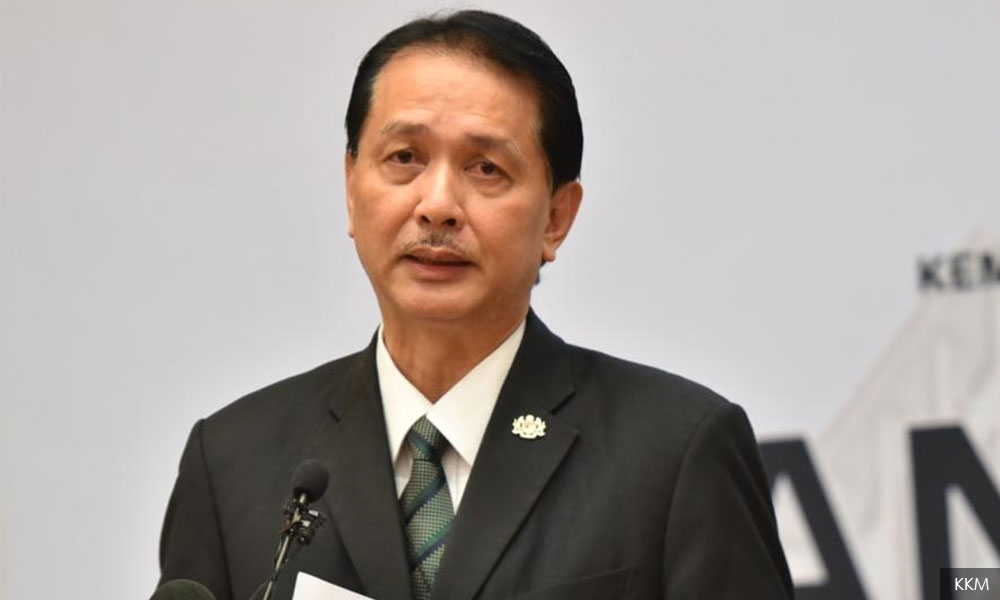
Dr Noor Hisham Abdullah

"Under Act 342, The Health Ministry has been given the power to enforce (the act) by the police and the AG. This case has been investigated by the police and the AG.

"So I do not want to comment any further on the probe," he told a press conference at Putrajaya this evening.

Noor Hisham was referring to the Prevention and Control of Infectious Diseases Act 1988.

He also did not answer whether the ministry is pursuing an internal investigation over the failure to issue Khairuddin with the quarantine order upon arrival.

The Prevention and Control of Infectious Diseases (Measures within the Infected Local Areas) Regulations (Number 7) 2020, among others, require overseas returnees to undergo a compulsory 14-day quarantine.

All returnees must also undergo a swab test for Covid-19 and be subsequently sent to a quarantine centre to carry out the 14-day isolation period.

Prior to July 24, overseas returnees who tested negative would still have to undergo quarantine but were allowed to do so at home.

They were not allowed to leave home for 14 days and must be retested on the 13th day before their quarantine bracelet can be removed. Khairuddin allegedly did not undergo this process.

From July 24 onwards, quarantine must be done at government-designated centres. The measure was reintroduced after many violated their quarantine conditions at home.

Khairuddin's case had received national attention amid complaints that regular Malaysians are treated more harshly than VIPs. - Mkini

PBS backs plan to legalise undocumented workers with conditions


Parti Bersatu Sabah (PBS) said it was offering conditional backing for Putrajaya's plan to allow undocumented migrants to work in the plantation and industrial sectors.

Its president Maximus Ongkili said his party supported the plan on the condition that it was implemented in accordance with immigration and labour laws.

"The plan must be well managed and conducted with transparency. PBS will make sure that these strict conditions will be complied with," he said.

Yesterday, Prime Minister Muhyiddin Yassin said his administration was considering temporary work permits for undocumented foreigners to overcome labour shortages in the oil palm and rubber industries.

He said there were proposals for a one or two-year work permits to solve labour shortages after Malaysia closed its borders to curb the spread of Covid-19.

Ongkili, who is also the federal minister for Sabah and Sarawakian affairs, explained that the government was dealing with a high number of foreigners in detention centres and that such amnesty measures have been carried out before.

"It is a form of regularisation, whereby the private sector requesting for foreign labour can apply to recruit workers through the Immigration and Labour Departments directly from the detention centres, or from the domestic labour market, provided they comply with the strict procedures and conditions set by the Ministry of Home Affairs," he said.

Ongkili said the first phase of the plan will focus on Peninsular Malaysia and will only be extended to Sabah and Sarawak should similar requests be made by industry players there.

"In the case of Sabah, an on-going discussion between the Department of Sabah and Sarawak Affairs in the Prime Minister's Office and the Home Ministry is being held for the setting up of a proposed special committee.

"This is to ensure that the management and outcome of the operation will also be part of the strategy to reduce the presence of illegal immigrants in the state.

"There is also a very high incidence of Covid-19 cases affecting most plantation and construction sectors in East Malaysia," he said.

Ongkili said PBS considered the plan "noble" and urged Sabahans not to believe rumours about the programme.

He assured that PBS leaders in the state will continue to ensure that the plan, if implemented in Sabah, will be done in accordance with the law and with strict adherence to the conditions set by Putrajaya.

Sabahans have long held a distrust of the government in terms of the naturalisation of foreigners who entered the state illegally from the Philippines and Indonesia, among others.

According to the Department of Statistics, an estimated 29 percent of Sabah's population was made up of non-citizens in 2019. - Mkini

'Food was major concern for vulnerable communities during MCO'


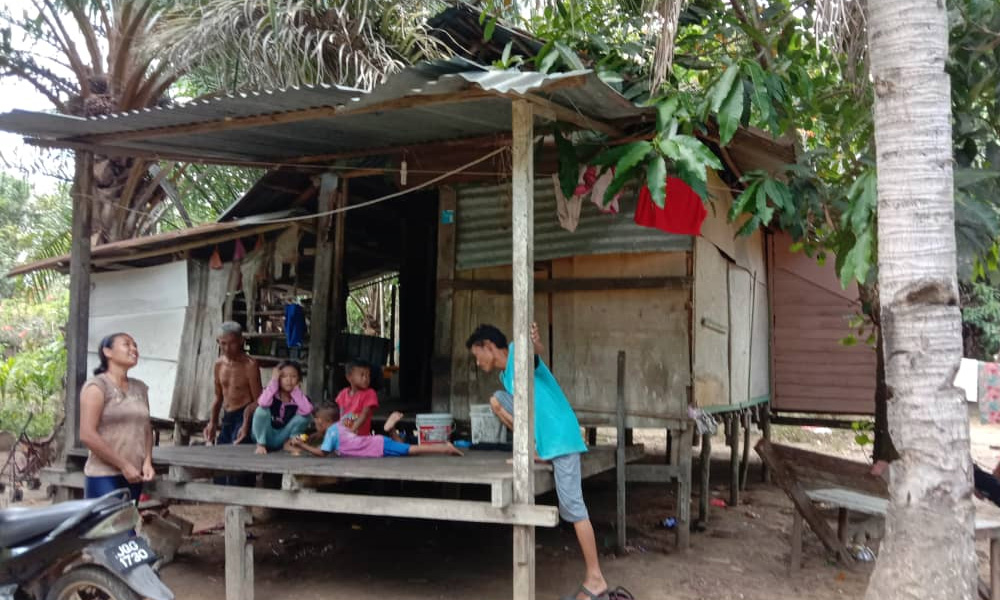
Food was a major source of concern for some vulnerable communities, such as the homeless, the refugees and the Orang Asli community amid the Covid-19 pandemic and the various movement control orders (MCO).

Pertiwi Soup Kitchen founder Munirah Abdul Hamid said they were out on the streets on the night of March 18, the day MCO started, to provide their mobile soup kitchen and mobile medical services to the homeless community in the area.

“It was so eerie, I thought to myself, is this what the end of the world looks like, it was so empty.

“But the homeless were there and they were worried about food. I thought we had to find ways to make sure we did not ignore them,” she said during a Zoom webinar entitled "Speaking for the Unspoken: The Vulnerable Population and Covid-19" hosted by the Medico-Legal Society of Malaysia (MLSM) today.

She said Pertiwi has been providing food to the homeless throughout the pandemic by asking them to collect their food from the side of a restaurant where they could limit physical contact.

However, the question now is what to do moving forward as the pandemic does not appear to be going away anytime soon.

“This is becoming a serious problem which we have got to sit down with the authorities and agencies and find solutions,” she said.

The problem is that it is not clear which government agency or ministry or department is in charge of the homeless community in Malaysia, she said.

United Nations High Commissioner for Refugees (UNHCR) representatives Dr Susheela Balasundaram and Wong Chun Ting also said that food security was one of the key areas of need for refugees during the pandemic.

Aside from food security, they said access to health services was also a big concern as the UNHCR attempted to communicate to the refugee community about the pandemic and how to access healthcare.

Other key areas of need for refugees during the pandemic include cash assistance, legal protection services and mental health services, among others, they said.

Meanwhile, Center for Orang Asli Concerns (COAC) founder Colin Nicholas said food was also a big problem for the Orang Asli community during the MCO.

“People themselves barricaded their own villages. Whenever there’s a pandemic, they will move and isolate themselves. The problem was food because everything came unexpectedly.

“Some 60 percent of the Orang Asli depend on agriculture, rubber and oil palm. (During the MCO), cash was in short supply (for the Orang Asli community),” he said.

So the COAC, together with Impian Malaysia, set up a fund and raised about RM380,000 and distributed food to 30,000 families and 190 villages.

He said they would work with local coordinators on the ground, who would contact them and give them a list of how much they needed.

“That night itself, the money would be banked into their account and they would buy food from their local food stores.

“This is empowering the Orang Asli to do it themselves, without breaking the MCO, without physical contact,” Colin said.

The Orang Asli community has been fortunate in that there have been few Covid-19 cases among them so far, he said.

However, he said, if ever someone from a village were to get infected somehow, it was likely that almost everyone in that community would get Covid-19 within the next few days as they were very closely knit.

He also corrected the perception that the Orang Asli were “fleeing” into the forest to escape Covid-19.

Instead, he said, they were retreating into the forests where it was safer and better, and he described this as a “natural phenomenon” for people who are used to living in the forests.

He said the Orang Asli have often voiced out their concerns so they are not the “unspoken” but rather, they are the “forgotten”.

The Orang Asli should be provided with the right to self-determination as well as the right to free, prior and informed consent, he said.

“Once we have that, the Orang Asli health situation will be improved,” he said. - Mkini

This is the way: Netizens surprised over Finas' rebate for Disney show


For Malaysians with a VPN connection and a Disney+ subscription, the end credits for season two of the acclaimed "The Mandalorian" TV series came as a surprise.

Viewers were greeted by a familiar National Film Development Corporation (Finas) logo and a message that indicated the agency had provided "financial assistance" in the form of a "30 percent rebate".

This has led to several posts appearing on popular forums such as Reddit and Lowyat.net where netizens sought answers.

As it turned out, Finas has been offering foreign and domestic film companies a subsidy since 2012 through its Film In Malaysia Incentive (Fimi).

Fimi covers both film production and post-production work. To qualify, the foreign film producer must use a Malaysian location for filming and/or do post-production and co-produce with a Malaysian film producer.

The filming expenditure must also be more than RM5 million or more than RM1.5 million for post-production activity.

In the case of "The Mandalorian", a popular spin-off from the Star Wars series, the post-production work was performed by Emmy-award winning Base FX, a Beijing-headquartered visual effects studio with an office in Kuala Lumpur.

This was not the first time Base FX KL had qualified for the incentive as they also worked on the Netflix-produced and Michael Bay-directed "6 Underground".

According to the Fimi website, the incentive was to encourage production work and increase the skill sets of locals in the creative content industry.

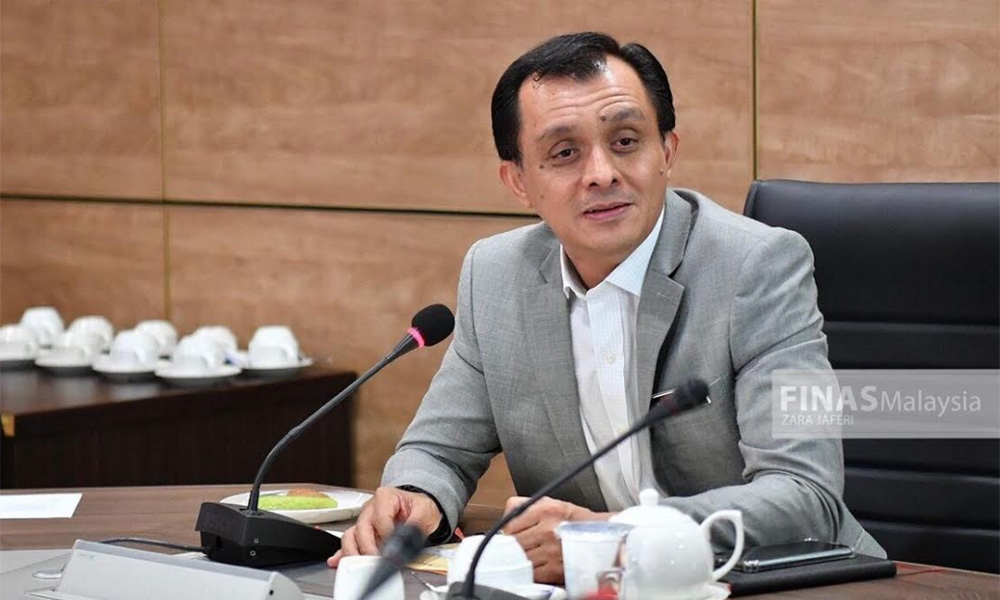
Finas CEO Ahmad Idham Ahmad Nadzri (above) told NST on Oct 13 that the incentive was also designed to make Malaysia competitive in the creative industry world.

"With this incentive, international films will be able to invest in developing their productions in Malaysia. Finas will provide a 30 percent cash rebate for expenses incurred in Malaysia.

"Via Fimi, the cost of production and post-production work is comparable to neighbouring countries, which will result in more job opportunities for the Malaysian creative industry," he said. - Mkini

Covid-19 (Oct 31): 659 new cases, no deaths, record number of recoveries


COVID-19 | The Health Ministry today reported 659 new Covid-19 cases, no new deaths and the highest number of recoveries in a 24-hour period.

Leading indicators in brief:

  • Active cases = 10,051 ↓ (351 fewer than previous day)
  • Patients in intensive care = 83 ↓ (7 fewer than previous day)
  • Intubated patients = 19 ↓ (1 fewer than previous day)
  • Deaths = 0

Health director-general Dr Noor Hisham Abdullah during his daily press briefing today said 1,000 patients were discharged in the 24-hour period ending noon.

This was a new record.

Sabah continued to record the highest number of new cases with 529 while there was a significant decrease in infections reported in the Klang Valley territories with 70 cases, down from 170 yesterday.

A fifth of all the new cases originated from jails or detention centres.

Only one new case was imported. A summary of the latest locally transmitted cases are as follows:

Sabah (529 new cases)

  • Existing clusters - 205 
  • Close contact screening - 203 
  • Various types of screening - 121 

Selangor (54 new cases)

  • Existing clusters - 18 
  • Close contact screening - 22 
  • Various types of screening - 14

Negeri Sembilan (25 new cases)

  • Existing clusters - 16 
  • Close contact screening - 2 
  • Screening of patients with symptoms - 2 
  • Various types of screening - 5 

Labuan (12 new cases)

  • Existing clusters - 5 
  • Close contact screening - 6 
  • Other types of screening - 1 

Kuala Lumpur (11 new cases)

  • Existing clusters - 9 
  • Various types of screening - 2 

Sarawak (9 new cases)

  • Existing clusters - 6 
  • Close contact screening - 1 
  • Screening of patient with symptoms - 1 
  • Close contact screening - 1 

Perak (6 new cases)

  • Existing clusters - 4 
  • Various types of screening - 2 

Putrajaya (4 new cases)

  • Existing clusters - 2 
  • Various types of screening - 2 

Kedah (2 new cases)

  • Existing clusters - 2 

Penang (2 new cases)

  • Close contact screening - 2 

Terengganu (2 new cases)

  • Existing cluster - 2 

Pahang (1 new case)

  • Existing cluster - 1 

Kelantan (1 new case)

  • Close contact screening - 1 

The current death toll stood at 249 of which 117 were reported in Sabah alone (47 percent of the national total).

According to Noor Hisham, no new clusters were classified today, keeping the number of active clusters throughout the country at 133.

Cases for Rumah Merah and Kepayan clusters increased by 111 and 26 respectively. Both clusters involved detention centres in Sabah.

A total of 33 clusters saw new cases being reported today. - Mkini

NSC to scrutinise comprehensive action plan on Covid-19 soon


A comprehensive action plan to ensure the Covid-19 epidemic continues to stay under control although the pandemic carries on for a long time, is expected to be tabled to a sub-committee in the National Security Council (NSC), latest by next week.

Senior Minister (Security Cluster) Ismail Sabri Yaakob said the plan took into account suggestions from various sectors including economy, health and education.

"Prime Minister Muhyiddin Yassin considers this plan a matter that needs to be expedited.

"It is expected to be tabled in a sub-committee and brought to a meeting of the main committee before it is submitted at a NSC special session committee meeting.

"This plan, especially involving the proposals that we have decided in facing the Covid-19 pandemic in the long term, will then be presented to the people," he said.

He said this when met by reporters at the Melaka Awards presentation ceremony in conjunction with the 71st birthday celebration of Yang Dipertua Negeri of Melaka Mohd Ali Rustam to 294 recipients at Seri Negeri, today.

At the ceremony, Ismail Sabri and Minister of Higher Education Noraini Ahmad each received the Darjah Gemilang Seri Melaka which carries the title of Datuk Seri.

Bernama today reported that the NSC was formulating a comprehensive action plan to ensure that the Covid-19 epidemic remains under control even though the pandemic continues for a long time.

NSC deputy director general of National Security (Security Management) Rodzi Md Saad was quoted as saying that the action plan would be based on an assessment of facts and experience of the actions taken by the government in controlling Covid-19 since January this year.

In another development, Ismail Sabri said the proposal to grant temporary work permits to illegal foreign workers in the country to overcome the shortage of workers in the oil palm and rubber industries would be brought to a Cabinet meeting in the near future.

"Based on a NSC special meeting prior to this, the priority to fill vacancies in the sectors is given to local workers and if they are not available, then only the vacancies will be offered to foreign workers who are already here and not new workers brought from outside," he said.

Muhyiddin was previously reported as saying that the government was considering issuing temporary work permits to illegal foreign workers who were in the country to address the shortage of foreign workers in the oil palm and rubber industries, especially after the country's border gates were closed in an effort to control the spread of the Covid-19 pandemic.

- Bernama