


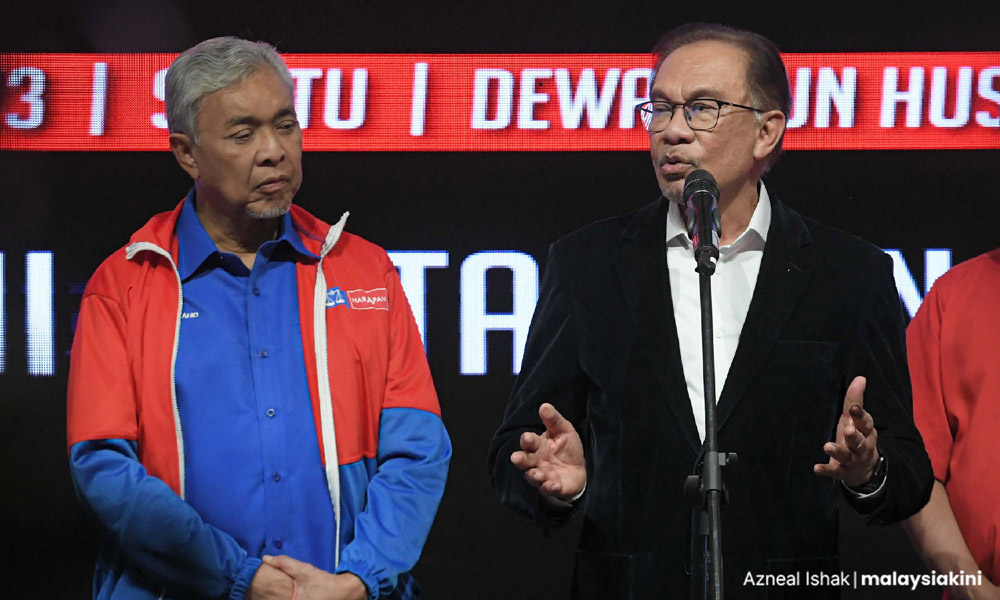
Prime Minister Anwar Ibrahim’s recent statement that Pakatan Harapan is prepared to contest head-to-head nationwide, should BN choose to move independently in the Johor state election, signals more than ordinary coalition bargaining.
It reflects a deeper recalibration within the Madani government, where political cooperation is increasingly shaped not only by electoral arithmetic but by questions of long-term survival, leadership leverage, and institutional credibility.
At the centre of this emerging tension lies Umno’s renewed “solo campaign” narrative following its 80th anniversary celebrations recently.
The rhetoric is politically understandable. Umno’s leadership, particularly under Ahmad Zahid Hamidi, faces growing pressure from internal factions demanding a stronger party identity after years of coalition compromise.
The argument from these factions is familiar: Umno risks losing its traditional base if it continues to be perceived merely as a junior stabilising component within the Madani framework rather than an independent Malay political force.
Yet political symbolism and electoral mathematics are not always aligned. Johor remains strategically significant precisely because it is one of the few states where Umno still retains meaningful structural strength, organisational machinery, and historical loyalty.
A direct Harapan-BN confrontation there would therefore become a national stress test for the entire Madani coalition model.
The question is not whether Harapan can survive independently, but whether both coalitions can afford fragmentation while Perikatan Nasional remains electorally relevant despite its internal weaknesses.
Anwar’s statement should therefore be understood less as confrontation and more as strategic signalling. Harapan cannot appear politically dependent on BN indefinitely without weakening its own bargaining position.
At the same time, Zahid cannot entirely suppress Umno’s grassroots demand for renewed autonomy without risking internal destabilisation. Both leaders are managing competing pressures: one seeks coalition continuity, while the other must preserve party relevance.
Tensions in PN
The broader political environment complicates matters further. PN is no longer operating from a position of unified momentum.
Tensions between PAS and Bersatu are becoming increasingly visible, particularly regarding leadership direction, electoral strategy, and succession calculations.
PAS continues to command ideological discipline and grassroots mobilisation, but Bersatu faces lingering questions surrounding organisational cohesion and long-term strategic identity.
The relationship increasingly resembles a coalition of necessity rather than strategic harmony.

This creates a potential opening for Madani. If PN remains fragmented while Harapan and BN maintain at least functional coordination, the probability of an early state election or even a broader general election scenario becomes more conceivable.
From a strategic standpoint, governments traditionally prefer elections when opponents appear divided rather than consolidated. Political history rarely rewards hesitation when the opposition is internally distracted.
Economic issues, cost-of-living
However, the risks are equally substantial. Malay-Muslim voter sentiment remains fluid and cannot be reduced to simplistic assumptions about communal alignment.
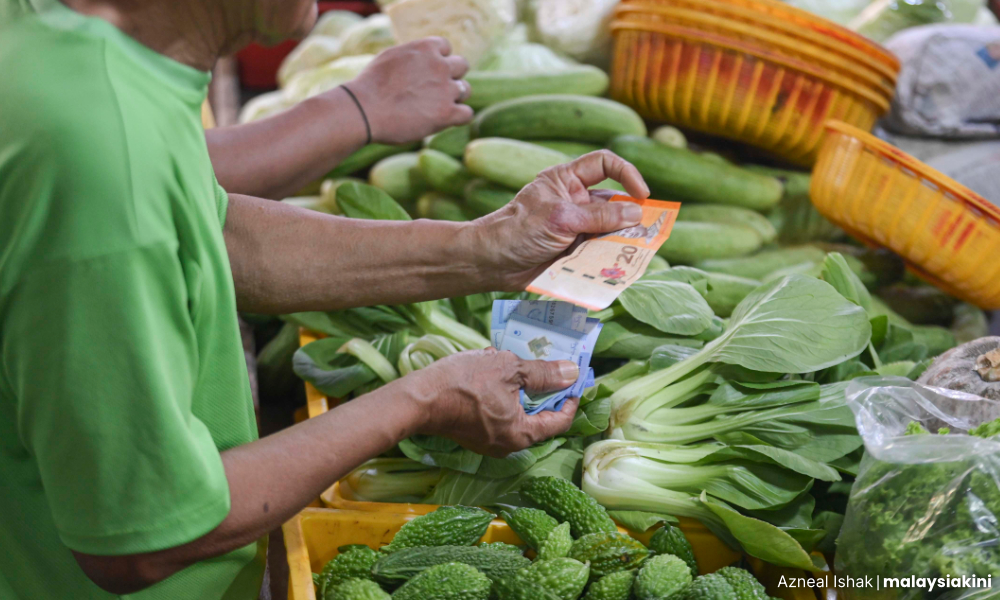
Economic pressure, subsidy concerns, cost-of-living anxieties, and perceptions of governance credibility continue to shape voter behaviour more than rhetoric alone.
Any perception that coalition disputes are driven purely by power calculations rather than policy direction could weaken public confidence across all sides.
Johor would likely become the symbolic battlefield, but the implications would extend beyond one state. Negeri Sembilan, with its more mixed political balance, could become highly sensitive to shifts in Malay middle-ground sentiment.
Penang remains structurally favourable to Harapan, though turnout dynamics and urban economic pressures remain relevant.
Pahang presents a more delicate terrain where BN’s organisational machinery still matters significantly. In each case, a nationwide direct-contest strategy would force parties to redefine not only alliances but also political identities.
From an economic perspective, investors are unlikely to react negatively to elections themselves. Markets are generally capable of absorbing democratic contestation.

What investors dislike is prolonged uncertainty, unstable coalitions, and inconsistent policy direction. A clear electoral mandate, even following aggressive political competition, may ultimately be viewed more positively than a coalition paralysed by unresolved tensions.
Political speak
This explains why Anwar’s positioning carries both political and economic logic. By signalling readiness for direct contests, he projects confidence while also pressuring coalition partners to clarify their long-term intentions.
Simultaneously, Zahid’s calibrated “solo” messaging allows Umno to reassure its grassroots without necessarily collapsing coalition cooperation entirely.
The decisive variable, however, remains execution rather than rhetoric. If Madani can maintain policy continuity, manage coalition disagreements pragmatically, and capitalise on PN’s internal fractures, the coalition may emerge stronger from controlled electoral competition.
If factionalism escalates beyond strategic management, however, fragmentation could benefit only the opposition.
Ultimately, Malaysia’s next political phase will not be determined solely by slogans about unity or independence. It will be shaped by whether political actors can balance ambition with discipline, coalition survival with party identity, and electoral strategy with economic stability.
In that balance lies the real test of Malaysia’s political maturity towards the next electoral cycle. - Mkini
AZAM MOHD is an independent political and economic analyst.
The views expressed here are those of the author/contributor and do not necessarily represent the views of MMKtT.

No comments:
Post a Comment
Note: Only a member of this blog may post a comment.