


THE Women’s Aid Organisation (WAO) has called on Kelantan and other states to raise the minimum marriage age to 18 without exceptions, saying social problems cannot justify marrying off children.
The group expressed concern over the Kelantan state government’s reported position that a blanket ban on marriage involving those below 18 was “not suitable” given existing social problems and safeguards.
While welcoming the state’s formation of a special committee to seek solutions, WAO said the minimum marriage age should be 18 for everyone, regardless of circumstances.
“Social problems cannot justify child marriage. They are a reason to address the underlying challenges and strengthen protections for children,” it said in a statement.
WAO said child marriage was a national issue, noting that the Dewan Rakyat was told on Nov 11 that only Selangor and Kedah had amended their laws to set the minimum marriage age for Muslims at 18.
The federal government remains committed to standardising the minimum age at 18 nationwide, gradually and in cooperation with state governments, the minister told Parliament.
A total of 1,361 marriages involving children below 18 were recorded in 2024 across civil, Syariah and customary law. The minister said part of the increase from 2023 reflected more systematic data collection in Sarawak.
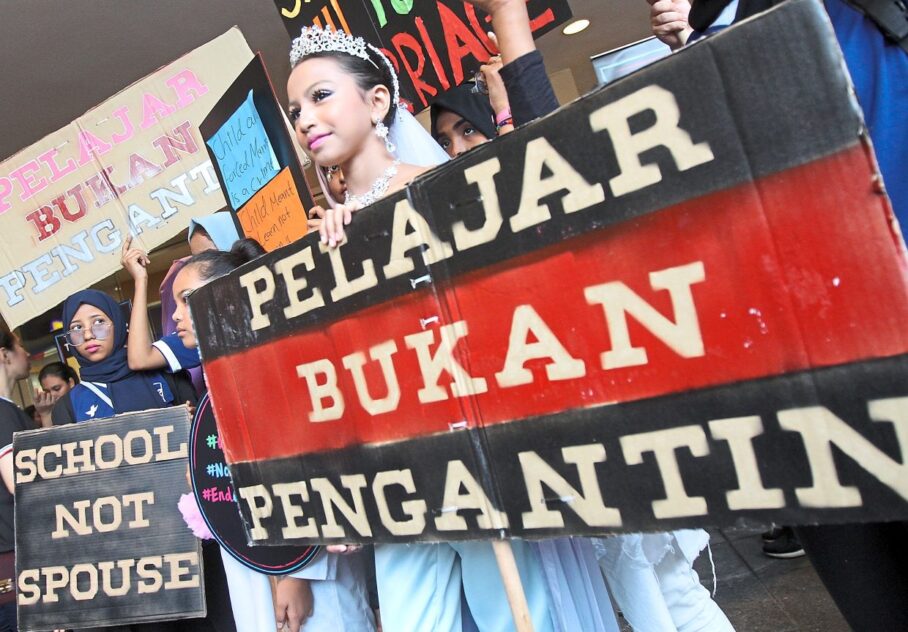
Penang has also announced engagement sessions on raising the marriage age for Muslims, which remains 16 in the state.
WAO said children married before 18 risk losing access to education, being exposed to early pregnancy and childbirth, and becoming economically dependent and isolated from support networks.
“Girls are particularly impacted because child marriage reinforces gender inequality. Girls may be expected to leave school, take on domestic responsibilities and become mothers before they are ready,” it continued.
“It treats a girl’s future as something to be arranged by others rather than chosen by her. Boys can also be affected, for example, if they are forced to quit school and work before they are ready.”
The group said varying minimum ages across genders, states and legal systems were difficult to reconcile with equality before the law and the principle that all children deserve equal protection.
It also cited its work with domestic violence survivors, saying economic dependency, isolation and unequal power dynamics can make it difficult for victims to escape abuse.
Child marriage could create these vulnerabilities early, with consequences extending into adulthood.
Malaysia is a party to the Convention on the Rights of the Child and the Convention on the Elimination of All Forms of Discrimination Against Women, and has committed to eliminating child, early and forced marriage by 2030 under the Sustainable Development Goals.
Safeguards are not a substitute for prevention
WAO said standard operating procedures and court approval mechanisms intended to oversee underage marriages did not eliminate the harm, arguing that a system permitting exceptions still allowed children to marry.
“A system that allows for such exceptions embraces the possibility of a child marrying. Oversight can only manage the consequences, not avoid it,” the group stressed.
“Its effectiveness also depends on a child’s ability to speak freely when family members are frequently present, and on discretion being applied consistently in every case.”
In November 2023, the Kelantan state administration reported that 533 couples below the required age had married since 2019, with only 13 applications rejected.
WAO questioned whether the safeguards were preventing child marriage or merely regulating it, adding that exceptions remained possible even in states which had raised the minimum age to 18.
Support families instead of marrying off children
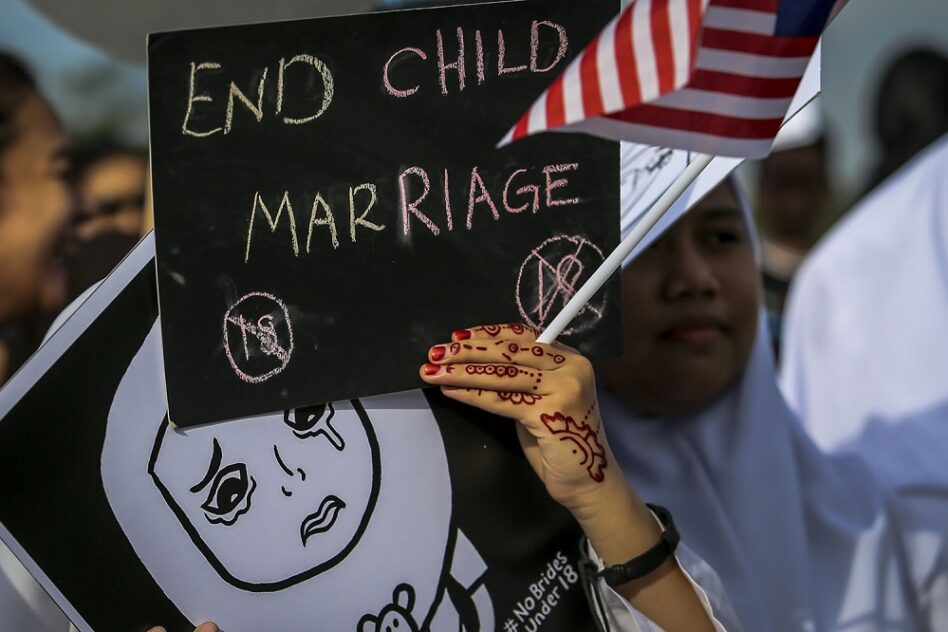
The group acknowledged poverty, adolescent pregnancy, family problems, stigma and cultural expectations as contributing factors, and said families might believe marriage was in their children’s best interests.
However, it said marriage did not resolve these problems, particularly for pregnant girls who remained entitled to healthcare, education and protection.
Instead, marriage could transfer responsibility for a child’s welfare to a family without sufficient resources, potentially contributing to school dropout, financial hardship and abuse.
WAO called for a minimum marriage age of 18 without exceptions for girls and boys, regardless of religion, ethnicity or state, urging state governments to amend their laws and the federal government to lead and fund legal harmonisation.
It also called for healthcare, psychosocial support, continued education and social protection for children facing pregnancy or other difficult circumstances, without pressure or stigma; child-friendly sexual and reproductive health education; and stronger social protection to address poverty and educational barriers.
The group further urged authorities to publish disaggregated data on underage marriage applications, approvals and rejections, independently review existing safeguards and ensure reform committees include child protection experts, women’s rights groups, survivors and young people.
“Every child has the right to complete their education, to be protected, and to make their own life choices when they are ready,” WAO said.
“We ask the Kelantan state government to change its stance and collaborate with the federal government, other states, civil society, and communities to create a Malaysia where no child is married.” ‒ Focus Malaysia

No comments:
Post a Comment
Note: Only a member of this blog may post a comment.