


The Asean Parliamentarians for Human Rights (APHR) warned that religious and racial polarisation in Malaysia, especially in the form of online hate speech, must be addressed before it reaches a breaking point.
A group of APHR members consisting of current and former MPs from the Philippines, Singapore, and Timor-Leste, recently conducted a fact-finding mission on peace and harmony after Malaysia’s latest elections.
It compiled a number of preliminary recommendations, including establishing a preventative strategy to preempt the spread of hate speech during election periods.
“Collaborative efforts among institutions like the Election Commission, the Malaysian Communications and Multimedia Commission, and Suhakam are vital in this regard.
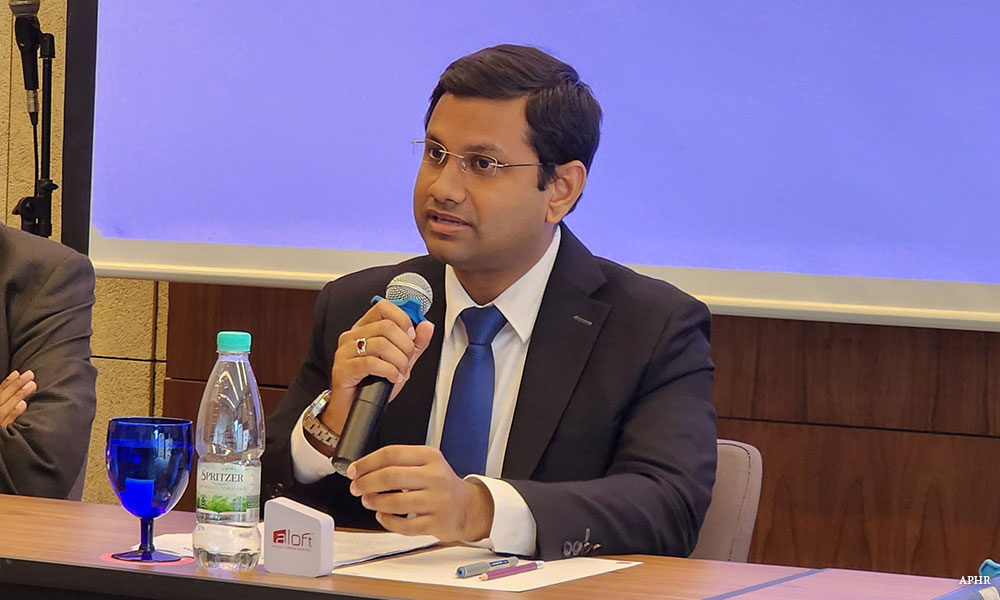
“Malaysia must foster the unity of its rich multicultural society and turn away from using divisive rhetoric for political gain,” said APHR member and former Singapore MP Mohamed Irshad at a press conference this afternoon.
“We are pleased to see that, despite years of political instability, Malaysians have been able to express their political choices through the ballot box in November 2022 and August 2023, resulting in a peaceful transition of power at both the federal and state levels.
“However, several observers have highlighted certain worrying trends regarding religious and racial polarisation that must be addressed before they reach a breaking point,” added Mohamed.
The APHR team noted that during the elections, discriminatory and hateful campaign rhetoric flooded various social media platforms, with TikTok even saying that it was on “high alert”.
It said these narratives exacerbated divisions in Malaysian society and resulted in the further marginalisation of vulnerable and minority groups.
“We are deeply concerned by the proliferation of hate speech, particularly in online spaces.
“The lack of trust between different communities that is the basis of some of these narratives needs to be addressed through open and frank discussions to get to the root cause of the problems. If not, these issues will only recur in the future,” said Mohamed.
Hold social media companies responsible
APHR also cited a lack of suitable safeguards and appropriate oversight mechanisms that allow for the creation of echo chambers and the spread of disinformation, divisiveness, and hate.
“In Malaysia, and globally, these phenomena are undermining democracy, public institutions, social cohesion, and stability.
“We believe governments throughout the region, including Malaysia, must be firm in holding social media companies to act more responsibly and take ownership for their role in facilitating the spread of hate and division,” said the APHR.
It called on politicians and community leaders to promote responsible speech and curtail inflammatory remarks, particularly during elections.
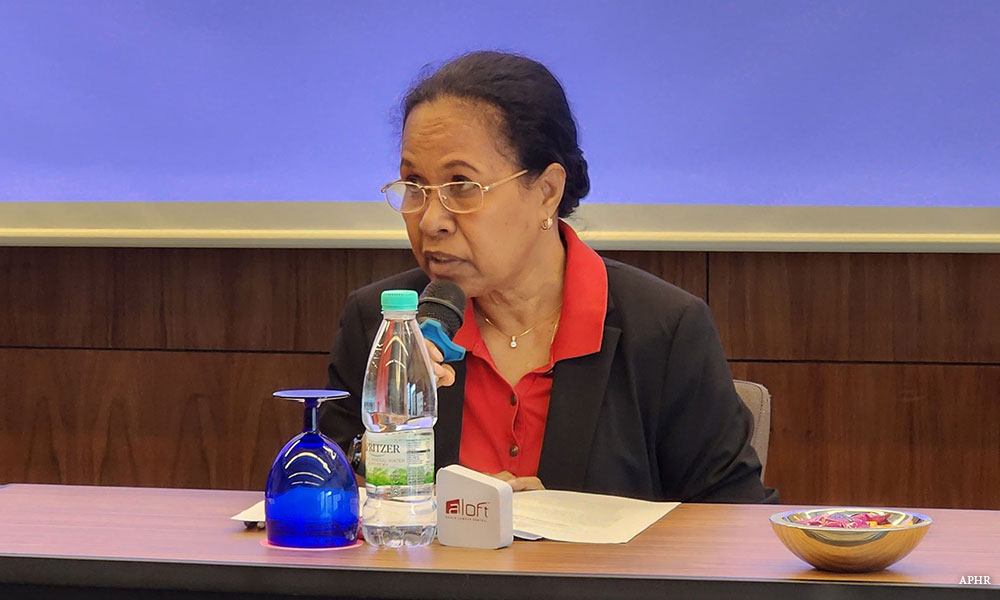
Timor-Leste MP Maria Terezinha da Silva Viegas said parliamentarians and government officials should speak out firmly and promptly against intolerance, discriminatory stereotyping and hate speech.
“We also reiterate our call for the Malaysian Parliament to urgently review laws that have been used to repress freedom of expression – such as the Communications and Multimedia Act – as they also hinder candid religious discussion,” added the APHR member.
APHR recommended a national mechanism for a meaningful, genuine, open, and honest interfaith dialogue, as a way to bridge gaps and promote mutual respect among different religious communities.
“As with all peoples, there is more that unites Malaysians than divides them.
“The challenges that Malaysia – and the rest of Southeast Asia – faces in the next five to 10 years, such as climate change, food security, and technological advances, are ones that must be faced together, regardless of race and religion,” added Maria. - Mkini

No comments:
Post a Comment
Note: Only a member of this blog may post a comment.