


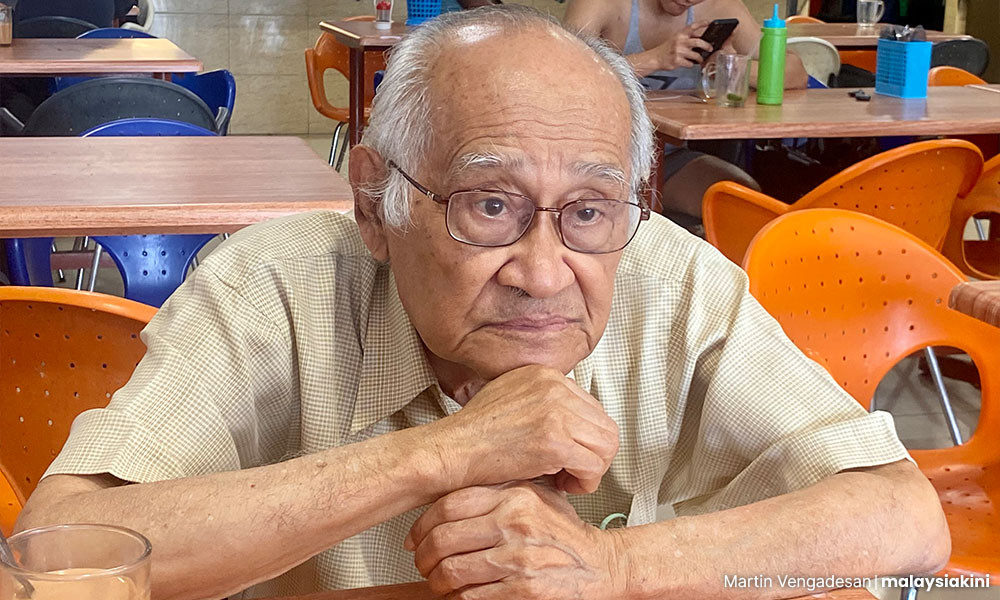
INTERVIEW | Former PKR deputy president Syed Husin Ali has reminded his party colleagues of their obligation to ensure that draconian laws that allow for detention without trial must be addressed and done away with.
In an interview with Malaysiakini, Syed Husin was generally positive about the performance of the administration of Prime Minister Anwar Ibrahim, but took note of criticisms levelled against the new government after independent preacher Wan Ji Wan Hussin’s sedition charge was allowed to proceed resulting in a jail term.
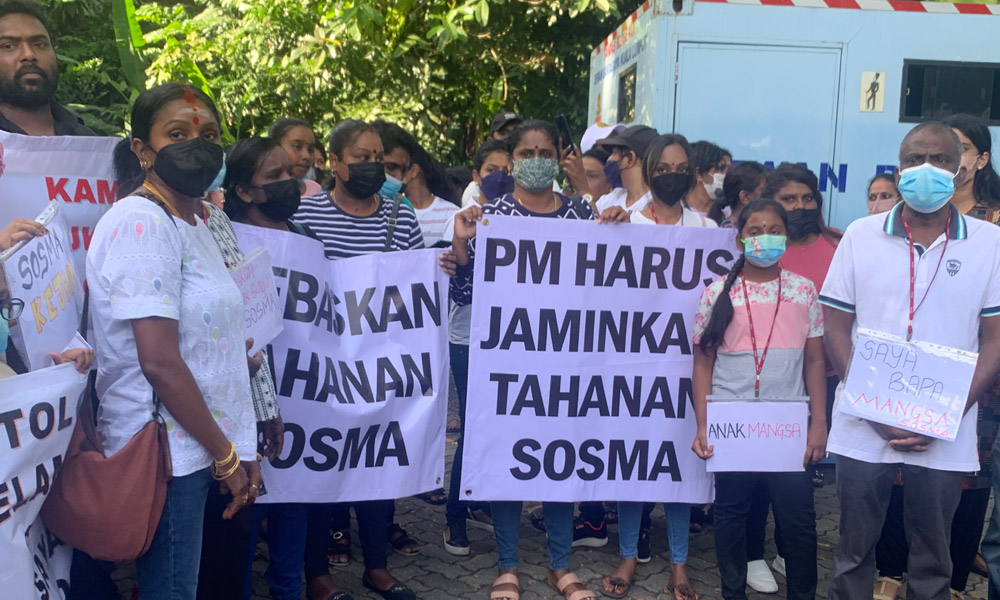
Prior to that, Deputy Minister in the Prime Minister’s Department (Law and Institutional Reform) Ramkarpal Singh said that the government has no intention of repealing the Security Offences (Special Measures) Act (Sosma) - which allows detention without trial for 28 days.
Instead, he said that Putrajaya aims to improve the law by introducing several amendments in stages.
“They should do something more but they haven't done enough on this, which is disappointing to me.
“In the past, they have been critical about such acts which are open to abuse of power,” said Syed Husin, who was detained for six years without trial under the Internal Security Act from 1974 to 1980.
He warned that the current administration must not be seen as suppressing those who are critical.
“Even if the current government wasn’t trying to suppress the opposition, it must be aware of optics. I don’t believe in making a police report on every issue or criticism. This should not be tolerated,” added Syed Husin, who just turned 87.
The British way
He also lamented the case involving Wan Ji, who will begin serving nine months in prison over a 2014 sedition case linked to the Selangor sultan after the appellate court unanimously allowed his appeal to reduce his sentence which the High Court had previously enhanced.

“In terms of Wan Ji’s case, some are very sensitive about the rulers. They cannot be touched at all.
“I think we should adopt the attitude of the British. They can be critical of the rulers but that doesn't make their monarchy system disappear. It's better to allow people to be critical and let them voice their feelings rather than suppressing them,” Syed Husin added.
He noted that the response to the current government is quite divided.
“Some traditional Pakatan Harapan supporters are very disappointed and they criticise freely. It’s to be expected but they can be very personal in their attacks.
“Then, there are others who are quite happy with the government and recognise that this is the best outcome for our stability and progress. In terms of the number of MPs, it should be stable because it’s almost two-thirds. I am one of them,” he said.
Syed Husin, who served two terms in the Dewan Negara, added that it was also a key stabilising factor that Sarawak’s GPS and Umno are working with Harapan.
High expectations
He sounded a note of caution to those who are expecting too much from the government, recalling the collapse of the Harapan administration due to the Sheraton Move.
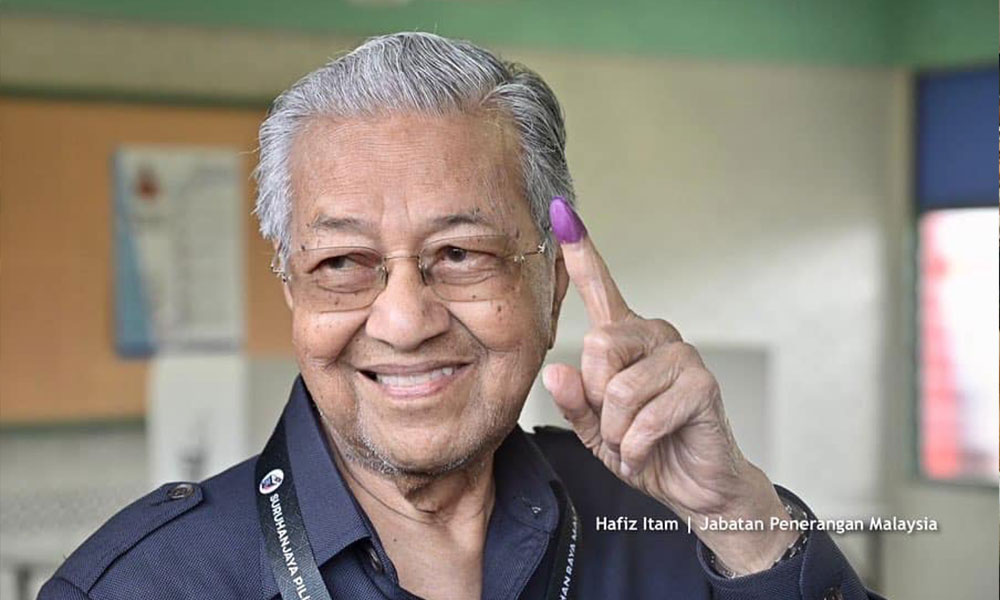
“We were optimistic after the GE14 victory and then Dr Mahathir Mohamad just unilaterally resigned as prime minister, setting off the Sheraton Move.
“I think even though Mahathir had promised the handover, he always rejected any timeframe because he had a hidden fear of Anwar becoming prime minister.
“Maybe he thought Anwar knew too much and could expose him. Even though Anwar said he wants to move on, to this day Mahathir tries to discredit him, saying he has no ability to be the prime minister,” Syed Husin pointed out.
The veteran politician, who also served as an academic for several decades, acknowledged that the discharge not amounting to an acquittal (DNAA) on corruption charges for Deputy Prime Minister Ahmad Zahid Hamidi was discouraging.
“Even though Zahid’s DNAA looks bad, I am convinced that ministers are not into corruption the way that previous ministers or prime ministers were.
“I think there is a greater concern for the common people. They are trying very hard to improve the standard of living,” Syed Husin said.
He added that he felt a need for big changes in education and that the new administration should start using education as a tool for building unity in the nation.
“The curriculum should be changed. There should be a curriculum that enables various ethnic groups to know the history and understand the culture and lives of other ethnic groups. To love each other, we must first know each other.
“The quality of education is also not very democratic. If you look at urban vs rural, rich vs poor, it’s very imbalanced in terms of access to facilities. We must make it more even,” he said.
“I would also like to see politics that are more open and democratic. There should be free exchange of ideas and open discussions instead of hiding behind personalities or promoting race or religion,” Syed Husin added. - Mkini

No comments:
Post a Comment
Note: Only a member of this blog may post a comment.