


On July 4, 2018, former prime minister Najib Abdul Razak was granted bail of RM1 million after claiming trial to charges linked to SRC International Sdn Bhd.
Within days, a group calling itself “Solidariti Bersama Datuk Najib” launched a donation drive, and party loyalists even pledged personal jewellery to fund his defence.
Two years later, on July 28, 2020, Najib was convicted in the High Court on seven counts of criminal breach of trust, money laundering, and abuse of position involving RM42 million from SRC International. He was sentenced to 12 years in prison and fined RM210 million.
The Court of Appeal in 2021 upheld the ruling, branding his actions a “national embarrassment.” The Federal Court dismissed his final appeal in 2022, sealing his fate.
Yet Umno, under Ahmad Zahid Hamidi, refused to let go. For years, the party rallied under the slogan “Justice for Najib,” insisting he had not received a fair trial.
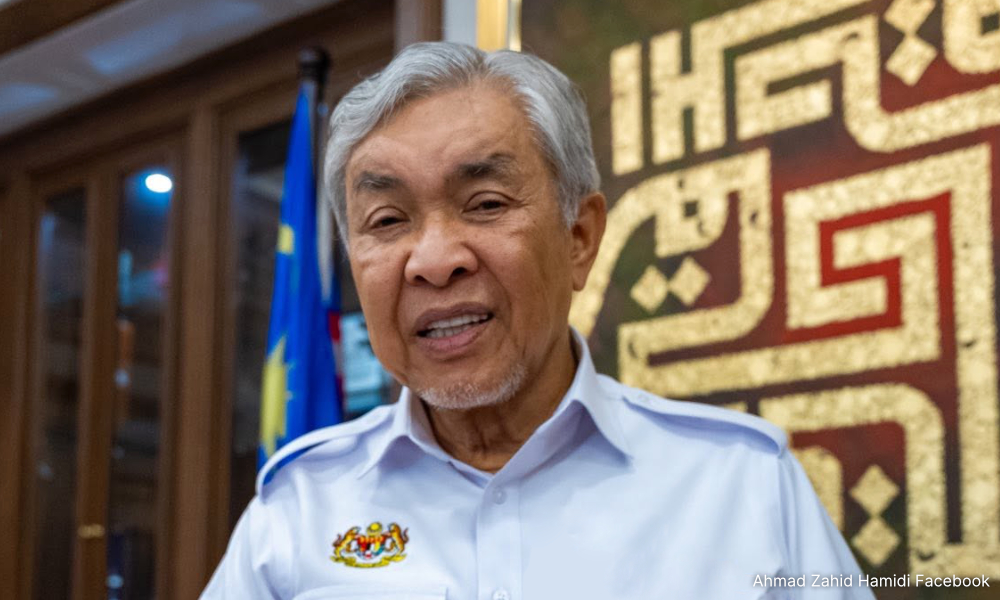
Zahid himself demanded “fair justice” from the judiciary, while leaders and grassroots repeated the mantra long after the courts had spoken.
Pardon and house arrest bid
In 2024, Najib secured partial relief when the Pardons Board halved his sentence to six years and slashed his fine to RM50 million.
This emboldened his supporters, who then pursued a controversial bid for house arrest, claiming a “royal addendum order”. But the courts rejected the argument, ruling it had no constitutional basis.
By April 2026, Najib’s lawyers withdrew the appeal, effectively ending the house arrest saga.
Najib’s son, Nizar, likened his father’s imprisonment to that of South African anti-apartheid leader Nelson Mandela’s experience and described it as God’s way of elevating his father to a higher level.
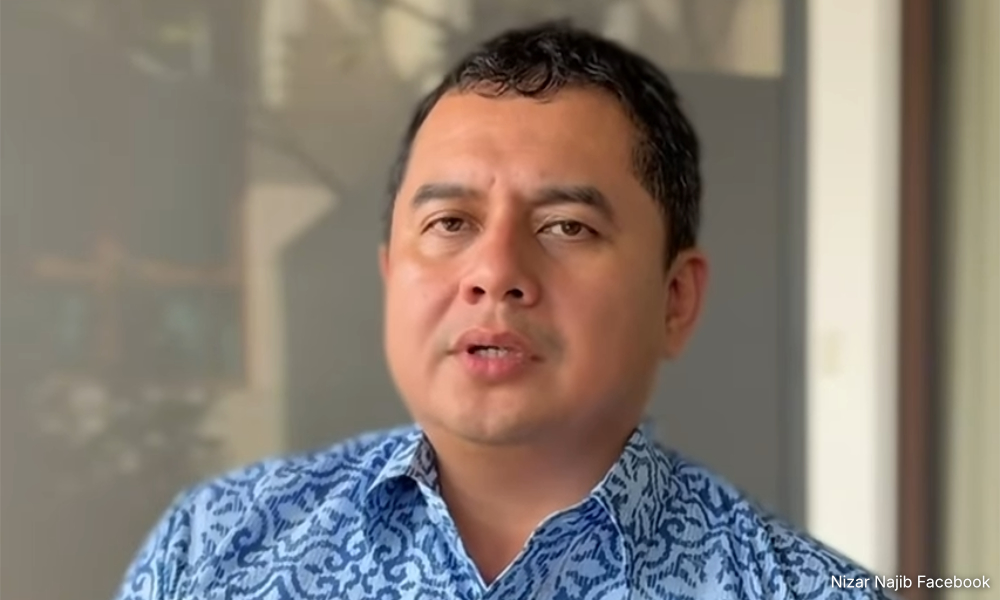
Today, Najib remains in Kajang Prison, serving his reduced term. No fresh pardon application has been filed, despite speculation earlier this year.
The once-thunderous “Justice for Najib” campaign has tapered off, its rallying cry muted by legal closure and political fatigue.
The irony is stark: Najib has already received clemency, yet his supporters continue to demand “justice.” What began as a defiant movement has dwindled into silence, exposing the limits of political loyalty when confronted with judicial finality.
Another judicial rebuke
Then, in December last year, the Kuala Lumpur High Court found Najib guilty on 25 charges and imposed a 15-year prison term plus a RM11.4 billion fine.
The sentence will begin after he completes his reduced six-year SRC International sentence.
If the Court of Appeal’s remark that Najib was a “national embarrassment” was a rebuke, judge Collin Lawrence Sequerah, who presided over the 1MDB trial, wrote in his 809-page judgment (released June 16, 2026) that the scale of Najib’s plunder “made Attila the Hun look like a choirboy by comparison.”
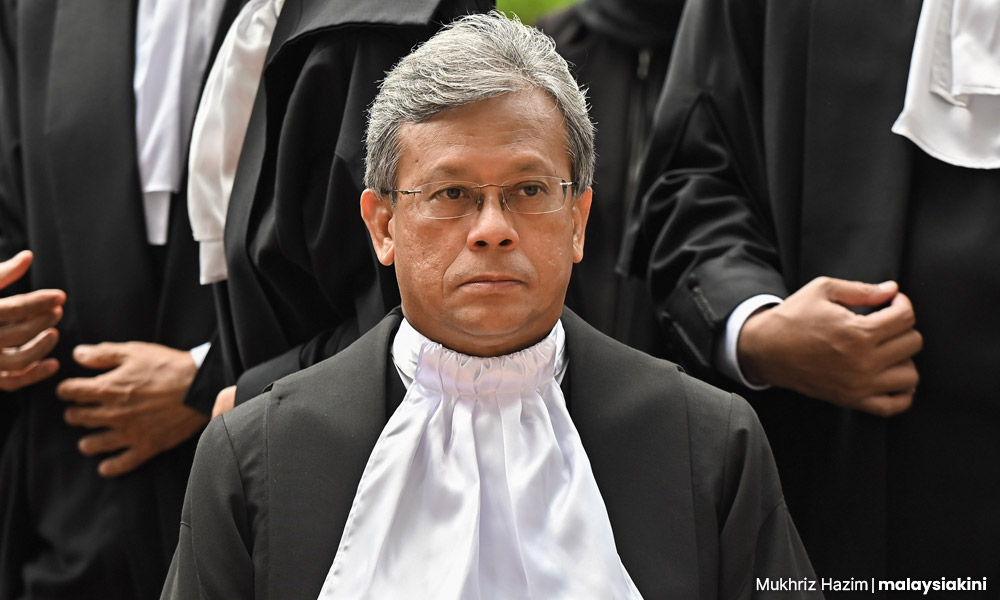
These damning remarks underscored the unprecedented magnitude of the scandal, which the judge described as one of the world’s largest kleptocratic episodes.
Since then, there has been a golden silence. Perhaps, with state elections looming, Zahid and his Umno cohorts decided that bringing Najib’s name into the fray would be more of a liability than of an asset in the lead-up and campaigning.
Even Najib’s staunchest ally, who benefited from Najib’s generosity, the MIC, last January held special prayers in Batu Caves with hundreds of people wearing white shirts bearing the MIC party logo who chanted “Hidup Najib” (Long Live Najib).
Prime Minister Anwar Ibrahim, who has maintained an elegant silence, ignoring such calls despite being badgered over the past eight years, has not yielded.
But when he was in the opposition, he asked those calling for a royal pardon for Najib to first read through the judges’ decisions in the SRC International case, which sent him to jail.
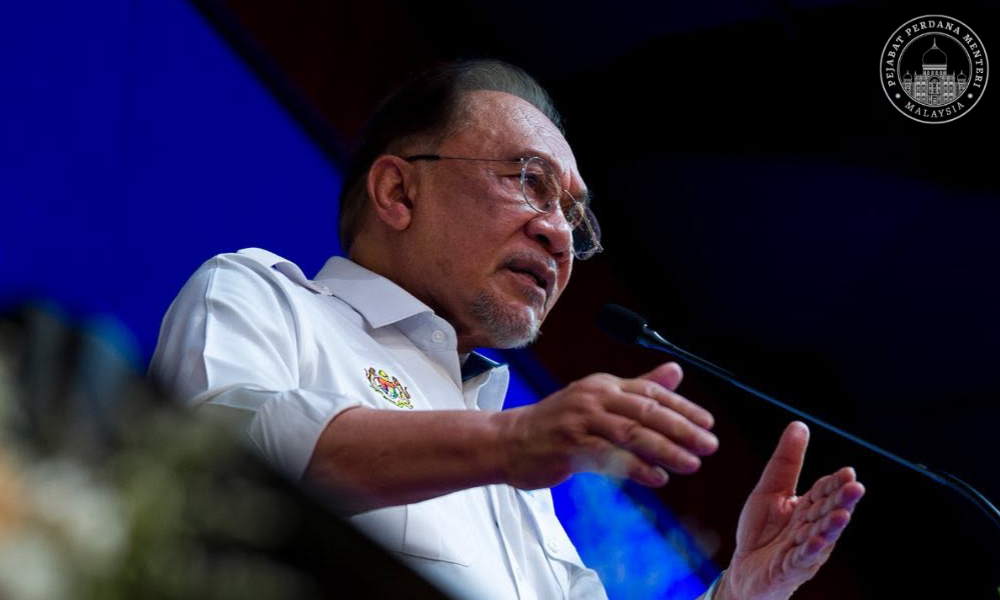
“Read first, how many millions (were taken), which account they went to, how many diamonds were bought. Once we read and know, then we won’t defend (Najib),” Anwar said.
It was never about Najib
So, has Najib been forgotten or written off by Umno?
When Najib’s conviction was upheld, Zahid demanded “fair justice” (whatever this means) for Najib.
His rallying cry - “Justice for Najib” - became a partisan slogan, repeated endlessly by party loyalists even after the courts had spoken.
For Zahid, Najib’s plight was political capital, a tool to galvanise the grassroots and project Umno as the defender of its embattled leader.
The contrasting voices within reveal the hollowness of the “Justice for Najib” campaign.
It was never a universal principle within Umno - only a shield wielded by some, while others quietly distanced themselves.
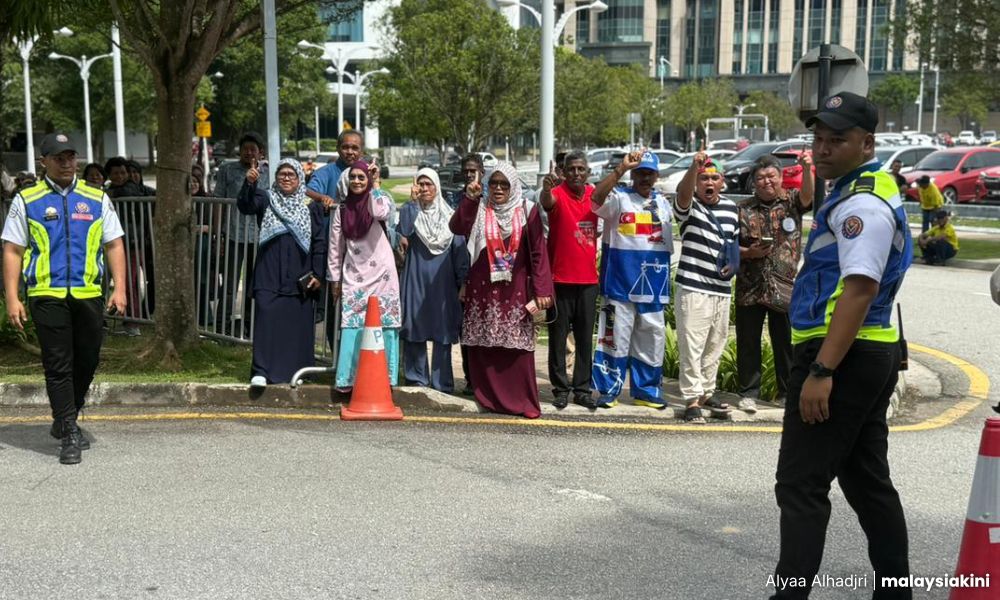
The “Justice for Najib” campaign was loud, relentless, and choreographed - but it was never truly about Najib. It was about Umno’s survival and the political dividends his plight could yield.
Zahid and the party elite wrapped themselves in his cause when it suited them, demanding “fair justice” as a rallying cry to boost the grassroots.
The same leaders who once thundered in his defence now pivoted to other agendas, leaving Najib to serve his reduced term in Kajang Prison. If his appeal on the 1MDB case fails, he will serve another 15 years.
Najib’s allies appear to be fair-weather friends. They used his predicament as a shield against criticism, a banner to rally the faithful, and a bargaining chip in their own political manoeuvring.
But when the slogan no longer served the party’s interests, they abandoned it - and Najib.
His fate illustrates a deeper reality of Malaysian politics: loyalty is conditional, and justice is often invoked only when it aligns with power.
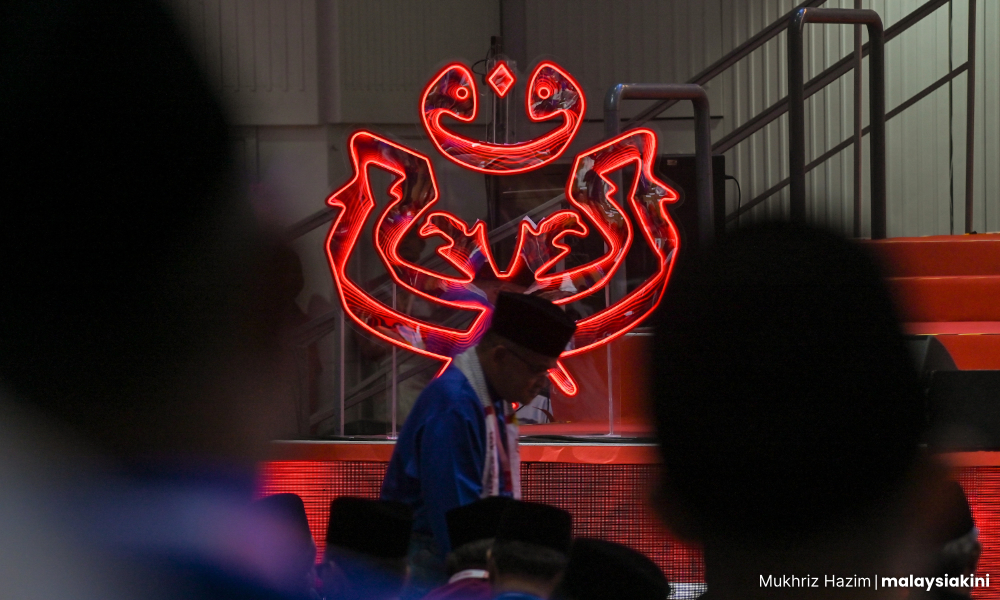
The silence of his comrades these days is the clearest proof that “Justice for Najib” was never about justice at all. It was a slogan of convenience, discarded once it no longer fit the narrative.
Najib remains behind bars, but the campaign that once roared in his name has withered into whispers.
His story is no longer about innocence or guilt - it is about how quickly political loyalty evaporates. And in that silence, Najib stands alone, a reminder that in politics, even the loudest allies can turn out to be the feeblest friends. - Mkini
R NADESWARAN is a veteran journalist who strives to uphold the ethos of civil rights leader John Lewis: “When you see something that is not right, not fair, not just, you have to speak up. You have to say something; you have to do something.” Comments: citizen.nades22@gmail.com.
The views expressed here are those of the author/contributor and do not necessarily represent the views of MMKtT.

No comments:
Post a Comment
Note: Only a member of this blog may post a comment.