


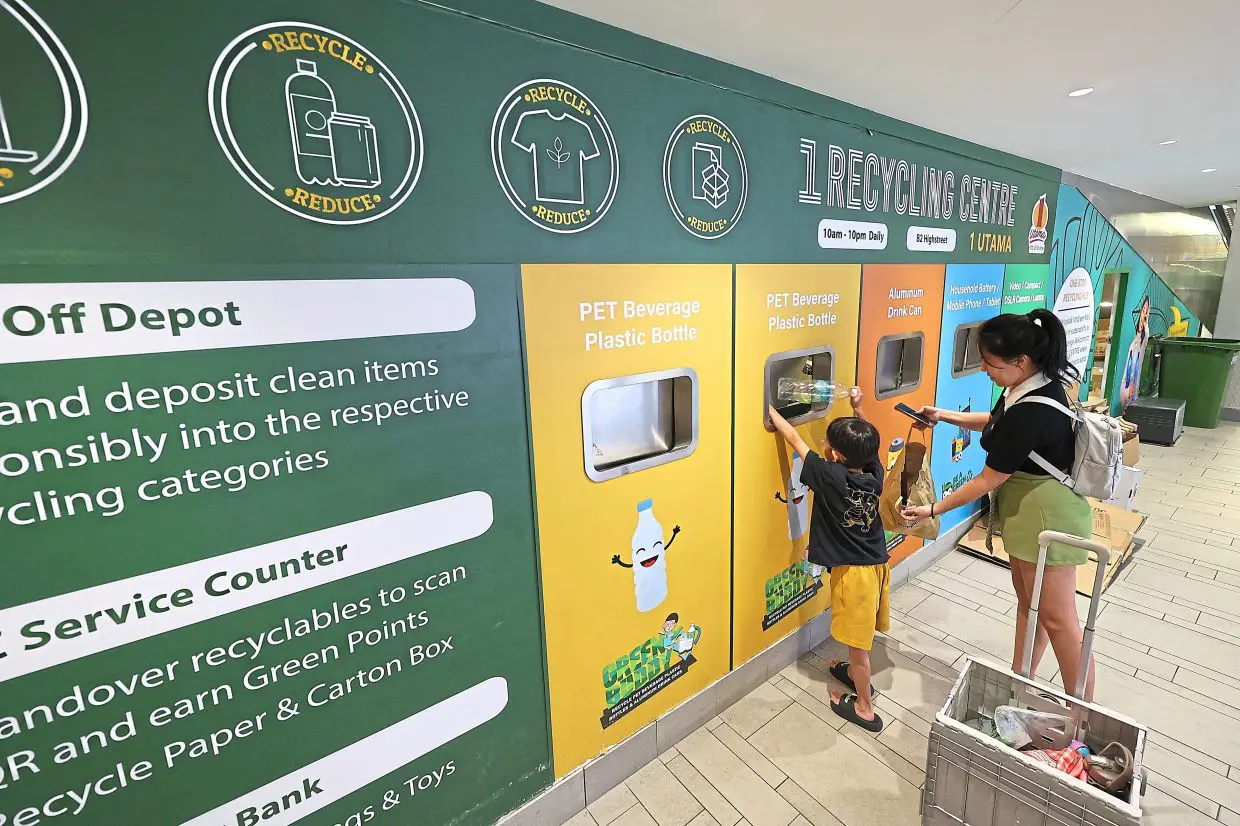
ON June 24, Housing and Local Government Minister Nga Kor Ming launched the National Recycling Campaign at a shopping mall in Bukit Bintang, one of Malaysia’s busiest commercial districts.
Every day, thousands of people shop, dine, work and travel through the area, generating large amounts of packaging, plastic bottles, cans, paper and other materials that are often discarded after a single use.
The choice of venue was significant. Bukit Bintang represents modern urban consumption at its most visible and is therefore an ideal place to demonstrate how commercial districts can lead the way in embracing more sustainable practices.
Recent global events have also highlighted the importance of making better use of the resources already available to us.
Disruptions to international supply chains, rising transportation costs and economic uncertainty have shown how vulnerable countries can be to developments beyond their borders.
While Malaysia cannot control global events, it can strengthen its resilience by reducing waste and improving resource efficiency.
That is where recycling plays an important role. Every aluminium can, plastic bottle, cardboard box and electronic device that is properly recovered becomes part of a circular economy rather than ending up in a landfill.
By keeping valuable materials in circulation, we reduce unnecessary waste, lower dependence on raw materials and create a more sustainable economy.
This is no small challenge. According to SWCorp Malaysia, the country generated about 15.2 million tonnes of waste in 2024, equivalent to more than 41,000 tonnes a day.
More importantly, almost 40% of the waste sent to landfills could potentially be recycled, suggesting that millions of tonnes of valuable materials are still being discarded rather than recovered and reused.
Recycling alone will not shield Malaysia from inflation or geopolitical uncertainty. However, it is a practical and achievable step that helps the country make better use of existing resources while reducing pressure on landfills and the environment.
The National Recycling Campaign is therefore a welcome initiative. Yet raising awareness is only part of the solution.
Most Malaysians understand the importance of recycling. Encouragingly, the national recycling rate increased from 35.38% in 2023 to 37.9% in 2024. The challenge is turning awareness into consistent action.
For many people, recycling is not always convenient. Recycling bins may be difficult to locate, poorly labelled or unavailable in certain areas.
Some households are unsure what can be recycled, where to dispose of e-waste or whether the items they separate are ultimately processed correctly.
If recycling is to become a daily habit, it must be easier than simply throwing everything into a single bin.
Nga has taken a positive step by requiring shopping malls to provide recycling facilities. Similar efforts could be expanded to public transport hubs, markets, residential neighbourhoods and large workplaces.
At the same time, clearer labelling, reliable collection systems and practical incentives would help encourage broader participation.
Businesses also have an important role to play. Retailers, food outlets and manufacturers should continue exploring ways to reduce unnecessary packaging while designing products that are easier to reuse, repair and recycle.
A good example is mooncake packaging. Every year, beautifully designed gift boxes appear on store shelves ahead of the Mid-Autumn Festival.
While visually appealing, many contain multiple layers of decorative packaging that serve little practical purpose. Once the mooncakes are consumed, much of that packaging ends up as waste.
Consumers can also contribute through simple but meaningful actions, such as separating household waste, carrying reusable bags and bottles, and disposing of e-waste through authorised collection channels.
Building a more sustainable Malaysia requires participation from everyone. The government must provide leadership and infrastructure. Businesses must innovate and reduce waste. The public, meanwhile, must make responsible consumption and recycling part of everyday life.
Places like Bukit Bintang can demonstrate how these efforts come together. In a district defined by constant movement, commerce and consumption, small actions taken by businesses, workers, residents and visitors can collectively make a significant difference.
A cleaner Malaysia is an important goal. But so is a smarter and more resilient Malaysia, one that recognises that in a world of rising costs and uncertain supply chains, we cannot afford to waste the resources we already have.
Ben Fong Kok Seng is the chairperson of the Bukit Bintang Parliamentary Zone Residents’ Representative Council.
The views expressed are solely of the author and do not necessarily reflect those of MMKtT.
- Focus Malaysia.

No comments:
Post a Comment
Note: Only a member of this blog may post a comment.