`


THERE IS NO GOD EXCEPT ALLAH
read:
MALAYSIA Tanah Tumpah Darahku

LOVE MALAYSIA!!!


21 JUNE 2026

Thursday, January 1, 2026

The conflicting demands afflicting healthcare

Patients now demand faster and better care, made possible by new technologies that are pricier, yet they expect to pay less.

muralitharan

The perennial problem afflicting healthcare the world over is the issue of rising costs.

A previous article explored some of the supply side issues allegedly driving the rise of healthcare costs in Malaysia, especially within the private healthcare landscape.

However, across both the public and private sectors there is a significant increase in costs not attributable to the human resource factor — the fees of health professionals.

The answer? First among these is technological and scientific innovation that have an impact on drugs, equipment, medical devices, tests and consumables. Across the spectrum, there are innovations in all these fields that lead to newer, better strategies to deliver healthcare and improve patient outcomes.

Unfortunately, few of them, if any, are ever cheaper. In most cases, they are more expensive than existing technologies by leaps and bounds.

In fact, as an interesting aside for the reader, for more than a quarter century that I have been in the healthcare landscape I have never witnessed a technological or scientific medical innovation that is cheaper than the prevailing standard of practice that it was intended to replace.

Enough said.

Drug A, for example, would have been used for more than five decades as an antibiotic. Highly effective but causes some side effects.

Today, scientific research and innovation would have led to the development of Drug B for the same purpose; equally effective but with lesser side effects.

The cost? Unfortunately, the price of Drug B would be almost two or three times that of Drug A. This is the price of innovation.

Lest I sound pessimistic and come across as a grouch denying scientific discoveries and how they continue to improve healthcare outcomes, let me also provide this example.

Until the past few years, lung cancer, which continues to be diagnosed largely in late stages in Malaysia, was a disease that could not be managed by existing therapeutic modalities. Patients survived weeks at the most.

It is the entry of innovative therapies such as immunotherapies and targeted therapies that have really changed the landscape, with patients now surviving years and many going into stable conditions, back to living their lives.

Admittedly, the prices of these drugs are in the tens of thousands of ringgit every month, but they save lives every day. What is the price of the life of a loved one compared to this measly monetary cost?

The innovative technologies and therapeutics in the supply side driving healthcare costs are further amplified by the demand side calls for incorporating them into healthcare delivery, which further compounds increases to overall healthcare costs.

Even in the public sector (and of course in the private sector), there is a constant demand to provide newer, more effective treatment solutions.

And at the current rate of healthcare scientific innovation, almost every day there is a new device, drug, test or treatment approved by regulators — improving lives but further increasing the costs.

In the public sector, for example, there are cost-control mechanisms in place to limit the rise of healthcare costs attributable to technological innovation.

One such example is health technology assessment (HTA) mechanisms where the cost-benefit and budgetary impact of each innovation is assessed before being incorporated into daily use within all the health ministry facilities.

The other mechanism is rationing — where a fixed budget is provided for a certain therapeutic area, and thus only certain patients can avail of new therapeutics or treatment due to limited availability of resources.

This is no longer accepted within public healthcare settings, with outcries from various stakeholders including patients and families on why they or their loved ones are not receiving new, top-of-the-line treatments; this is also definitely not going down well within the private healthcare system, where individuals are paying insurance premiums and expecting top-of-the-line treatments as a matter of course.

For insurers to limit access to innovative treatment due to cost-containment measures is something that private health insurance clients (and their prescribing physicians) are not going to stomach. Hence the current disgruntlement.

But insurers are not finding it easy as well. Premiums have been collected based on models for treatments that were cutting-edge at the time these products were designed, in some cases more than two decades ago.

The current prices of new therapeutic treatments have broken all these models.

Therefore, the repricing of premiums, as is now proposed or attempts made to have them implemented, is something existing subscribers are not willing to accept.

This is especially so for those who have been loyally paying premiums worth thousands of ringgit for decades.

The other “invisible hand” driving healthcare costs is something related to both supply-demand curves, namely over medicalisation.

Over medicalisation refers to the overuse of therapeutic solutions for medical conditions that could have been treated with other cheaper or different non-therapeutic solutions.

Over medicalisation includes overdiagnosis and overtreatment, among other conditions, and may be driven both by supplier-induced demand (where physicians are prescribing these treatments) or by demand itself where clients are demanding for quick fixes via therapeutic solutions.

Increasingly, the expectation and pressure from clients and families are also leading many physicians to practise defensive medicine, another facet of over medicalisation, just to ensure that they are not being led down the road to a medicolegal lawsuit.

With rising numbers of medicolegal cases, more and more physicians are practising defensive medicine, and the result of it is often higher healthcare costs.

So in the end, rising healthcare costs are in no small part due to a conflicting demand in the supply-demand curve.

Everyone wants better, more effective treatments, but at a lower cost. This is not a reality achievable in this universe at this time.

Other options? Better cost-control mechanisms, but that is another story for another time. - FMT

The views expressed are those of the writer and do not necessarily reflect those of MMKtT.

2026 will be the year of the great SME pivot

The world is looking to Malaysia as a hub for supply-chain diversification.

sop kilang

From William Ng

As we cross the threshold into 2026, Malaysia’s 1.2 million SMEs find themselves at a crossroads.

The “survival mode” of the post-pandemic years has finally come to a close, replaced by a more stable economic outlook and a clearer fiscal trajectory.

However, the dawn of 2026 brings with it a realisation that “business as usual” is no longer a viable strategy for survival, let alone growth.

If 2025 was the year of “Fixing the Foundations”, as I have argued previously regarding our low-wage ecosystem, then 2026 must be the year of the Great SME Pivot.

The challenges: a triple threat

The obstacles SMEs will face in 2026 have evolved into a complex “triple threat” of structural demands:

1. First, the compliance ceiling is lowering. With the full implementation of e-invoicing for many and the increasing pressure for ESG reporting, the cost of doing business is no longer just about wages and rent; it is about the “regulatory tax” of data and transparency.

While Samenta has welcomed the increase in the threshold to RM1 million for e-invoicing as a compassionate “breathing space”, we must be honest: that space is a waiting room, not a permanent sanctuary.

SMEs that fail to digitise their accounting and governance in 2026 will find themselves locked out of the global supply chains.

I would even go so far as to proclaim that we are entering a “compliance economy”, one where compliance becomes the currency for trade, growth and survival.

For example, Jan 1, 2026 marks the start of the “Green Wall” era: the definitive phase of the EU’s Carbon Border Adjustment Mechanism (CBAM) and the “trial” rollout of our own National Carbon Tax.

SMEs in the supply chain must realise that a high carbon footprint is now a financial liability.

2. Second, the liquidity squeeze and execution deficit continue to be SMEs’ silent killer.

Despite a record RM50 billion allocation for business financing in Budget 2026 (and equally supportive numbers in previous years), 70% of firms still operate with less than six months of cash reserves.

We don’t need more billions in “allocated” funds if the “accessible” funds are still guarded by 19th-century collateral requirements.

Furthermore, SMEs continue to find themselves in a maze of overlapping agencies. Currently, SME development programmes are fragmented across 14 ministries and over 60 agencies and state bodies.

This institutional “bloat” often results in contradictory directives and a “silo” mentality that leaves the average business owner exhausted by red tape before they even receive a single sen of support.

This has to be the year when we finally rationalise this ecosystem; we need a “single window” for SME development that prioritises the user experience of the entrepreneur over the administrative convenience of the bureaucrat.

3. Third, perhaps the most daunting challenge is our stagnant productivity growth. For too long, our SMEs have relied on a “low-cost, high-volume” model fuelled by manual labour.

This model is long broken. Our labour costs are rising (and rightfully so), but our output per worker has not kept pace.

While our labour productivity per hour has grown to approximately RM45.10, it lags far behind regional competitors like Singapore by nearly 4 to 1 in value-added per worker.

Without a significant leap in productivity through automation and better management practices, SMEs will find themselves crushed between a rising floor of wages and a stagnant ceiling of efficiency.

Samenta has pushed back against aggressive labour market reforms. But we can only push back for so long, as wages and labour conditions cannot stagnate forever. Our productivity must outpace wage growth.

The opportunities: a regional springboard

Despite these headwinds, 2026 offers a unique alignment of stars.

The most significant opportunity lies in our Asean integration. Following Malaysia’s chairmanship and the launch of the Asean SME Caucus championed by Samenta, the regional market of 680 million people is a natural first step for our SMEs to grow beyond Malaysia.

The conclusion of the Digital Economy Framework Agreement and the upgraded Asean Trade in Goods Agreement are “passports” for “Made by Malaysia” brands to compete in Jakarta, Ho Chi Minh City, and Bangkok.

Furthermore, the incentives for AI and cybersecurity training that Samenta has fought for, while not as extensive as we would like, is a strong signal that we must use technology as enablers to lift our productivity.

The 2026 resolution: from middlemen to value creators

I previously defended SMEs against the charge that we are “addicted to low wages”. Low wages are a symptom of a low-productivity system. But in 2026, the responsibility to break that cycle is a shared one.

SMEs must proactively pivot from being mere middlemen, traders and OEM manufacturers to becoming brand owners and IP holders.

We must stop competing on price. That’s a race to the bottom where someone else will always be cheaper. We must start competing on value, innovation, and trust.

A call to action

To the government: give us an enabling ecosystem that goes beyond grants. Chief of this would be to ensure that costs of doing business remain stable, while cutting down on barriers to doing business.

Recent work that Samenta has been part of, in driving business efficiency and scaling back bureaucracy are indications of the government’s will to disrupt the bureaucratic tendencies of the past.

Rest assured that the business community is supportive of even more drastic actions against red tape, and we will have your back on this.

To my fellow SME owners: 2026 is not a year to be defensive. It is a year to go on the offensive.

The world is looking to Malaysia as a hub for supply-chain diversification. Let us not just be part of the economy in 2026; let us be the ones driving it. - FMT

William Ng is the national president of the Small and Medium Enterprises Association of Malaysia (Samenta).

The views expressed are those of the writer and do not necessarily reflect those of MMKtT

WILL THE AYATOLLAHS BE KICKED OUT


  • latest Iran demos now in fourth consecutive day 
  • significant escalation in Iran's internal pressure cooker 
  • combination of economic collapse, fatigue, eroding regime legitimacy 
  • could cascade regime collapse
  • sparked off Dec 28, 2025 when Tehran’s Grand Bazaar strike
  • to protest rial’s depreciation, inflation surpassing 42% 
  • rial’s free fall made essential imports out of reach
  • igniting strikes among bazaar vendors, truck drivers, gold, furniture merchants
  • By Dec 30 spread to university campuses in Tehran, Mashhad 
  • currency's free fall made essential imports out of reach, igniting strikes.
  • fiscal mismanagement; diversion of resources to Lebanon, Yemen, Iraq
  • regime corruption and incompetence.
  • traditional regime-supporters join students, laborers, minorities to reject ayatollahs
  • unrest in Tehran, Mashhad, Hamadan, Malard, Arak, Izeh, Kermanshah, Rasht, Shush 
  • bazaar closures paralyzing commercial arteries
  • Slogans chant “Death to the dictator,” “Until the mullah is killed” 
  • broad participant base: women, youth, ethnic minorities, retirees, workers. 
  • intergenerational, cross-strata composition 
  • IRGC deployed tear gas, live rounds, birdshot in Hamadan, Izeh
  • Ayatollahs responded with violence 
  • Islamic Revolutionary Guard Corps crackdowns
  • deployment of Afghan mercenaries to compensate for reluctant domestic forces
  • Ayatollahs ready to use lethal violence, mass detentions, targeted eliminations 
  • IRGC crowd-control capabilities, sniper teams, chemical agents
  • Low morale among enforcers 
  • defection in provincial garrisons 
  • protests economically driven, widespread, commercial shutdowns 
  • Bazaar participation - pillar of regime’s support base marks systemic fracture
  • 2022-2023 movement violent, sustained over months with women at forefront 
  • current protests predominantly economic-focused
  • bazaar-led economic leverage over immediate livelihood crises
  • sustained economic strikes could paralyze key sectors
  • regime deploys maximum force, mass arrests 
  • if strikes spread to refineries, ports, IRGC defections could cascade nationwide

The views expressed are those of the writer and do not necessarily reflect those of MMKtT.

King, Queen extend New Year greetings


KUALA LUMPUR: His Majesty Sultan Ibrahim, King of Malaysia, has called on the people to continue strengthening unity and mutual respect among one another for the harmony of the country.

In a New Year message posted on his official Facebook page, Sultan Ibrahim, together with Her Majesty Raja Zarith Sofiah, Queen of Malaysia, prayed that 2026 will bring continued well-being and prosperity to the nation.

"His Majesty Sultan Ibrahim, King of Malaysia, and Her Majesty Raja Zarith Sofiah, Queen of Malaysia, extend their New Year 2026 greetings to all Malaysians.

"Their Majesties pray that Malaysia will always be under Allah's protection and be blessed with lasting peace, progress, and prosperity." - NST

Navy helicopter crashes off Melaka, all four on board rescued


KUALA LUMPUR: A Royal Malaysian Navy (RMN) helicopter is believed to have crashed in the Straits of Malacca off Klebang, Melaka.

The New Straits Times understands that all four people on board were rescued from the AgustaWestland Super Lynx anti-submarine warfare helicopter.

However, the condition of those rescued and the exact time of the incident have not been confirmed.

As of press time, NST has reached out to the RMN for further details. - NST

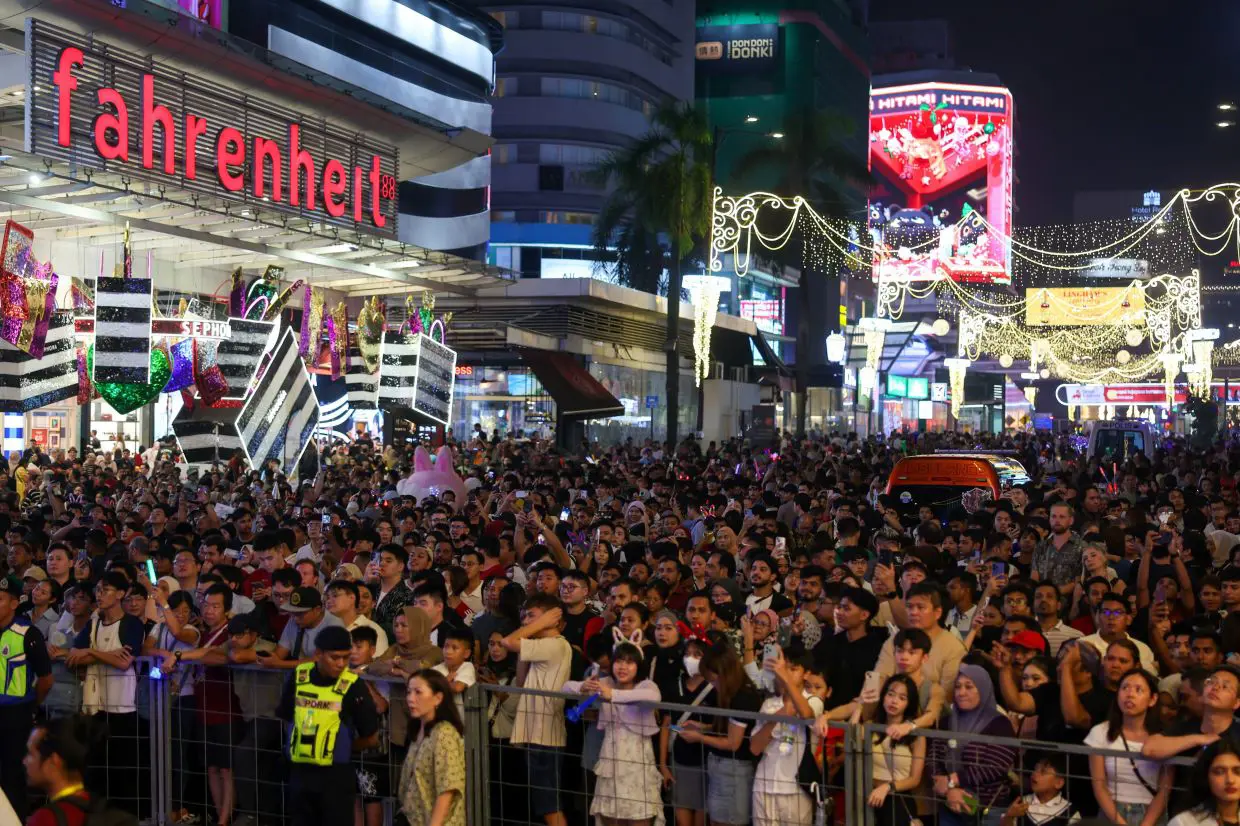
PM ushers in New Year with revellers at Bukit Bintang


KUALA LUMPUR: Prime Minister Datuk Seri Anwar Ibrahim has arrived at Bukit Bintang tonight to join the New Year’s Eve countdown, greeted by cheering crowds lining the streets.

Revellers waved and called out as he made his way through the Pavilion Bukit Bintang area where the Visit Malaysia 2026 countdown festival is being held.

Before reaching at his designated spot, the Prime Minister moved through the crowd, exchanging greetings with attendees.

Their cheers created a lively and festive atmosphere ahead of the countdown with attendees taking photos and videos to capture the moment.

There were also cultural performances to entertain the attendees ahead of the countdown.

On stage, the Prime Minister waved the VM2026 flag with Tourism, Arts and Culture Minister Datuk Tiong King Sing, while performers sang the VM2026 theme song. - Star

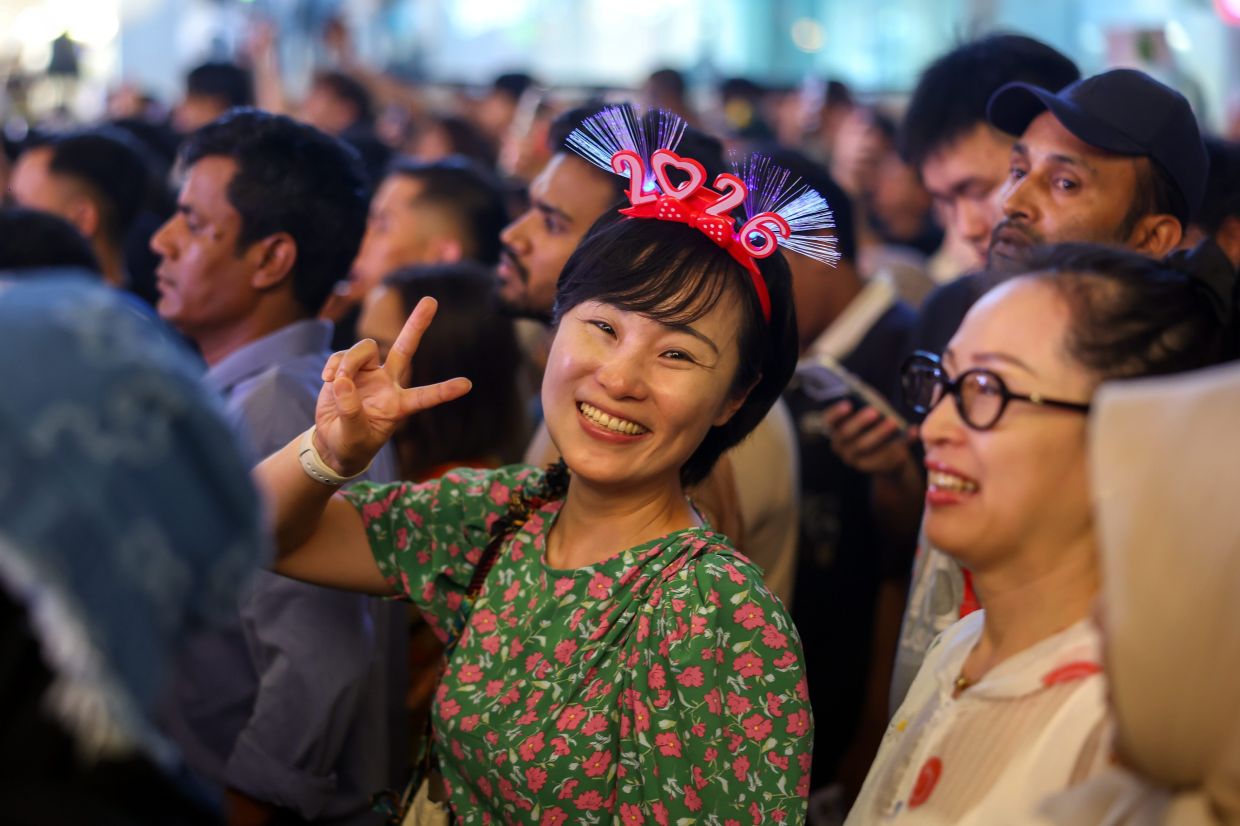
Revellers thronging Bukit Bintang for thethe Visit Malaysia 2026 countdown festival is being held. - Photo: BernamaRevellers thronging Bukit Bintang for thethe Visit Malaysia 2026 countdown festival is being held. - Photo: Bernama