


The Kuala Lumpur High Court granted leave to the US Embassy in Malaysia to challenge the Industrial Court ruling awarding RM66,000 to a security guard who was dismissed 15 years ago.
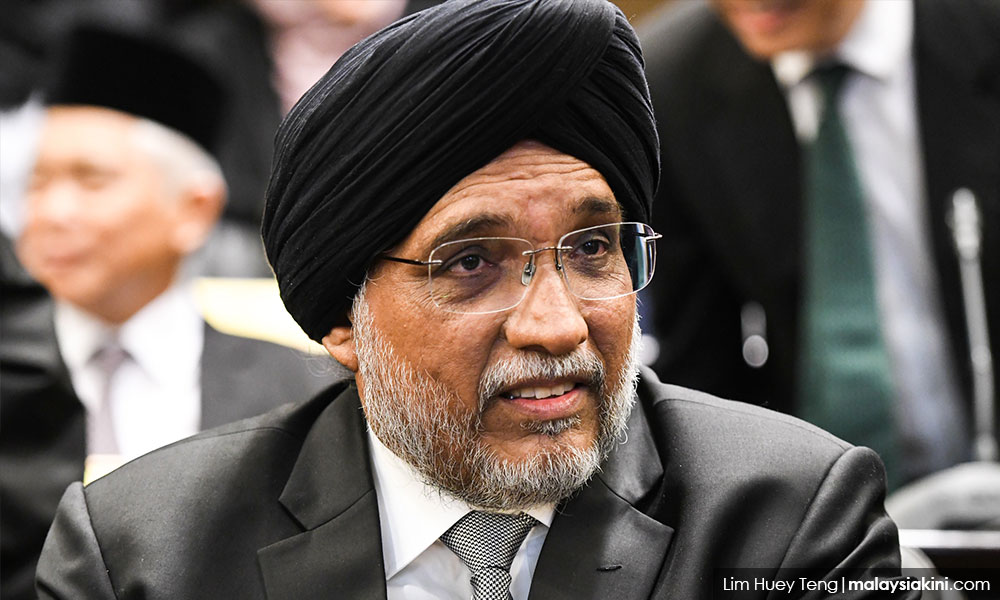
Judge Amarjeet Singh allowed the superpower’s judicial review leave application, following no objections raised by the US Embassy’s former security guard L Subramaniam, as well as the Industrial Court.
The Appellate and Special Powers civil court division then set Jan 16 next year to hear parties’ oral submissions on the merits of the judicial review proper.
Back on May 2, it was reported that the Industrial Court awarded RM66,000 to Subramaniam over his alleged unlawful dismissal from the US Embassy in Kuala Lumpur in 2008.
From the onset, the US Embassy's legal team contended that the Malaysian Industrial Court had no jurisdiction to hear Subramaniam's unfair dismissal case.
During open-court proceedings this morning, the US Embassy's counsel Lim Heng Seng informed the civil court that it was understood that the two respondents in the matter - Subramaniam and the Industrial Court - have no objections to the judicial review leave application.
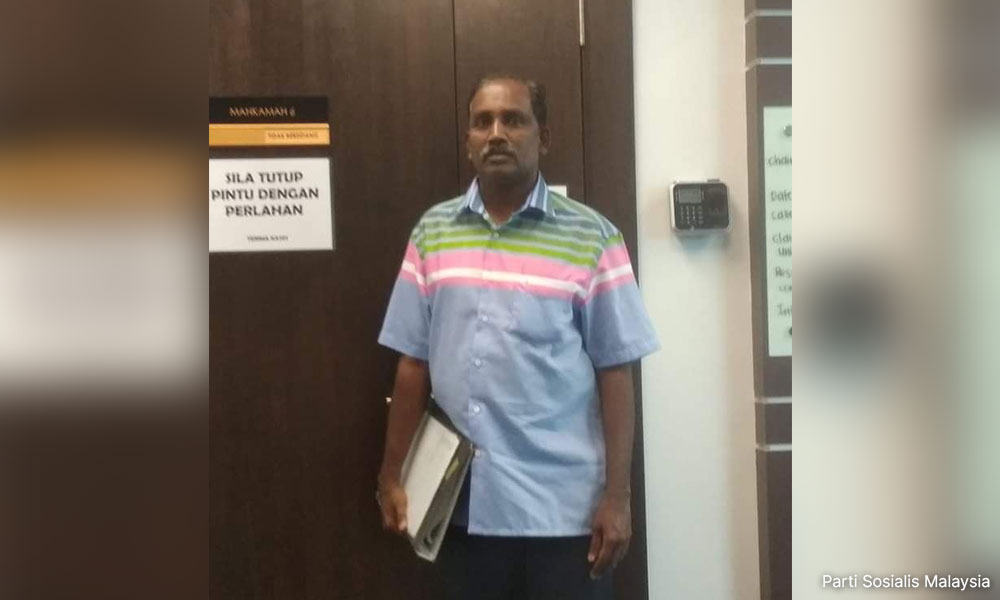
Subramaniam's counsel Shoban Nair Gobi informed Amarjeet that the former US Embassy guard has no objections to leave being granted.
The judge then allowed order in terms, including for an interim stay on execution of the Industrial Court ruling, pending disposal of the judicial review proper now set for hearing next year.
Meanwhile, Lim proposed for the court to invite the Attorney-General's Chambers (AGC) to appear as amicus curiae (friend of the court) for the substantive hearing of the judicial review.
Lim said this is due to the seriousness of the matter that involved issues of international relations and foreign affairs, therefore the AGC - which is headed by Attorney-General Ahmad Terrirudin Mohd Salleh who is the top legal adviser to the government in his official role - can greatly assist the court in arriving at a decision.
Amarjeet then said that the court would send a letter to AGC as a formal invitation for the agency to act as amicus curiae in the judicial review.
Under the law, amicus curiae refers to one who assists the court by furnishing information or advice regarding questions of law or fact.
In his ruling delivered on April 27, Industrial Court chairperson Amrik Singh said the US Embassy failed to provide evidence of misconduct against Subramaniam, now aged 55.
‘No impact on US’ sovereignty’
According to the written ruling, Amrik noted that the US Embassy’s legal team spent a large portion of their submissions stating the Industrial Court had no jurisdiction to hear the case, rather than providing evidence over Subramaniam’s alleged misconduct linked to unauthorised leave of absence.
Amrik pointed out, however, that the issue of the US Embassy enjoying absolute immunity does not apply here as Subramaniam’s contract of employment from Sept 20, 1998, until his unlawful termination on April 4, 2008, does not involve the handling of confidential information that has an impact on US’ sovereignty.
The chairperson noted that Subramaniam was never promoted to a higher position that would’ve involved handling confidential information despite being employed at the embassy for nearly 10 years.
“The employment contract itself did not provide a clear indication of the law applicable to the claimant (Subramaniam) and the US Embassy should there be a dispute between them. There was a total disregard for the claimant’s right of appeal when he had written to seek an explanation for his dismissal.
“The claimant cannot be left to ponder which legal system is applicable for him to seek redress for his dismissal when no response was advanced by the US Embassy at the time of his dismissal.
“The additional point here is, of course, the claimant - being a Malaysian citizen - enjoys the rights under the laws of his home country. In this case, no documentary evidence was produced to prove that no claims or proceedings can be brought before the Malaysian courts due to the sovereign immunity of the US Embassy, which in turn entails the claimant to treat the employment contract as commercial in nature,” Amrik said.
The Industrial Court chairperson noted that the US Embassy had made it clear from the onset that it would not participate in the hearing of the merits of Subramaniam’s case, resulting in the embassy not providing any evidence of the claimant’s alleged misconduct that formed the basis behind the dismissal.
Amrik pointed out that the particulars of Subramaniam’s alleged misconduct were not disclosed to him so that he could answer or provide any explanation prior to the termination.
“Additionally, it is important to note that the US Embassy terminated the claimant’s service without issuing him a show-cause letter and without holding a domestic inquiry, in which he would have been given the opportunity to answer to the charges made against him. There were no reasons given to the claimant in writing or in verbal either.
“No evidence was adduced on record on behalf of the US Embassy to rebut the claimant’s claim of unfair dismissal. Without any rebuttal evidence from the US Embassy, it is sufficient for the court to hold that the claimant’s dismissal was without just cause or excuse,” Amrik said.
Back wages
In calculating the award of RM66,000, the Industrial Court considered Subramaniam’s back wages of RM2,000 times 24 months, as well as compensation in lieu of reinstatement (one-month salary for every completed year of service) of RM2,000 times nine months.
Amrik also ordered the US Embassy to pay the RM66,000 to Subramaniam within 30 days of the date of the award, namely April 27.
Subramaniam, who worked with the US Embassy in Kuala Lumpur for more than 10 years, claimed that his service was unfairly terminated in 2008.
He then filed a representation under Section 20(1) of the Industrial Relations Act 1967, claiming that his dismissal by the embassy was without just cause and excuse, and sought reinstatement to his position as a security guard.
In April 2019, the then human resources minister M Kulasegaran referred the matter to the Industrial Court for adjudication of the dispute.
The US government then filed a judicial review application in the High Court seeking, among others, to quash the then minister’s reference decision and a declaration that it and its embassy were immune from the jurisdiction of the Industrial Court.
The High Court on Jan 8, 2020, ruled that the US government and its embassy were protected by immunity and prohibited the Industrial Court from adjudicating Subramaniam’s unlawful dismissal claim case.
In 2021, the Court of Appeal overturned the High Court’s decision and ordered the Industrial Court to proceed with hearing the dispute, prompting the US government to bring the matter up to the Federal Court.
The Federal Court in June 2022 upheld the ruling of the Court of Appeal.
The Industrial Court hearing of Subramaniam’s claim began in February this year. - Mkini

No comments:
Post a Comment
Note: Only a member of this blog may post a comment.