


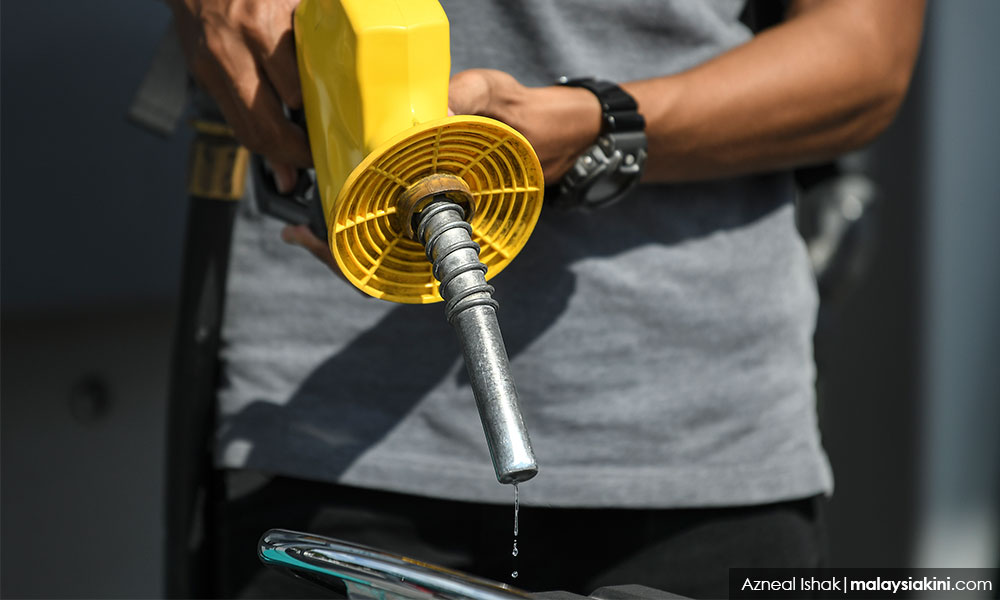
The government is prepared to absorb higher fuel subsidy costs, which could reach RM45 billion a year amid surging global crude oil prices, rather than pass the burden on to consumers through higher petrol prices.
Prime Minister Anwar Ibrahim said the government would maintain RON95 petrol at RM1.99 per litre despite international crude oil prices rising to between US$120 (RM490) and US$130 (RM530) a barrel.
He said the move was intended to shield the public, particularly low- and middle-income households, from rising fuel costs and the resulting pressure on household budgets.
“If oil prices continue to surge, the cost borne by the government could reach between RM42 billion and RM45 billion a year. If we raise fuel prices in line with market rates, people would have to pay an additional RM2 or RM3, or at least RM5 a day.
“Imagine those who have to send their children to school and go to work themselves. That could mean an extra RM10 a day. It is better for the government to bear the burden than to burden the people, our parents,” he said.
He was speaking at the ‘Sentuhan Kasih MADANI’ Programme and the launch of the National Cost of Living Action Plan 2030 at the Hang Jebat Sports Complex in Krubong here today.
He spoke at the Sentuhan Kasih Madani programme and the launch of the National Cost of Living Action Plan 2030 at the Hang Jebat Sports Complex in Krubong, Malacca, today.
Also present were Domestic Trade and Cost of Living Minister Armizan Ali and his deputy, Fuziah Salleh.
Growth must improve people's lives
Anwar said global crude oil prices had nearly doubled from about US$70 a barrel, putting pressure on living costs in many countries.
He said the government had opted to absorb a substantial portion of fuel subsidy costs to prevent consumers from facing steep price increases if domestic petrol prices were allowed to follow market rates.
Rejecting the view that generous subsidies could make the public overly dependent on government assistance, Anwar said policies must account for the realities faced by low-income households.

He added that the government would continue to balance economic growth with its responsibility to ensure that national progress improved the people's standard of living and well-being.
He said economic success should not be measured solely by growth, investment, and trade, but also by the tangible benefits these brought to people's lives.
Efforts to advance the economy, including through emerging technologies such as artificial intelligence and semiconductors, must go hand in hand with meeting basic needs, particularly in living costs, education, healthcare, and employment, he added.
“We are not talking merely about figures and statistics, but about people.
“The government's approach is guided by the principle of ‘reaching for the sky while remaining rooted in the ground’, which requires the country to continue exploring new fields of knowledge and technology without neglecting human values, ethics, culture, and the well-being of the people at the grassroots level,” he said. - Mkini

No comments:
Post a Comment
Note: Only a member of this blog may post a comment.