`


THERE IS NO GOD EXCEPT ALLAH
read:
MALAYSIA Tanah Tumpah Darahku

LOVE MALAYSIA!!!


25 Ogos 2026

Thursday, August 27, 2026

Malaysia must watch the Israel –Turkey fault line in Syria closely too — Phar Kim Beng


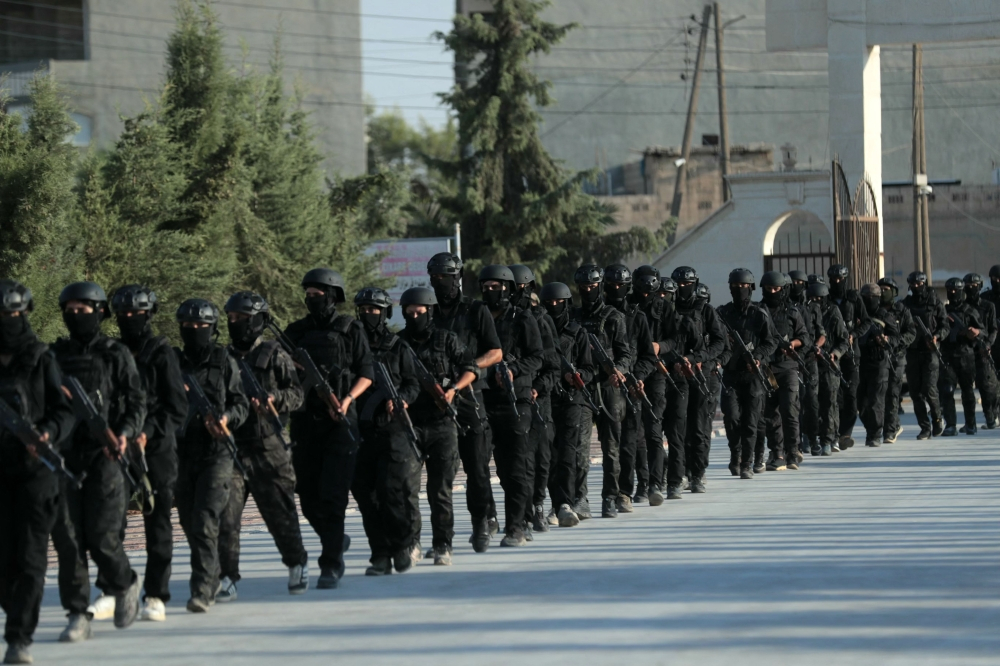
Kurdish fighters from the Qamishli Brigade, part of the Syrian Democratic Forces (SDF) participate in a military parade in Qamishli on August 21, 2026. — AFP file pic

AUG 27 — Malaysia has every reason to watch Gaza closely. But Kuala Lumpur should not allow the continuing tragedy there to obscure another potentially dangerous development: the growing strategic friction between Israel and Turkey.

Israel’s August 18 strikes on Syria’s Abu al-Duhur airbase in Idlib were militarily limited but strategically significant. 

Eight strikes reportedly hit the runway and storage areas without causing casualties. The facility had been largely inactive for years.

What made the attack important was not simply what Israel bombed, but whom Israel appeared to be addressing.

Israel subsequently argued that Syria had been close to violating a security understanding by permitting Turkish troops to deploy at the airbase. 

Ankara denied that Turkish forces were present and said its military cooperation with Syria was focused on training and the exchange of expertise.

Turkey strongly condemned the attack, describing it as an assault on Syria’s infrastructure, territorial integrity and unity.

Malaysia should take notice.

The Middle East is entering a phase in which regional rivalries increasingly overlap. Israel’s security concerns are no longer confined to Iran, Hezbollah, Hamas or other familiar adversaries. 

Turkey’s expanding influence in post-Assad Syria is increasingly becoming part of Israel’s strategic calculations.

That creates an entirely different order of risk.

Turkey is not a non-state actor. It is a major military power, a member of NATO and one of the most influential states in the Muslim world. 
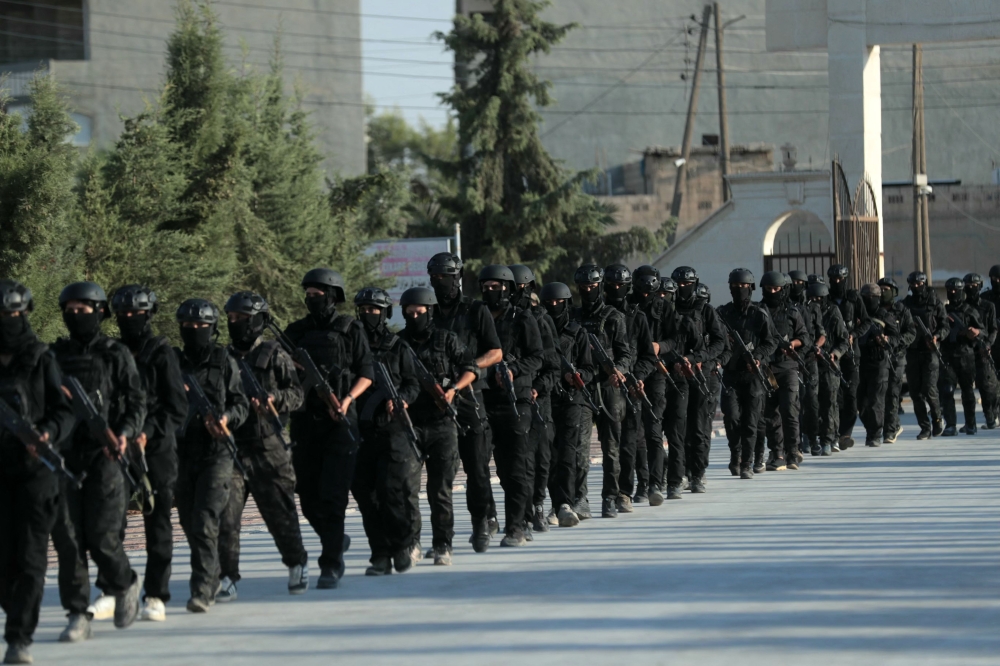
Kurdish fighters from the Qamishli Brigade, part of the Syrian Democratic Forces (SDF) participate in a military parade in Qamishli on August 21, 2026. — AFP file pic

Ankara also possesses a sophisticated defence industry, including increasingly capable drone, missile and electronic-warfare technologies.

A confrontation between Israel and Turkey would therefore represent something qualitatively different from many of Israel’s previous military engagements.

Abu al-Duhur demonstrates how easily such a confrontation could begin unintentionally.

The airbase lies relatively close to Turkey. American special envoy Tom Barrack warned after the strike that Washington was working towards a deconfliction mechanism involving Turkey, Israel and Syria precisely because misunderstandings between heavily armed states could have serious consequences.

The danger is escalation through miscalculation.

An Israeli aircraft approaches Syrian territory. Turkish radar detects it. 

Ankara is uncertain about the intended target. Defensive systems are activated. An aircraft is challenged or shot down. Israel retaliates.

A political dispute can suddenly become a military crisis.

This is precisely why Malaysia must analyse Israeli behaviour beyond the immediate Palestinian question.

Malaysia has longstanding political sympathy for Palestine and has consistently supported Palestinian self-determination. 

Yet Malaysian diplomacy cannot afford to view every Middle Eastern development exclusively through that prism.

The regional security architecture itself is changing.

Turkey has emerged as one of the principal external supporters of Syria’s new government under President Ahmed al-Sharaa. 

Ankara wants a stable Syrian state, greater control over security threats along its southern frontier and sufficient influence over Syria’s reconstruction.

Israel, meanwhile, appears determined to prevent the emergence of military infrastructure in Syria that could restrict its freedom of action.

These strategic objectives can collide even when neither country actively wants war.

This is particularly important because the United States has relationships with both countries. 

Washington therefore finds itself attempting simultaneously to reassure Israel, maintain its NATO relationship with Turkey and stabilise Syria.

Indeed, Barrack described the Israeli strike as an unnecessary escalation, while subsequent reporting indicated that Washington was concerned about how easily the episode could have spiralled.

Malaysia should consequently encourage deconfliction rather than simply observe events from afar.

There are at least three reasons.

First, instability involving Turkey would reverberate throughout the Muslim world. 

Ankara possesses political, economic and military weight considerably beyond Syria.

Second, Malaysia and Turkey maintain substantial diplomatic, economic, defence and educational ties. 

Any serious Israeli-Turkish confrontation would inevitably create diplomatic pressures across the wider Muslim world.

Third, the episode reinforces an important principle for Malaysian foreign policy: the sovereignty and territorial integrity of states must remain central to international order.

Whatever Israel’s security concerns about potential Turkish deployments, repeated unilateral military attacks inside another state’s territory risk normalising a regional environment in which powerful countries increasingly determine acceptable security arrangements through force.

That precedent should worry Asean too.

Southeast Asia depends heavily on norms restraining stronger states from imposing security preferences militarily on weaker neighbours. 

Malaysia cannot reasonably defend sovereignty and international law in Southeast Asia while treating their erosion elsewhere as strategically irrelevant.

There is also a larger lesson.

The Middle East is becoming increasingly multipolar. Saudi Arabia, Turkey, Iran, Israel, Pakistan, Qatar and the United Arab Emirates are all developing overlapping networks of influence, while China, Russia and the United States remain deeply involved.

Malaysia therefore needs a wider strategic map of West Asia.

Palestine remains indispensable to Malaysian diplomacy. But so too must Syria’s sovereignty, Turkey’s security concerns, Gulf stability and the prevention of conflicts among major regional powers.

Abu al-Duhur may ultimately be remembered as a relatively small military episode.

But small incidents sometimes reveal large geopolitical transformations.

Israel’s strike suggests that the strategic contest over Syria is increasingly becoming intertwined with the emerging Israel-Turkey rivalry.

Malaysia should watch this fault line carefully.

The objective should not be to choose another side in another Middle Eastern rivalry.

It should be to prevent yet another regional confrontation from becoming a war that nobody originally intended to start. - malaymail

* Phar Kim Beng is professor of Asean Studies, and director at the Institute of International and Asean Studies, International Islamic University Malaysia.

** This is the personal opinion of the writer or publication and does not necessarily represent the views of MMKtT.

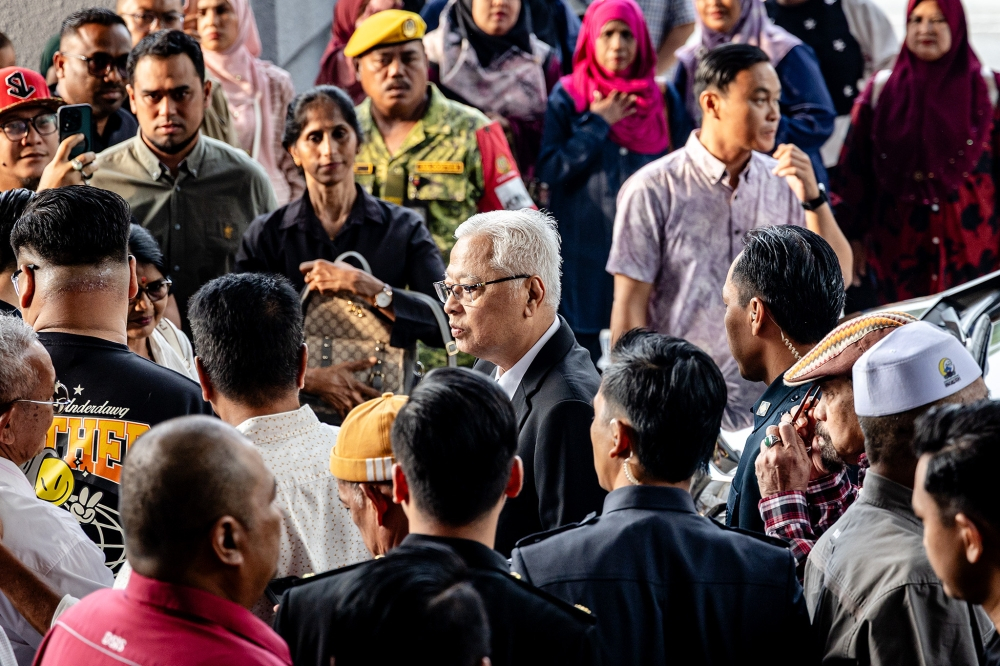
More than 80 Ismail Sabri supporters travel three hours from Bera to KL court complex


Former prime minister Datuk Seri Ismail Sabri Yaakob is pictured at the Kuala Lumpur High Court Complex on August 27, 2026. More than 80 supporters of the former prime minister turned up at the court complex this morning to show their support. — Picture by Firdaus Latif

KUALA LUMPUR, Aug 27 — More than 80 supporters of former prime minister Datuk Seri Ismail Sabri Yaakob gathered outside the Kuala Lumpur Court Complex here this morning to show their support for him.

One supporter, who identified herself as Liza, 42, said they were residents of Bera, Pahang who travelled to the capital on two buses that left at about 4am, BuletinTV3 reported.

Most of them were understood to be members of the Bera Umno division.

“We started getting ready at home as early as 3am before leaving for the capital.

“We arrived at about 7am after a journey of nearly three hours by bus. Some also drove their own vehicles here.

“It is all to give moral support to our elected representative,” she told reporters.

Ismail Sabri, 66, who is also the Bera MP, arrived at the Sessions Court here at 8.32am to face charges under the Malaysian Anti-Corruption Commission (MACC) Act 2009.

The case is scheduled to be mentioned before Judge Suzana Hussin at 9am.

The former prime minister is expected to face a charge under Section 36(2) of the MACC Act 2009 relating to asset declaration.

Ismail Sabri was originally scheduled to be charged on August 7, but the proceedings were postponed to today after he was admitted to the National Heart Institute (IJN) for health reasons.

Suzana had previously postponed the reading of the charges and the recording of his plea to Aug 27 after lawyer Amer Hamzah sought a deferment, citing Ismail Sabri’s possible irregular heartbeat and a planned procedure to implant a pacemaker.

The former prime minister had previously been called several times to have his statement recorded in connection with an asset declaration he made to MACC.

MACC also seized RM170 million in cash in various foreign currencies and confiscated 16kg of pure gold bars estimated to be worth RM7 million as part of a corruption and money-laundering investigation involving him.

The seizures were made during searches of residences and an office believed to have been used as a “safe house”, following investigations into four of Ismail Sabri’s senior officers who were arrested in February 2025. - malaymail

Buloh Kasap rep Zahari appointed new Johor Speaker


ISKANDAR PUTERI: Buloh Kasap assemblyman Datuk Zahari Sarip has been appointed the new Johor state assembly Speaker.

His was the only name proposed by Johor Mentri Besar Datuk Onn Hafiz Ghazi in a letter to the state assembly secretariat.

“I believe Zahari’s past experience as a former teacher, officer to a health minister, member of senate, state exco member, as well as the current Buloh Kasap assemblyman since 2018 has given him the maturity and credibility to serve as a Speaker,” Onn Hafiz said during the state assembly sitting at Kota Iskandar here on Thursday (Aug 27).

The motion was seconded by Bukit Permai assemblyman Datuk Mohd Jafni Md Shukor and was accepted by the state assembly secretariat.

Zahari was subsequently sworn in as the new Speaker.

Prior to this, he was Johor agriculture, agro-based industry and rural development committee chairman from 2022 until the dissolution of the state legislative assembly in June this year.

He takes over the post from previous Speaker Datuk Dr Mohd Puad Zarkashi.  - Star

Keeping Onam flame alive


Community celebration: (Second from left) Shaila and Putramas president Datuk Janathanan Nair looking on as guest of honour Tan Sri Ravindran Menon lights the oil lamp at the Onam celebration at Putrajaya. — IZZRAFIQ ALIAS/ The Star

PUTRAJAYA: From gathering with hundreds of fellow Malayalees at community celebrations to preparing a traditional sadya for family and friends at home, Malaysians observed Onam in their own ways while keeping the festival’s traditions alive.

An Onam sadya is a banana leaf spread filled with various sweet, sour, salty, bitter, savoury and spicy dishes symbolising the many flavours of life.

Shanta Nair, a homemaker in Putrajaya, said she has been celebrating Onam with her Malayalee community for several years.

“I pray at home, buy lots of flowers, dress up and then come here to celebrate with the community.

“It has been two or three years since I last cooked sadya. I usually cook for about 20 people, comprising family and friends,” she said when met at an Onam celebration here yesterday.

For Malayalees, yesterday marked Thiruvonam, which was the culmination of the 10-day Onam harvest festival that started on Aug 16.

Celebrated in tandem with Kerala’s rice harvest, Onam marks the homecoming of the mythical King Mahabali, whose reign was said to be an era of prosperity and happiness.

Datin Sushila Nair, 61, usually prepares sadya at home but skipped it this year because her samajam (Malayali community) organised a joint feast.

“We will light oil lamps and have prayers at home before coming here,” she said.

All Malaysia Malayalee Association (Amma) president Datin Seri Shaila V said Onam was a cultural celebration that transcended religion and brought people together through their shared heritage.

“Onam reminds us of the power of unity, where our cultural roots tie us back together,” she said in her speech at the Putrajaya Onam celebration.

She spoke of the importance of engaging the younger generation to ensure the tradition continues to be passed down.

She said the National Onam Celebration, Onam Vannallo 4.0, will be held on Sept 12 at Jasmine Banquet Hall in Section 19, Petaling Jaya.

“The celebration will be particularly significant as one of the major events under the association’s new leadership, providing the Malayalee community with a national platform to celebrate its heritage while welcoming Malaysians from all backgrounds,” she added.

While many Malayalees celebrate Onam with their respective samajams, others observe the festival more intimately at home with their families.

Parimala Rajagopal, 53, from Puchong, said her family prepared a sadya comprising about 20 vegetarian dishes for 30 guests.

She said the dishes cooked by her mother included sweet pineapple yoghurt and ginger-tamarind pickle.

Maithilli Devi Nermala Devi, 24, from Butterworth, said her family prepared between 11 and 16 vegetarian dishes which was served to 10 family members and friends.

“We began the day by preparing the pookalam (colourful floral design), lighting oil lamps, praying and then enjoying our Onam sadya cooked early in the morning,” she added. - Star

Unusual day in court as three ex-PMs face separate legal proceedings


KUALA LUMPUR: In an unusual day in court, three former prime ministers were at the same court complex to face spearate legal proceedings of their own on Thursday (Aug 27).

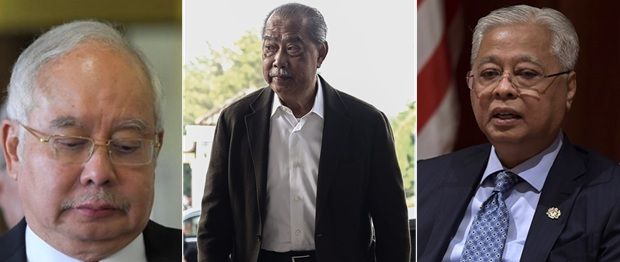
Datuk Seri Najib Razak, Tan Sri Muhyiddin Yassin and Datuk Seri Ismail Sabri Yaakob were all at the Kompleks Mahkamah Kuala Lumpur in Jalan Tuanku Abdul Halim, drawing attention from the public and the media.

Najib is in court for the ongoing hearing of a US$5.6bil civil suit filed by 1Malaysia Development Bhd (1MDB) against him and five other former 1MDB directors while Muhyiddin's graft trial linked to the Jana Wibawa programme is also being heard at the High Court in the same complex.

Meanwhile, Ismail Sabri is scheduled to be charged at the Sessions Court this morning.

The Bera MP is expected to face a charge under Section 36(2) of the Malaysian Anti-Corruption Commission (MACC) Act 2009 over an alleged failure to declare assets as required by MACC.

He was initially scheduled to be charged last week but the proceedings was postponed due to health complications.  - Star

Nepal floods: Over 50 Malaysians still missing, families unable to contact


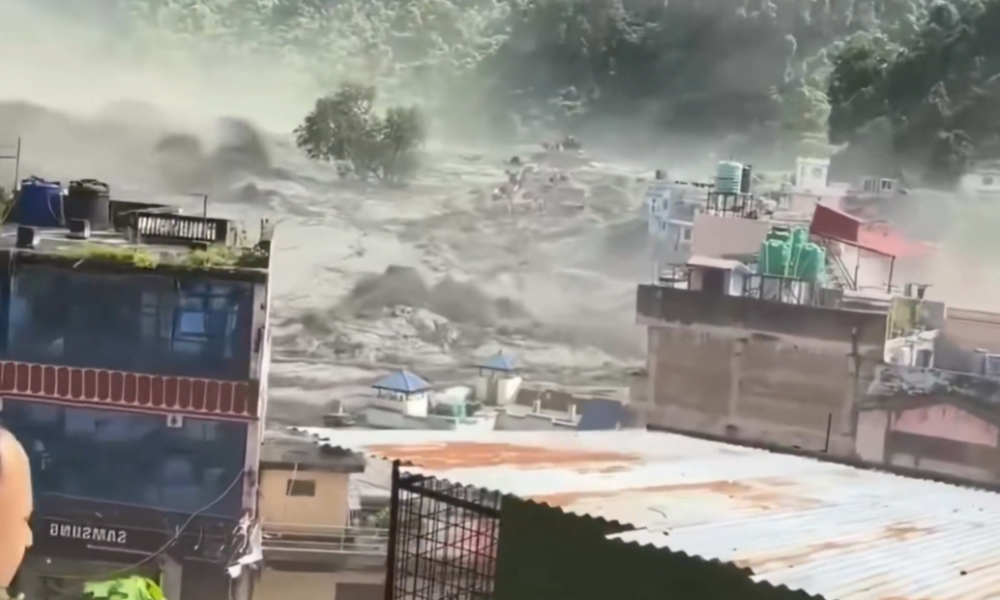
Families have been unable to contact more than 50 Malaysian travellers in Nepal following yesterday's devastating floods, in which hundreds of foreigners and Nepalese remain unaccounted for.

"We are still gathering information on the Malaysians who are unreachable. Family members have been unable to establish contact with more than 50 Malaysians," the charge d’affaires of the Malaysian Embassy in Kathmandu, Firdaus Azman, told Bernama late yesterday.

Firdaus said road access to the region has been affected by the Bhote Koshi River flood, and the Nepalese government has deployed helicopters for search-and-rescue operations.

"We are in touch with authorities," he said, adding that it is challenging to get information on the missing Malaysians because of the damage to communication infrastructure.

Malaysians trying to locate their relatives or friends should email passport and travel details of the persons concerned to the Malaysian Embassy at mwkathmandu@kln.gov.my for coordination, Firdaus said.

The death toll crossed 160 on Wednesday night while hundreds, including tourists and members of Nepal's police and security forces, remained unaccounted for.

At least 142 Indians are among the foreigners reported missing.

Villages, bridges, and power projects were swept away in the flood caused by an avalanche.

A magnitude-5.2 seismic event occurred near the border between Nepal and China at 8.37am local time on Wednesday, the US Geological Survey (USGS) said on its website.

"This event was initially reported as a magnitude 4.4 earthquake. Additional analysis of nearby seismic stations, long-period seismic waves, and satellite imagery led to the determination that the seismic event was instead a glacial collapse and debris flow, and that no earthquake had occurred," USGS said.

Nepal authorities said earlier that a sudden flash flood entered Nepal from the Chinese side through the Bhote Koshi river in the district of Rasuwa.

Nineteen bridges and 40km of highway were destroyed in the flood, according to a Kathmandu Post report.

Police halted vehicles going from Kathmandu towards the worst-hit districts of Rasuwa, Nuwakot, and Dhading.

Support deployment

Apocalyptic CCTV footage shows buildings and vehicles at the border port of Gyirong in southwest China's Xizang Autonomous Region being destroyed by a torrent of water and mud.

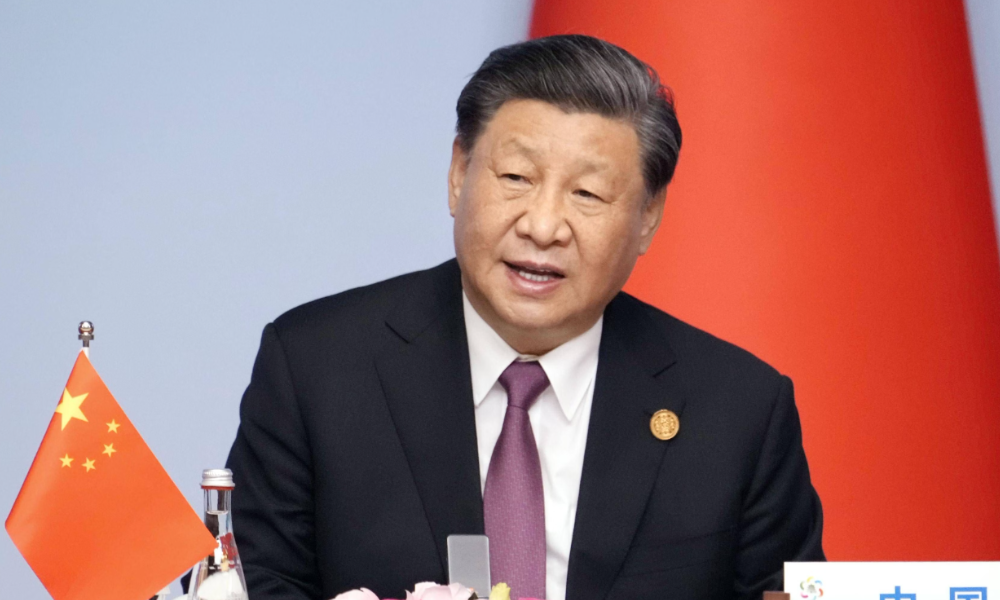
Chinese President Xi Jinping has ordered all-out efforts to locate missing people in the region, China's UN ambassador Fu Cong said in a post on X.

Chinese President Xi Jinping

Three deaths and 265 missing people were reported on the Chinese side.

India has deployed a C-130J aircraft carrying 10 tonnes of essential relief materials and medical supplies to Nepal.

"Additional air effort by C-17 and C-130 aircraft will transport further relief supplies, with helicopters earmarked for rescue and evacuation operations," the Indian Air Force said in a post on X.

Bangladesh Prime Minister Tarique Rahman said his country is ready "to extend any support that Nepal may need at this time of distress".

Pakistan's Deputy Prime Minister and Foreign Minister Ishaq Dar said the country "stands firmly with the government and people of Nepal in this difficult hour and remains ready to extend all possible assistance".

Following this tragedy, the Indian states of Bihar and Uttar Pradesh, which border Nepal, are on flood alert.

A sudden rise in the water level of the Trishuli River at Furke Khola in Nepal, around 160km from the Indian border, has been reported, India's Home Ministry said in a statement yesterday.

"The impact of the flood is likely to travel downstream in the Gandak River, in India," it said.

- Bernama

PM orders student critics to be freed; Fadhli accuses Harapan of 'sakau' culture


Politics

  • Prime Minister Anwar Ibrahim has ordered that all disciplinary action against varsity students for criticising ruling politicians be immediately reversed.

    He also signalled that a new law to replace the Universities and University Colleges Act will ensure that universities can administer themselves autonomously.

    He said this in a Facebook post recapping his remarks at an academic forum at Universiti Malaya last night.


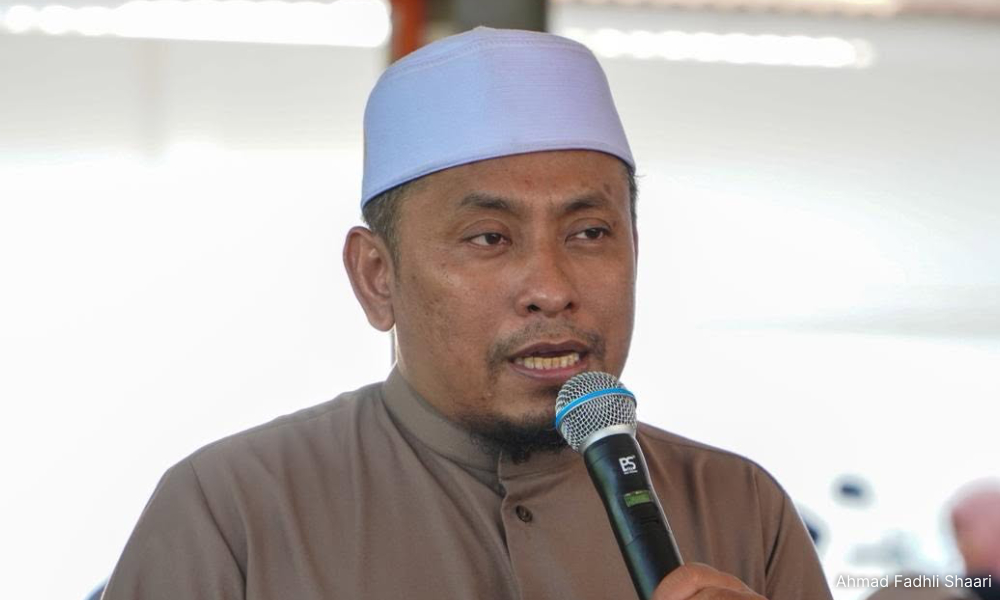
  • PAS Information chief Ahmad Fadhli Shari has accused Pakatan Harapan of engaging in the theft of public monies.

    This follows the new Negeri Sembilan government’s demanding the previous term’s Harapan assemblypersons to return all funding they received after the state legislature was dissolved.

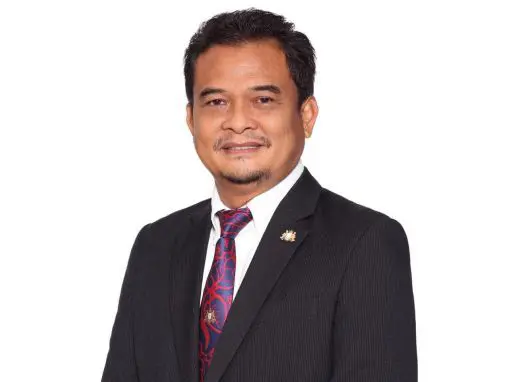
    Ahmad Fadhli Shaari

    It marks a 180 for Harapan, which usually accuses others of graft.

    “If they took the chance to sakau (rob) a state as small as Negeri Sembilan in the name of ‘menteri besar allocations’, what is the guarantee they did not sakau when governing the country where there is far more money to manage?

    “It’s a good thing that Negeri Sembilan changed hands,” he said in a Facebook post last night. - Mkini