


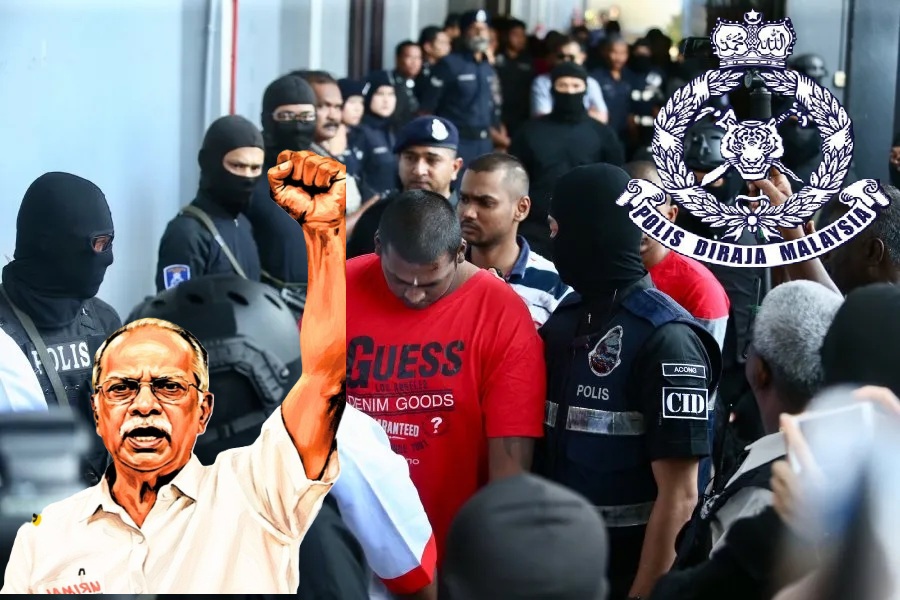
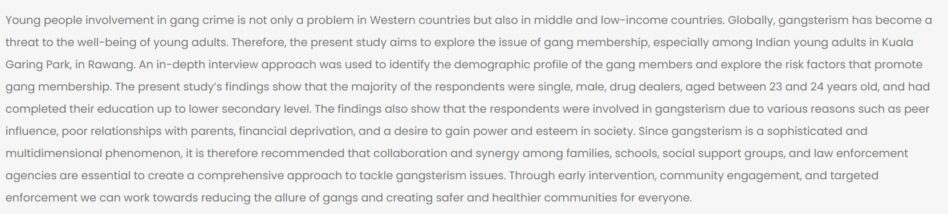
A RECENT article on the involvement of Indian youth in crime seems to suggest that lack of parental guidance, poverty, the role of recruiters and other factors are responsible for why they turn to crime.
There is some oblique reference to the political, economic and social marginalisation of Indians. However, this seems to be largely ignored in favour of explanations that place the responsibility on individual, family and social factors.
There is no denying that the involvement of Indian youth in crime is disproportionate to their share of the country’s population which is around 6%.
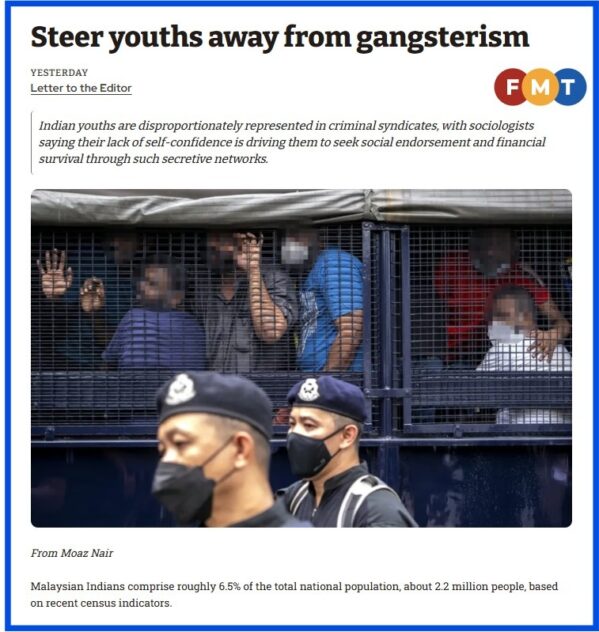
While Indians are not evenly represented in the public service and business enterprises, their involvement in crimes associated with the functioning of secret societies remains a glaring feature of Malaysia’s demographic landscape.
Although Indians constitute a relatively small proportion of the total population, they appear to be over-represented in the membership of secret societies.
The government, particularly the police force, is primarily interested in addressing the law-and-order dimension of the problem.
This is understandable from the perspective of policing. But law enforcement alone cannot address the underlying causes that push some young people towards criminal activities.
Other government agencies have done little to address the real structural and socio-economic issues that influence Indian youth to partake in criminal activities.
Employment hardship
Indians, by definition, are not prone to gangsterism. It is the political, economic and social environment which some Indian youths find themselves in that can push them towards such activities.
Parents, teachers and community leaders undoubtedly have an important role to play in reducing gangsterism among Indian youth. But to place the burden primarily on parents and young people is to overlook a much larger problem.
That problem is racial discrimination and the continuing marginalisation of Indians in the country.
With more than 90% of employees in the public service being Malays, Indians can virtually forget about obtaining meaningful employment opportunities in this sector.
Even when Indians are employed, they are often confined to rank-and-file positions with limited access to higher levels of the public service.
The private sector is no better in many respects.
While there are government policies and quotas that provide advantages to Malays in employment and education pursuit, among others, Indians have to compete with others for employment opportunities on what is supposed to be a level playing field.
Competition is acceptable. But competition ceases to be fair when Indians are discriminated against on the basis of race.
The late entry of Indians into the urban sector has also meant that many of the better employment and economic opportunities have passed them by.
Unless overt and covert racial discrimination is effectively addressed and outlawed in the country, Indians will continue to face serious obstacles to securing gainful employment and advancing in both the public service and the private sector.
The success of a few Indians in the public service and private sector should not be used to deny or minimise the deleterious effects of ethnic discrimination in the country. The achievements of individuals cannot be used as evidence that systemic discrimination does not exist.
‘Addressing symptoms but not underlying conditions’
Given the hostile environment that many Indians face in the public service and private sector, some Indian youths may see the criminal underworld and secret societies as an easier avenue to earn money, gain status and secure a sense of belonging.
This is not to justify criminality. It is to recognise that criminality does not emerge in a social vacuum.
The tendency to blame Indian youth and their parents for gangsterism fails to address the larger elephant in the room.
That elephant is none other than racial discrimination and the political, economic and social marginalisation of Indians in the country.
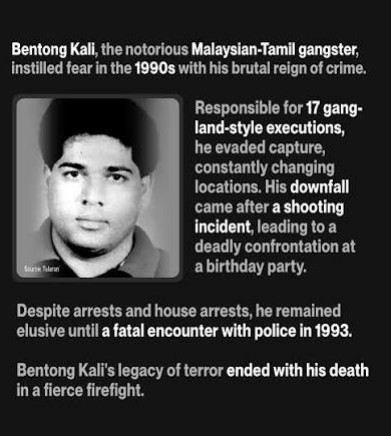
The government cannot simply demand that parents discipline their children, teachers guide their students and the police arrest offenders.
These measures may deal with the symptoms but they do not address the underlying conditions that make some young people vulnerable to recruitment into criminal networks.
If the government is serious about reducing gangsterism among Indian youth, it must go beyond policing.
It must address the structural inequalities that shape their lives: unequal access to public-sector employment, discrimination in the private sector, limited economic opportunities and the continuing marginalisation of sections of the Indian community.
The country has benefited enormously from the blood, sweat and toil of generations of Indians. Yet, instead of receiving equal opportunities and recognition, many continue to face racial discrimination and marginalisation.
The problem, therefore, is not simply Indian youth and crime.
The bigger question is why after decades of development and independence, a section of the Indian community continues to face barriers to equal participation in the economic, social and institutional life of the country.
Until that question is honestly confronted, blaming Indian youth, their parents or the police will only address the symptoms while leaving the disease untouched.
Former DAP stalwart and Penang deputy chief minister II Prof Ramasamy Palanisamy is chairman of the United Rights of Malaysian Party (Urimai) interim council.
The views expressed are solely of the author and do not necessarily reflect those of MMKtT.
- Focus Malaysia.

No comments:
Post a Comment
Note: Only a member of this blog may post a comment.