


Three years ago, amid a post-election deadlock between Pakatan Harapan, BN, and Perikatan Nasional that plunged the country into its first hung Parliament since independence, Ahmad Zahid Hamidi emerged as an unlikely figure to chart the country’s political future.
The Umno president and BN chairperson, after discovering PN had netted a group of BN MPs and was on the cusp of power, hit the brakes on the insubordinate parliamentarians.
Zahid instead chose to steer BN towards Harapan. The other political groups that had been cautiously observing the dance between the big three coalitions eventually followed suit, and the coalition government was born.
For many Chinese voters, it was an ambivalent and surreal moment. In online chatter, some had even jokingly referred to the Umno president as “Zahid BB” - short for baby, a playful term of endearment common in Chinese internet lingo.
The man whom they had viewed with disapproval amid corruption charges against him at the time, had spared them from a potential PN government, which would have included PAS as a senior partner, whose theocratic inclinations often worry minorities.
Today, the country is again at a political crossroads and Zahid has reemerged as a key figure who will influence the balance of power.
After BN triggered early polls in Johor at the start of June, the coalition has made it clear it will contest in all state seats, against its partners in the federal government.
BN’s playbook
The move is eerily similar to BN’s playbook in 2021 and 2022. The coalition, under Zahid’s stewardship, appeared unstoppable after it triggered a series of early polls in Malacca (November 2021) and Johor (March 2022) and convincingly retook the state governments.
Buoyed by the victories, and at the behest of Umno, then-premier Ismail Sabri Yaakob called for a general election in November 2022.
Zahid’s masterstroke appeared to have set BN on the path of a major revival, but the 15th general election’s outcome turned out very different.
An unexpected exodus of Umno’s traditional base to PN, particularly in the northern states, saw BN achieve its worst results in history.
The 30 parliamentary seats BN won allowed it to play kingmaker, but the coalition sank to a new low and limped as a junior partner in the coalition government.
But in just three years, things appear to be looking up again for Zahid and BN. The tussle between Bersatu and PAS is threatening to break PN, while Harapan is struggling with a voter base disillusioned with the lack of substantive reforms.

BN is seeing tailwinds as it did in late 2021, but this time, it appears more cautious about being carried away and is laying the groundwork.
While trying to claw back Malay support from PN, BN is also setting its eyes on Chinese voters who had traditionally supported Harapan.
‘Coalition frenemies’
Over the past three years, BN and Harapan had avoided direct confrontation in several state and by-elections. The cooperation helped BN to soften its image among Chinese voters.
Some who outright rejected the coalition as electoral poison in the past, due to its perceived historical indulgence in hardline rhetoric at the expense of minorities, voted for BN in the name of the coalition government.
Now, with its plan to go solo in Johor, BN is hoping to continue its rehabilitation among Chinese voters without Harapan’s help.
Since the dissolution of the Johor assembly, BN leaders have been sending a steady stream of conciliatory signals towards the Chinese community.
Earlier this month, Zahid gave separate interviews to Sin Chew Daily, China Press, and Nanyang Siang Pau. They were his first interviews with the Chinese-language media since becoming deputy prime minister after GE15 in 2022.
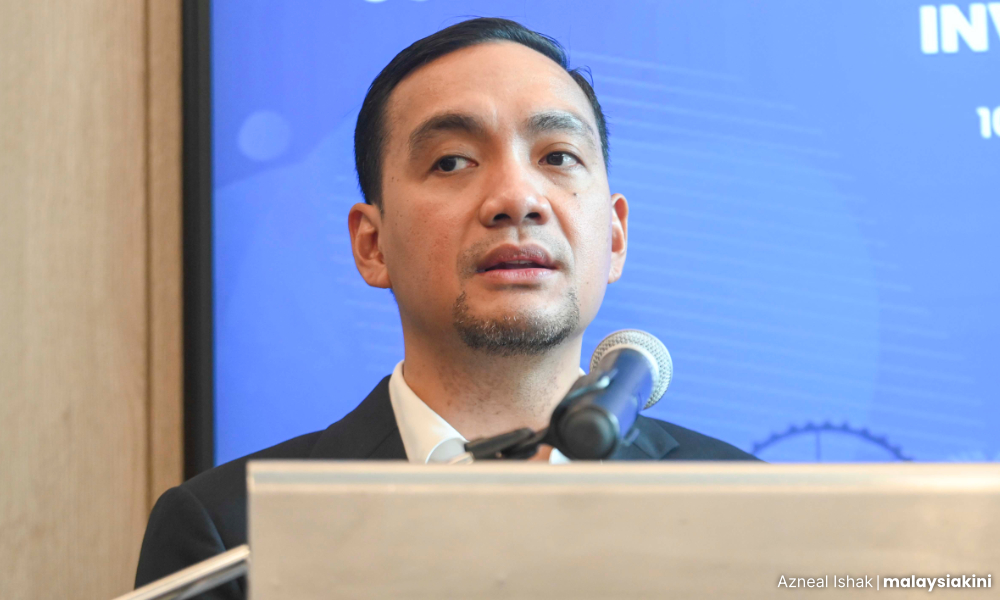
A few days later, caretaker Johor menteri besar Onn Hafiz Ghazi also sat down for a joint interview with the Chinese press.
The carefully arranged media outreach appears to be a deliberate attempt to gauge the community’s political temperament.
‘Zero to hero’
In his Sin Chew Daily interview, Zahid shared that some of his Chinese friends had described him as going from “zero to hero” after the 2022 general election.
Zahid also spoke openly during the interview about his ambition to become prime minister.
For over a decade, Zahid had been a heartbeat away from the premiership, having occupied the position of deputy prime minister twice since 2015. A BN revival would put the top job within reach.
The Bagan Datuk MP said that, should the opportunity arise, he would pursue three objectives: improving the economy, ensuring fairness in education, and strengthening national security.

The goals themselves are hardly controversial. But Harapan leaders such as DAP’s Liew Chin Tong have argued that BN’s ambitions are symptomatic of an obsession that BN, or more specifically Umno, has never been able to shake off - the desire to dominate.
Even at BN’s lowest point, Umno’s minority partners MCA and MIC have complained about a lack of respect, with MIC at one point contemplating leaving the coalition.

The strain is also in part due to minority representatives in government being filled by Harapan, leaving little role for the minority parties in BN.
If Umno can revive BN’s fortunes, then MCA and MIC stand to benefit too.
Zahid’s foreshadowing
At the federal level, Zahid’s talk of the premiership could be a foreshadowing of what comes after the state elections.
The Johor election on July 11 is not merely a state contest. It is also a barometer of the country’s political direction.
The Negeri Sembilan election is set for Aug 1, while the Malacca polls are due in November.
The Harapan-led Negeri Sembilan assembly was dissolved amid uncertainty after BN representatives pulled support from the state government, only to backtrack later.

A strong BN performance in Johor could build momentum in subsequent states, before the coalition makes a move at the federal level, just as it did between 2021 and 2022.
In Johor, Onn is already hitting the ground running. He has sought to appeal to Chinese voters by highlighting his administration’s record and policies.
He emphasised that the Johor government has consistently allocated funds to Chinese education, including Chinese primary schools, independent Chinese secondary schools, and Southern University College.
Onn also clarified his statement about refusing to sit at the same table with DAP, which has traditionally relied on Chinese voters.
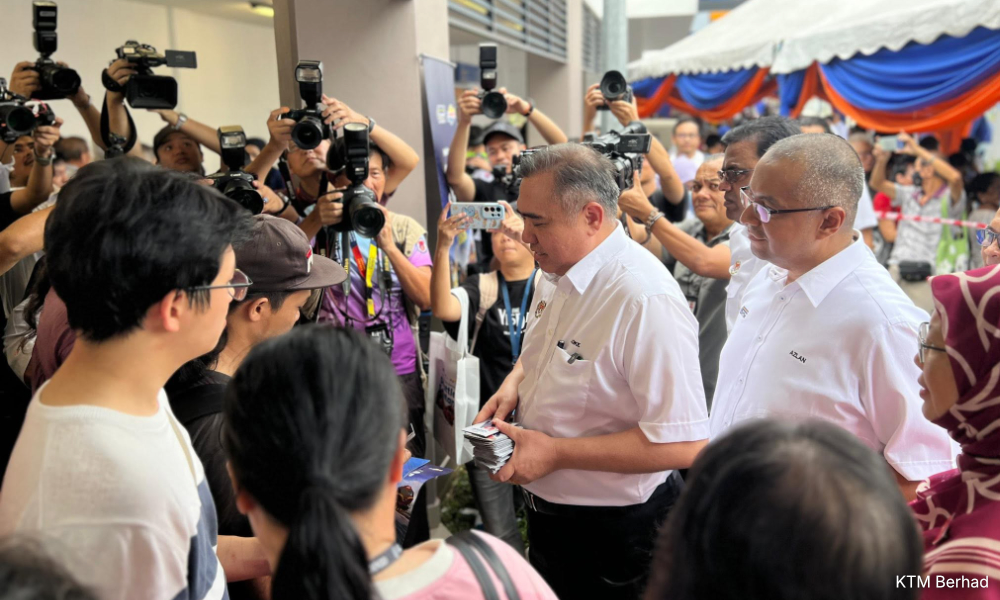
The caretaker menteri besar assured that his statement did not carry racial undertones, explaining that his "same table" comment was figurative rather than a literal refusal to meet DAP.
According to Onn, what he meant was that he wouldn't form a state government with DAP.
Competitive contests
BN’s eager courtship of Chinese voters is, among others, due to the fragmentation of its Malay support base, part of which has shifted to PN.
In the past, Umno’s greatest strength has always been its ability to win the Malay heartland with unassailable majorities. That has now changed, even for Johor, which is Umno’s traditional base.
Both Malay and non-Malay votes have become competitive, and BN is determined to go on the offensive on both fronts.
Harapan, in contrast, must play defence and protect its traditional support base.
After three years in government, Harapan no longer enjoys the political momentum it possessed while in opposition. Policy compromises and the slow pace of reforms have steadily worn down the patience of its supporters.
The greatest concern for Harapan is less about non-Malay voters defecting en masse to BN or PN but more about voter apathy.
In the previous Johor state election, Harapan won 12 seats, 10 of which were secured by DAP. In past elections, DAP often adopted a strategy of opening up new frontiers, sending prominent figures to contest in previously unwinnable seats.
This time, its priority is more basic: ensuring that its existing supporters are still willing to turn up at the polling stations.
As the political players scramble to prepare in Johor, the state is shaping up to be the first piece in a series of dominoes that will determine the balance of power in Putrajaya and the next general election. - Mkini

No comments:
Post a Comment
Note: Only a member of this blog may post a comment.