


The debate over the Constitution (Amendment) (No. 2) Bill 2026 has rightly focused on the appointment of the public prosecutor (PP), on who selects the person, and how.
However, there is a second, equally important and underdiscussed question that any serious reform must address. Once appointed, how is the PP held accountable in exercising an extraordinary and largely unreviewable discretion?
Structural independence and operational accountability are not the same thing. Malaysia needs both. This comes down to the “enabling act”, the detailed instrument that defines how the new PP would operate, which has not drawn much public attention.
The gravity of the problem is not abstract. Malaysia has repeatedly and painfully witnessed the consequences of prosecutorial discretion exercised without transparency.
High-profile charges against politically connected individuals have been withdrawn or discharged, often with no reasons given and no standards against which the decision could be assessed.
The Center to Combat Corruption and Cronyism (C4 Centre) has observed that Malaysia has seen charges against politically connected persons dropped with "little to no explanation”.
Transparency International Malaysia has similarly called for the publication of strict guidelines governing when prosecution may be discontinued.
Projek Sama's December 2025 report titled "Do Politicians Still Get Away with Corruption after 2018?" reviewed 28 corruption, criminal breach of trust, and money laundering cases involving elected representatives since the 2018 general election.
We found that a third had their charges withdrawn by the Attorney-General's Chambers, with only three of the 10 withdrawals considered legitimate on their facts.
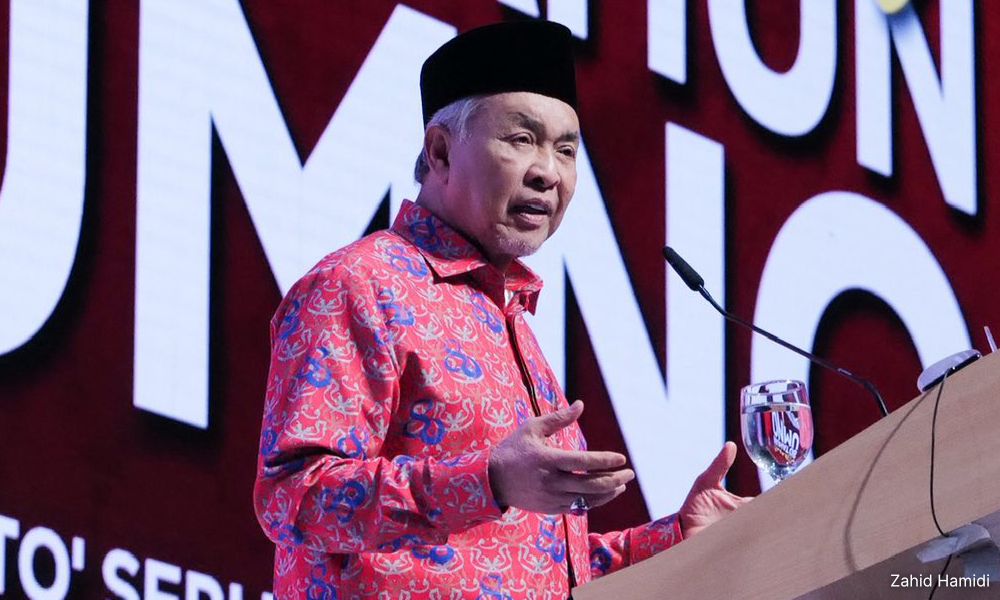
The report documented specific cases that have become emblematic of the problem. In Deputy Prime Minister Ahmad Zahid Hamidi’s Yayasan Akalbudi case, all 47 charges were withdrawn after 77 days of trial and a prima facie case established, resulting in a discharge not amounting to an acquittal.
As for former finance minister Lim Guan Eng, two corruption charges were dropped following a letter of representation whose contents were never made public.
For the former Sabah chief minister Musa Aman, all 51 charges were withdrawn before trial even commenced.
These are not fringe concerns. They are the accumulated record of a system that has operated, for too long, as though it owes the public no explanation.
Transparency, accountability for new PP
Separating the offices of the attorney-general (AG) and the PP is a necessary step. However, separation alone does not resolve the underlying problem if the new PP operates in the same opacity as the old arrangement.
What is required, alongside structural reform, is a statutory framework that makes the exercise of prosecutorial discretion legible, reviewable, and accountable to Parliament and the public.
Three instruments are essential to that framework: publicly available prosecutorial guidelines, a code of conduct, and a mandatory annual report.
Each addresses a distinct dimension of accountability, and together they constitute the minimum architecture of a genuinely independent and trustworthy prosecutorial service.
Best practices of the UK, Canada
The experience of the UK's Crown Prosecution Service (CPS) is instructive. The CPS publishes a Code for Crown Prosecutors - a public document that sets out the principles governing every decision to prosecute or discontinue a case.
Alongside the code, it publishes detailed prosecution guidance covering specific offence categories and procedural questions.
The CPS' own website states plainly that this transparency is intended to build public confidence and ensure accountability in decision-making, and that the public should understand how decisions about cases are made.
Annual reports that account for prosecution rates, case outcomes, performance against strategic objectives, and challenges faced are tabled to Parliament.

An independent inspectorate, which is the HM Crown Prosecution Service Inspectorate, a statutory body entirely separate from the CPS and answerable to Parliament, publishes reports on the CPS' work, which the latter is required to respond to publicly.
The result is a system in which the discretion of prosecutors is not merely trusted; it is also earned, or seen to be earned.
Canada's Public Prosecution Service offers a parallel model. Its published guidelines make clear that accountability is enhanced precisely because the instructions and policies of the director of public prosecutions are available to the public.
This enables citizens to assess the actions of prosecutors against stated standards.
Prosecution guidelines and code of conduct
Prosecutorial guidelines do not undermine independence. On the contrary, they give it meaning.
Without stated principles, there is no way to distinguish a decision that reflects genuine prosecutorial judgment from one that reflects political convenience.
In jurisdictions with mature prosecutorial frameworks, such guidelines typically establish a two-stage threshold test (Full Code Test) that must be satisfied before a prosecution is commenced.
First, whether there is sufficient evidence to afford a realistic prospect of conviction. Second, whether prosecution serves the public interest, having regard to factors such as the gravity of the offence, the culpability of the accused, and the impact on the victims and wider community.
And a code of conduct establishes the ethical standards to which prosecutors are held - their obligations of independence, impartiality, and fidelity to the rule of law.
Guidelines on withdrawing charges
Equally important are guidelines governing the withdrawal of charges. Best practice requires that a decision to discontinue a prosecution must itself satisfy the same evidential and public interest framework in reserve, and that the grounds must be as principled and as documented as the grounds for bringing the charge in the first place.
In practice, this means a published policy stating the grounds on which discontinuance may occur, formal notification and reasons given to the affected parties, a right of review for victims, and for high-profile cases, a public statement.
As far as we know, Malaysia has none of this. There are no publicly available prosecutorial guidelines governing when charges should be brought, varied, or discontinued.
There is no published code of conduct for prosecutors. There is no annual report tabled before Parliament accounting for the work and decisions of the AGC.
Annual report tabled, debated in parliament
The annual report deserves particular emphasis. It is the mechanism by which operational accountability to Parliament is rendered concrete.
An annual report laid before Parliament by the PP is the institutional means by which the PP demonstrates, on record, that the office has been exercised in accordance with its mandate.
The report must include basic data such as the number of prosecutions commenced and discontinued, the categories of offences prosecuted, and the reasons for significant departures from prosecutorial norms.
The CPS in England and Wales has been required to produce such reports since 1986.
The Enabling Act
Whether the AG-PP separation would produce a merely cosmetic result or an accountable, responsible, and credible PP depends much on the proposed Enabling Act - be it “the Office of Public Prosecutor Act” (OPPA) as former Malaysian Bar president Karen Cheah playfully dubs, or some other name that the government opts for.
The act must ensure that the new PP operates under publicly stated principles, is obliged to render a public account of its work, and shall not discontinue proceedings against a former prime minister or a serving minister without obligation to explain why.
The prosecutorial reform must go beyond the process by which that person is selected and cause a transformation in the culture and architecture of prosecutorial accountability.
It must be the one that makes the exercise of this formidable power transparent, principled, and answerable to the people in whose name it is exercised.
Hence, the Enabling Act must lay down all the matters above and must come into force together with the AG-PP separation.
Without an optimal statutory framework governing its powers, procedures, accountability mechanisms, and operational independence, the new PP office may be at best a disappointment.
At worst, if the appointment process is opaque and unaccountable, it can become a new nightmare capable of proliferating further instances of “corporate mafia”. - Mkini
NGEOW CHOW YING is a practicing lawyer and the convener of Projek Sama.
FARAH IZZAH HARON is a legal researcher and author of the report “Do Politicians Still Get Away with Corruption after 2018?” and “Beyond AG-PP Separation: Best Practices from Five Commonwealth Jurisdictions on Prosecutorial Accountability.”
The views expressed here are those of the author/contributor and do not necessarily represent the views of MMKtT.

No comments:
Post a Comment
Note: Only a member of this blog may post a comment.