


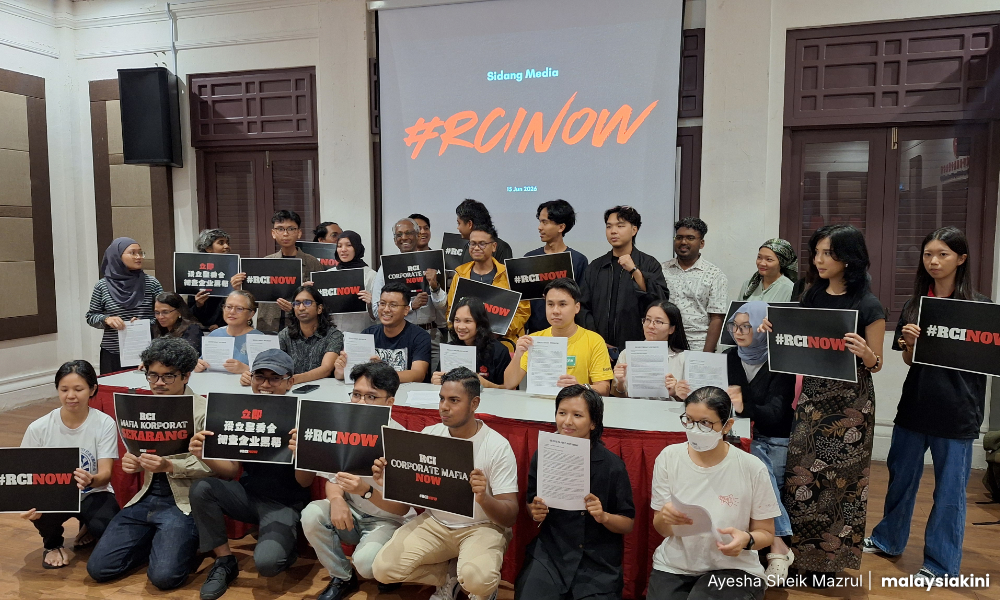
The Tangkap Azam Baki secretariat has rebranded itself as the #RCINOW secretariat, marking a new phase in its campaign for institutional reform and accountability.
Announcing the move today, Bersih executive director Asraf Sharafi said the new banner reflects a broader focus on restoring public confidence in national institutions amid lingering concerns over corruption.
“This rebranding marks a new phase of the movement's focus on the urgent need to restore the integrity of national institutions through clear, independent and accountable action,” he said at the Kuala Lumpur and Selangor Chinese Assembly Hall (KLSCAH) today.
The announcement comes alongside two key demands presented to the government.
Firstly, the secretariat reiterated calls for a royal commission of inquiry (RCI) into the “corporate mafia” scandal, in which MACC officials were accused of colluding with businesspeople to facilitate corporate takeovers.
It must also be chaired by figures of the highest integrity, including former chief justice Tengku Maimun Tuan Mat or others of similar standing.
“This commission must also be completely independent from the involvement of members of the executive, ministers, civil servants, and the attorney-general, to ensure that the investigation can be carried out without interference or conflicts of interest,” Asraf added.
The second demand concerns reforms to the appointment mechanism for the MACC chief commissioner.
According to Mandiri coordinator Hamdin Nordin, appointments should no longer be determined exclusively by the executive, but instead be subjected to parliamentary scrutiny and hearings before receiving the consent of the Yang di-Pertuan Agong.
"MACC, as the nation's primary anti-corruption institution, must be seen as genuinely independent from political influence and pressure from vested interests," Hamdin said.
He also singled out Azam’s successor, Abdul Halim Aman, urging him to act on the longstanding concerns surrounding the anti-graft agency or face similar scrutiny.
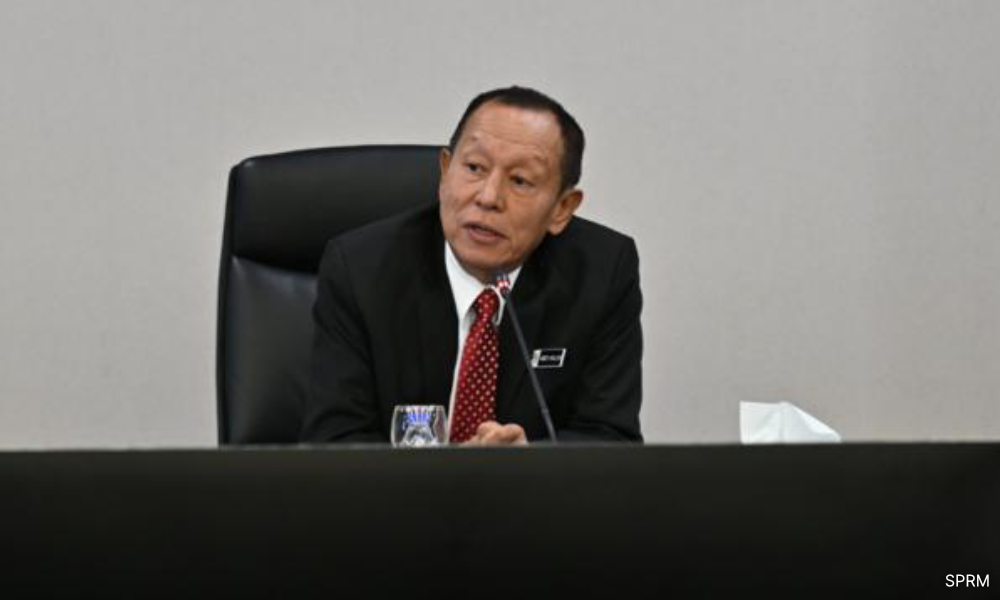
"The new MACC chief commissioner cannot merely continue the culture of the commission. Issues involving ‘corporate mafias’, the controversy surrounding Azam’s shares and corruption involving politicians must become top priorities.
"If you are negligent and repeat the failures that occurred under Azam’s leadership, then you too will be challenged by the people," Hamdin said.
March to Parliament
As part of its campaign, the #RCINOW secretariat announced plans to march to Parliament on June 30 to submit a memorandum outlining its demands to Prime Minister Anwar Ibrahim, ministers, and MPs.
The group also plans to organise a congress in the near future to broaden public discussion on the state of national institutions and the need for comprehensive reforms.
Calling on all layers of society to support the initiative, Hamdin said the issue transcends any particular group or political affiliation.
"This can no longer be viewed as the concern of a specific group, but rather a fundamental question about the future integrity of the country's institutions," he added.
Calls for an RCI and greater scrutiny of the MACC and Azam have persisted from various quarters in recent times.
Controversies and govt probe
During his tenure, Azam and the MACC under his watch were embroiled in several controversies, including his shareholdings and allegations of a "corporate mafia" network. They were later the subject of a government investigation.
Azam’s contract as chief commissioner was extended three times before he left on May 12.
Last week, DAP Women legal bureau chief Sangeet Kaur Deo and Muda secretary-general Ainie Haziqah Shafiee renewed calls for the findings of a government probe into Azam's shareholding controversy to be made public.
Several DAP leaders, including party chairperson Gobind Singh Deo, have also previously called for an RCI into the “corporate mafia” allegations, which the MACC has strongly denied, describing them as attempts to undermine the agency's credibility.
Azam had likewise denied wrongdoing in the shareholding controversy and had sued Bloomberg over its exposé. - Mkini

No comments:
Post a Comment
Note: Only a member of this blog may post a comment.