



WHEN the term “Anwarnomics” was coined in 2018 by Bloomberg columnist Andy Mukherjee, it described an economic philosophy centred on inclusive, rules-based and competition-oriented growth.
More than three years into Datuk Seri Anwar Ibrahim’s Madani administration, it is reasonable to ask whether Malaysia has moved closer to those aspirations. The answer is not straightforward.
The Madani government is certainly not short of vision. We do have the Madani Economy framework, the 13th Malaysia Plan (13MP), the New Industrial Master Plan, the National Energy Transition Roadmap, artificial intelligence (AI) strategies, education blueprints and various other fancy sectoral plans.
Anwarnomics should now be judged less by the frameworks it produces and more by whether it genuinely practises what it preaches.
Malaysia has a long history of development planning, stretching back to the First Malaysia Plan in 1966 and there is nothing inherently wrong with long-term planning.
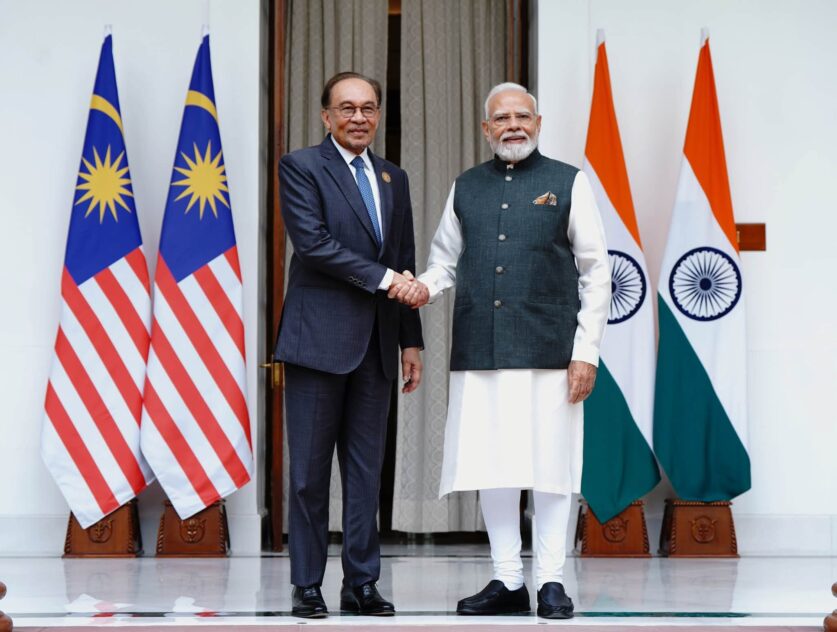
But after 60 years of producing plans and blueprints, perhaps we should also ask whether our policymaking system has become too comfortable with planning and not sufficiently focused on adaptability.
Foundation in Vision 2020
The world in which many of these plans were written can change very quickly. Protectionism is rising, supply chains are increasingly shaped by geopolitics while US-China strategic competition continues to influence investment decision with conflicts in the Middle East having added uncertainty to energy and commodity markets.
A blueprint can tell us where we want to go but it cannot anticipate every disruption we will face along the way.
Vision 2020 offers a useful lesson in how a long-term national direction can survive a severe shock without becoming rigid.
When the Asian Financial Crisis (AFC) struck in 1997, Malaysia adjusted its immediate policy response – including imposing selective capital controls and pegging the ringgit in 1998 – while retaining the broader ambition of economic modernisation and higher-income development.

The experience showed that a vision need not prescribe an unchanging route; its value also lies in providing a clear destination while allowing policymakers to adapt when circumstances demand it.
This is why adaptability should become one of the most important tests of Anwarnomics. The idea sounds simple but the consequences can be significant at policymaking level.
When circumstances change during implementation, policymakers need to be willing to adjust without losing sight of the original objective. Otherwise, a policy may fail to achieve its intended outcome or worse, create an unintended effect that contradicts another national priority.
Flip-flop e-invoicing policy
The implementation of e-invoicing provides a useful example. The government recently raised the exemption threshold to RM3 mil for businesses that fall within the exemption framework.
Yet the treatment is still weirdly different where a small business may not require to comply with e-invoicing if they sell physically but required to comply with e-invoicing if they started to sell online through e-commerce platforms.
There is little doubt about the intention behind e-invoicing where better transaction records can improve tax administration, formalisation and compliance.
The problem is the incentive created by uneven implementation. Imagine a micro entrepreneur operating both online and offline.
If selling through an e-commerce platform creates additional compliance requirements while remaining offline does not, some small businesses may simply choose not to sell online for the sake of not wanting to be captured under e-invoicing requirements.
The government may then face two unintended outcomes at once. First, the original objective of bringing more businesses into the formal tax ecosystem may still not be achieved because the entrepreneur remains outside it through offline activity.
Second, the policy may inadvertently discourage micro businesses from participating in the digital economy. This would run against Malaysia’s broader digitalisation agenda which successive governments have spent years trying to build.
The lesson is not that e-invoicing is inherently wrong but that good policy design must look beyond the intention of an individual policy and consider how businesses will actually respond to it.

Expanding care economy
This brings us to a bigger question. What Malaysia needs now is probably not another blueprint.
We need policymakers to ask where and what we want for our economy and society to be by 2040 and then continuously test whether today’s policies are helping us moving to that direction.
One area deserving greater attention is the care economy. As Malaysia ages and family structures change, demand for childcare and eldercare will grow.
These services should be treated as economic infrastructure because inadequate care support can reduce labour participation, household income and national productivity.
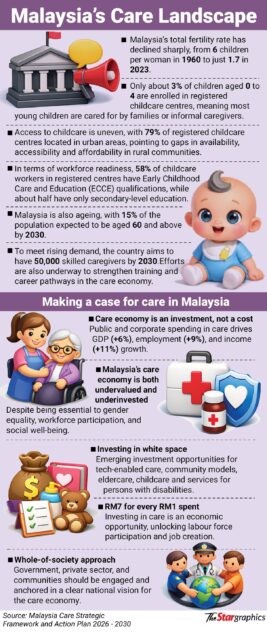
The care economy requires coordinated action across ministries. The Human Resources Ministry can professionalise caregiving and expand TVET pathways while the Finance Ministry (MOF) can introduce longer-term incentives to strengthen care services.
Flexible working arrangements and affordable professional care would also help more people, especially women, remain in the workforce.
This illustrates the broader test for Anwarnomics: whether the Madani government can coordinate policies, respond to evidence and adapt its approach while continuing to raise productivity, wages and quality of life.
The care economy is only one illustration of the larger challenge facing Anwarnomics. Malaysia’s next phase of development will not necessarily be symbolised by another megaproject or another beautifully designed policy document.
It may instead be reflected in whether Malaysia can produce world-class companies, adopt advanced technology, build a highly skilled workforce, raise productivity and ultimately deliver better wages and quality of life.
Anwarnomics began with ambitious ideas about building a more inclusive, rules-based and competitive economy.
As Malaysia moves closer to the next general election, can the government recognise when one policy is undermining another?
Can ministries work across institutional boundaries rather than operate within their own silos? Can policymakers change course when the behaviour of businesses and households differs from what was originally expected?
The real measure of Anwarnomics is therefore not how many blueprints it produces or how much the government intervenes. It is whether intervention is carried out with discipline, coherence and the willingness to adapt when reality demands it.
That will determine whether Anwarnomics is remembered as a maturing economic philosophy, or as another promising idea weakened by inconsistency.
An economist by training with over 10 years of dedicated experience in public policy, Adli Amirullah is chief economist at policy think tank Wawasanex.
The views expressed are solely of the author and do not necessarily reflect those of MMKtT.
- Focus Malaysia.

No comments:
Post a Comment
Note: Only a member of this blog may post a comment.