



EVERY festive celebration should be a time for joy, gratitude, generosity and goodwill. Yet across Malaysia, occasions such as Hari Raya Aidilfitri, Chinese New Year, Deepavali, Christmas and New Year’s Eve are often accompanied by firecrackers and fireworks.
For a few moments, the skies light up and the streets ring with explosions. But have we stopped to consider the environmental, financial and human costs behind this brief spectacle?
Fireworks have their origins in China, where gunpowder was developed more than a thousand years ago. Early firecrackers were reportedly made by packing gunpowder into bamboo or paper tubes to produce loud bangs, which were believed to ward off evil spirits.
Over time, the technology spread to the Middle East and Europe, eventually becoming a feature of celebrations around the world.
What began as a cultural tradition has developed into a substantial commercial industry. However, its consequences deserve serious reconsideration.
The hidden environmental price
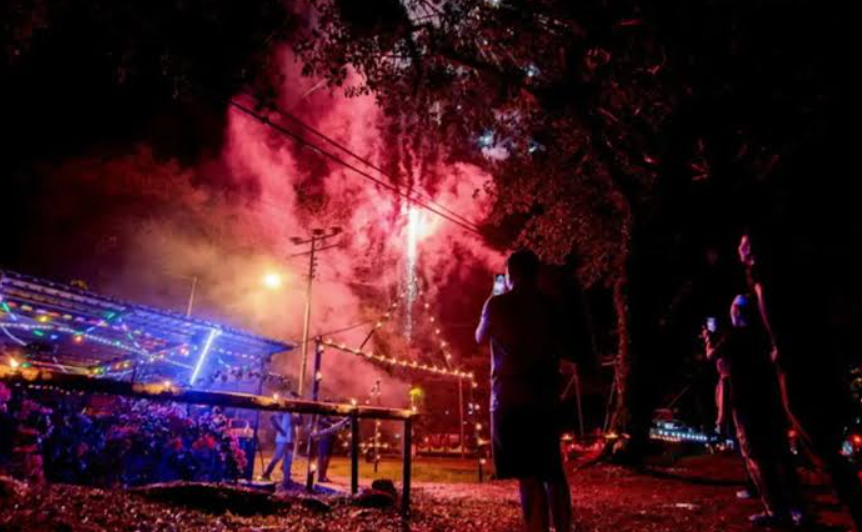
Fireworks are not simply harmless flashes of light. Their combustion releases fine particulate matter, including PM2.5, as well as gases and metallic compounds such as barium, copper and strontium, which help produce different colours.
A scientific review published in the journal Environments in June 2026, titled Environmental Impact of Fireworks, identifies air, water and soil contamination, noise, light pollution and waste debris as significant environmental concerns.
Research has also documented sharp increases in airborne particulate matter and metal concentrations in water following major fireworks displays.
The consequences extend beyond the air. Chemical residues can settle on roads, rooftops, vegetation and waterways, while discarded casings and other debris add to environmental waste.
Animals are among the most overlooked victims. Dogs and cats can experience fear, anxiety and disorientation from sudden explosions. Birds may abandon their roosting places, become disoriented or collide with buildings.
Wildlife can also be affected, particularly when celebrations coincide with breeding or migration periods.
We celebrate, but animals have no say in enduring the noise and distress.
How much money are we burning?
The financial cost matters just as much. According to World Bank trade data sourced from UN Comtrade, Malaysia imported approximately US$40.41 mil (about RM174 mil at an illustrative exchange rate of RM4.30 per US dollar) worth of fireworks in 2025, weighing approximately 28.5 million kg. Almost the entire amount came from China.
This figure represents the value of imports, not total consumer spending at retail level. Nor does it reveal how much was purchased for Hari Raya, Chinese New Year, Deepavali, Christmas or other occasions individually.
Publicly available official statistics do not provide a reliable breakdown of consumer spending on fireworks by celebration. The Government should consider publishing annual import, retail sales and festive expenditure figures to enable a more informed discussion.
Nevertheless, the scale of imports raises an important question: how much of our collective spending could be redirected towards more meaningful purposes?
Turning explosive spending into compassionate investment
Imagine if households, neighbourhood associations, businesses and community organisations voluntarily redirected even part of their fireworks budgets towards social causes.
That money could provide meals for underprivileged families, scholarships for disadvantaged children, medical assistance for elderly citizens, support for orphanages and homes for persons with disabilities, animal shelters, wildlife conservation and environmental rehabilitation.
Instead of spending RM200 or RM500 on fireworks that disappear within minutes, families could use the same amount to feed needy households or support abandoned animals.
Businesses and local councils could establish a fund that encourages communities to complement traditional celebrations with charitable activities, cultural performances and illuminated decorations.
Quieter alternatives, including drone displays, could also be considered where appropriate.
This would not diminish the significance of our diverse religious and cultural celebrations. Rather, it would give them greater meaning through compassion and social responsibility.
A change in how we understand celebration
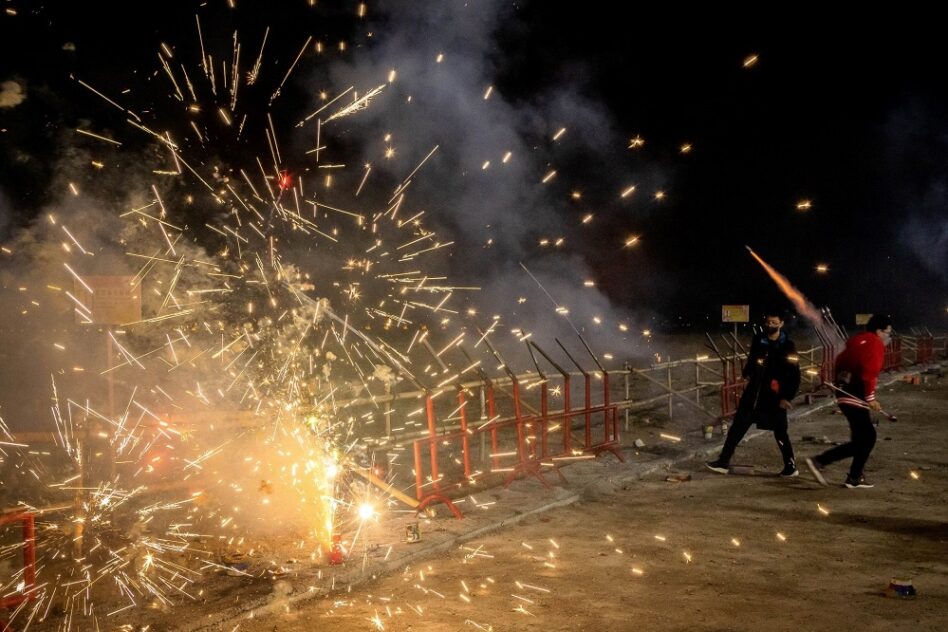
Malaysia takes pride in its multicultural society. Our festivals should reflect unity, respect, consideration and the shared values that bind us together.
The government should strengthen enforcement of existing fireworks regulations, improve public education, monitor environmental consequences and encourage safer, quieter alternatives.
Malaysia already regulates the import, sale and use of fireworks, permitting only specified products and authorised displays under prescribed conditions. Enforcement and public awareness therefore matter as much as regulation itself.
Cultural traditions deserve respect, but they can also evolve as society becomes more conscious of environmental sustainability and animal welfare.
Ultimately, what is the value of lighting up the skies while polluting the air, leaving chemical residues, frightening animals and spending money that could have helped relieve human suffering?
A truly meaningful celebration should leave behind happiness, not pollution; generosity, not unnecessary expenditure; and compassion, not fear.
Let us move from celebrating with explosions to celebrating through contributions. The brightest light a society can produce is not in its skies, but in the lives it improves.
KT Maran is a Focus Malaysia reader.
The views expressed are solely of the author and do not necessarily reflect those of MMKtT
- Focus Malaysia.

No comments:
Post a Comment
Note: Only a member of this blog may post a comment.