


In these past few years, I have spoken to many families whose loved ones had been on death row in Singapore.
It’s never easy as they describe the tribulations they face, travelling to the island nation and never truly knowing when the authorities would decide for your loved one to be next for the noose.
In a recent interview with Kellvina Kaur, the 20-something-year-old niece of death row inmate Kalwant Singh, she explained that they often had to spend hours on the road just to travel to Singapore for visits.
Once there, they had to sleep on one of Singapore’s many public beaches as they could not afford to pay for hotel rooms.
Family visits were complicated affairs. Appointments had to be made beforehand and if missed, the rescheduling becomes a major venture.
The number of visitors is controlled and the entire system is designed to be as bureaucratic as possible.
The inhumanity of the system
Nevertheless, despite the challenges of entering these institutions, visits to the inmates for some families meant everything. The costs, the indignity as well as the inconvenience were worth it, as long as they were able to talk to their loved ones. Life had to be made as normal as possible.
Upon sentencing, the death row prisoners become simulacra, a mere copy of what was before real. They appear to their families either as faces on a screen (tele-visits) or holographic figures behind reinforced see-through screens.
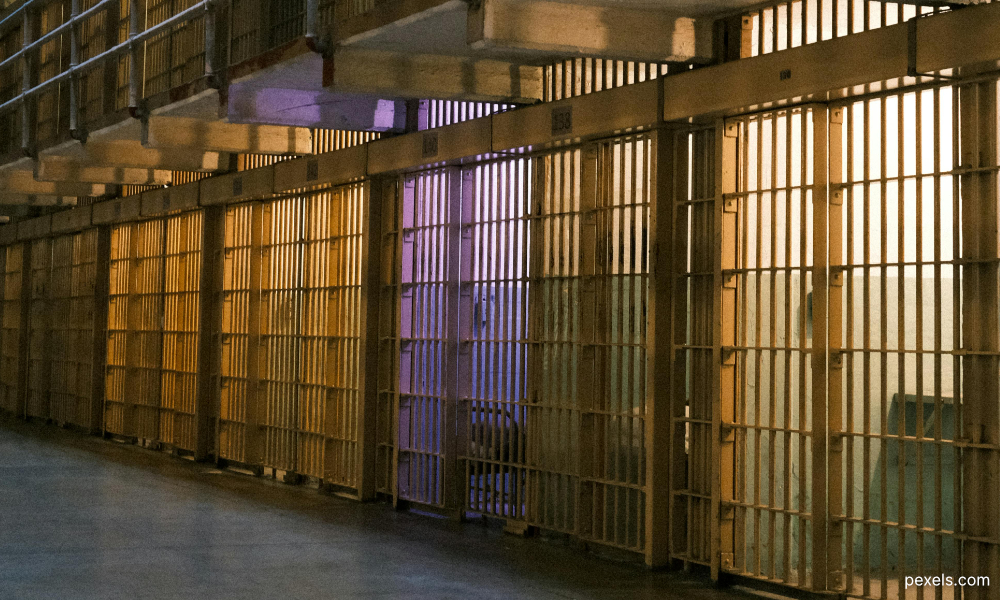
Despite being separated only by inches, the distance between individual and family during these visits is unbroachable.
Other death row families also explained that they did their best to ensure that the warmth of these gatherings could melt away the barriers or at least make them invisible even for those fleeting moments.
Death row prisoners are not normal prisoners and are sequestered from the rest of the general prison population.
They are only allowed to communicate with prison officials or religious counsellors outside of visitation hours and spend long hours by themselves in individual cells.
Once all appeals are exhausted, the only path to freedom for them is death. It is only then when everything has passed their families are able to touch and hug their lifeless bodies.
A macabre consolation
As a form of consolation, the prison authorities return photographs of the deceased to the families.
Procedurally the prisoners are made to take part in a macabre process where they smile and pose in new clothes purchased by their families for the photoshoot.
The sessions are usually conducted during the week just before the execution is to take place. So, the death row prisoner smiling and posing for the photographer is fully aware that within the week, he would executed.
Kellvina showed me the pictures. The prints were small, and their quality seemed to suggest that the prison authorities of Singapore, a developed and prosperous nation, had yet to discover digital technology.
But alongside the prison photos were more personal pictures belonging to Kellvina, of happier days, with Kalwant carrying her when she was just a few years old in a playground.
The contrast was extreme. Every single object she kept, from photographs to letters and even his ashes became symbols of resistance to his memory being held hostage by blurry studio-staged photographs.
Even in the final letters written to them both his mother and his niece hours before his death, Kalwant asked that they stay strong and take care of each other.
No institutional support for families
In Singapore and even Malaysia, the legal systems are focused more on retribution rather than reform and while murder is considered a capital offence, prisoners found guilty of drug trafficking continue to form the highest percentage on death row.
Since Singapore and Malaysia both consider this to be the most serious crime, the death penalty serves to deal with a “menace” threatening to undo the very sinews of society itself.
In such an environment, it is not surprising then that we very rarely hear of the tribulations that these families must undergo. As co-victims, these families not only suffer from social stigmatisation but are also made to face the leviathan of the state.
When I asked Kellvina if they had ever received any assistance from the Malaysian government during the period from Kalwant’s initial arrest in 2013 to his sentencing in 2016 until he was executed in 2022, her answer was an unequivocal “no”.
In fact, as Kellvina stated, it was young Singaporeans from the Transformative Justice Collective who provided the necessary assistance.
From the moment of Kalwant’s execution, to how his remains were brought back to Malaysia, this small team of activists provided constant support, gifting the family also with letters of encouragement from the Singaporean public.
Many death row families often suffer from what scholars would refer to as “disenfranchised grief”. This is a condition where they suffer from grief that is not recognised by anyone else.
At the same time, these scholars also state that grieving should be a right where families can express their profound sense of loss openly and to have that loss recognised.
The journey that many of these families have been on is incredibly lonely with the heavy burden of the stain, and the stigma remaining forever with them.
Does it work?
Societies like that of Singapore and Malaysia support long jail times, caning, as well as the death penalty because crime is seen as a problem that can only be “solved” through further violence. The efficacy of such methods is hardly ever questioned.
Regardless, the state has a responsibility to bear, especially when it comes to Malaysians languishing in foreign prisons. The government has a moral duty and imperative to protect the interests of our own citizens.
The Indonesian government has certainly done so with Filipino Mary Jane Veloso even after 15 years in an Indonesian prison.
One part of Kellvina’s story was particularly striking to me as we spoke. It was her description of the journey she would take into the foreboding prison complex prison itself.
After registering, she would be made to walk through the building, climbing stairs, descending, ascending again going around corners, only to reach long passageways leading nowhere. Only after this was she able to meet her uncle in a room separated by that thick reinforced screen.
No family should be made to go through such a harrowing experience without some kind of assistance from our own government.
According to a Straits Times report in 2022, there were 10 Malaysians on Singapore’s death row and as I write this, there are other prisoners awaiting their execution order within the walls of Singapore’s prison complex.
I can only imagine the sense of loneliness they would have to endure. I can only imagine the trauma so many other families have to face only to see their loved ones behind those screens.
The Malaysian government must now, more than ever, play its role. - Mkini
LEONG KAR YEN is a Malaysian academic based in Taiwan. He is currently looking at the “life” of the death penalty in the region.
The views expressed here are those of the author/contributor and do not necessarily represent the views of MMKtT.

No comments:
Post a Comment
Note: Only a member of this blog may post a comment.