


When Penang Smart Parking (PSP) was launched in 2019, Automatic Number Plate Recognition (ANPR) was never part of the original concept. The idea only emerged in 2024.
Following discussions involving Penang Island city councillors, the system was deployed on the streets of George Town on April 24, 2025.
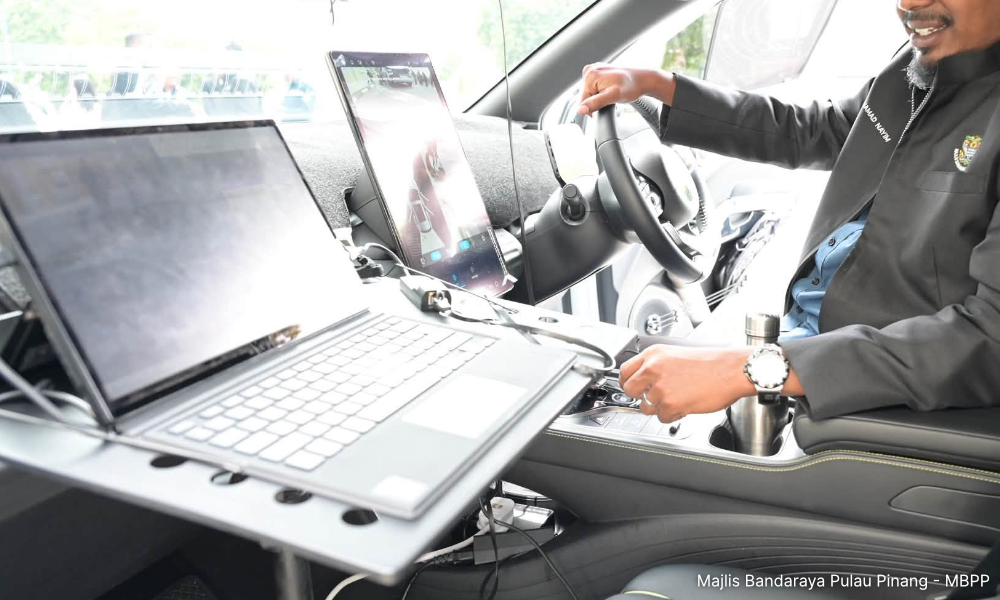
ANPR uses specially equipped patrol vehicles to scan number plates in real time and facilitate the issuance of digital compounds. Its stated purpose is straightforward: to make enforcement faster, more efficient, and increasingly automated.
But if ANPR had been operating since April 2025, why did it only become a major controversy more than a year later, prompting the state government to suspend it on Aug 8, 2026?
The answer is not that ANPR itself is the problem. It is how the technology is being used.
The question that started it all
The controversy began with a Facebook post I published on Aug 6, 2026, questioning Penang Island City Council (PICC)’s modus operandi in carrying out ANPR enforcement.
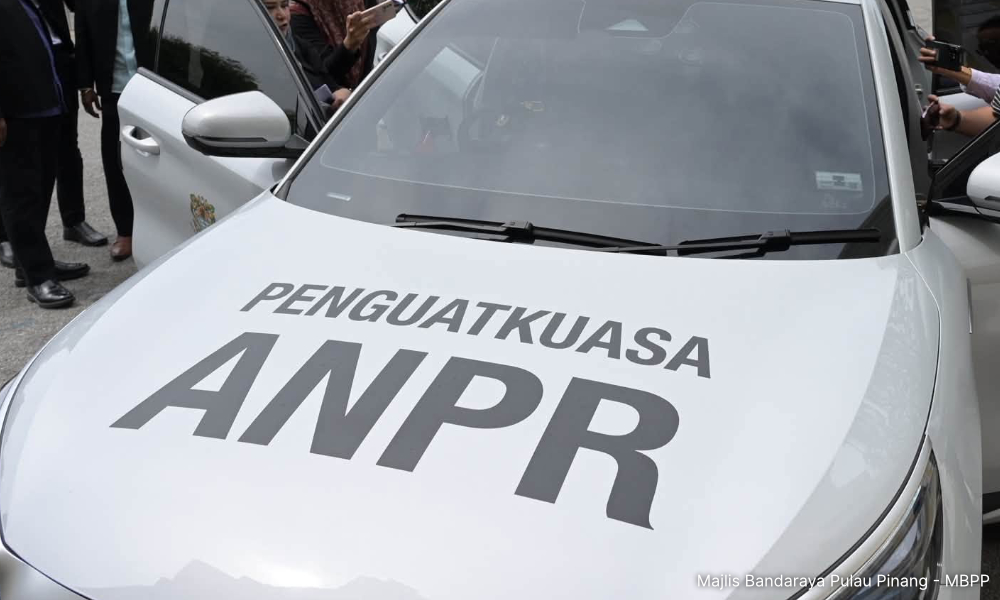
I asked a simple question: why does PICC need to resort to what appears to be covert enforcement against motorists?
Look closely at the vehicles used for ANPR enforcement. They resemble ordinary private cars, bearing only the words “Penguatkuasa ANPR” (ANPR enforcer) at the rear. There is no prominent PICC logo, no markings on the bonnet or sides, and no flashing or beacon lights.
Technically, they may not be “unmarked”, but to a motorist glancing at one from the front or side, they are effectively indistinguishable from any other car on the road.
Nor do we normally see uniformed officers stepping out of these vehicles to carry out enforcement. Motorists have no way of knowing who is inside, or who is responsible for the decision to issue a compound.
That matters because the power to issue a compound cannot simply be exercised by anyone. If the law requires an authorised compounding officer, that decision cannot be outsourced to a contractor, a machine, or an unauthorised person.
ANPR may assist in detecting an alleged offence, but technology should assist enforcement, not replace the lawful exercise of enforcement powers.
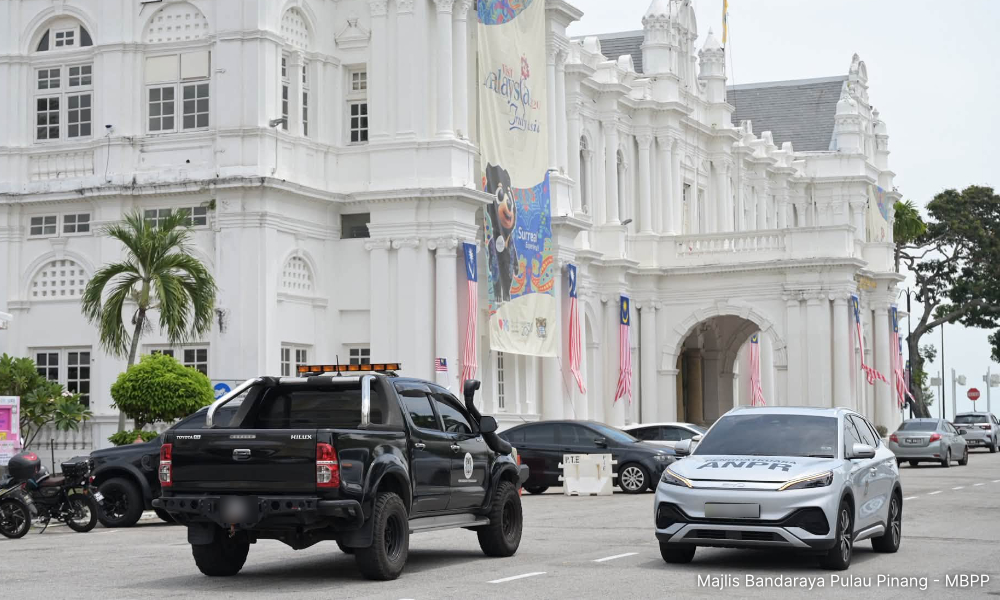
There is also a wider principle at stake. If the purpose of enforcement is to encourage compliance with parking regulations, enforcement should be visible.
Motorists should be able to recognise an enforcement vehicle and be reminded to comply, rather than left with the impression that the authorities are concealing their presence to catch as many motorists as possible.
The ‘one minute’ explanation
Instead of putting the controversy to rest, the PICC mayor’s press conference the following day intensified it.
His explanation that a one-minute grace period was sufficient for motorists to open the PSP app and make payment attracted even greater criticism.
It raised an obvious practical question: if a motorist can be compounded after merely one minute, what real opportunity is there to park, take out a phone, open the app, wait for it to load, identify the correct zone and complete payment?
The issue was never whether motorists should pay for parking. Of course they should.
The question is whether they are given a reasonable opportunity to comply before being penalised for failing to do so.
The mayor’s further disclosure that ANPR had been recording between 7,000 and 10,000 alleged violations every month only deepened the concern.
What had been presented as an efficiency tool suddenly raised a larger question: was ANPR being used to encourage compliance, or had enforcement become too focused on catching people out?
That distinction goes to the heart of the controversy.
Compounds to be cancelled
The controversy eventually reached a point where Penang Chief Minister Chow Kon Yeow had to intervene.
On Aug 8, 2026, the state government suspended ANPR enforcement pending a comprehensive review.
This was followed by an announcement from state executive councillor Jason H’ng that 29,240 compounds issued for vehicles parked outside designated bays would be cancelled, with motorists who had already paid able to seek refunds until Sept 30, 2026.
This is no longer a small administrative matter.
When nearly 30,000 compounds have to be cancelled, the government has to examine not merely individual enforcement decisions, but the system that produced them.
A proper review should therefore ask several basic questions:
How much time should motorists reasonably be given to pay?
Who actually decides to issue each compound?
What safeguards exist against erroneous compounds?
Should every detection automatically trigger enforcement?
Does the existing legal framework properly provide for how these digital compounds are issued and served?
These are not arguments against technology. They are arguments for a system that is fair, transparent, proportionate, and lawful.
The human element
There is nothing inherently wrong with ANPR. Technology can help local authorities enforce more efficiently, reduce inspection time, improve record-keeping, and deploy resources more sensibly.
But a machine sees a number plate and a payment status. It does not know whether the motorist parked 30 seconds ago, whether the app is still loading, whether the internet connection is slow, or whether an elderly motorist simply needs a little more time.

That is why automation cannot become a substitute for judgment.
Faster enforcement is not necessarily better enforcement.
Penangites understand the need to pay for parking and comply with the rules. But the success of enforcement should not be measured by how many motorists are caught. It should be measured by how effectively the system encourages people to do the right thing.
Free doesn’t mean zero cost
It has been pointed out that the ANPR vehicles were provided to PICC free of charge by the PSP contractor.
Let us be clear: this controversy was never about the acquisition price of the vehicles.

Free equipment is not the same as cost-free enforcement. PICC still deploys manpower to supervise enforcement, verify offences, and process compounds.
Administrative staff still handle records, enquiries, complaints, and appeals. Now, with the cancellations, further public resources will have to be devoted to identifying affected cases, processing refunds, and handling related enquiries.
These costs are ultimately borne by Penang’s ratepayers and taxpayers, while officers’ time is diverted from other municipal services.
Any genuine assessment should therefore look at the entire enforcement model, rather than simply asking whether the technology works. It should consider its manpower requirements, costs, legal basis, accuracy, grace periods, vehicle visibility, and verification processes.
Greatest cost may be political
There is another cost, however, that cannot be measured in ringgit and sen: public trust.
People will not remember ANPR’s camera specifications. They will remember receiving a compound. They will remember being told that one minute was enough.
They will remember an enforcement vehicle that looked, to them, like any other car on the road. And those who paid compounds that are now being cancelled will remember the inconvenience of seeking a refund.
A government is seldom overthrown over one parking system alone, but public support can be eroded when enough small grievances accumulate into a larger perception that the government has stopped listening.
That is why the suspension cannot simply be treated as a cooling-off period before the same system quietly resumes.
If ANPR is to return, the government must be able to demonstrate that it has addressed concerns over visibility, grace periods, accountability, accuracy, and the lawful exercise of enforcement powers.
The ANPR vehicles may have cost PICC nothing to acquire. But if the system is not properly reviewed and corrected, the price paid in public trust could dwarf anything spent on an enforcement vehicle.
That is why ANPR should no longer be treated as merely a parking issue. It has become a test of governance, accountability, and political responsiveness.
And when people tell their government that something has gone wrong, good governance begins with something even simpler: Listen. - Mkini
NG WEI AIK is a former Tanjong MP.
The views expressed here are those of the author/contributor and do not necessarily represent the views of MMKtT.

No comments:
Post a Comment
Note: Only a member of this blog may post a comment.