


Malaysia has slipped seven places to 95th in the World Press Freedom Index 2026 published by Reporters Without Borders (RSF), with its overall score falling to 52.73 from 56.09 last year.
The decline was reflected across nearly all five indicators assessed.
Under the political indicator, which measures media autonomy from political pressure, Malaysia’s score dipped from 44.66 to 43.00.
The economic indicator, assessing financial independence, saw a sharper drop from 48.67 to 40.28, while the legal indicator - covering the legislative and regulatory environment for journalists - fell from 46.26 to 43.71.
The steepest decline was recorded in the sociocultural indicator, which evaluates social constraints and self-censorship, dropping significantly from 62.72 to 51.25.
The only area of improvement was the security indicator, which rose from 78.16 to 85.42, reflecting a better assessment of journalists’ ability to work without unnecessary physical, psychological, or professional risk.
Rising and falling
Last year, Malaysia placed 88th - rising 19 spots from 107th in 2024.
Malaysia's placing in 2024 was the result of a fall of 34 rungs from 73rd the previous year. At the time, RSF attributed the drop to the frequency with which news sites critical of the government were being blocked.
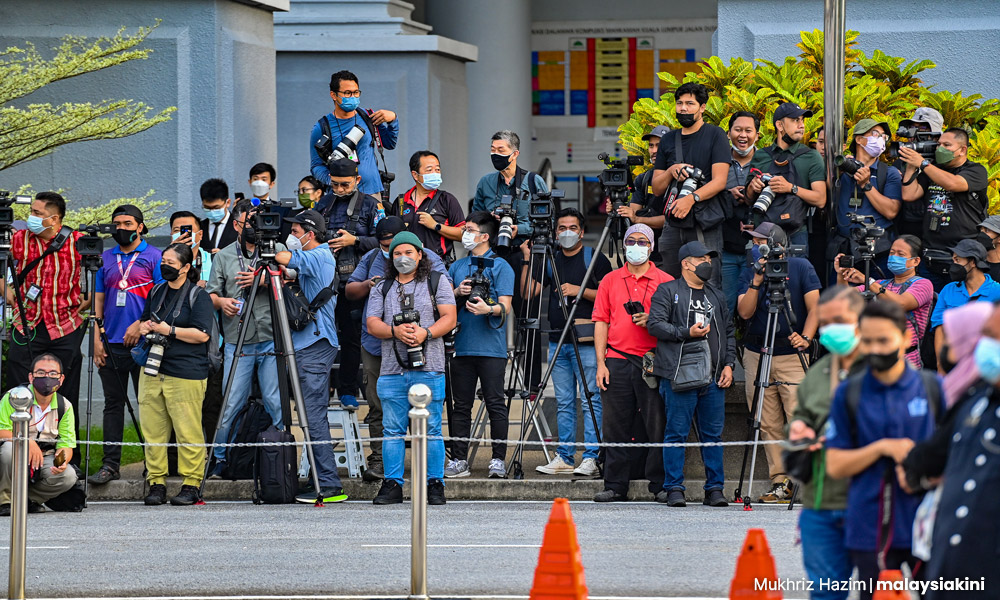
It said political pressure prevented the media from tackling sensitive subjects such as 3R (race, religion, and royalty) issues or criticising the government.
It also noted conflict between the Federal Constitution, which guarantees press freedom, and draconian laws such as the Printing Presses and Publication Act (PPPA) 1984, Sedition Act 1948, and Official Secrets Act 1972.
Average score lowest in 25 years
For this year's global analysis, RSF said that rankings were at an all-time low as over half the countries assessed have fallen into the “difficult” or “very serious” categories for press freedom.
"In 25 years, the average score of all 180 countries and territories surveyed in the Index has never been so low.
"Since 2001, the expansion of increasingly restrictive legal arsenals - particularly those linked to national security policies - has been steadily eroding the right to information, even in democratic countries.
"The Index’s legal indicator has declined the most over the past year, a clear sign that journalism is increasingly criminalised worldwide," it said.
Zooming in on Asia-Pacific, RSF described it as one of the most repressive regions for media, citing harsh laws, legal harassment, the criminalisation of journalists, as well as the growing global spread of censorship and propaganda tactics.
"In Indonesia (129), Singapore (123), Malaysia, and Thailand (92), journalists are routinely subjected to strategic lawsuits against public participation – abusive cases known as slapps (strategic lawsuits against public participation) – typically brought by political or economic elites exploiting a legal framework that offers scant protection to the press," it said.
Timor-Leste ranks highest among Asean countries at 30th place.
It is followed by Thailand (92), Malaysia, Brunei (96), the Philippines (114), Singapore (123), Indonesia (129), Cambodia (151), Laos (154), Myanmar (166), and Vietnam (174).
The index ranks 180 countries on the level of freedom enjoyed by journalists and the media.
RSF is an international organisation based in Paris which provides safety resources to journalists and conducts research on the state of press freedom worldwide.
The index can be accessed here.
Senior journo’s home raided
On Monday, police raided the home of Malaysiakini senior journalist B Nantha Kumar in connection with an investigation into an article concerning a proposed migrant worker recruitment system.
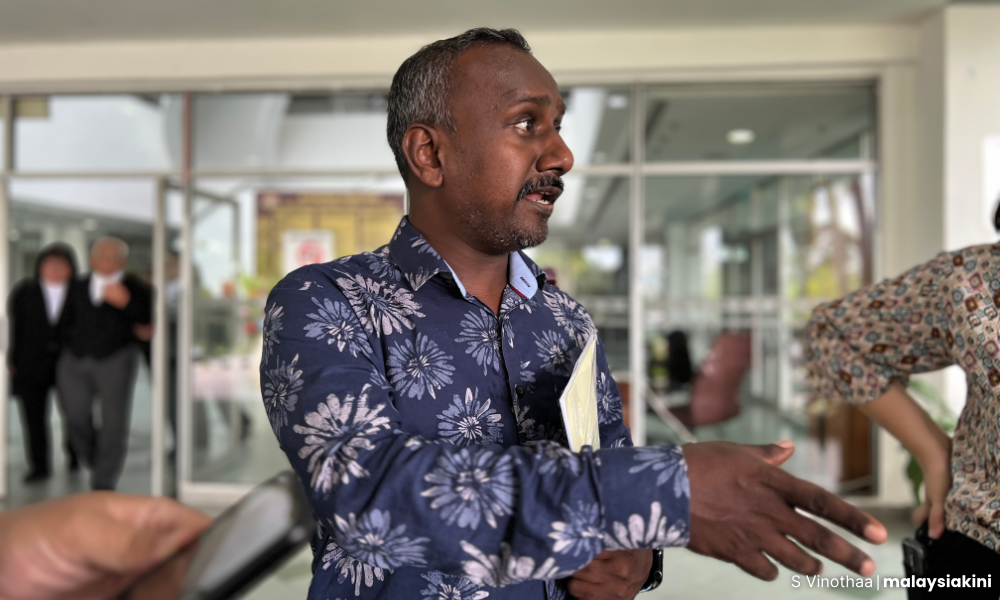
It is learned that the Human Resources Ministry lodged the report on the article after failing to respond to Malaysiakini’s repeated requests for comment before the article’s publication.
On April 1, Sepang district police headquarters said the investigation is being conducted under Section 203A of the Penal Code for unauthorised disclosure of information and Section 233 of the Communications and Multimedia Act for improper use of network facilities or services.
Earlier this month, Sin Chew Daily reported that police had instructed three journalists to delete photos and videos taken while covering follow-up developments on a riot at a Cheras entertainment centre.
Kuala Lumpur police chief Fadil Marsus later said that this was due to a "slight misunderstanding".
In January, former Free Malaysia Today journalist Rex Tan was arrested and detained under the Sedition Act, Penal Code, and Communications and Multimedia Act.
Tan, while covering a public forum, had posed a question said to have carried racial overtones. - Mkini

No comments:
Post a Comment
Note: Only a member of this blog may post a comment.