


Animal welfare activists are seeking a legal challenge against bail-out fees imposed by local councils to release impounded stray dogs, which they consider excessive.
The move comes after Global Human Rights Federation (GHRF) president S Shashi Kumar was charged RM2,000 by the Kuala Lumpur City Council (DBKL) to secure the release of a stray dog.
According to a receipt furnished to the media, Shashi was compounded under provisions allowing councils to capture and detain stray dogs found in public places.
Lawyer Rajesh Nagarajan argued that the hefty charge has no legal basis and far exceeds what is permitted under existing by-laws.
“I can tell you without any doubt or hesitation that it is illegal. You cannot charge RM2,000 for one dog. Why? Because it is not provided for in the bylaws.
“They can only charge you an administrative fee for catching the dog and for keeping it.
“If the charge is RM10 to RM20, that is reasonable. But RM2,000 is ridiculous,” he said during a press conference at the Kuala Lumpur and Selangor Chinese Assembly Hall today.

Joined by over 21 NGOs, the press conference was held to highlight what organisers described as a rapidly escalating stray animal welfare crisis in Malaysia.
Exorbitant bail-out fees
Shashi said that one of the most pressing issues faced by animal rescuers is bail-out fees imposed by local councils, which he described as “extortionate”.
He said the fees are financially burdening rescuers seeking to claim impounded animals and could ultimately result in more strays being euthanised.
Citing the Kulim Municipal Council as an example, Shashi claimed the local authority charges RM300 per dog to release strays, based on a holding fee of RM100 per night at the pound.
By comparison, DBKL charges a holding fee of RM2 per night, while the Shah Alam City Council (MBSA) reportedly does not impose any.
The group also raised concern over additional requirements imposed on shelters seeking to reclaim impounded strays, including the need to register with the Veterinary Services Department (DVS) to qualify for discounted fees.

Shashi claimed that about 90 percent of shelters are not registered with the department due to burdensome procedures and a lack of clear benefits.
He also alleged that some councils issue ultimatums to rescuers to quickly reclaim animals or risk losing them.
“In one case, we (the rescuers) were told that if we do not take the dog out in 15 minutes, we can’t see the dog again,” he said, implying that the animal will be put down expeditiously.
Longstanding concerns
The issue of bail-out fees is not new, having been raised previously by animal welfare groups.
Previously, in July 2025, Persatuan Haiwan Terbiar Malaysia (SAFM) had urged the government to absorb all bail-out fees imposed by local authorities on stray dogs, Free Malaysia Today reported.
Its president, R Kalaivanan, said fees can range from hundreds to thousands of ringgit per dog, creating an unsustainable situation for NGOs operating on limited resources.
He added that the bailout process should be streamlined to allow quicker rescue efforts without unnecessary delays or financial strain.
“This will enable the NGOs to focus on their mission to rescue, rehabilitate and rehome stray animals without huge financial implications,” he was quoted as saying.
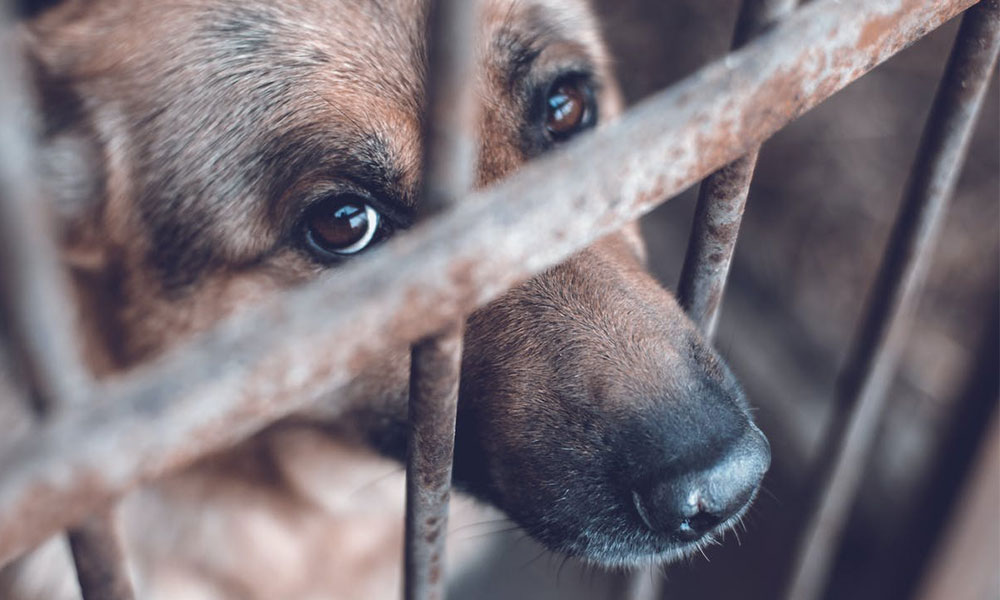
Kalaivanan's remarks came after the government announced that it will maintain its current procedure of trap-reclaim-rehome-dispose (TRRD) in managing stray dogs.
According to FMT, the Housing and Local Government Ministry viewed the method as the most practical solution in balancing public safety and humane treatment towards strays.
Housing and Local Government Minister Nga Kor Ming had said in November 2024 that local councils would only resort to euthanasia as a last option in managing stray animals.

Speaking during the ministry’s winding-up session of the Budget 2025 debate, Nga said the practice would be limited to sick, injured or frail animals, as well as those posing a public safety risk, such as rabies-infected cases, Malay Mail reported.
He added that the ministry’s approach prioritises humane management methods, including capture-and-release procedures, rehoming efforts, and transferring stray dogs or cats to NGOs for relocation where possible.
NGO leader debunks Nga’s assurance
Shashi, however, disputed Nga’s statement today, claiming there have been multiple instances of local councils mistreating strays, including during enforcement operations.
He cited the case of a stray dog named Kopi, which was shot by a Besut District Council personnel on Oct 6, sparking outrage among animal rights activists.
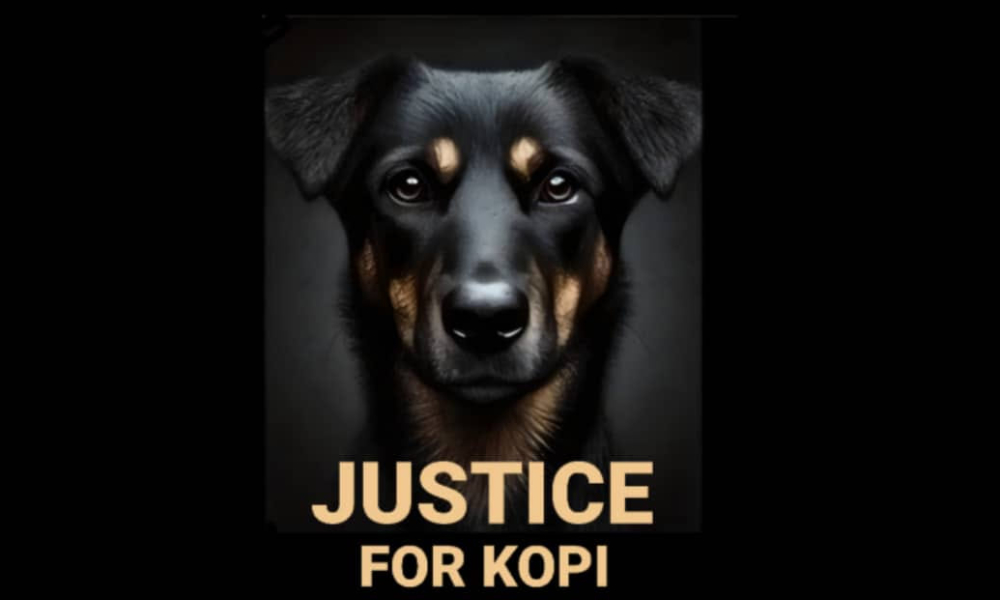
He also pointed to the incident in Universiti Putra Malaysia, where the institution was accused of engaging contractors to cull stray dogs on campus.
Shashi noted how these incidents raised concerns over the normalisation of harsh and inhumane methods in managing strays.
Lax enforcement against animal abuse
Additionally, the press conference also called out the worsening pattern of animal cruelty and weak enforcement in Malaysia.
Shashi said animal abuse has persisted over time, while enforcement by authorities remains lacklustre, leaving NGOs and the rescuers to once again shoulder the burden.
He recalled recent incidents of animal brutality, particularly of a poodle abuse case in Seri Kembangan, where the animal was hurled against a wall, sustaining injuries.
Despite the authorities being furnished with information about the perpetrator, he remains at large to this day, Shashi said.
Meanwhile, Rajesh condemned the frequent use of Section 428 of the Penal Code in animal cruelty cases, arguing that it is a general provision that should not take precedence over the Animal Welfare Act 2015 (AWA).
“The Penal Code is a general act that covers everything; from rape to murder to kidnapping and everything under the sun.
“It is not an act that was created in relation to animals. Here, you have a specific act, which is the AWA, so why are you running to the Penal Code? What is the logic?” he asked.
For context, Section 428 of the Penal Code criminalises “mischief by killing or maiming any animal”, and carries a penalty of up to three years’ imprisonment, a fine, or both. The quantum of the fine is at the judge’s discretion.

In contrast, Section 30 of the AWA criminalises the killing of animals except in certain circumstances, such as for food. It provides for up to three years imprisonment, a fine between RM20,000 and RM100,000, or both.
Rajesh stressed that animal cruelty cases should be prosecuted under AWA, arguing that imposing lighter punishment undermines accountability.
Rajesh and Shashi also called for an amendment to the AWA, saying that current provisions, such as Sections 34 and 59, still empower local councils to implement inhumane methods while managing stray animals.
Section 34(2) provides that animal welfare officers could put down an animal without a veterinary surgeon's approval if they deemed that the animal is suffering or if it’s not practical to acquire the approval beforehand.
Section 59, meanwhile, grants legal immunity for personnel enforcing the law.
They added that this comes hand-in-hand with demands for accountability and competency from authorities while managing animal abuse cases.
"How long are we going to report to (the authorities) and it totally goes into inaction? This is where we are fed up, and we are holding the government responsible and accountable in this matter,” Shashi said. - Mkini

No comments:
Post a Comment
Note: Only a member of this blog may post a comment.