


The estimated RM150 million price tag attached to holding two state elections separately from the upcoming general election now carries heavier economic consequences, amid pressing concerns fuelled by the ongoing energy crisis spurred by the West Asia conflict.
While certain segments appear intent on standing firm against postponing the Malacca and Johor elections, an economist cautioned that the steep cost of the democratic process must be considered in the context of a constrained fuel supply environment.
Samirul Ariff Othman opined that under the current climate, RM150 million should no longer be viewed as routine administrative spending, as the funds could be a potential emergency buffer to address immediate economic priorities.
Highlighting that the amount is “not insignificant”, he asserted that injecting funds into stabilising fuel distribution and logistics is likely to yield far greater economic returns than non-essential spending.
“For instance, RM150 million could be deployed to support transport operators, cushion SMEs (small and medium enterprises) facing rising freight costs, or ensure continuity in the distribution of essential goods,” the Universiti Teknologi Petronas adjunct lecturer told Malaysiakini.

“Redirected effectively, the same amount could fund temporary fuel-related support for hundreds of thousands of vulnerable households - directly mitigating the pass-through of global price shocks into domestic living costs.
“The question is not whether we can afford elections, but whether we can afford duplication,” he added.
He also warned that avoidable spending could send mixed signals as the government pursues fiscal consolidation and deficit reduction targets.
In that context, Samirul stressed that aligning electoral cycles where possible would not only reduce costs but also reinforce policy discipline at a time when markets are closely watching how governments respond to external shocks.
“None of this diminishes the importance of elections (as) they remain a core democratic function and a necessary cost of governance.
“However, the issue here is not elections per se, but whether they are conducted in the most efficient manner possible,” the senior consultant with Global Asia Consulting emphasised.
He noted that while holding separate elections may be seen as manageable in calmer periods, such spending needs to be justified - not assumed - under current conditions.
No reason to delay polls
Putrajaya has projected that its spending on fuel subsidies this month could balloon to RM7 billion - an approximately 10 times increase from the RM700 million expenditure before the Iran war.
Prime Minister Anwar Ibrahim has also warned the public to brace for price hikes and recognise the gravity of the crisis.
On April 22, Deputy Prime Minister Ahmad Zahid Hamidi reiterated that BN and its linchpin Umno do not endorse suggestions to postpone the Malacca and Johor state elections.
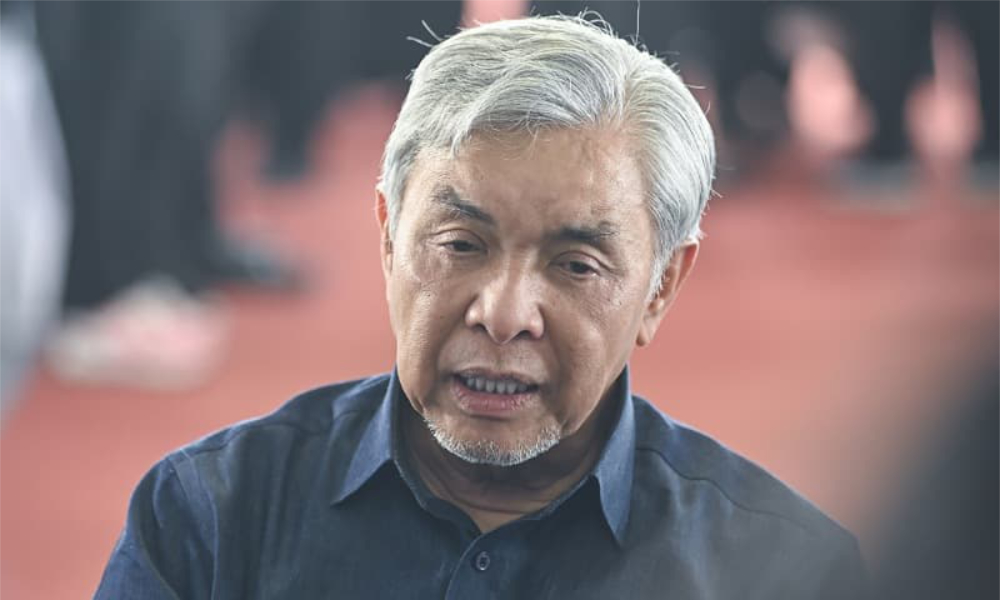
The Umno president and BN chairperson’s remark came after party supreme council member Ahmad Maslan reportedly said he would urge the party against proceeding with “inappropriate and illogical” plans to hold the two state elections soon.
The deputy works minister, however, later clarified that he was merely expressing his opinion in backing the polls’ postponement, adding that timing is critical.
On April 21, PKR secretary-general Fuziah Salleh said calls to postpone the two state polls need to be assessed realistically, particularly if the reason for the delay is linked to geopolitical factors.
Speaking as a guest on a Bernama Radio programme, she pointed out that while geopolitical developments will take time to resolve, elections cannot be delayed indefinitely.
On the same day, Malacca Chief Minister Ab Rauf Yusoh said there is no strong basis to delay the state’s election, claiming that there is “insufficient basis” to support proposals on the matter.
With the federal government’s term due to run until December 2027, the Malacca state assembly is scheduled for an automatic dissolution in December this year, while Johor’s election is due in April next year.
Last week, Bloomberg reported that Anwar is allegedly in the early stages of considering holding a general election in the third quarter of this year.
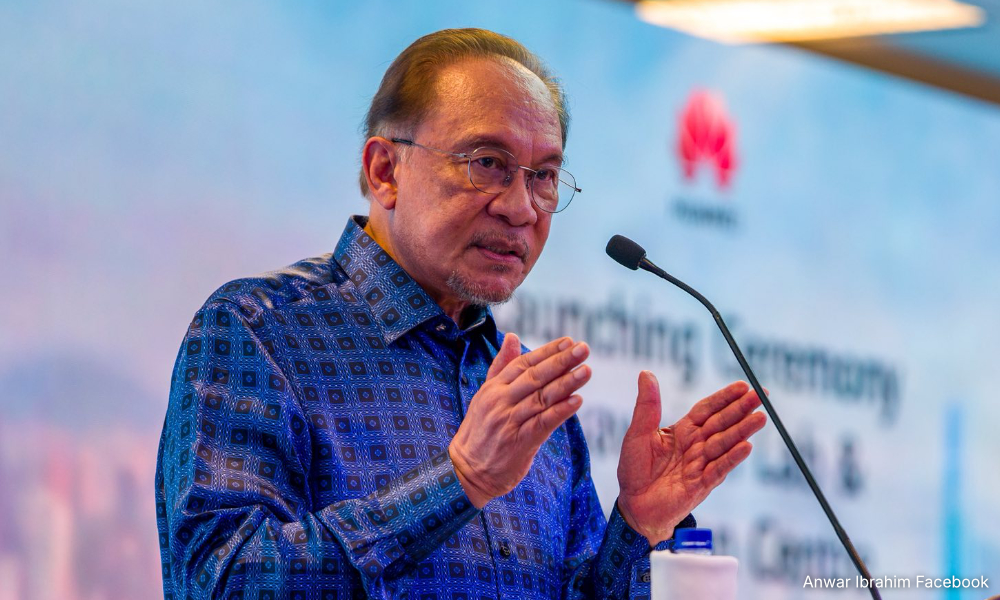
A source was quoted as saying that an election before October is being considered as policymakers prepare for a more targeted approach to subsidies in the second half of this year.
‘Adopt appropriate measures’
Asraf Sharafi, an executive director at electoral reform group Bersih, told Malaysiakini that while the Election Commission’s (EC) allocation for polls is sourced from consolidated funds, money meant to be used for elections cannot be utilised for other non-related matters.
However, Muda vice-president Dobby Chew urged the EC to adopt appropriate measures in light of the growing energy crisis, including considering postal voting and other procedures that could help reduce operational overhead for the state polls.
He further argued that political parties, especially the ruling parties, should cut back on the “usual extravagance of shuttling in VIPs” for events.
“Political campaigns should reflect the austerity measures we have to collectively undertake.
“We cannot put a price on maintaining our democracy, but this does not give us a blank cheque to spend blindly for elections,” he said when contacted.

He added that the EC and political parties participating in the election should know and understand the significance of such funds while implementing critical reforms that would help absorb and reduce costs.
In September last year, DAP secretary-general Anthony Loke publicly proposed holding concurrent federal and state elections, particularly in Peninsular Malaysia, to ensure better coordination in party preparations and to reduce costs.
As of February this year, his position appears to have remained unchanged, with the transport minister telling Malaysiakini that a packed electoral calendar would disrupt national administration and hinder the government’s ability to implement policies effectively.
If federal and state elections are not held concurrently, there could be at least five rounds of polls within the next year or two, including in Malacca, Johor, Sarawak, the national polls, and the six state elections.
Former EC deputy chairperson Wan Ahmad Wan Omar previously said that from an election management viewpoint, holding state polls and the general election simultaneously would be the best to save funds, manpower, and resources.
Noting that there are no legal obstacles to bar the hosting of the Malacca and Johor state polls concurrently with a general election, Wan Ahmad told Berita Harian in December last year that merging the elections could save around RM200 million in gross budgeted costs. - Mkini

No comments:
Post a Comment
Note: Only a member of this blog may post a comment.