


If you walked into your usual kopitiam this morning and the kuey teow still costs what it did last month, you may have come away thinking the diesel crisis is someone else’s problem.
However, the truth is the opposite: your bill has not yet moved because the person behind the counter is absorbing the cost on your behalf.
The most important question for households over the next six months is not whether prices will rise. It is when, and by how much, as soon as businesses are no longer able to afford the absorption.
At a closed-door roundtable recently convened by the Institute of Strategic Analysis and Policy Research (Insap), this was the dominant pattern across food and beverage, retail, vegetable wholesalers, tourism, manufacturing and construction.
A flash survey of local small and medium enterprises (SMEs) conducted by the Small and Medium Enterprises Association of Malaysia (Samenta) and tabled at the roundtable captured it with unusual clarity.
Ninety-three percent of respondents said they were already feeling the cost increase. Thirty-eight percent said their costs had risen by more than 11 percent, yet only 17 percent had raised prices.

Forty-five percent were absorbing the increase by cutting margins, while another 14 percent said they had not yet decided what to do.
That gap between cost rising and retail prices rising is what I would call silent absorption. It is merely a postponement, paid for out of business margins that can only compress so far before they break.
And when they do break, prices tend to move in steps, all at once, because operators who have held out for as long as they could find that they no longer can.
It’s in the data
The first wave of consumer-end pressure is already in the data. A separate household survey conducted by Insap between April 21 and 26, with 125 respondents across 11 states, found that six in 10 reported a significant or severe impact on their daily lives.
The top three pressure points were food prices (60 percent), transport costs (54 percent) and household goods (42 percent).
B40 and lower-M40 households made up about three-quarters of the sample, and impact severity rose as you moved down the income distribution.
In other words, the first wave of impact from the fuel crisis has already arrived. The second wave is the one being held back, for now, by margin compression in the wholesalers, service operators and contractors who sit between the diesel pump and the consumer.
This brings me to the second pattern, which is just as important and considerably less discussed.
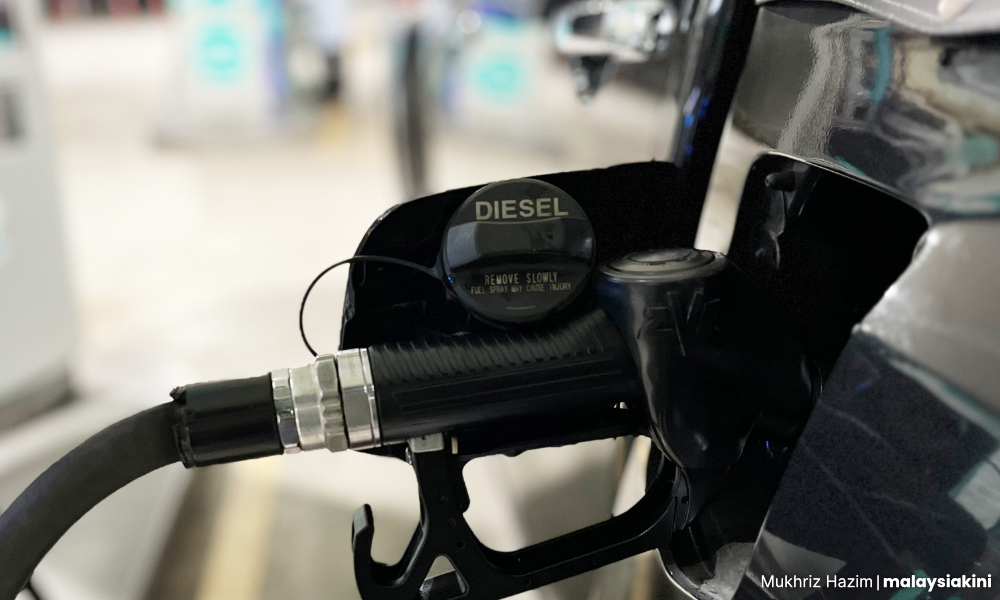
The diesel support architecture is reaching some operators and missing precisely the ones whose costs ultimately land on the consumer.
Vegetable wholesalers explained that even though long-haul lorries are subsidised, the 4x4 vehicles farmers actually use to move produce from the farm gate to the collection centre are not.
According to industry voices, Budi Agri-Komoditi covers only part of the planting costs and is insufficient to even cover the irrigation pumps, which on a one-acre (0.4ha) farm could consume up to 20 litres of diesel a day.
No relief
Tourism operators also reported that domestic tour bus operators receive no targeted diesel relief at all. A day-trip ticket that sold for RM100 a year ago is now selling for RM200. Replacement coach prices have moved from around RM600,000 to RM900,000 per unit.
During the recent Songkran festival at Bukit Kayu Hitam, it was reported that for an event that would normally see more than 100 Malaysian tour buses leaving Kuala Lumpur for the event up north, only a fraction made the trip.
The construction sector tells a similar story. Findings presented by Samenta at the roundtable indicated that more than 280 construction projects are running behind schedule, with diesel having moved from around RM3 per litre to over RM6 per litre at the peak of the crisis, and material costs up 30 to 40 percent against fixed-price contracts that were tendered before the surge.
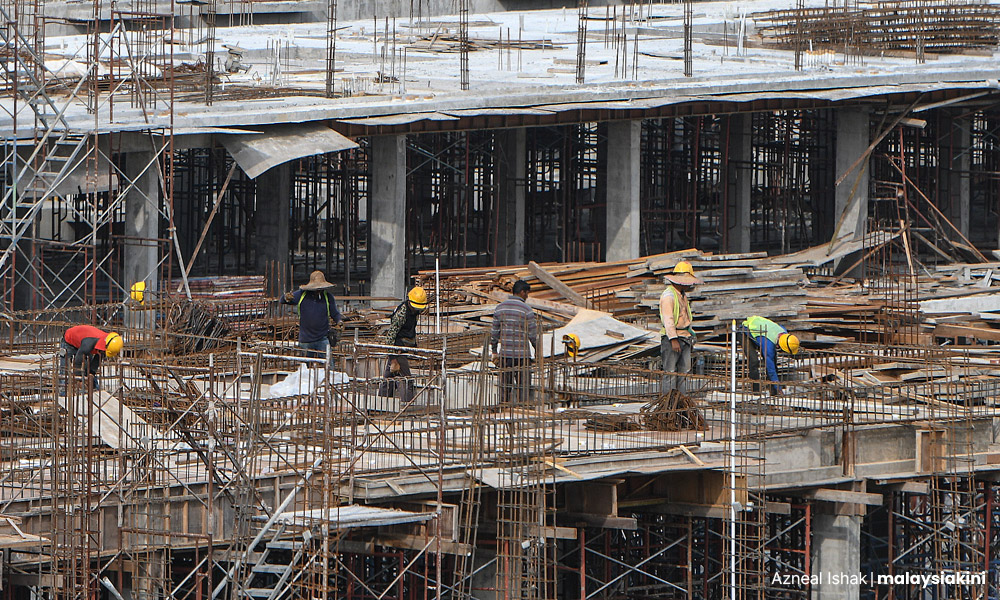
What ties these examples together is that the cost cascade is flowing through the precise choke points the subsidy was not designed to cover.
They are simply not in the places where vegetable wholesalers, tourism and construction set the prices that eventually arrive on your weekly grocery bill or your transport receipt.
For the ordinary household, two practical implications follow.
The first is that the calm at the cash register is misleading and probably temporary. The second is that closing the eligibility gaps in existing support, before the second wave breaks, has stopped being an argument about industrial policy and has become an argument about your monthly food spending.
The data and the testimony are pointing in the same direction, and the window for adjustment is narrower than it looks. - Mkini
WOON KING CHAI is the director of the Institute of Strategic Analysis and Policy Research (Insap). He previously served in senior roles in the federal government and private sector.
The views expressed here are those of the author/contributor and do not necessarily represent the views of MMKtT.

No comments:
Post a Comment
Note: Only a member of this blog may post a comment.