


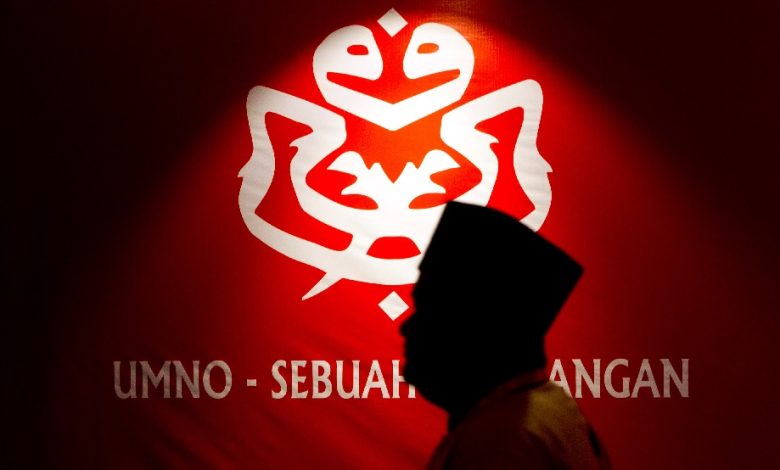
FEW political parties survive the kind of electoral humiliation suffered by the United Malays National Organisation (UMNO) in the 2018 and 2022 Malaysian general elections. Fewer still manage not only to endure, but to reinsert themselves at the centre of power.
Yet UMNO has done precisely that, adapting its strategies, exploiting fragmentation among rivals, and mastering coalition politics with a pragmatism that its opponents underestimated.
The collapse of the Pakatan Harapan (PH) government in 2020 was not a spontaneous implosion but the culmination of careful political manoeuvring. The Sheraton Move demonstrated how UMNO, despite its weakened electoral standing, could still act as a kingmaker.
By aligning tactically with the Malaysian United Indigenous Party (BERSATU) and defectors from PH, UMNO helped dismantle the reformist government it had lost to just two years earlier.
This was not simply political revenge, but strategic recalibration. UMNO recognised that in a fragmented landscape, electoral strength alone was no longer the sole determinant of power; coalition leverage mattered more.
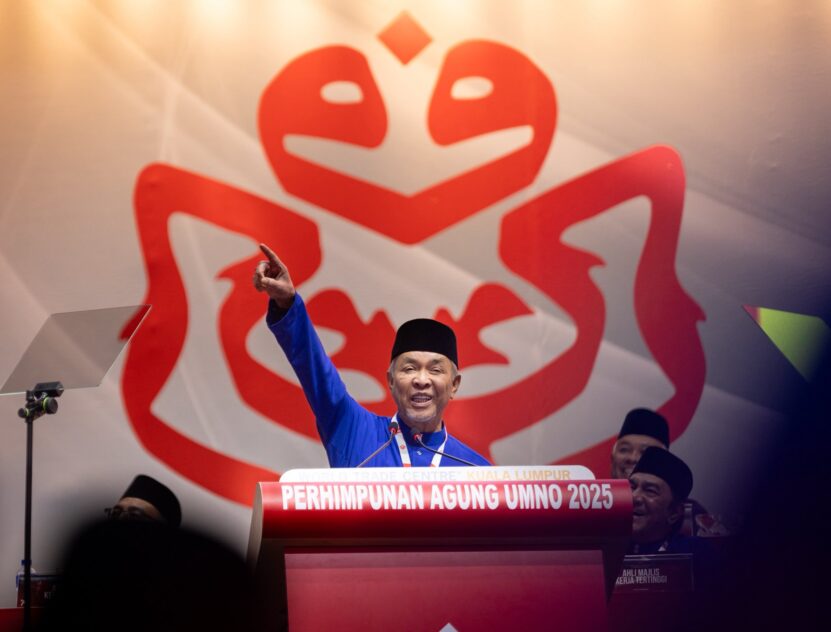
What followed was even more revealing. UMNO entered into cooperation with its erstwhile rival, Bersatu, under the Perikatan Nasional (PN) banner.
However, this partnership was inherently asymmetrical. UMNO’s grassroots machinery, patronage networks, and historical legitimacy far outweighed Bersatu’s comparatively shallow organisational base.
By lending temporary credibility to its partner, UMNO simultaneously created the conditions for its weakening. The eventual rupture between the two, culminating in UMNO’s distancing ahead of GE15, left Bersatu exposed and struggling to sustain relevance outside a broader coalition framework.
In effect, UMNO executed a classic game-theoretic strategy: cooperate when advantageous, defect when necessary. It maximised short-term gains while ensuring that its partner did not grow strong enough to become a lasting competitor.
This pattern has continued in the post-2022 political arrangement, where UMNO joined a unity government alongside PH, led by the People’s Justice Party (PKR) and supported by the Democratic Action Party (DAP).
At first glance, this alliance appeared to favour PH. UMNO, weakened by electoral losses and corruption scandals, seemed to occupy a junior position. Public perception suggested PH was setting the agenda. Yet UMNO has again recalibrated its approach.
Rather than confronting its partners directly, it has adopted a subtler strategy: shaping internal dynamics within PH itself. From a strategic perspective, this resembles a divide-and-influence model.
By maintaining rhetorical pressure on DAP, often through appeals to its traditional Malay base, UMNO preserves its core support while subtly straining cohesion within the governing coalition.
At the same time, its position in government allows it to influence policy direction and public narratives, complicating PH’s reformist messaging.
This dual-track approach serves multiple objectives. First, it prevents PH from consolidating a unified voter base. Second, it creates ambiguity over who truly leads the government.
Increasingly, perceptions have shifted towards the idea that UMNO is exerting disproportionate influence within the coalition.
Recent developments at state level reinforce this pattern. UMNO’s decision to withdraw support from the PKR-led administration in Negri Sembilan signals a willingness to disrupt even its own coalition arrangements when strategically useful.
Such moves are not isolated incidents but calculated demonstrations of leverage. By showing it can unsettle governments, UMNO reinforces the message that stability depends on its continued participation.
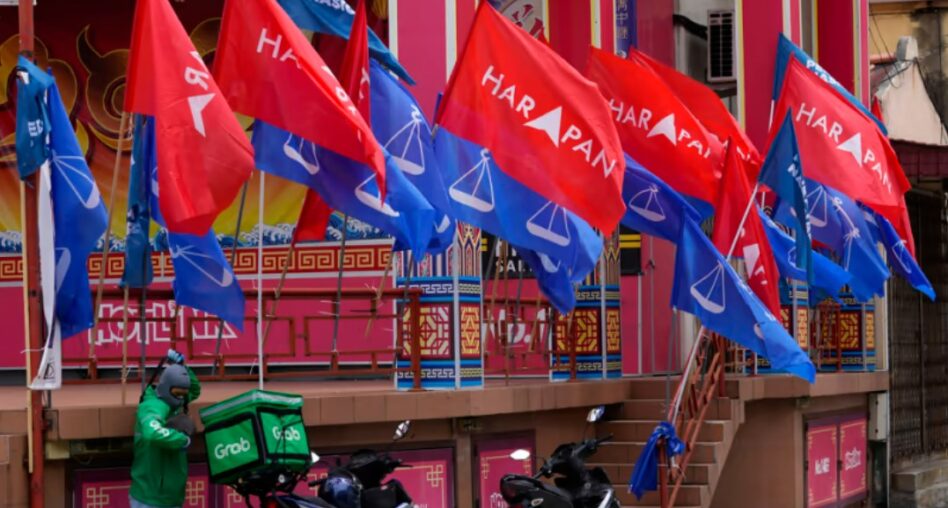
PH’s challenge is therefore not merely electoral, but strategic. The coalition has yet to fully internalise the lessons of UMNO’s earlier dealings with Bersatu and PN. In both cases, UMNO entered partnerships from a position of weakness, only to emerge stronger by outmanoeuvring its allies.
There is little indication that its approach within the current PH–Barisan Nasional framework differs fundamentally.
Compounding PH’s vulnerability are internal uncertainties. The anticipated departure of Datuk Seri Rafizi Ramli from PKR removes a key strategist and policy voice.
Meanwhile, perceptions of weakened leadership within DAP raise questions about its ability to counterbalance UMNO’s influence. These developments create a window of opportunity for UMNO to assert itself further.
UMNO’s longer-term objective appears increasingly clear: to rebuild dominance not through immediate electoral victory, but through incremental positioning.
By the time of the next general election, it aims to have reshaped the political landscape by weakening rivals, consolidating its base, and projecting itself as indispensable to stability.
The situation in Sabah illustrates this dynamic. Voter unease with the PH–BN partnership reflects broader ideological inconsistency. PH, once defined by its opposition to UMNO politics, now governs alongside it, creating cognitive dissonance among supporters.
UMNO, by contrast, has demonstrated far greater ideological flexibility, prioritising power retention over doctrinal consistency.
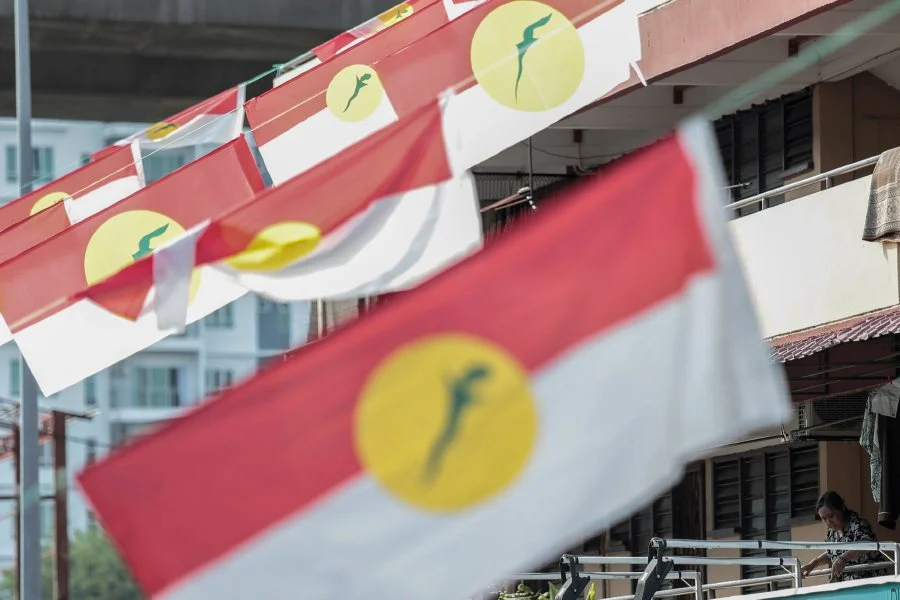
Adding to this is the quiet reintegration of UMNO figures previously sidelined or suspended, signalling internal consolidation and renewed confidence within the party.
For PH, particularly PKR, the stakes are increasingly existential. The coalition must decide whether it is merely coexisting with UMNO or being strategically outmanoeuvred by it.
Recognising UMNO’s pattern of engagement—cooperate, consolidate, then dominate—is the first step. The second is developing a counter-strategy that restores clarity of purpose and public trust.
Whether PH’s leadership is prepared to confront this reality remains uncertain. The risk is not only electoral defeat, but strategic irrelevance.
UMNO has shown it does not require overwhelming public support to wield power—only the ability to navigate a fractured political landscape more effectively than its rivals.
If PH fails to adapt, it may find that the party it once defeated has not only survived, but quietly regained the upper hand.
R. Paneir Selvam is Principal Consultant at Arunachala Research & Consultancy Sdn Bhd (ARRESCON), a think tank specialising in strategic and geopolitical analysis.
The views expressed are solely of the author and do not necessarily reflect those of MMKtT.
- Focus Malaysia.

No comments:
Post a Comment
Note: Only a member of this blog may post a comment.