


Home Minister Saifuddin Nasution Ismail has clarified that the controversial Section 63A in the Prisons (Amendment) Bill 2026 is not an attempt to confer legal immunity on officers.
This would not prevent police investigations and internal action from being carried out, he said, commenting on the bill, which has since been referred to a parliamentary special select committee.
"Prison officers are still subject to legal action in the event of negligence or violation of the law," he told a press conference at the Home Ministry's monthly assembly at Putrajaya today.
The proposed section had aimed to provide protection from court proceedings to prison officers and any person following instructions from the commissioner-general if any act or negligence occurred in good faith, with a belief that it was necessary.
Saifuddin acknowledged that the word "protection" required fine-tuning due to "perceptions" from NGOs and lawmakers that it conferred legal immunity.
The status of immunity refers to protection against liability, punishment, or legal action. Qualified immunity, which protects government officials from lawsuits, has been criticised in other countries for eroding trust in authorities amid rising concerns over accountability.
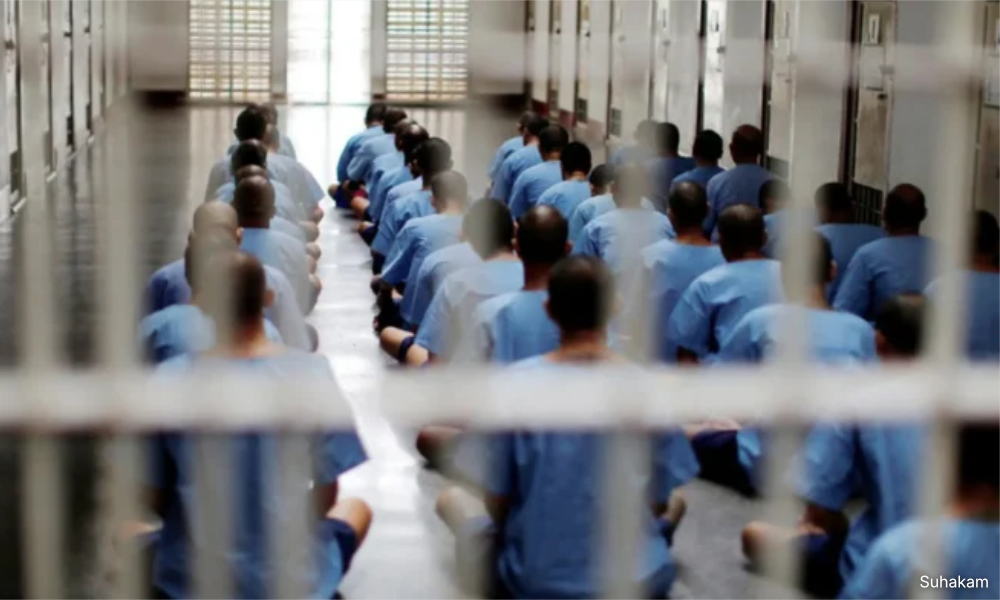
During the last Dewan Rakyat sitting, lawmakers across the political spectrum raised red flags over several provisions, labelling the bill as "regressive" and "draconian".
While Section 63A gained the most airtime in the debates, MPs also questioned Clause 9, which allows for the inclusion of confiscated property in the prison officers' reward fund, and Section 66A, which empowers the commissioner-general with the ability to appoint volunteers to assist prison officers in carrying out rehabilitation programmes.
Enabling uniformity
Commenting further, Saifuddin said that Section 63A was introduced in the Prisons Act to enable uniformity with other statutes that have such protections.
"Many other Acts in our country also have similar provisions," he said.
He also provided a few examples to justify the proposed protection for prison officers.
He said that a Prison Department director had once been sued after a prisoner died after undergoing caning as ordered by the court.
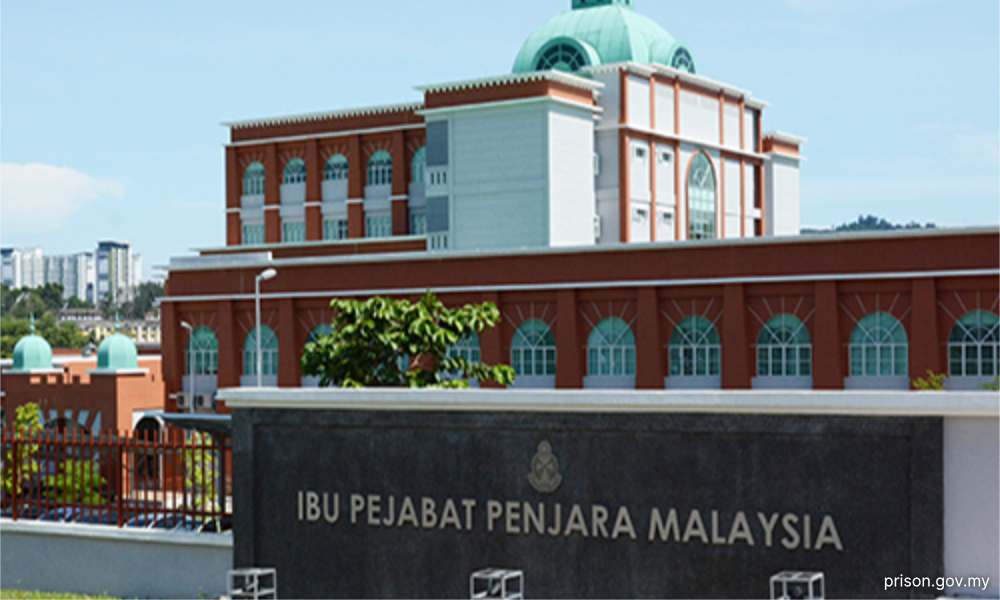
"We know that every caning sentence is carried out according to the prescribed procedure, including the presence of a doctor and compliance with all relevant conditions.
"However, whether the death was caused by the caning sentence or otherwise, prison officers are still sued even though they are only implementing the court's decision.
"So for cases like this, I feel that there is a need for the Prisons Act to be amended in this context," he said.
Another example involved a prisoner who had died in their sleep.
"The medical report confirmed that there was no element of foul play, but the prison officers were still sued," he added.
However, he said the ministry will continue with its engagement sessions and provide clarification to all stakeholders.

"The examples I gave earlier are only a small part of real situations faced by prison officers who carry out their duties in good faith but are still exposed to legal action.
"Therefore, we see the justification for this matter to be presented again," he said. - Mkini

No comments:
Post a Comment
Note: Only a member of this blog may post a comment.