


Kedah Menteri Besar Sanusi Nor’s speech is problematic not simply because his remarks may be perceived as insulting Malaysians of Chinese or Indian descent.
The deeper problem lies in a fundamental misconception of Malay history and identity itself.
I do not intend to label Sanusi’s speech as racist. It was delivered on an election platform, where political figures often use strong language and emotional appeals to mobilise supporters.
A firebrand politician like Sanusi is known for such rhetoric, and sensationalism is expected in political campaigning.
Let us examine his exact words:
“Malays have no other land. Malays only have this Tanah Melayu. Indians have India, Chinese have China, Cambodians have Cambodia, and the Siamese have Thailand. Where do the Malays go? Malays are only here.”
At first glance, this sounds like simple, emotive logic. It is designed to evoke a sense of insecurity and urgency among Malays by suggesting that they must protect their only homeland.
The Kedah menteri besar’s aim is clearly to rally the Malay electorate by framing their rights as tied exclusively to a single, irreplaceable homeland.
There is no doubt that simplicity and emotional intensity are powerful tools for mobilising support.
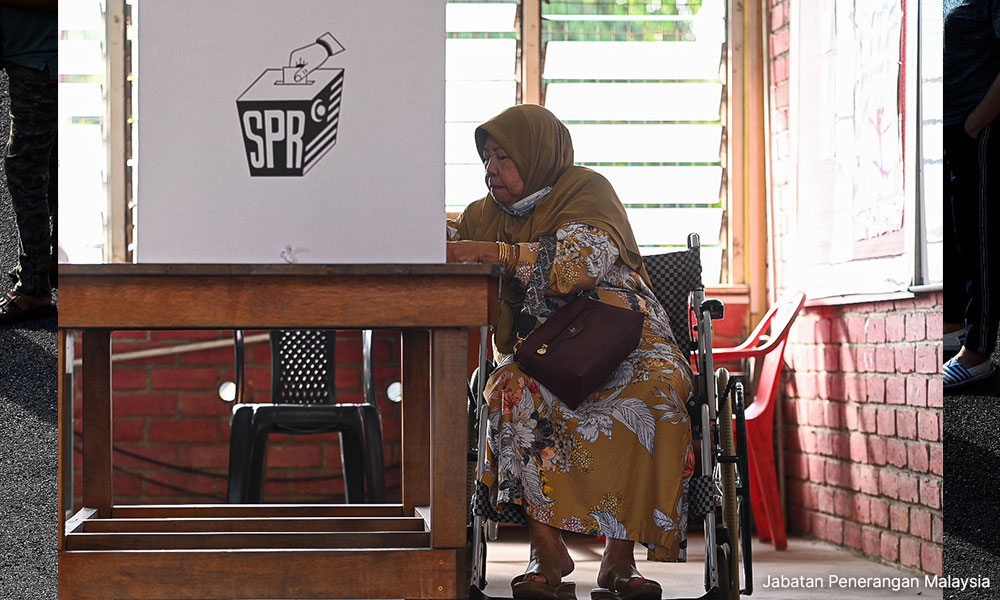
However, the historical premise behind his argument is seriously flawed - not because it is offensive, but because it distorts historical and anthropological reality.
Clarifying the definition of Malay
From a legal perspective, Malays are recognised as the majority indigenous people of the Malay peninsula, with a special constitutional definition tied to language, culture, the Islamic faith, and customary practices.
Historically, Malays have deep roots in Malaysia and the wider Malay world long before the arrival of European colonial powers. Calling this land Tanah Melayu is largely a matter of semantics; acknowledging this history should not be controversial.
However, recognising the historical and cultural connection between Malays and Tanah Melayu does not mean that Malaysia as a modern nation-state belongs exclusively to one ethnic group.
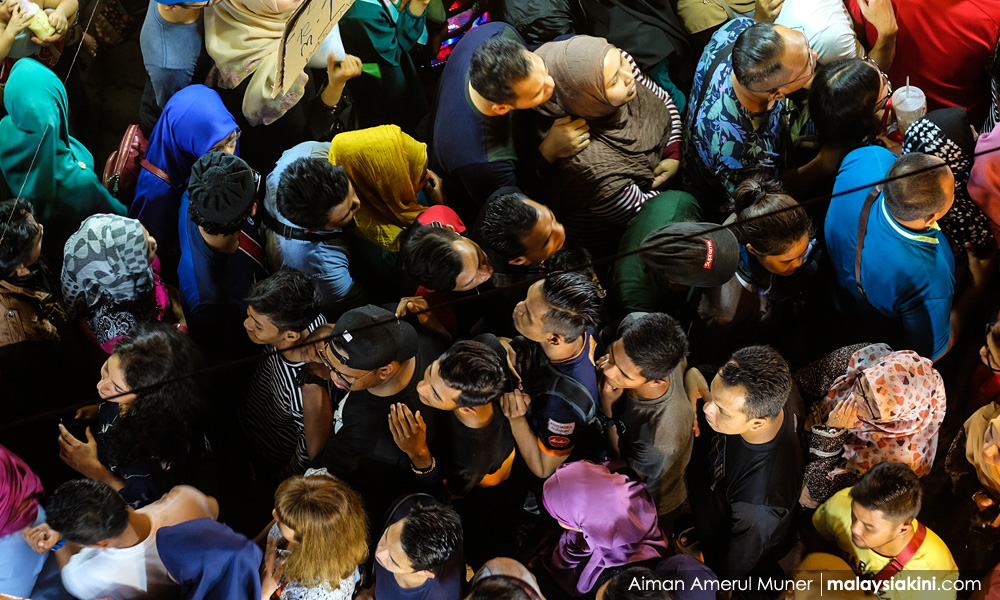
The Federation of Malaysia was founded through the independence struggle of the peoples of Malaya and Borneo, uniting diverse ethnic communities. Citizenship in the federation is based on allegiance to the Constitution.
All citizens who call this country home are part of the shared national story.
This is why Sanusi’s statement is perceived as provocative: it risks creating the impression that some citizens have a less legitimate claim to belonging than others.
I do not think Sanusi necessarily intended to deny the citizenship of non-Malays or question their loyalty. Rather, his strategy is to invoke emotion by arguing that Malays have no other homeland besides Tanah Melayu.
But this very logic becomes dangerous when it echoes a Zionist-style narrative - the idea that one ethnic group has an exclusive, timeless claim to a land while ignoring centuries of demographic and political evolution.
Assumption of ‘one people, one homeland’
The problem is that this argument relies on an oversimplified understanding of the historical evolution of states and societies.
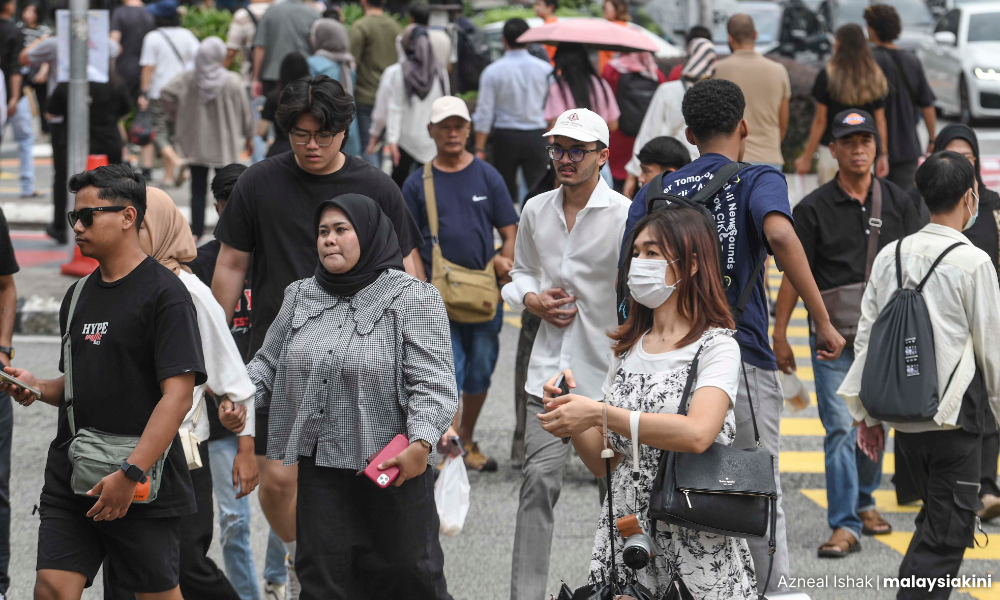
The most problematic aspect of Sanusi’s narrative is the assumption that every ethnicity naturally corresponds to a single modern nation-state: Chinese have China. Indians have India. Cambodians have Cambodia. Siamese have Thailand.
This sounds intuitive, but it does not reflect historical reality.
Modern nation-states are political creations shaped by centuries of migration, empire-building, colonial boundaries, and socio-economic development. They do not perfectly correspond to ethnic or cultural groups.
China officially recognises itself as a multiethnic state consisting of more than 50 distinct ethnic groups. India is among the most culturally and linguistically diverse nations on Earth.
Cambodia is home to a Khmer majority, but Khmer communities have historically extended into what are now Thailand, Vietnam, Myanmar and Laos. The Tai peoples, meanwhile, founded numerous kingdoms across mainland Southeast Asia that later evolved into the modern states of Thailand (formerly Siam) and Laos.
Even the term “Indian” does not fit neatly into Sanusi’s equation. In the Malaysian context, Indian ethnicity implies various communities with ancestral origins in different parts of the South Asian subcontinent, including areas that today belong to India, Pakistan, and Sri Lanka.

Therefore, the idea that every people has a single exclusive homeland is historically untenable.
Malay world larger than Tanah Melayu
Sanusi’s fallacious logic only perpetuates ignorance about Malay history.
In truth, Malay identity has never been confined to the borders of modern Malaysia. Throughout history, Malay civilisation developed across a vast maritime region known today as the Malay Archipelago or Nusantara.
The ancestors of the Malays built great polities and kingdoms - Srivijaya, Langkasuka, Malacca, Brunei, Jambi-Riau, and numerous Malay sultanates - whose territories extended far beyond present-day Malaysia.
The legacy of these civilisations laid the foundation for multiple modern nation-states, including Malaysia, Indonesia, Brunei, Singapore, the Philippines and parts of mainland Southeast Asia.
In other words, the homeland of the Malays extends well beyond Tanah Melayu. The division of this wider Malay world into separate political entities was largely a consequence of European colonialism, not intrinsic ethnic destiny.
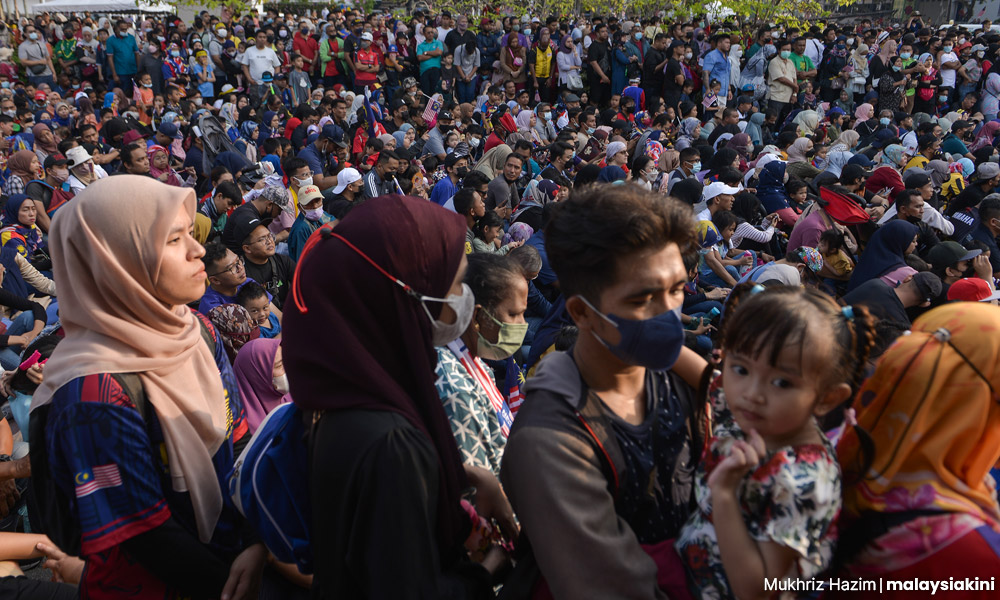
Therefore, if history is the basis of identity, then Malay history itself demonstrates that the Malay homeland is far broader than Tanah Melayu alone.
Connection to Austronesian heritage
A wider historical perspective reveals an even greater story.
The Malays are part of the broader Austronesian family, a vast linguistic and cultural community whose origins and expansion span several millennia.
The Austronesian-speaking peoples accomplished perhaps the greatest maritime migration in human history.
Over at least 5,000 years, Austronesian seafarers explored and settled a vast area spanning over half of Earth’s circumference, estimated roughly 120 million square kilometres, 30 percent of the Earth’s ocean surface.
They did not merely settle new lands; they built extensive trading networks, spread agricultural and maritime technologies, and nurtured vibrant cultures.
Their reach extended from Taiwan in the north to New Zealand in the south, from Madagascar in the west to Hawaii and Easter Island in the east.
To put this in perspective, the total region is larger than the entire land area of Asia and Africa combined. In terms of inhabited land mass, it is estimated to be the size of India. No other ancient civilisational traditions attained such an immense geographical expanse.
The Malays of Tanah Melayu are inheritors of this incredible civilisational legacy. It is a history of exploration, commerce, and cultural exchange.
The Austronesian pioneers have created a cosmopolitan world characterised by diversity rather than insularity. Malay civilisation is part of this extraordinary heritage.
Malays should take pride in these remarkable achievements, rather than reducing them to a narrow, fearful narrative.

Instead of portraying Malays as a people with nowhere else to go, history tells a far more inspiring story: Malays belong to a great civilisation with deep roots, extensive connections, and illustrious traditions.
Future built on confidence, not fear
Whether one calls it Tanah Melayu or otherwise, this land has been shaped by many histories and communities. It is a country of abundance that thrives best when it embraces diversity and inclusivity. It is unbecoming for politicians to continually stoke fear and hostility in the competition for influence and power.
It is futile for Malaysians of different ethnic backgrounds to quarrel over who belongs here. Successful nation-building requires every citizen to understand their shared responsibility for the future.
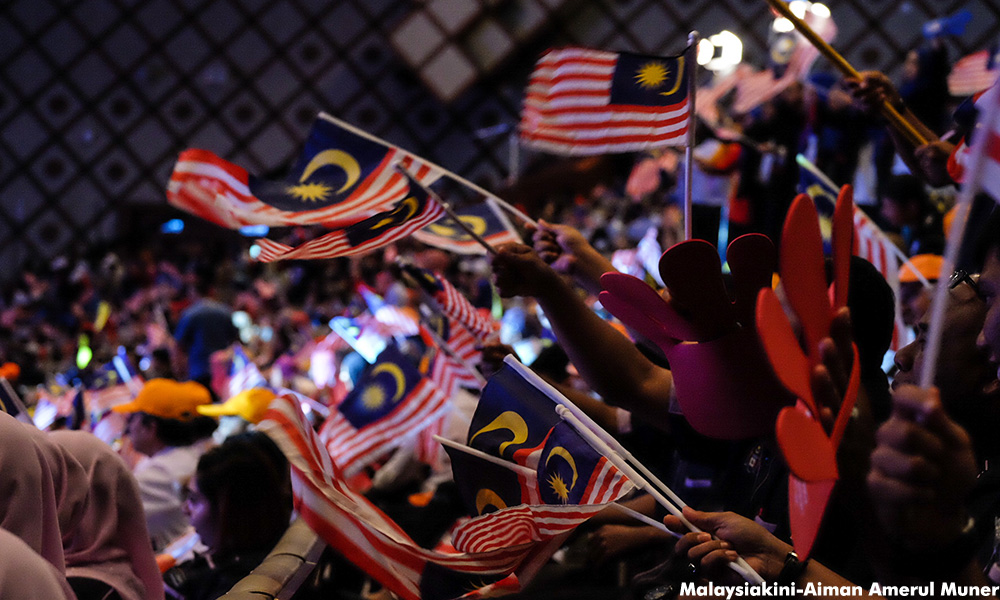
Malay heritage deserves recognition and pride. But genuine pride does not require fear of others. A civilisation confident in its own destiny does not need to define itself through exclusion.
With such a rich and brilliant history behind us, we should look forward to building a great country where all citizens, regardless of origin, can call home. That should be the true spirit of our nation, rooted in the history of Tanah Melayu. - Mkini
TIAN CHUA is former Batu MP.
The views expressed here are those of the author/contributor and do not necessarily represent the views of MMKtT.

No comments:
Post a Comment
Note: Only a member of this blog may post a comment.