


Quite unexpectedly, my remarks at the Perikatan Nasional-BN Grand Rally in Jempol, Negeri Sembilan, on July 23 became the subject of controversy.
I was accused of asserting that the Malays have only Malaya whereas other peoples have countries historically associated with their respective origins.
What I said was simply this: “The Malays have no other land left. The Malays have only Malaya. Indians have India. The Chinese have China… Where do the Malays belong? The Malays belong here and nowhere else.”
I subsequently reiterated the same proposition by referring to the history of the nation’s formation: “Allah has ordained that every nation has a land and every people has a land of its own.
“The Siamese are in Thailand, the Vietnamese in Vietnam, the Kampucheans in Cambodia, the Chinese in China and the Indians in India… This land was once called Malaya. The Federation of Malaya was established.”
I delivered these remarks in the context of the Negeri Sembilan state election campaign.
I linked Malaya’s historical identity to the economic and political position of the Malays, the establishment of the Federation of Malaya and the need for the Malay community to remain attentive to contemporary political developments.
Not a novel idea
From an academic perspective, however, the proposition that Malaya is the historic homeland and the only homeland of the Malays is not a novel idea devised by me.
The same essential proposition was formally articulated by at least three British statesmen during debates of the British Parliament: Oliver Stanley in 1946, Lord Killearn (Miles Wedderburn Lampson) in 1949 and Lord Ogmore (David Rees-Williams) in 1957.
My remarks should therefore not be portrayed as though I had introduced a new racial doctrine or sought to deny the citizenship of non-Malay Malaysians.
What I stated is firmly rooted in the official British historical record concerning Malaya.
Stanley: Malaya, home of the Malays
On March 8, 1946, when the House of Commons debated the proposed Malayan Union during the second reading of the Straits Settlements (Repeal) Bill [Lords], Stanley, the UK MP for Bristol West, stated: “It is quite true, as has been pointed out by so many honourable members, that Malaya was originally a Malayan country, that it is the traditional home of the Malays, and that the Chinese and Indians who have come there have come there in larger numbers, at any rate, in recent years and largely at our invitation.”
Stanley’s statement embodied two important historical acknowledgements.
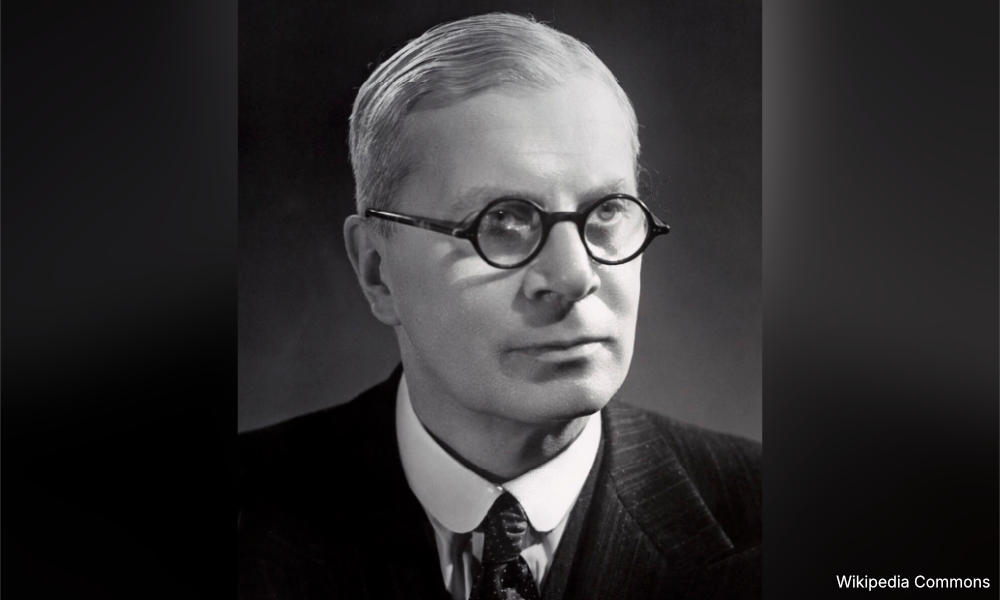
First, Malaya was originally a Malay territory and the traditional homeland of the Malays.
Secondly, the substantial growth of the Chinese and Indian populations during the colonial era cannot be separated from British economic and administrative policies that imported labour and encouraged migration.
Stanley did not, however, invoke that historical reality to deny a future to non-Malay communities that had settled permanently in the country.
In the same speech, he explained: “Whatever the history is, the fact remains that we cannot possibly expect large numbers of Chinese and Indians to live forever as stateless visitors in the country in which they may have chosen, at our invitation, to make their homes and the homes of their children.”
This speech demonstrates that two principles may coexist: Malaya is the traditional homeland of the Malays, while non-Malay communities that have settled permanently in the country cannot continue to be denied citizenship.
These principles subsequently developed through the Federation of Malaya Agreement 1948 and the Merdeka Constitution of 1957.
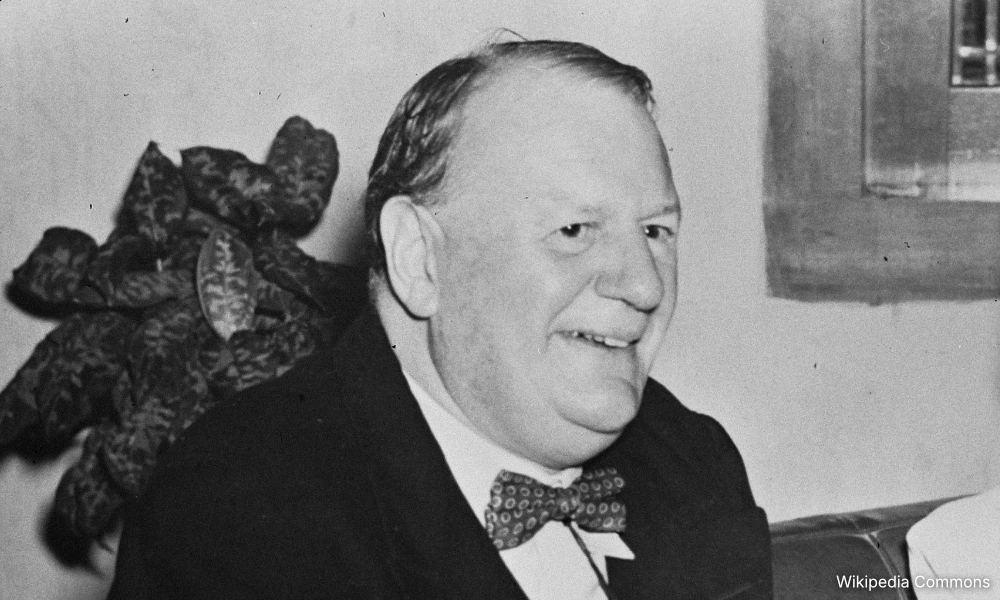
Killearn: The name ‘Malaya’ signifies it
Three years later, on April 13, 1949, Killearn delivered a speech during the House of Lords debate on colonial policy and administration.
While discussing the future of self-government in Malaya, he stated: “As the name implies, it is the land of the Malays - a grand people. But there are other racial factors which have to be considered in dealing with this extremely delicate question.”
Killearn expressly connected the name “Malaya” with the Malay people. In his view, the very name of the territory signified that it was the land of the Malays.
At the same time, he did not deny the existence or relevance of other communities. On the contrary, he acknowledged that the position of other ethnic groups had to be taken into account in resolving Malaya’s political and constitutional questions.
This again demonstrates that recognising Malaya as the land of the Malays does not necessarily entail rejecting the rights or presence of other communities.
Both propositions may be acknowledged simultaneously: the historic Malay identity of the country and the reality of a plural society.
Ogmore: Malaya is Malays’ only homeland
On July 29, 1957, approximately one month before the Federation of Malaya attained independence, Ogmore spoke during the House of Lords debate on the second reading of the Federation of Malaya Independence Bill.
He stated: “One has to remember that Malaya is the Malays’ only home, and that that does not necessarily apply to any of the other races who occupy the peninsula, or to people who live in it for a shorter or a longer time.”
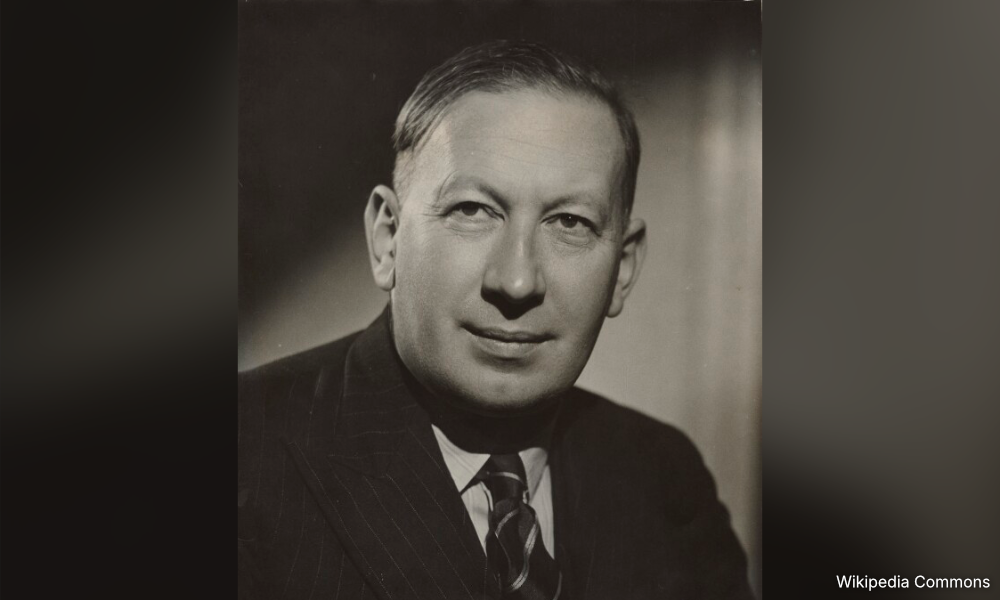
Ogmore’s formulation is materially the same as mine.
I said: “The Malays have only Malaya.”
Ogmore said: “Malaya is the Malays’ only home.”
The similarity lies not merely in the choice of words but in the central proposition that the Malays have no alternative nation-state founded upon the Malay name, institutions, language and identity.
Ogmore expressed that view while discussing the constitutional compromise embodied in the Merdeka Constitution.
He identified citizenship, religion, language, the special position of the Malays and the status of Penang and Malacca as matters capable of generating controversy.
He also noted that Malaya then had a population of approximately 3.1 million Malays, 2.5 million Chinese and 800,000 Indians.
The principal constitutional challenge was to create a nation acceptable to its multi-ethnic population without erasing the history, institutions and position of the Malay community.
It was within that context that Ogmore observed that the Malays had made substantial constitutional concessions to other communities.
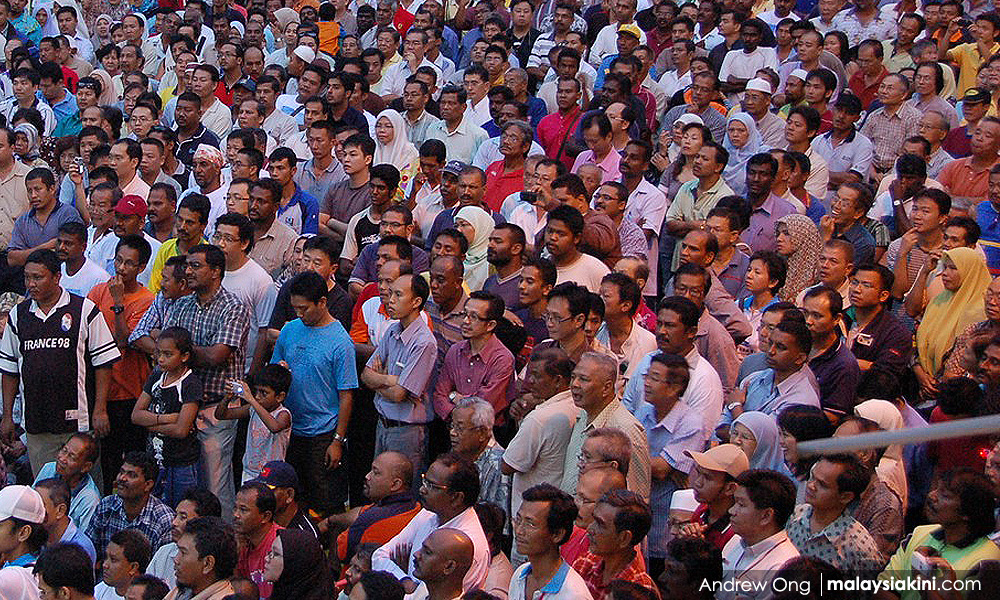
Nevertheless, like Stanley and Killearn, Ogmore did not end with an assertion of Malay identity alone. He appealed to “all the races and all the peoples in the Federation of Malaya, to help wholeheartedly in the working of the Constitution.”
Ogmore therefore recognised the distinctive historical relationship between the Malays and Malaya while equally accepting that an independent nation required the cooperation, loyalty and participation of all its citizens.
Unmistakeable parallels
When my remarks are compared with those of Stanley, Killearn and Ogmore, the parallels are unmistakable.
All formulations convey the same historical proposition: Malaya is a territory possessing a distinctive historical, political and cultural relationship with the Malay people.
That relationship is reflected in the existence of the Malay states, the institution of the Malay rulers, the Malay language, Malay customs, Islam as a defining element in the history of those states and the very name “Federation of Malaya”.
My remarks are therefore neither extraordinary nor novel, nor are they detached from history.
They represent a contemporary political expression of an acknowledgement openly recorded in the British Parliament since 1946.
If the propositions that “Malaya is the traditional homeland of the Malays”, “Malaya is the land of the Malays” and “Malaya is the Malays’ only homeland” are accepted as historical observations when articulated by Stanley, Killearn and Ogmore, a statement carrying the same essential meaning should not be characterised as racist merely because I was the person who expressed it.
Any statement must be assessed according to its meaning, context and the speech as a whole, not merely according to the identity or political position of the speaker.
Not denying non-Malays’ citizenship
It must be made clear that recognising Malaya as the historic homeland of the Malays is not the same as claiming that non-Malay Malaysians possess no rights in Malaysia.
Similarly, elsewhere in my speech, I stated that the Malays could live peacefully and harmoniously with people of different ethnic backgrounds.
I observed that Chinese traders could open shops and conduct business in Malay villages without interference, and emphasised: “We do not trouble anyone.”
My remarks must therefore be understood as expressing concern about the political and economic position of the Malays, not as a call for Malaysian citizens of Chinese or Indian descent to leave the country.
Malaysian citizens of Chinese and Indian descent possess constitutional rights, owe allegiance to the nation and have a legitimate sense of belonging to Malaysia. As citizens, Malaysia is their homeland.
At the same time, that fact does not erase the historical reality that the peninsular developed from the Malay states and that the federation which attained independence in 1957 was named the Federation of Malaya.
These two truths are not contradictory.
Historical, political contexts
There are, of course, differences in the historical and political contexts of the four speeches.
Stanley spoke while the Malayan Union was being debated in 1946. Killearn addressed the prospect of self-government in 1949, and Ogmore spoke while independence was being finalised in 1957.
However, I spoke during the Negeri Sembilan election campaign. My language may also have been somewhat more forceful because it was delivered in the setting of a political rally, whereas the remarks of the British lawmakers were recorded in formal parliamentary debates.
Those differences in setting, tone and purpose do not, however, extinguish the shared substance of the four statements. Each recognised that Malaya has a distinctive historical relationship with the Malay people.
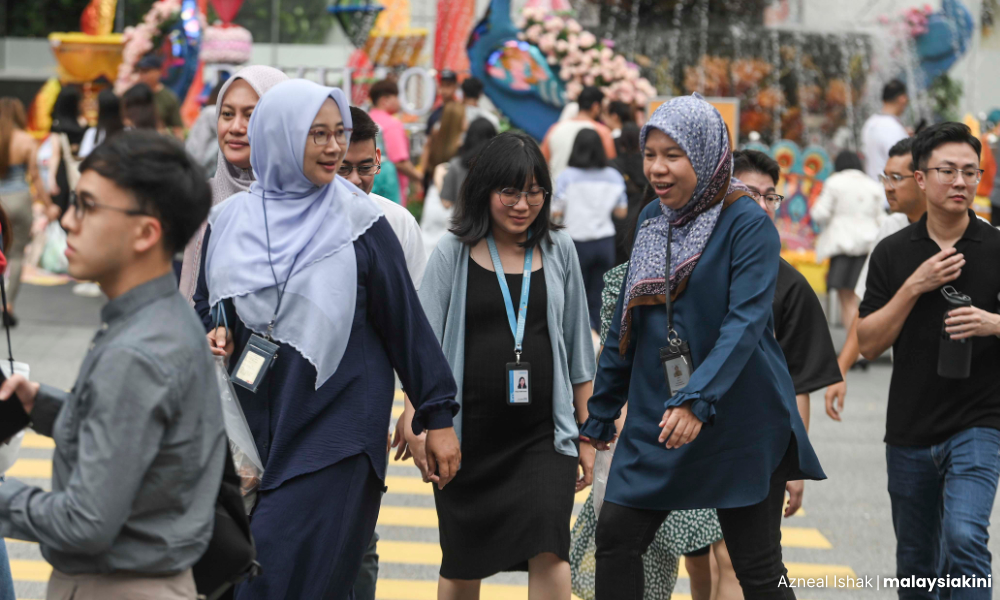
It is therefore wrong to isolate my words and portray them as a challenge to the citizenship of the Chinese and Indian communities.
My speech, when considered in full, shows that I was discussing the historical relationship between the Malays and Malaya, together with my concerns regarding the economic and political position of the Malay community.
My remarks on July 23 bear clear textual and conceptual similarities to the statements made by the three British lawmakers of the past.
My remarks should therefore not be transformed into a controversy as though they amounted to a call to expel, reject or deny the citizenship of non-Malay Malaysians.
Such an interpretation goes beyond the words actually spoken and disregards the context of my speech as a whole.
The British Hansard records of 1946, 1949 and 1957 establish that the conception of Malaya as the historic territory and the only homeland of the Malays has long been acknowledged in the official records of the British Parliament.
It is neither an invention of mine nor a form of political rhetoric that emerged in 2026. - Mkini
SANUSI NOR is the state assemblyperson for Jeneri and also Kedah menteri besar.
The views expressed here are those of the author/contributor and do not necessarily represent the views of MMKtT.

No comments:
Post a Comment
Note: Only a member of this blog may post a comment.