


The controversy surrounding the speech by Kedah Menteri Besar and Perikatan Nasional election director Sanusi Nor arose from the PN-BN Grand Rally held in Jempol, Negeri Sembilan, on the night of July 23.
In that address, he dealt with three principal matters: the economic position of the Malays, what he regarded as the erosion of Malay political power, and the need for cooperation between PAS and Umno.
He situated these issues within the history of Tanah Melayu and urged the Malays, particularly the younger generation, to take a more active interest in politics.
The full recording of his speech may be viewed here.
The passage that became the subject of controversy begins at about one hour, 59 minutes, and 55 seconds here.
Malaysiakini report the starting point
At 2.16pm on July 24, Malaysiakini published a report bearing the headline, “Cina ada China, India ada India, Melayu hanya ada Tanah Melayu - Sanusi”.
The report quoted him as saying: “Malays have no other land. Malays only have this Tanah Melayu. Indians have India, Chinese have China, Cambodians have Cambodia, and the Siamese have Thailand. Where do the Malays go? Malays are only here.”
Those words were indeed uttered by Sanusi. The principal question, however, is not whether he said them, but whether Malaysiakini’s headline and presentation provided sufficient context to enable readers to understand the meaning of the speech as a whole.

More troublingly, Malaysiakini did not merely reproduce those words; it also interpreted them as an assertion that Malaysia was a place of refuge for its indigenous population, unlike other communities which have countries of origin of their own.
It was this editorial interpretation by Malaysiakini that reinforced the perception that Sanusi was questioning the place of Malaysians of Chinese and Indian descent.
Portions of the speech were omitted
Sanusi’s speech in fact contained two separate references to the relationship between an ethnic group and their historical homeland.
The first was the passage used in Malaysiakini’s headline. Shortly thereafter, Sanusi repeated the same idea within a historical context: “Allah has ordained that every nation has a land, and every people has its own land. The Siamese are in Thailand, the Vietnamese in Vietnam, the Kampucheans in Cambodia, the Chinese in China, and the Indians in India.”
He then referred to the establishment of the Federation of Malaya in 1948 to replace the Malayan Union, relying upon that history as the basis of his argument that Tanah Melayu possesses its own history and core identity.
More importantly, before making the second reference, Sanusi also said: “There are many tolerant Malays who are able to live peacefully and harmoniously alongside people of different races.”
He cited the example of Chinese traders opening shops and prospering in Malay villages without interference, and emphasised: “We do not trouble anyone.”
This section is important as it shows that Sanusi has never displayed an anti-Chinese or anti-Indian attitude, let alone called for Malaysians of Chinese or Indian descent to leave Malaysia. The focus of his speech was on his concerns over the political and economic position of the Malays, rather than on denying the citizenship of other races.
By omitting the passage on the said inter-ethnic tolerance, as well as the second reference that more clearly linked his argument to the history of the Federation of Malaya, the report left considerable room for readers to interpret the phrase “the Chinese have China” as meaning that Chinese Malaysians ought to regard China as their homeland.
This is the distinction between an accurate quotation and a complete account. A quotation may remain literally accurate, yet still create a misleading impression when the words immediately preceding and following it are omitted.
The condemnation begins
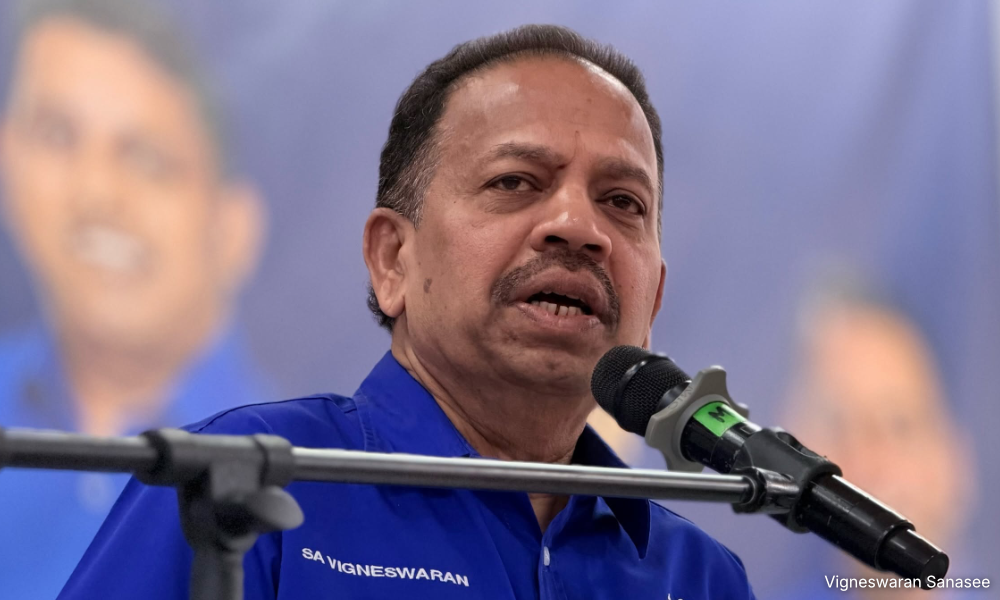
On the same day, MIC president SA Vigneswaran condemned the remarks. He stressed that Malaysians of Indian and Chinese descent are not citizens of India or China, but Malaysians whose loyalty is owed to Malaysia and the Yang di-Pertuan Agong.
He further stated that non-Malay Malaysians have no other country to which they may “return”, and that loyalty cannot be judged by skin colour or ancestral lineage. His response was plainly founded upon the interpretation that the speech portrayed the Chinese and Indians as outsiders possessing alternative homelands.
On July 25, Bukit Gelugor MP Ramkarpal Singh described the statement as insensitive and as implying that Malaysians of Chinese and Indian descent did not truly belong in this country. He also called upon the authorities to investigate. The report on his statement specifically noted that he was responding to what had been reported by Malaysiakini.
BN chairperson Ahmad Zahid Hamidi subsequently advised Sanusi not to exploit racial and religious issues during the campaign. He said Sanusi would be better served by concentrating on the administration of Kedah and need not campaign in Negeri Sembilan.
Zahid took the view that such remarks were open to varying interpretations and could cause unease in a plural society.
Umno information chief Azalina Othman Said likewise stated in a media statement that Sanusi’s formulation could create the impression that only the Malays truly possess Malaysia, whereas Malaysia is the homeland of millions of citizens of Chinese and Indian descent.
This chronology illustrates how a single headline shaped the initial framework of the debate. Once the proposition that “the Chinese and Indians have other countries” was accepted as the intended meaning of the speech, most subsequent responses addressed that interpretation rather than examining the speech in its entirety.
Police report
On July 24, a 40-year-old man lodged a police report in Bandar Seri Jempol, expressing dissatisfaction with the contents of Malaysiakini’s report on Sanusi’s speech.
On July 25, Negeri Sembilan police chief Alzafny Ahmad confirmed that an investigation paper had been opened under Section 505 of the Penal Code and Section 233 of the Communications and Multimedia Act 1998. The investigation concerns the making, publication, or circulation of statements or reports capable of causing public mischief.
On the same day, Sanusi maintained that his remarks had been distorted and expressed his readiness to institute legal proceedings and lodge police reports against those whom he said had misrepresented his speech.
Parallels with mufti’s speech
The theme advanced by Sanusi in fact bears similarities to remarks made by Perlis mufti Asri Zainul Abidin during the Kembara Merdeka Jalur Gemilang programme at the Perlis Islamic University College on Aug 18, 2019.
The video of Asri’s speech may be viewed here.

In that speech, he said every country possesses its own history and dominant identity. China is associated with the Chinese people, India with the Indian people, and Tanah Melayu with the Malay people.
He said: “All lands are destined by Allah to have certain peoples living on them. In China, what community lives there? The Chinese. Who are the owners of that land? Who are their leaders? In India, who are their leaders? Whose land is it? Okay, everyone has their own land. Tanah Melayu belongs to whom? Is this fair?”
He added: “I am not saying that other people cannot live here, but they must respect the owners of this land; there must be an identity. Malays wear the baju Melayu, and there is nothing wrong with wearing Indian attire too, but when it comes to asking what the national attire is, it is the baju Melayu. Does that mean insulting other races? No. You go to Europe, there is their way. You go to Thailand, there is their way. You come to Tanah Melayu, there is its way.”
Asri stressed further: “I am saying that there must be justice for all. All citizens have equal rights before the law. Justice is for all, justice for everyone, but a land must have its identity. The dominant identity of Tanah Melayu is that its religion is Islam and its customs are Malay customs. This is not racism; it is a reality.”
Accordingly, if Sanusi’s speech is to be regarded as an offence, how then should this speech by Asri be viewed?
Pahang sultan’s address
Significantly, the address delivered by the Pahang ruler Sultan Abdullah Sultan Ahmad Shah at the Pahang state-level Maal Hijrah Celebration for 1448H/2026 at Laman Sejahtera Jelai, Felda Sungai Koyan, on June 17 also touched upon a closely related issue.
His Royal Highness said: “Of late, the people have grown increasingly anxious upon seeing certain groups, originally received on humanitarian grounds, becoming bolder in advancing various demands that are inconsistent with their position in this country.”
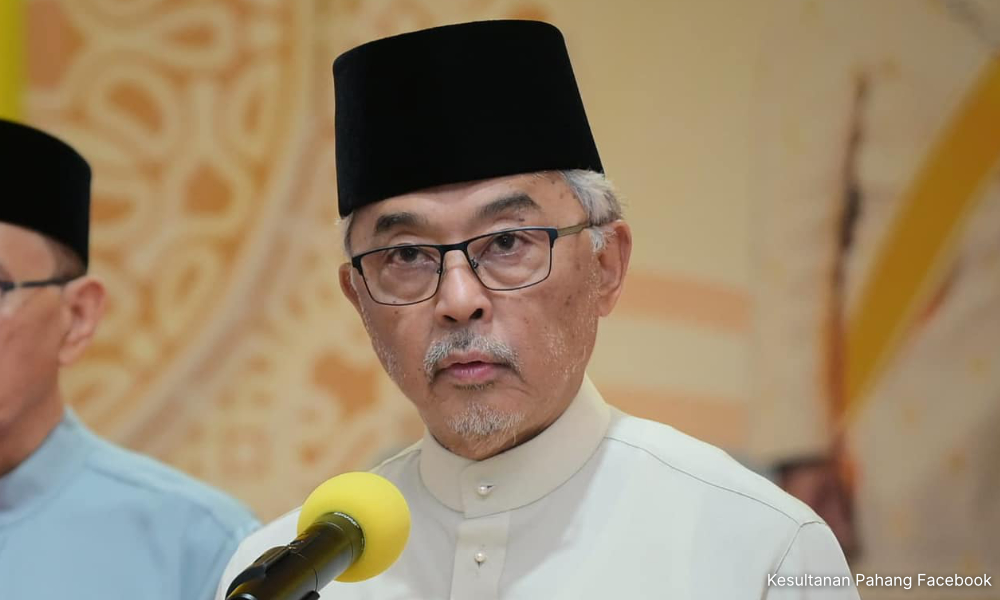
His Royal Highness added: “In Malay custom and Islamic teaching, guests are always accorded honour. A guest who understands proper conduct, however, will know how to appreciate goodwill, respect the law, and recognise the limits of his position.”
His Royal Highness further declared: “Let it not come to pass that those given passage in the boat ultimately seek to dictate the helmsman’s course. Let it not be that, through excessive generosity, the host’s rights in his own home are called into question.”
The Pahang sultan’s address may be read here.
More balanced approach
All parties should emulate the more measured approach adopted by MCA president Wee Ka Siong in addressing this issue. He emphasised that Malaysia belongs equally to all its citizens and that statements capable of being interpreted as questioning a person’s loyalty should be avoided.
At the same time, he acknowledged the possibility that Sanusi’s remarks may have been misunderstood or inaccurately interpreted. Wee then called upon Sanusi to provide an immediate clarification to defuse the tension.
This approach is more appropriate when debating any sensitive issue. It does not dismiss the concerns of the Chinese and Indian communities, but neither does it immediately attribute a person’s intentions solely based on a headline or selected excerpts.
Shared responsibilities
Criticism of Malaysiakini’s framing should in no way be taken to mean that the media ought not to report controversial remarks. The media has both the right and the responsibility to report statements by political leaders that are matters of public interest.
However, in reporting matters involving race and religion, the literal accuracy of a quotation is not, by itself, sufficient. Reports must also provide material context, distinguish the words actually spoken from journalistic interpretation, and afford the person being reported upon a proper opportunity to explain his intended meaning, preferably before publication.
The Malaysian Code of Ethics for Journalists was introduced to strengthen professionalism, integrity, and public confidence in the media as a source of news. Its principles require media organisations to avoid content that is inaccurate, unfounded, or misleading.
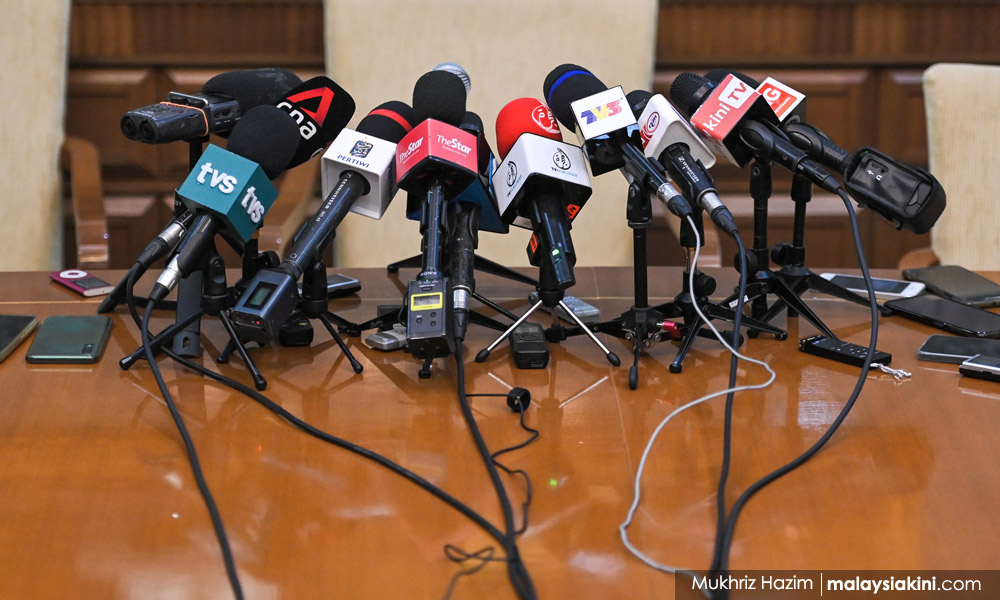
Malaysiakini should have published a clarification or follow-up report containing the section of the speech on racial tolerance, the second reference to the history of the Federation of Malaya, and Sanusi’s direct explanation on whether he was referring to non-Malay Malaysians or China and India as historical entities.
Political leaders, for their part, should not rush to compete with one another in condemning another leader solely based on a news headline. They should watch the full recording, examine the sequence of the speech, and obtain clarification from the speaker before making serious allegations.
The public should also practise tabayyun (verification). News headlines serve to summarise a report, but they do not necessarily provide the full context. In this case, the full recording is publicly available and can be examined by anyone themselves.
Police reports should likewise not be lodged solely based on a headline, political disagreement, or an isolated extract circulating on social media. Before lodging a report, a complainant should examine the complete material, identify the particular statement being challenged, and explain the basis upon which an offence is believed to have occurred.
Beyond the headline
A true quote does not necessarily provide a complete portrayal of a speech. The full recording of Sanusi’s speech shows that he placed the statement within a discussion on the history of Tanah Melayu, Malay political and economic power, as well as the need for PAS and Umno to work together.
He also stated that Malays can live peacefully alongside a multi-racial society and do not interfere with Chinese traders within Malay communities.
The mistake by Malaysiakini in its report lies in the choice of headline, the editorial interpretation, and the failure to include the context that could distinguish between a claim of Malay historical identity and the allegation that Malaysians of Chinese and Indian descent do not belong to Malaysia.
A good resolution to this issue can be achieved through three actions, namely Malaysiakini clarifying the context of the report, Sanusi explaining his meaning directly, and all parties reviewing the full recording before making accusations.
Media freedom must be defended, but that freedom must be accompanied by accuracy, context, and accountability. Likewise, political freedom must be accompanied by care in the choice of words.
In a plural society, an imbalanced headline and a careless expression can both give rise to misunderstandings. - Mkini
AHMAD FADHLI SHAARI is the PAS information chief and Pasir MAS MP.
The views expressed here are those of the author/contributor and do not necessarily represent the views of MMKtT.

No comments:
Post a Comment
Note: Only a member of this blog may post a comment.