


For the past three years, Malaysians have repeatedly been told that institutional reform is finally here.
We have been promised a Government Procurement Act to combat corruption, a Freedom of Information Act to strengthen transparency, an Ombudsman to improve accountability, and the long-awaited separation of the attorney-general and public prosecutor to reinforce the rule of law.
On paper, this appears to be one of the most reform-minded governments Malaysia has seen in decades. Yet behind the impressive headlines and carefully crafted announcements, a troubling and dangerous pattern is beginning to emerge.
Rather than dismantling the structures that enabled abuse of power under previous administrations, many of these so-called reforms merely redesign them. They retain executive dominance, weaken meaningful oversight, and create the appearance of reform without fundamentally redistributing power.
The tabled Freedom of Information (FOI) Bill 2026 is perhaps the clearest example of this approach. Freedom of information laws exist for one simple reason: information held by the government belongs, by default, to the people unless there is a compelling reason to withhold it.

That principle is recognised across mature democracies and reflected in international human rights standards. Yet, Malaysia's proposed legislation turns this principle on its head.
The bill expressly states that it creates no substantive right to information, preserves the Official Secrets Act (OSA) in its entirety, introduces broad exemptions without meaningful harm tests or public interest overrides, and even requires applicants to justify why they are seeking information.
More alarmingly, it criminalises the use of lawfully obtained information for purposes different from those originally stated in the application. Information frequently uncovers new facts that could never have been anticipated at the time a request is submitted.
Criminalising the subsequent use of that information is not only disproportionate but fundamentally inconsistent with the principles of transparency, investigative journalism, and democratic accountability.
Perhaps the most disturbing provision is Clause 22, which declares that nothing contained within the Act should be construed as constituting a fundamental liberty under Part II of the Federal Constitution. This is extraordinary to the extent of being sinister.
Rather than strengthening constitutional democracy, the legislation appears to distance itself from it by expressly denying any connection between access to information and the constitutional guarantee of freedom of expression under Article 10.
In effect, the government is introducing an FOI law that goes out of its way to avoid recognising freedom of information as a constitutional right.
Familiar pattern
Unfortunately, this is not an isolated example. Last year, similar concerns were raised regarding the Government Procurement Act. It, too, was presented as a landmark reform and Malaysia's first comprehensive procurement legislation. Yet, beneath the rhetoric lay a familiar pattern.
Instead of decentralising procurement governance and strengthening independent oversight, the Act consolidated significant powers within the Finance Ministry.

Extensive discretion over procurement policies, procedures, and exemptions remains concentrated in the executive, while broad exclusions continue to shield important categories of procurement from meaningful public scrutiny.
Critical sectors such as defence procurement remain largely insulated from comprehensive transparency measures despite being among the highest corruption risk areas.
Viewed on its own, each piece of legislation may appear to contain technical shortcomings capable of future amendment. But taken together, however, they reveal something much more significant and intentional.
They reflect an emerging philosophy of governance where reforms are introduced without fundamentally altering the balance of institutional power.
The issue is therefore no longer whether reform legislation exists, but whether these reforms genuinely transfer authority away from the executive towards Parliament, independent oversight institutions, the judiciary, and ultimately the Malaysian public.
Increasingly, the answer appears to be no!
Who holds power?
Ironically, this presents a different challenge from previous administrations. Past governments were frequently criticised for their reluctance to pursue institutional reform. The present administration risks something potentially more dangerous: institutionalising executive control under the language of reform.
When governments fail to reform, the public knows reform has not occurred. But when governments enact legislation carrying the labels of transparency, accountability, and integrity while quietly preserving executive dominance, reform becomes considerably harder to challenge.
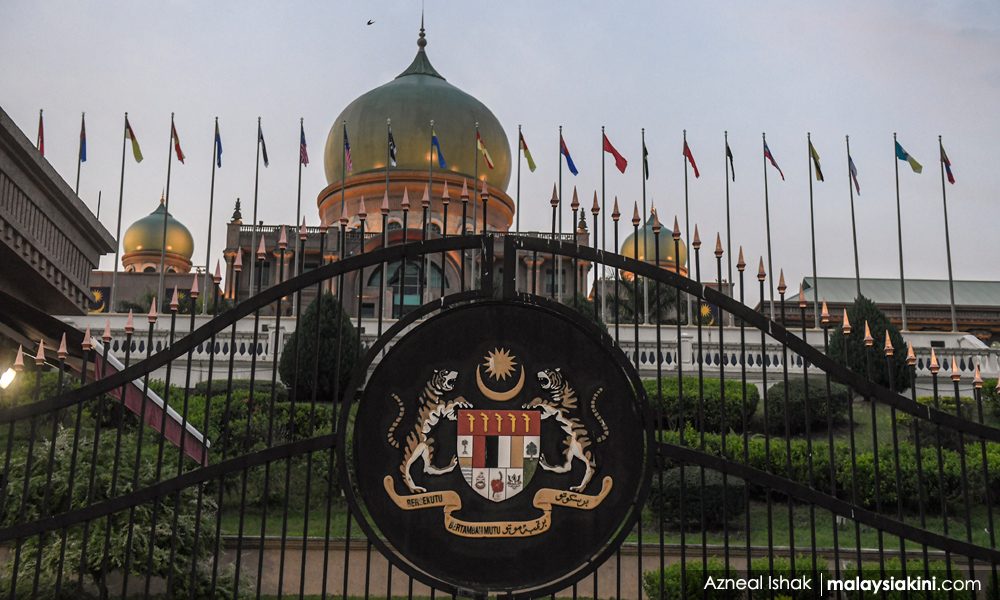
New institutions are created, legislation is passed, international commitments are cited, and reform promises appear fulfilled, even though the underlying concentration of power remains largely unchanged.
This is what makes legislative whitewashing so dangerous.
The Government Procurement Act, the Freedom of Information Bill, and aspects of the proposed Ombudsman framework all raise a common concern. Rather than asking whether new laws have been enacted, Malaysians should be asking a far more fundamental question: who holds power after these reforms take effect?
Genuine institutional reform requires governments to surrender power, not merely reorganise administrative procedures. It requires accepting scrutiny, empowering independent oversight bodies, and creating mechanisms capable of holding the executive accountable without political interference.
Reform that leaves executive dominance intact is not transformative reform. It is administrative modernisation dressed up as constitutional progress.
Malaysia is approaching a defining constitutional moment. Public confidence in institutions remains fragile, and citizens are demanding genuine accountability rather than carefully branded legislative achievements.
Passing an FOI law that entrenches secrecy or a procurement law that centralises authority risks undermining the very public trust these reforms claim to restore.
Institutional reform should never be measured by the number of bills passed in Parliament. It should be measured by a much simpler test: who exercises power after the law is enacted? If the answer remains the executive, then the legislation has not fundamentally transformed the system. It has merely changed its appearance.
Malaysia deserves more than symbolic reform. It deserves institutions that genuinely disperse power, strengthen independent oversight, protect constitutional freedoms, and place government accountability where it has always belonged - with the people. - Mkini
PUSHPAN MURUGIAH is a governance, integrity and anti-corruption consultant.
The views expressed here are those of the author/contributor and do not necessarily represent the views of MMKtT.

No comments:
Post a Comment
Note: Only a member of this blog may post a comment.