


The upcoming state elections in Johor on July 11 and Negeri Sembilan on Aug 1 present an interesting opportunity for voters in those two states, and more broadly, the country to prepare itself for polls in the age of artificial intelligence.
This is pivotal because ChatGPT, being the first mainstream AI product targeting the mass consumer, was only launched 11 days after the country cast its ballot the last time around in November 2022.
In some ways, the country could count itself lucky for not being part of the 2024 election “super year” where 3.7 billion people across 72 countries cast their ballots.
There was legitimate worry then that the fast mainstreaming of AI capabilities could wreak havoc on democratic processes by increasing the volume of disinformation by lowering the barrier to creation. By and large, this worry was thankfully misplaced – with most scholars acknowledging as much.
Since then, however, ChatGPT itself has seen its capabilities increase multiple folds, and it is no longer the sole mainstream generative AI product in the market.
Today, generative AI products are relatively ubiquitous – ranging from those that are able to generate text, to those that can produce videos, and the multimodal options in between.
While the risk this poses to democratic processes did not materialise in 2024, there is no guarantee that this would be constant, and as with most things in life, it is better to be safe than sorry.
I argue for prudence and proactiveness in this regard for one relatively simple reason. Between 2022, 2024 and today, the barrier to creating AI-generated video capabilities that are almost indistinguishable from authentic ones has, essentially, collapsed.

Once only within the realm of experts with technical knowledge or niche online communities, these capabilities are in the hands of ordinary Joes today. With that, the risks highlighted back in 2024 may very well be more pronounced now.
Misleading content
To be more specific: on the one hand, there are deepfakes designed to impersonate and deceive. It is not beyond imagination for this to be used to make it seem like the candidate is either promoting a false narrative or performing conduct detrimental to the campaign.
On the other hand, AI-generated political satire or caricatures, where AI is used to create videos that are obviously fictional in nature and do not seek to deceive but can nevertheless influence perception.
To give an example, recall the Lego-style AI-generated videos that were deployed by Iran-friendly operators during the US and Israel’s war on the country.
While both these types of videos share the commonality of being generated by AI, the policy approach towards them during election periods should be markedly distinct. This distinction, I argue, rests on the abuse of the likeness of an individual.
For deepfakes designed to impersonate and deceive, there are two policy responses that can be considered.
One, towards potential creators of this type of content, it needs to be communicated that, without consent, it is unacceptable and, frankly, illegal to abuse the likeness of an individual.
For deterrence to take effect, this should be communicated clearly and widely to all political operators - both official and contracted service providers.
Two, to ensure the public is not deceived, public communications need to double down on the risk of convincing deepfakes being weaponised for political ends during heated campaigning periods.
Doing this ahead of the electoral period will be critical to inoculate the public against its implications and to insulate the message against sundry politics.
At the same time, digital literacy toolkits must be upgraded, and then not just be inculcated, but actually exercised while consuming political content.
Political maturity
Managing AI-generated political satire or caricatures requires, at the heart of it, political maturity.
Caricaturising people in or seeking power has been an art form which some might find unpalatable, uncouth, and unbecoming – but remains a core exercise of free speech.
As it does not seek to mislead, I would argue that the medium in and of itself should not be regulated.
That said, the absence of deception does not necessarily mean the absence of influence.
If anything, one of the more interesting developments over the past year is how AI-generated videos have demonstrated an ability to shape perceptions without making any factual claim at all.
Instead of convincing people that something false is true, these videos can reinforce existing beliefs, evoke emotional reactions, or frame a political figure in a particular light. In this regard, their power lies not in information, but in association.
This is where political maturity becomes important. Democracies have long relied on citizens being able to distinguish between satire and fact, and AI-generated political satire should be viewed through this same lens.
The challenge for voters, therefore, is not merely to ask whether a video is real, but also whether it is fair.
Litmus test
Ultimately, Johor and Negeri Sembilan offer Malaysia something increasingly rare in public policy, the opportunity to test our preparedness before the stakes become much higher, such as during a general election.
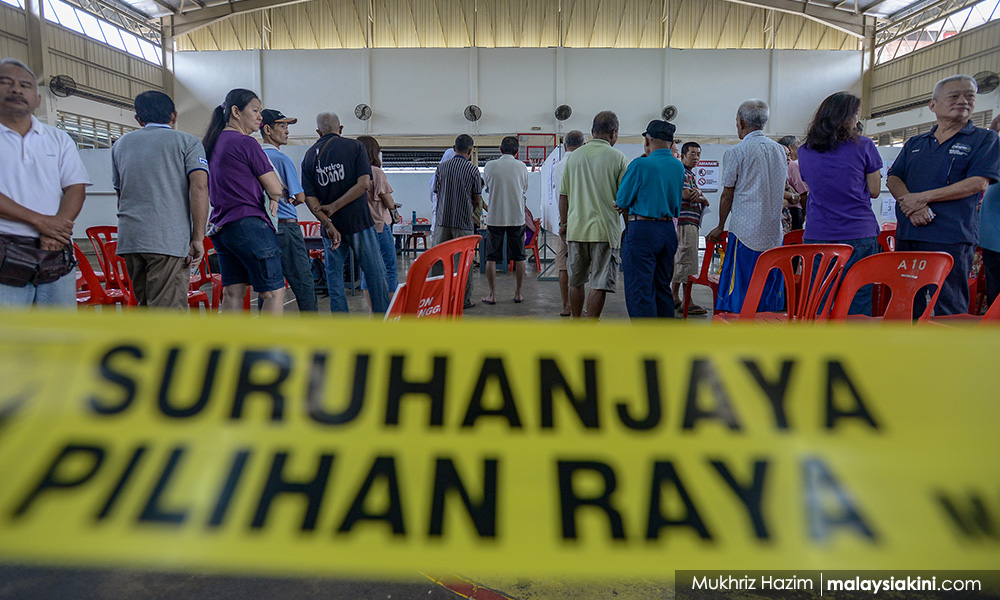
This gives institutions, political parties, media organisations and voters a valuable opportunity to observe how AI-generated content is used in practice, identify vulnerabilities, and refine responses before the next nationwide elections.
For this reason alone, the upcoming state polls may prove to be more consequential than many realise. Their significance may ultimately lie in offering the country's first real glimpse into what campaigning in the age of AI will look like. - Mkini
HARRIS ZAINUL directs research at the Centre for Responsible Technology at the Institute of Strategic and International Studies Malaysia.
The views expressed here are those of the author/contributor and do not necessarily represent the views of MMKtT.

No comments:
Post a Comment
Note: Only a member of this blog may post a comment.