


INTERVIEW | Nearly a year into her stint as education minister, Fadhlina Sidek is philosophical about the changes that she wants to see.
“I know the expectations are high and many people will have grievances, but for me every small victory, every good improvement is a reformasi.
“To me, we are always on track. Every day is reformasi when you talk about education. A reform of values, structure and access. When we were in opposition we always put forward our vision and now we are in a position where we can do it,” she told Malaysiakini in an exclusive interview.
Hers had been a meteoric rise as she only made the move from full-time lawyer and activist to politics just over three years ago. Suddenly she was given an appointment to the Dewan Negara and won a heated contest for Wanita PKR's top post.
This was followed by a successful parliamentary contest in Nibong Tebal in the last general election and then an appointment to the education hot seat last November.
Observers of our Dewan Rakyat debates will have noticed that Fadhlina has adopted a “cikgu” persona in handling questions from her unruly “pupils”.
“It’s really been a different challenge, because last time I was in a different role in the Dewan Negara, but now am facing the fire as a minister.
“Because there was a lot of drama. I will always think - how would teachers handle their classes? With the different backgrounds of their students. Some are aggressive, some talkative, some can be rude. So I tried to handle it this way,” she said.
Coping with expectations
Whenever there is a crisis, be it a broken bridge in a rural area, an alleged conversion attempt by teachers, dress code disputes, social ills, falling standards, the public expects the education minister to solve the problem.
"I think in every crisis there is always hope. When things happen, there will be the minimum expectation that the minister will respond.
"I see it this way, I feel very humbled when these things happen and everyone is looking for us. It means that all this time the issues have not received attention and the people put their hope in us to be resolved.
"Although these are matters that need to be resolved, we also need to teach the people, to focus on respecting the work process. We teach people how to make a complaint. Because now if it's not going viral, it's not getting settled," she conceded.
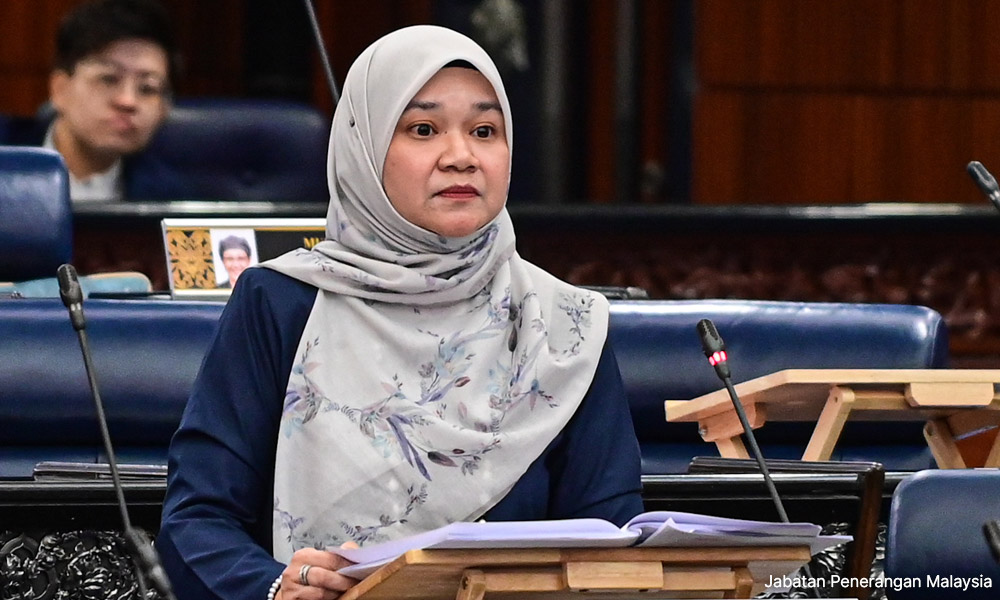
Fadhlina said that she wants leaders and the people to communicate through a transparent process.
"There is a complaint process. The most important thing is trust. We need to address this trust deficit. If issues arise that could be seen as trivial in our eyes, we must accept that they have been raised because they are not trivial in the eyes of the people," she said.
Fadhlina added that her administration placed great weight on deliverables so that they would be answerable to the people.
"Maybe it is because of my legal background. We never take anything for granted. What is the issue that has blown up until it reaches us? We have to empathise with the people's issues."
Centre of unity
Fadhlina has emphasised that bullying, sexual harassment, and racism are not to be tolerated, and she acknowledged that she has to tread carefully with the issue of vernacular schools.
"Now, when we have the Malaysian Education Development Plan, the issue of unity is indeed the main core. Schools should be the centre of unity.
"That's why we, in collaboration with the National Unity Ministry, reaffirm the national doctrine through the Rukun Negara. There must also be basic integration of the national education policy, a philosophy that emphasises that our children will be raised in unity.
"Also activities and programmes at school must be cross-racial. We are also developing what we call the National Character Building Programme. This is very important. We have done a pilot project in Negeri Sembilan involving Sixth Form students of all races and religions.
"They were educated in the camp, about citizens, democracy and how to solve community issues as a Malaysian nation. This is what we want to bring forward," she said.
Best option
Fadhlina's late father is the former Abim leader and Institut Darul Ehsan chairperson Siddiq Fadzil, who instilled in her the belief that we should read, learn, and debate ideas.
While Prime Minister Anwar Ibrahim was responsible for some controversial moves during his time as education minister from 1986 to 1991, she still cites him as a leader who placed great value on education.
"His focus has always been on education, even until now. He will always remind me of how things were back then and how it would be tougher for me now," she said.
Schooled in religious law, she also believes that the Islamic values that existed with the current government can withstand the more conservative push of the “Green Wave”.
"Our party president Anwar has talked about a cosmopolitan Islam. The fundamental values are compassion, justice, and consultation. Just because you don’t have a conservative interpretation doesn’t make you less Muslim,” Fadhlina told Malaysiakini last year.
She said she hopes that PKR and Pakatan Harapan are able to be seen as promoting harmonious dialogue on difficult and sensitive matters, instead of sweeping issues under the carpet.
She also said that the current administration was not the one that voters had in mind but it has turned out to be the best option in terms of stability.
"This is the best government we can offer the rakyat because of the dynamic background of all parties. We need more time and I think the rakyat should give us more chance to execute this. We have an experienced PM and other leaders.
"Cabinet meetings have been a very interesting experience and we know that we always need to do more." - Mkini

No comments:
Post a Comment
Note: Only a member of this blog may post a comment.