


As Malaysia assumes the Asean chair in 2025, expectations are naturally high.
Detractors argue that Malaysia lacks a coherent roadmap, that the chairpersonship risks becoming overly associated with Prime Minister Anwar Ibrahim, and that Asean remains ineffective in addressing regional crises.
However, such criticisms overlook the depth of Malaysia’s strategic vision, the unique leadership that Anwar brings, and the shifting geopolitical realities that make this chairpersonship a critical opportunity for recalibrating Asean’s global role.
Why Malaysia’s leadership matters
Asean stands at a crossroads. The global economic order is in flux, transnational crime is on the rise, cyber threats are intensifying, and regional security is being tested by external pressures, including heightened tensions in the South China Sea and the evolving situation in Myanmar.
Against this backdrop, Malaysia’s chairpersonship under Anwar is not merely routine - it is a defining moment for Asean’s strategic recalibration.
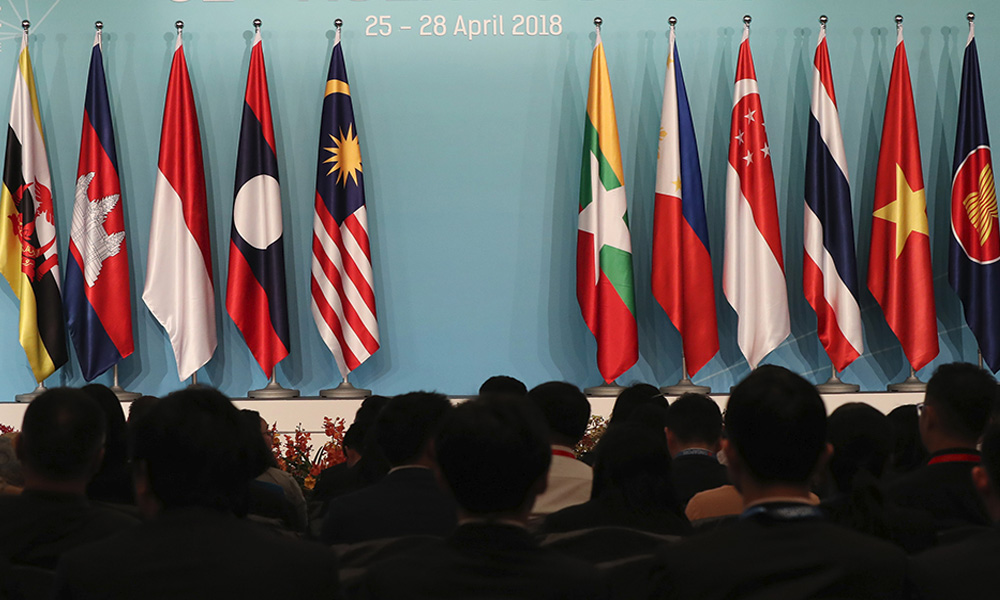
Unlike previous chairs that have largely maintained the status quo, Malaysia has the opportunity to reorient Asean’s priorities toward a forward-looking agenda that integrates economic resilience, strategic autonomy, cybersecurity governance, and global engagement.
Anwar’s chairpersonship is a reset - not a mere continuation - of the bloc’s traditional approach.
A dialogical leader
One of Anwar’s defining strengths is his role as a dialogical leader - a leader who understands the power of dialogue as a tool for diplomacy, conflict resolution, and global governance.
Throughout his career, he has engaged with a broad spectrum of world leaders, scholars, and policymakers, from Washington to Beijing, and from Riyadh to Brussels.
His ability to navigate ideological divides, engage in intellectual discourse, and foster mutual understanding places him in a unique position to redefine Asean as a hub for global dialogue. Under Malaysia’s chairpersonship, Asean can:
1. Establish itself as a global mediation platform – Asean, under Malaysia’s leadership, can emerge as a neutral forum for global discussions, particularly in areas such as geopolitical stability, cyber governance, and economic cooperation.
2. Strengthen Asean’s soft power – By leveraging Anwar’s credibility as a global statesperson, Malaysia can position Asean as a moderator of global issues, offering a middle path between competing power blocs.
3. Enhance Asean’s role in the Muslim world – Given Anwar’s strong ties with both the Middle East and the West, Malaysia can advance Asean’s role in fostering Islamic moderation, inter-civilizational dialogue, and cooperation on global humanitarian issues.
Rather than seeing Asean as a passive regional bloc, Malaysia’s leadership can transform it into an intellectual and diplomatic powerhouse - one that is sought after as a trusted venue for global discourse on peace, security, and governance.
Strategic inclusion of former leaders
Anwar’s decision to seek counsel from experienced former Asean political figures like Thaksin Shinawatra and George Yeo is a strategic, rather than personal, decision.
Bridget Welsh’s assessment that Malaysia’s Asean leadership is overly centered on Anwar is a misreading of the realities of regional governance.
Asean has long been guided by continuity and institutional memory.
Including figures like Thaksin, a former Thai prime minister with deep regional economic expertise, and George Yeo, a respected former Singaporean foreign minister with extensive geopolitical experience, provide Malaysia with invaluable insights into Asean’s challenges and opportunities.
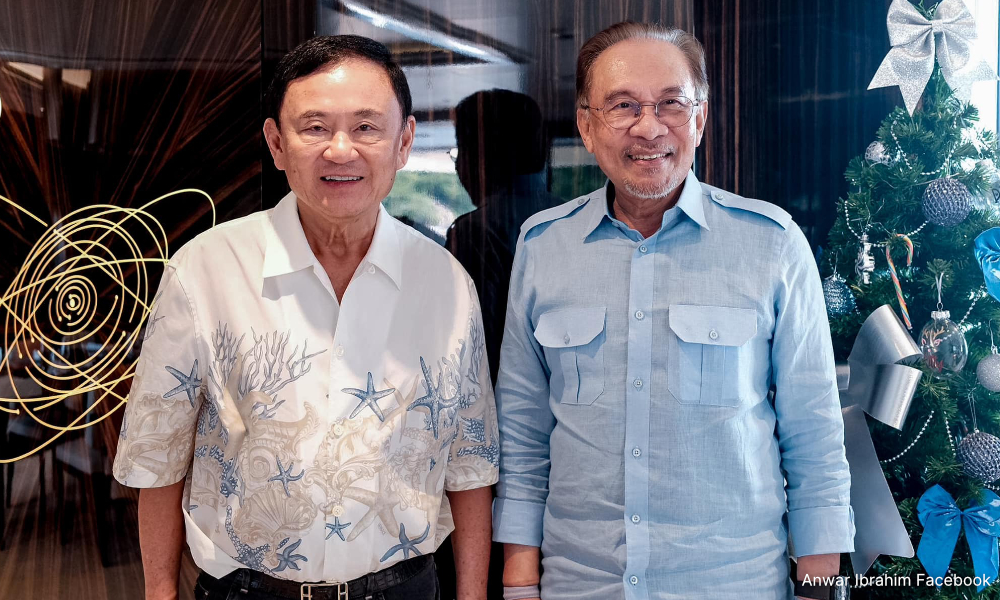
Critics who dismiss their involvement fail to recognise that their expertise is not about individual personalities but about ensuring Asean’s collective strength. Anwar’s leadership is not about singular authority - it is about bringing together the right minds to shape Asean’s future.
Cybersecurity and AI governance
A key area that Malaysia will advance as Asean chair is cybersecurity governance. The rise of cyber threats, digital espionage, and AI-driven security risks necessitate a regional framework for cyber norms and resilience.
Anwar understands that in the 21st century, national security is inseparable from cybersecurity. Asean has made incremental progress in cybersecurity cooperation through the Asean Cybersecurity Cooperation Strategy, but Malaysia will push for:
1. Asean cybersecurity norms - Establishing a regional framework for responsible state behaviour in cyberspace, akin to the Tallinn Manual that governs cyber warfare norms in Europe.
2. A regional digital security pact - Strengthening cyber defence cooperation among Asean states, particularly against cybercrime syndicates and state-sponsored cyber threats.
3. AI governance in Asean - Advocating for ethical AI usage in security, public administration, and governance to prevent authoritarian abuses and data privacy violations.
Malaysia’s leadership in bridging technology governance with security policy will place Asean at the forefront of global digital diplomacy, ensuring that Asean is not just a consumer of cybersecurity policies from external powers, but a proactive shaper of its own cyber future.
Conclusion: Asean’s best opportunity yet
Malaysia’s Asean chairpersonship under Anwar is not a leadership crisis - it is a leadership opportunity.
Critics who focus on short-term setbacks fail to recognise the broader statecraft at play - one that prioritises Asean’s long-term strategic positioning over reactionary politics.
Anwar’s leadership is Asean’s best chance to assert itself in an era of global uncertainty, economic transformation, and shifting security paradigms. Malaysia’s Asean 2025 is not about one leader - it is about setting a foundation for Asean’s next phase of global relevance.
Rather than questioning Malaysia’s ability to lead, the focus should be on how Asean can capitalise on this rare window of strategic opportunity.
The true failure would not be Malaysia’s leadership - it would be Asean’s reluctance to embrace the leadership it urgently needs. - Mkini
YUSMADI YUSOFF is a former senator and MP for Balik Pulau, founder and chairperson of Rights Foundation, and a member of the Asian Dialogue Society (ADS).
The views expressed here are those of the author/contributor and do not necessarily represent the views of MMKtT.

No comments:
Post a Comment
Note: Only a member of this blog may post a comment.