


If Malaysia’s first challenge is recognising the nature of modern espionage, the second - and more complex - challenge is responding without sacrificing economic opportunity.
The intensifying rivalry between the United States and China places Malaysia, and Asean more broadly, in a strategic bind.
Both powers are indispensable economic partners. Both supply capital, technology, and access to global markets. Yet both also operate intelligence systems that view global data access as a strategic necessity.
In such an environment, neutrality cannot remain a rhetorical position; it must be operationalised through policy, regulation, and institutional discipline.
Malaysia’s development model has long been built on openness. Foreign direct investment, export-oriented manufacturing, and integration into global supply chains have driven growth for decades.
Today, technological integration from advanced semiconductors and cloud computing to smart infrastructure is central to national competitiveness.
However, openness without safeguards creates vulnerability. Data generated within Malaysia, whether from transport networks, communications systems, financial platforms, or smart cities, has become a strategic resource.
Economic link in national security
In a data-driven world, information is not merely economic value; it is intelligence value.
The danger lies in assuming that economic engagement is separate from national security. Modern espionage does not require clandestine agents or hostile acts. It operates structurally, through access, dependency, and legal authority.
When foreign technologies dominate critical sectors, and when data governance is shaped externally, sovereignty becomes conditional.
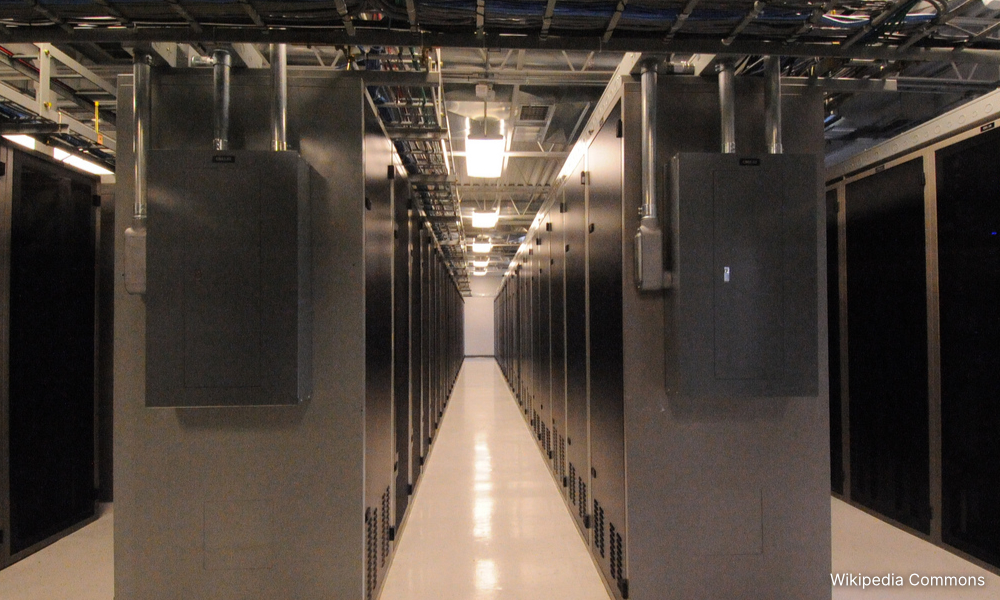
Malaysia risks becoming not just a manufacturing hub or consumer market, but a testing ground where competing powers trial technologies, standards, and data practices under real-world conditions.
This risk is especially pronounced in the Indo-Pacific. Both the US and China are competing not only to sell technology but to shape digital ecosystems. Each seeks to embed its platforms, standards, and governance norms into partner countries.
Once embedded, these systems create long-term dependencies that are costly and politically difficult to unwind. Malaysia must therefore ensure that its infrastructure and regulatory environment are not shaped primarily by the strategic priorities of external powers.
Consolidated data governance
The first pillar of Malaysia’s response must be robust data sovereignty. Data relevant to national security, including infrastructure telemetry, communications metadata, mobility data, and government information, must fall unequivocally under Malaysian jurisdiction.
This does not require blanket data localisation, which could undermine efficiency and innovation. Instead, it demands a selective, risk-based approach.

Systems involving critical infrastructure, public services, or mass data aggregation should be subject to onshore storage, strict access controls, and mandatory transparency regarding data processing and transfer.
Without such safeguards, Malaysia risks losing effective control over data generated within its borders. Once data is stored or processed abroad, it becomes subject to foreign legal systems and intelligence obligations.
At that point, neutrality becomes symbolic rather than substantive.
Regulation must step up to counter
Digital sovereignty is not about stopping data flows; it is about governing them. Regulation alone, however, is insufficient.
Malaysia must integrate intelligence risk into procurement, investment screening, and technology adoption decisions.
Contracts for telecommunications networks, cloud services, transport systems, and smart infrastructure should include enforceable provisions on audit rights, cybersecurity standards, and restrictions on remote access.
Vendors subject to foreign intelligence laws must demonstrate how compliance risks are mitigated. Short-term cost savings or rapid deployment cannot outweigh long-term strategic exposure.
Institutional capacity is equally critical. Modern counterespionage is technical, continuous, and interdisciplinary. Intelligence agencies must work closely with regulators, cybersecurity professionals, and private-sector operators.

Threat detection today involves analysing data flows, monitoring system behaviour, and understanding how foreign legal frameworks can translate into leverage over domestic infrastructure. Fragmented oversight creates blind spots that sophisticated actors can exploit.
Asean cooperation
Malaysia must also avoid becoming a laboratory for external rivalry. When technologies are deployed rapidly without adequate governance, they expose vulnerabilities that foreign actors can observe, analyse, and refine.
Testing grounds are rarely declared; they emerge where regulation is weak, oversight is limited, and dependence is high. Innovation must be matched by institutional readiness.
Asean cooperation strengthens Malaysia’s position. Many Southeast Asian states face similar pressures: reliance on foreign technology, competition for investment, and limited individual leverage.

By promoting regional standards on data governance, cybersecurity, and technology transparency, Malaysia can help Asean act collectively rather than reactively. Collective norms reduce the risk that any single country becomes a weak link or a convenient testing environment.
Economic diversification is also a security strategy. Malaysia’s efforts to strengthen domestic semiconductor capabilities, digital innovation, and advanced manufacturing are not merely industrial policy; they are strategic hedging.
Local capacity increases control over critical systems and reduces reliance on external platforms.
Diversification should extend to partnerships as well. Overdependence on any single country - regardless of intent - erodes strategic autonomy.
Active diplomacy
Diplomacy remains essential, but it must be underpinned by capability. Malaysia should engage both Washington and Beijing openly, but with clearly defined boundaries.
Strategic neutrality does not mean passivity. It means insisting that cooperation aligns with Malaysian law, oversight, and sovereignty interests.
When rules are clear and consistently enforced, neutrality becomes credible rather than rhetorical.
Finally, public awareness matters. Citizens and businesses must understand that modern espionage operates through everyday technologies - applications, vehicles, platforms, and devices that collect data continuously.
Digital literacy and corporate accountability strengthen resilience from the ground up.

The Indo-Pacific will remain the epicentre of global competition, where technology increasingly erases the boundary between commercial activity and intelligence power.
Malaysia’s future will not be determined by aligning with any great power, but by the strength, coherence, and discipline of its governance.
The overriding challenge is to ensure that openness builds resilience rather than vulnerability, and that connectivity drives growth without eroding national control.
In the digital age, sovereignty is no longer defined by isolation, but by authority over data and systems.
Malaysia must ensure that the power to govern, access, and regulate data generated within its borders remains firmly in its own hands. - Mkini
R PANEIR SELVAM is the principal consultant of Arunachala Research & Consultancy Sdn Bhd, a think tank specialising in strategic national and geopolitical matters.
The views expressed here are those of the author/contributor and do not necessarily represent the views of MMKtT.

No comments:
Post a Comment
Note: Only a member of this blog may post a comment.