


I say this as a Muslim and as someone who comes from a mixed background. Living between different worlds teaches you something important very early in life. A person’s worth does not change because of his race, his language, or the way he prays.
What changes is how society chooses to see him. And in Malaysia today, too many people are still being made to feel smaller than they should in the country they call home.
Malaysia is often praised as a peaceful country made up of many races and religions. On the surface, that picture still looks true. We go to school together, work together, eat at the same stalls, and live in the same towns. We take comfort in that and call it proof that our unity is strong.
But lately, that comfort feels less convincing.
The problem is no longer just a few rude people saying offensive things online. The problem is that too many now speak as if basic respect depends on who is being spoken about.
One post, one video, one mocking remark, and suddenly a matter that should have been handled calmly turns into a racial and religious quarrel. That has become the pattern. Outrage spreads faster than truth, and putting others down has become far too easy in public.
This is where Malaysia is now. Not broken, but strained. Not falling apart, but being worn down by people who mistake provocation for courage.
In the past, people still argued. But they had to face one another. There were limits. People knew when they had gone too far. Today, the loudest voices often shape the mood of the country. Anger gets attention. Cruelty gets shared. A person who wants to poison the public mood no longer needs a crowd. A phone is enough.
That is how a nation starts to fail. Not only when violence erupts, but when contempt becomes ordinary, and respect is no longer defended.
Race, religion, and royalty
In Malaysia, the same sensitive matters keep getting thrown into the fire: race, religion, and royalty. Everyone knows how dangerous these issues can become when handled recklessly.
What should remain a legal issue, a planning issue, or a matter for the authorities quickly becomes something else. It becomes a test of pride. It becomes a show of power. It becomes another chance to remind others that, in the eyes of some, they still stand lower.
That is why many non-Malays in this country feel worn down. Many feel that no matter how much they contribute, they are still viewed with suspicion, as if their place must always be qualified and their loyalty endlessly weighed.
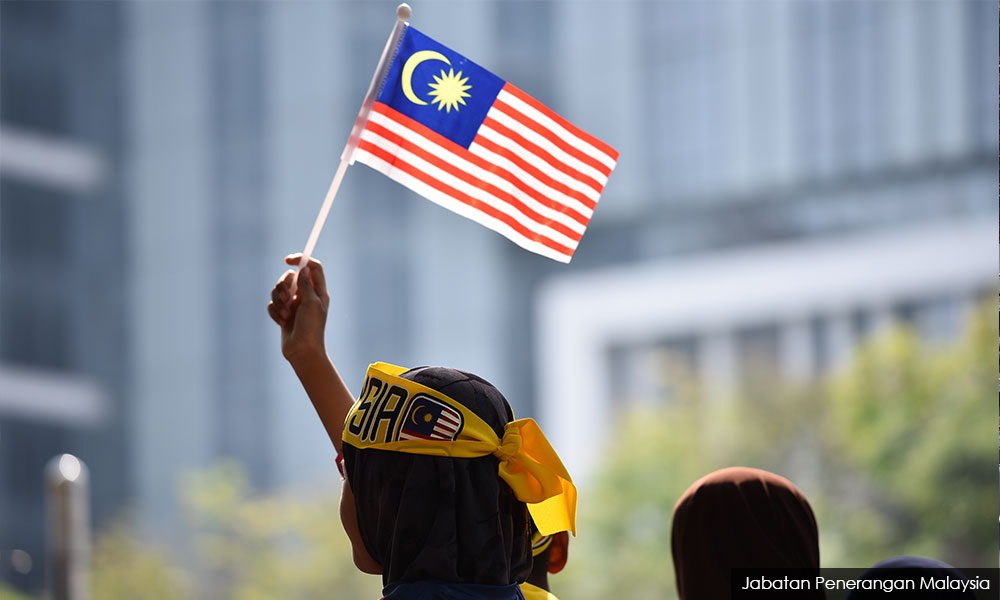
That feeling does not come from nowhere.
When someone is born here, studies here, works here, pays tax here, raises children here, and buries loved ones here, how many more times must he prove that this is his home too?
At the same time, many Malays feel uneasy when issues involving Malay rights, the position of Islam, the Malay rulers, and the place of the Malays in this country are raised in ways they see as rude or extreme.
These concerns are real. They are tied to history, identity, and the shape of the nation that emerged at independence. They should not be mocked or dismissed.
But concern cannot become a permit for putting others down.
This is where Malaysia keeps stumbling, because two truths can exist at the same time. The first truth is that illegal temples are a real issue. It is not small, it is not harmless, and it should not be brushed aside for the sake of convenience or sentiment.
If a temple is built without proper approval, whether on government land or private land, then that is a serious matter. It affects not only Malay sensitivities. It also affects landowners, authorities, public order, and the basic principle that the law must apply to everyone.
That reality must be faced honestly.
Many Indians acknowledge that some temples were built without proper process and that this cannot simply be defended on emotion alone. The Chinese also build temples, and in many cases, approvals, land matters, and procedures are properly followed.
The same standard must apply to everyone. If one group is expected to respect the law, then no other group should act as though religion places it above the law.
That, too, is part of living together in a shared country.
Public display of contempt
But the second truth is just as important. A real issue does not become more correct when it is carried by the wrong behaviour.
The moment a valid dispute is pushed through insults, taunts, and the mocking of another faith’s sacred symbols, it stops being a serious effort to solve a problem. It becomes a public display of contempt.
That is why people such as self-styled land activist Tamim Dahri Abdul Razak have caused so much damage in moments like this. The problem is not only what is said, but the way it is delivered and the effect it has in turning a real dispute into a public spectacle of insult and anger.
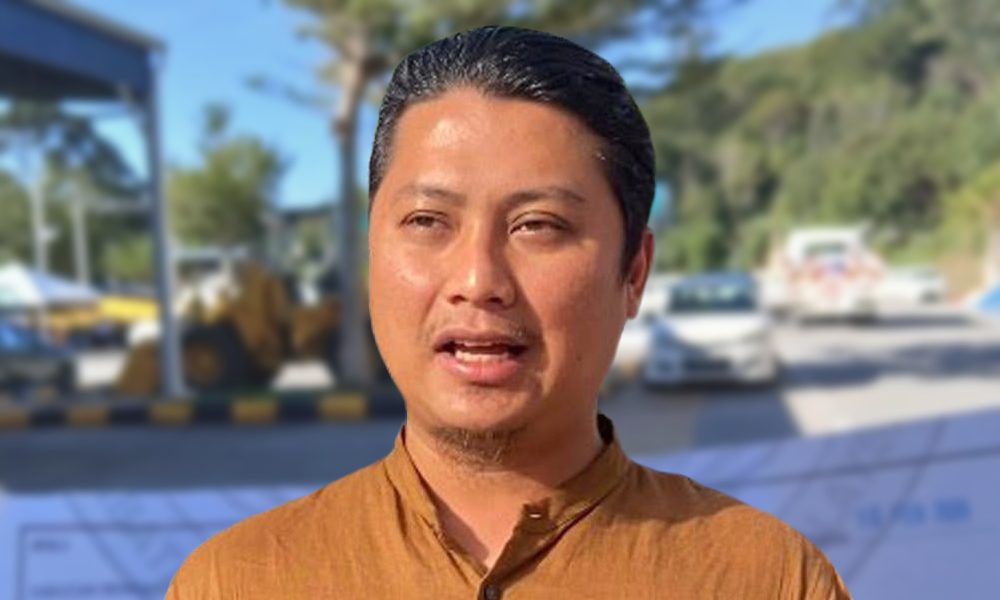
Once that happens, the original dispute is no longer what the public sees. What they see is arrogance. What they feel is disrespect. What remains is anger.
That kind of conduct solves nothing. It does not make people more objective. It does not create understanding. It only turns a matter of law into a contest of ego. It reinforces the view that some people may speak with full standing, while others are expected to accept being talked down to.
As a Muslim, I find this deeply troubling.
If a person claims to speak in the name of religion, then people have every right to ask whether that religion has made him more decent, more restrained, and more just.
Faith should make a person better in speech and better in conduct. It should make him more careful with the dignity of others, not more careless with their pain. A man who mocks what others hold sacred does not honour his religion. He only exposes how little of it has entered his character.
Is the law firm enough?
The deeper problem is simple. Too many people in this country are raised to believe that their own race or religion naturally stands above others.
Once that idea settles in the mind, it becomes easy to look down on fellow citizens, no matter how much they have built, contributed, or sacrificed. From there come the insults, the labels, the slurs, and the habit of treating others as lesser people.
That is why careless speech matters. When a person lets his mouth or his keyboard run wild, he not only wounds others but also reveals himself.
This is also why so many rakyat now question whether the law is firm enough and fair enough. When those who stir racial and religious anger do not seem to face quick and clear consequences, people begin to believe that some are protected while others are simply expected to endure.
Once that belief spreads, trust starts to crack. And once trust cracks, unity becomes just another word repeated on stage and forgotten on the ground.
No country can keep preaching unity while allowing whole groups of people to feel insulted, unwanted, and unprotected in their own home.
This is not about rejecting the Federal Constitution. It is about remembering what it is supposed to do. The Constitution is there to hold the country together.
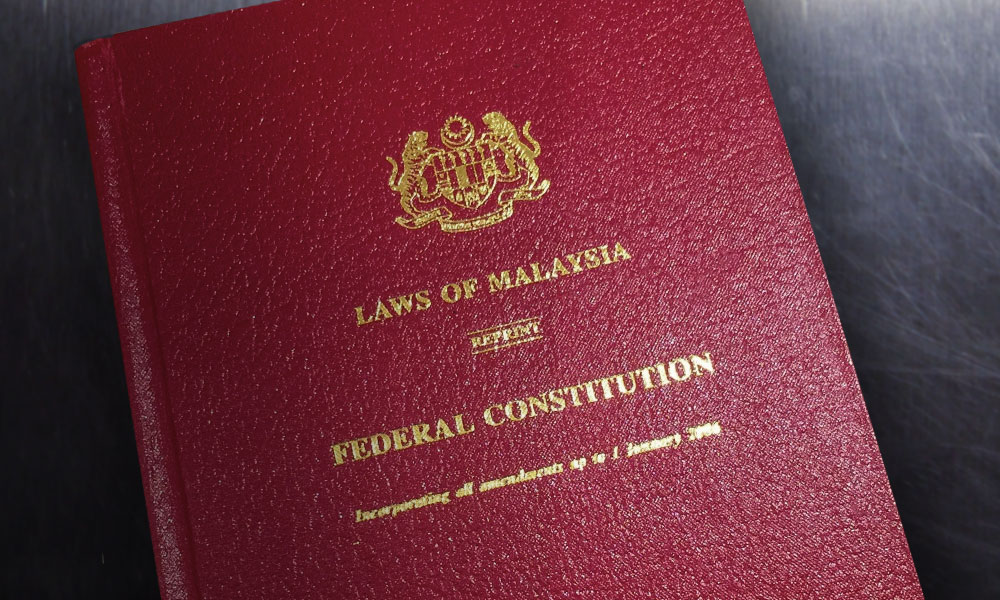
It recognises the place of the Malays and bumiputera, the position of Islam, the role of the rulers, and the rights of other groups as citizens of the same nation.
The country we build
That is the reality of Malaysia. And when people speak about the social contract, or what many see as the founding compromise, it should be understood in that same spirit.
Not as a licence to look down on others, but as an understanding meant to keep the peace.
That founding compromise was never meant to mean that one group keeps its dignity while another must keep proving it deserves dignity too. It was never meant to turn citizenship into a ladder, with some forever standing higher and others forever told to wait below.
If the Constitution is to be respected, then it must be lived with fairness. If that compromise is to mean anything, then it must protect coexistence, not excuse contempt.
History matters. Independence matters. The founding compromise matters. But none of them should be twisted into a permanent excuse to keep fellow citizens feeling small in the national imagination.
My Indian friends did not choose to be born Indian. My Chinese friends did not choose to be born Chinese. My Sikh friends did not choose to be born Sikh. Malays did not choose to be born Malay either. These are not achievements. They are not offences. They are simply the facts of birth.
What matters is what kind of country we build from those facts.
Many families from many backgrounds have lived on this soil for generations. They have worked on this soil, suffered on this soil, prayed on this soil, and buried their loved ones on this soil. They have no other country to return to. This is their home too.
So why are some still made to feel like strangers in the place that raised them?
The real threat
As a Muslim, I believe diversity is part of God’s wisdom. Human beings were created in different races, tribes, and languages. That should teach us humility. It should remind us that difference is not a threat by itself.
The real threat is what happens when politicians, preachers, and loud public figures use those differences to fill people with fear and hatred.
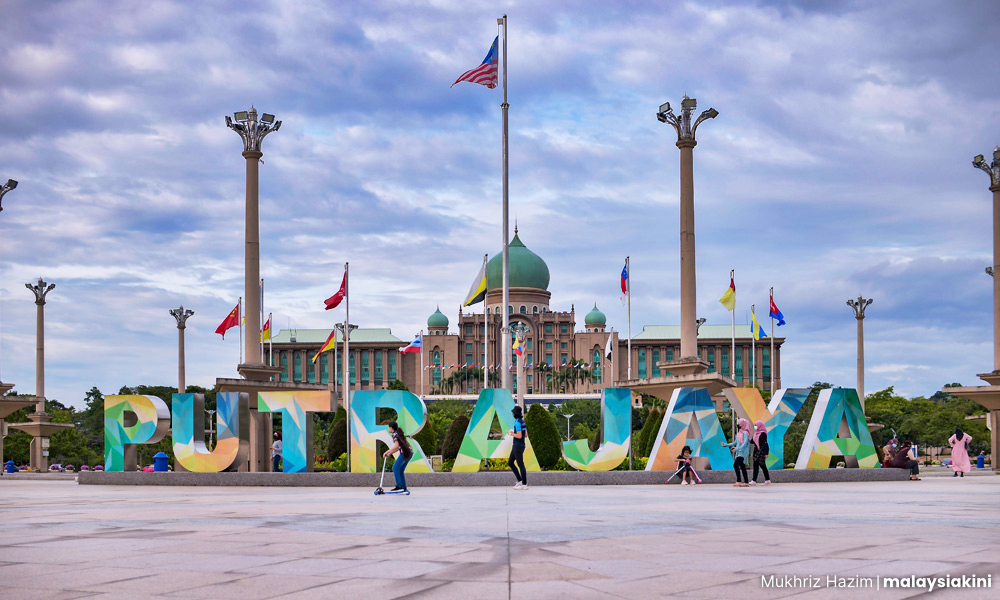
Too many Malaysians are now being pushed to see one another through race first and humanity later. That road will not make this country stronger. It will make Malaysia more brittle, more bitter, and more easily torn apart.
Malaysia does not need more provocation parading as principle.
It needs fairness.
It needs restraint.
It needs laws that are applied without fear or favour.
It needs people mature enough to admit when their own side is wrong.
It needs leaders and citizens who know that firm speech is possible without insulting others.
It needs a public culture where real issues can be discussed without turning every disagreement into a racial showdown.
And above all, it needs the moral courage to say something simple and mean it: no Malaysian should have to beg to be treated with equal dignity in the only home he has ever known.
Because unity is not just about living side by side.
Unity means no citizen is made to feel lesser while standing on the same Malaysian ground. - Mkini
MAHATHIR MOHD RAIS is a former Federal Territories Bersatu and Perikatan Nasional secretary. He is now a PKR member.
The views expressed here are those of the author/contributor and do not necessarily represent the views of MMKtT.

No comments:
Post a Comment
Note: Only a member of this blog may post a comment.