


Lawyer Ambiga Sreenevasan says seeking a discharge not amounting to an acquittal is contrary to the trial judge's finding of a prima facie case.
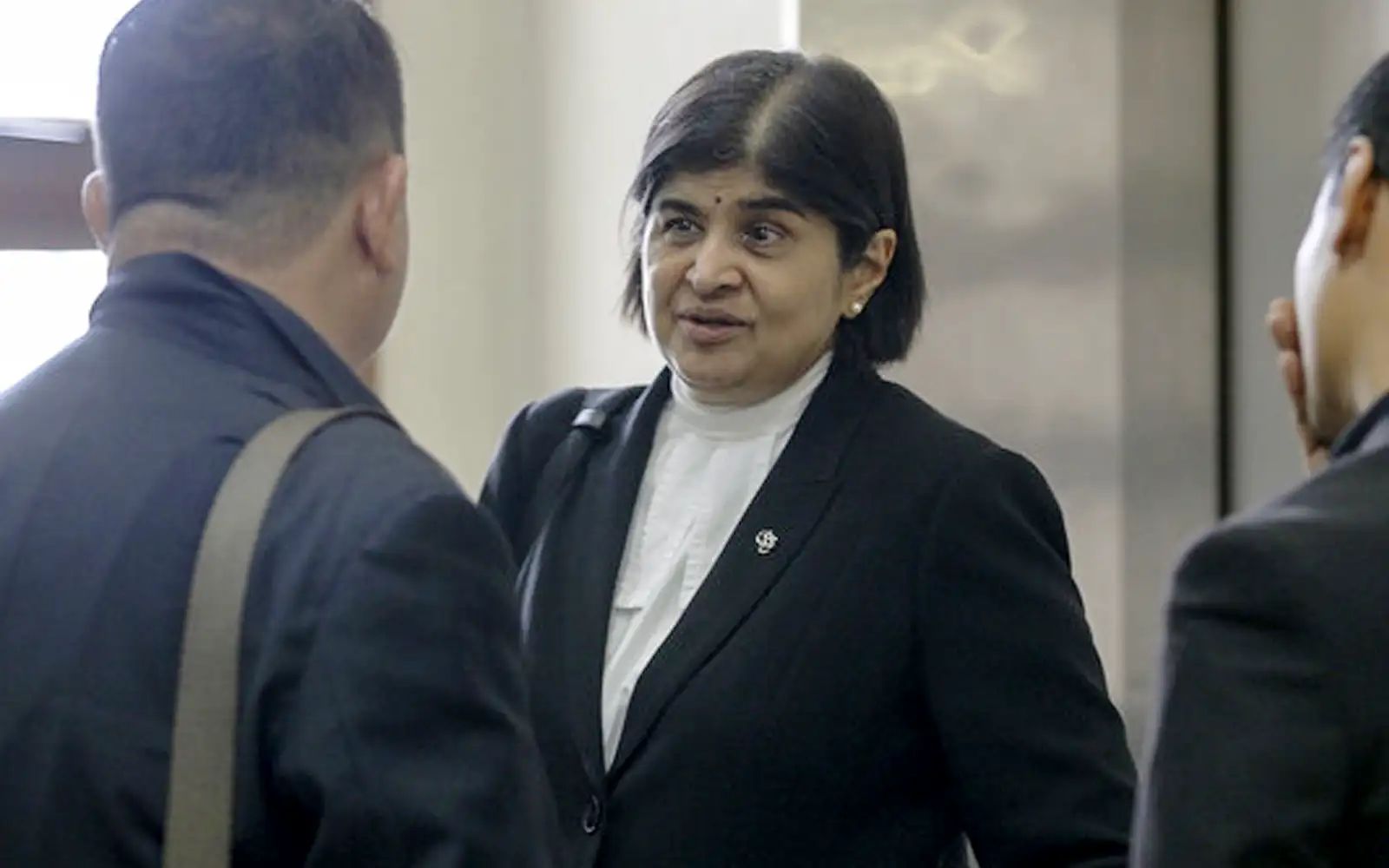
Lawyer Ambiga Sreenevasan said seeking a discharge not amounting to an acquittal (DNAA) is contrary to the trial judge’s finding of a prima facie case.
“The AGC’s decision is tantamount to throwing the prosecutors who conducted the trial under the bus,” she submitted in the Malaysian Bar’s appeal for leave to challenge the attorney-general’s decision to secure a discharge for the deputy prime minister from his corruption case.
Ambiga said the officers, who had worked hard to prove the case against Zahid, were undermined by the AGC.
“They were unfairly treated based on the statements made in court,” she said before a three-member bench chaired by Justice Faizah Jamaludin.
Justices Lim Hock Leng and Nadzrin Wok Nordin are also hearing the appeal.
On June 27, 2024, the High Court in Kuala Lumpur dismissed the Bar’s application for leave to commence judicial review proceedings to challenge the attorney-general’s decision to discontinue the case against Zahid, who is also the Umno president.
Justice Amarjeet Singh ruled that the attorney-general had no duty to furnish the Bar with any document arising from the Malaysian Anti-Corruption Commission’s investigations into the case.
Then deputy public prosecutor Raja Rozela Raja Toran and a deputy head in the AGC’s prosecution division had led the prosecution team.
The AGC applied for a DNAA for Zahid after 99 prosecution witnesses and 15 defence witnesses had testified over 77 days of trial.
Ambiga said the public was shocked when then DPP and current Attorney-General Dusuki Mokhtar informed trial judge Collin Lawrence Sequerah that he had instructions to discontinue the proceedings.
Dusuki requested that the case be classified as a DNAA since MACC was still investigating the matter following several representations submitted by Zahid during the trial.
Ambiga said the court was told that the charges against Zahid were allegedly rushed, careless, incomplete, and premature.
She said the trial judge was also informed that the charges had been “manipulated” or “exploited by certain parties” for their own agenda.
She said the DNAA was sought in view of the royal commission of inquiry established to examine claims made in former attorney-general Tommy Thomas’s controversial memoir, particularly allegations of selective prosecution.
The case did not inspire public confidence in the AGC, which prompted the Bar to seek legal redress, as the public expected an explanation.
“The conduct of the trial was deeply troubling, and this is clearly an exceptional case in which leave ought to have been granted to enable the substantive matter to be heard,” she said.
AG’s power not questioned
Ambiga highlighted that trial judge Sequerah stated that the court did not question the attorney-general’s powers as public prosecutor to institute and discontinue proceedings under Article 145(3) of the Federal Constitution and Section 254(1) of the Criminal Procedure Code at any time before judgment was delivered.
“However, the judge remarked that much precious judicial time and significant public funds would be wasted if the prosecution were to decide in the near future not to proceed with the charges,” she said.
She said that on Jan 8, the AGC stated that the Yayasan Akalbudi case involving Zahid had been classified as requiring no further action due to insufficient evidence following MACC investigations.
Another lawyer, S Sivaneindiren, submitted that the threshold for obtaining leave for judicial review was that the application must not be frivolous or vexatious.
“However, the test for challenging the AG’s decision requires exceptional circumstances,” he said, adding that there should not be two different thresholds for obtaining leave to challenge a public authority.
The hearing was adjourned to April 15. - FMT

No comments:
Post a Comment
Note: Only a member of this blog may post a comment.